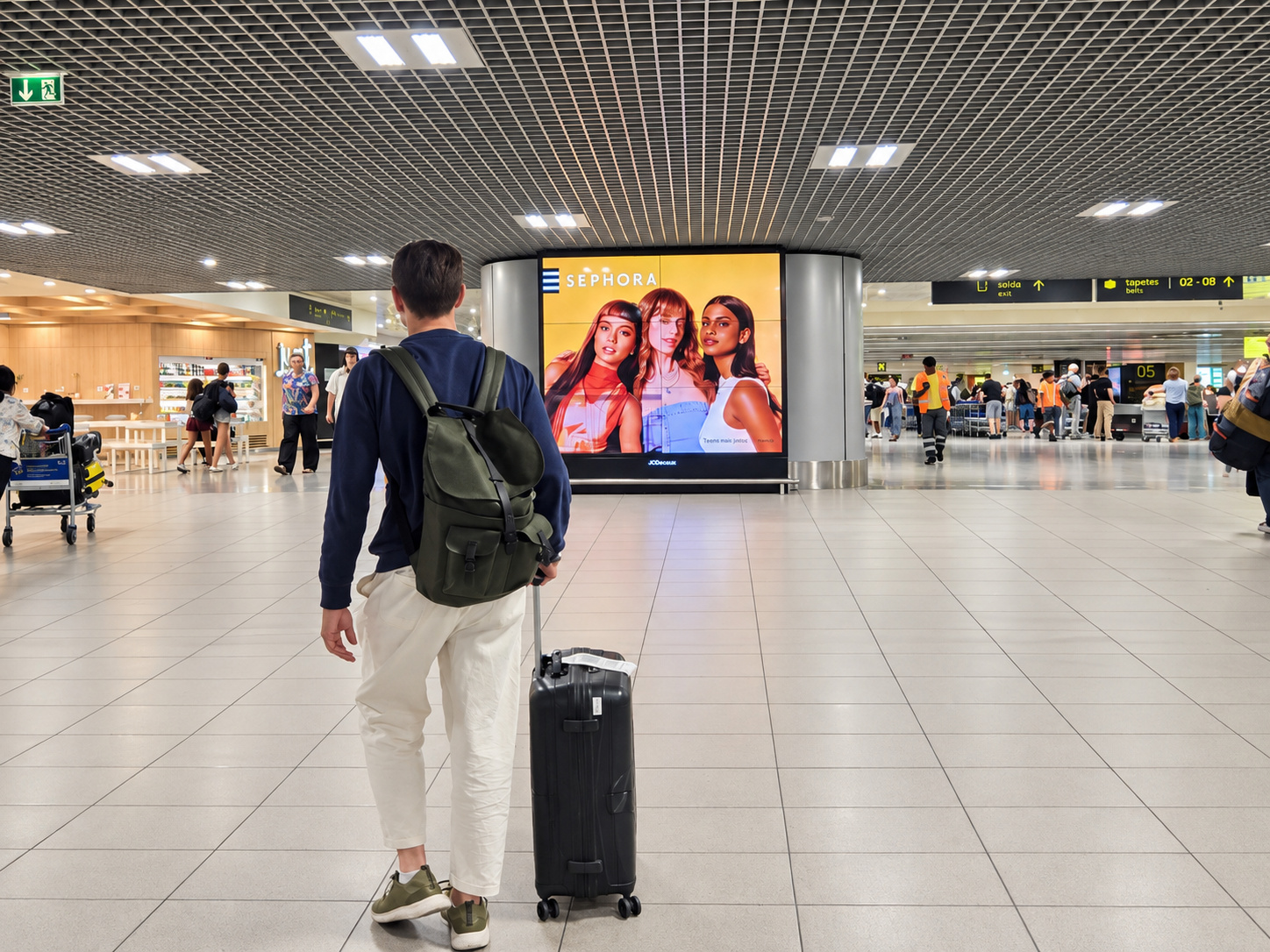






Houston airport advertising at George Bush Intercontinental Airport (IAH) Energy, Medicine, and Everyone Else.

48 million passengers a year: Houston’s energy, medical, and corporate workforce flying out, the partners, patients, and visitors flying in, and CERAWeek, OTC, and the Rodeo on top. Get the IAH media kit for formats, planning ranges, and booking windows.

We’ll follow up with the kit and next steps for your campaign.

  • 125+Airports worldwide
  • 40+Media vendors
  • 48MIAH passengers in 2025

You’re in good company

  • Thomson Reuters
  • Invest in Canada
  • Dynatrace
  • Fortinet
  • Motorola
  • BYU

At a glance

Houston airport advertising
at a glance

Bush is the United hub and international door for Houston’s energy, Medical Center, and corporate base. Hobby is the Southwest-heavy airport across town, and it is not this buy.

  1. 1

    IAH handled about 48 million passengers in 2025 inside a Houston Airports system of 62 million (IAH plus HOU). International traffic at Bush reached a record 12.4 million. United is the hometown hub carrier, with a majority share of IAH traffic concentrated in Terminals B, C, and E. IAH is the energy, corporate, and Medical Center buy; Hobby is Southwest’s leisure spine, and DFW is a different market.

  2. 2

    Five terminals, linked by Skyway airside and Subway landside. Terminal C is the United domestic hub heart (Clubs, retail, claim). Terminal E carries United international. Terminal D carries the foreign-flag and international mix. Terminal A carries mixed domestics (American, Delta, Spirit, and others as published). Terminal B is the United regional and Express emphasis. Confirm airline maps at contract.

  3. 3

    The always-on audience is Houston itself — Energy Corridor and downtown energy headquarters, Texas Medical Center, port and industrial employers, and universities — thickened by Latin America and international visitors on D and E. Business travel runs both directions: residents flying out and partners flying in.

  4. 4

    CERAWeek (March 8–12, 2027) and OTC plus URTeC (May 3–5, 2027) add short overlays. They do not replace the resident base. Holiday and winter corporate travel fills the United terminals. The Houston Livestock Show and Rodeo runs March 2–21, 2027 at NRG Park, overlapping CERAWeek.

  5. 5

    Planning ranges: a single unit or network runs $25,000–$120,000 per four-week period. A two- or three-unit package runs $75,000–$200,000 per period. Full-airport digital domination (88 screens on the current kit) runs north of $240,000 per period. Production and installation on static units are priced separately at quote. Those are planning ranges, not a rate card.

  6. 6

    Inventory is sold in four-week periods. Hold expiry, cancellation, and proof-of-posting terms are set at contract. Digital creative is due 14–18 business days before start; static creative is due 21–28 days before start. Competitive separation may be possible, but it isn't guaranteed; ask when booking and write it into the contract. Creative needs airport authority approval.

  • 48MIAH passengers in 2025; Houston Airports system 62 million with HOUHouston Airports
  • 12.4MIAH international passengers in 2025, a record year, about 26% of BushHouston Airports
  • 4 weeksBuying unit on the current kit; digital is a 10-second spot in a 60-second loopJanuary 2026 IAH media proposal

What you can run

What can you run
at IAH?

Six placements on the current kit: Terminal C claim and Club-adjacent static banners, a large funnel LED network across A, B, C, and E, gate-hold charging screens on A, C, and D, and a full-airport digital network. Digital is a ten-second spot in a sixty-second loop. No single unit reaches everyone.

Terminal C · Static

Baggage-claim banner package

Under the claim information boards, either side of the info booth, Terminal C

Type
Static, 2 banners, about 65.5 in × 224 in
Your spot
Full face
Best for
Primary United domestic arrival read for people entering Houston

Terminal C · Static

United Club–adjacent banner, South Retail

Next to the United Club, Terminal C South Retail

Type
Static, 1 banner; size not stated on the kit
Your spot
Full face
Best for
Affluent United departures and arrivals with retail dwell

Terminal C · Static

United Club–adjacent banner, North Retail

Outside the United Club, Terminal C North Retail

Type
Static, 1 banner; size not stated on the kit
Your spot
Full face
Best for
The same affluent United path on the north retail side

Terminals A, B, C, and E · Digital

Large funnel LED network

Ticketing, TSA, and other high-dwell funnel zones

Type
Digital, 8 large LED screens, various sizes
Your spot
10-second spot in a 60-second loop
Best for
Departure frequency across United and the mixed domestics

Terminals A, C, and D · Digital

Gate-hold charging-station network

Double-sided screens in gate holds

Type
Digital, 44 screens, about 32 in
Your spot
10-second spot in a 60-second loop
Best for
High-dwell departures and connections, including international D

Terminals A, B, C, and D · Digital

Full-airport digital network

Arrivals, departures, and major gate holds

Type
Digital network; the kit cites 88 screens and, in one line, 69 — confirm the live count
Your spot
10-second spot in a 60-second loop
Best for
Domination-scale frequency, including connectors who never enter Houston
How the loop worksA 10-second spot in a 60-second loop is about one of six if the loop is full.

Confirm how many advertisers are in the loop, and the live share of voice, at quote. Require play-log terms at contracting. In an energy week the loop fills; the spot still plays on the same cycle, but it shares the screen with more competitors.

Print is part of the branding buyTerminal C claim and Club-adjacent statics are the United arrival and dwell read.

Print and static inventory in Terminal C is a real share of the branding program on this kit — the claim package plus Club-adjacent faces — not an afterthought. Branding plans often mix one digital network for motion and play logs with Terminal C static for continuous United presence.

Full-airport digital is not local reachThe 88-screen package includes connectors who never enter Houston.

The 88-screen package is a frequency buy across the building, including connectors who never enter Houston. Use it for hub-network and always-on brand briefs. For people actually in Houston this week, pair or replace it with Terminal C claim and curb-facing units rather than assuming airside share of voice equals local reach. The kit also cites 69 screens in one line. Confirm the live count at quote.

Construction and map driftTerminal B is a multi-year program; confirm locations at contract.

Terminal E ticketing work has been completing. Terminal B transformation is a multi-year Houston Airports program. United continues upgrades in C and E. Confirm unit locations against the current fly2houston map at contract, not against last year’s proposal screenshot. Airline assignments drift, especially any Southwest residual at IAH versus Hobby-only.

Every airport format, with specs and lead times

The digital, static, experiential, and exterior units brands buy in airports. For IAH we plan specific units and dates against what is open at the time.

Examples

What does airport advertising
look like?

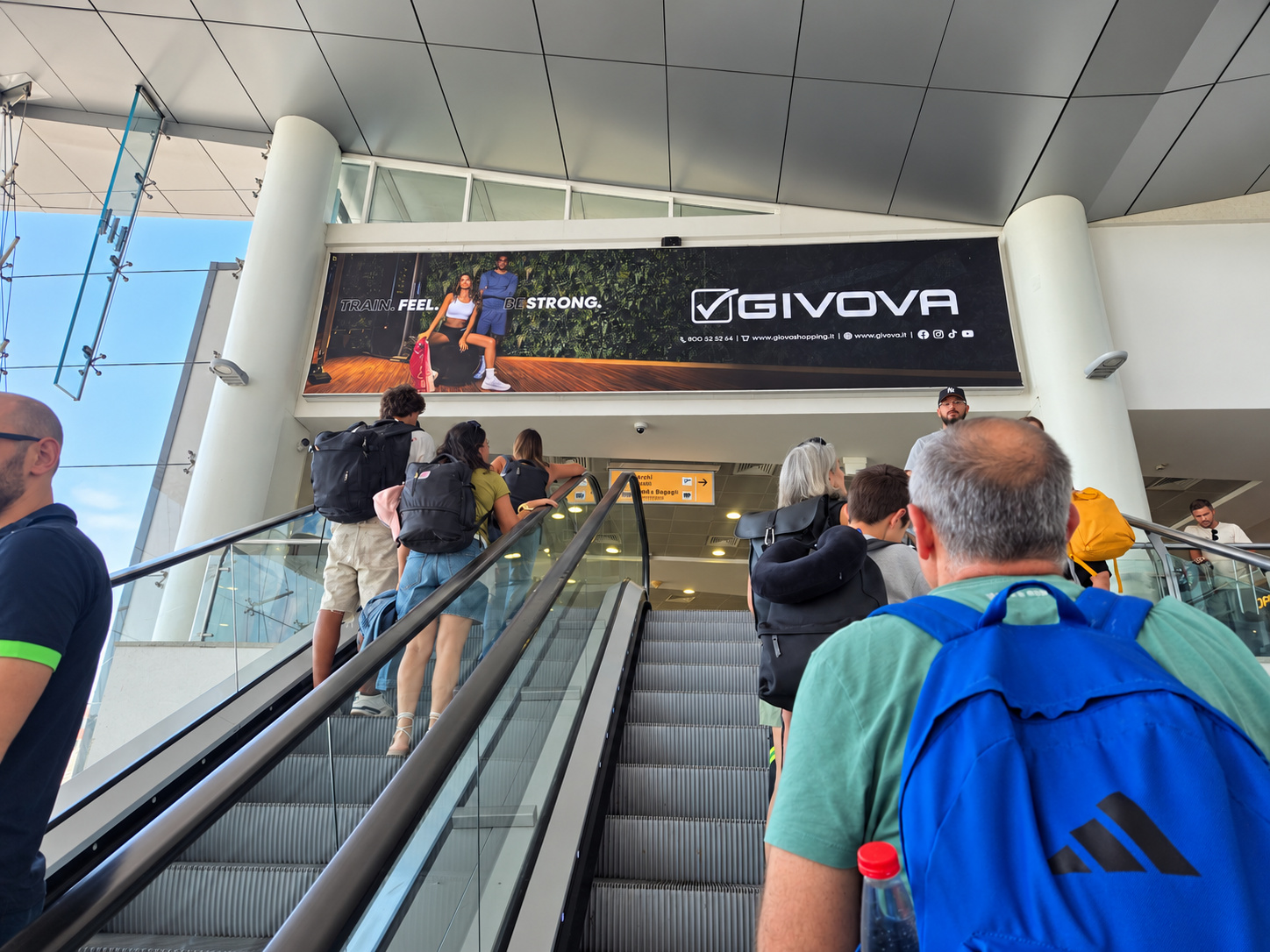
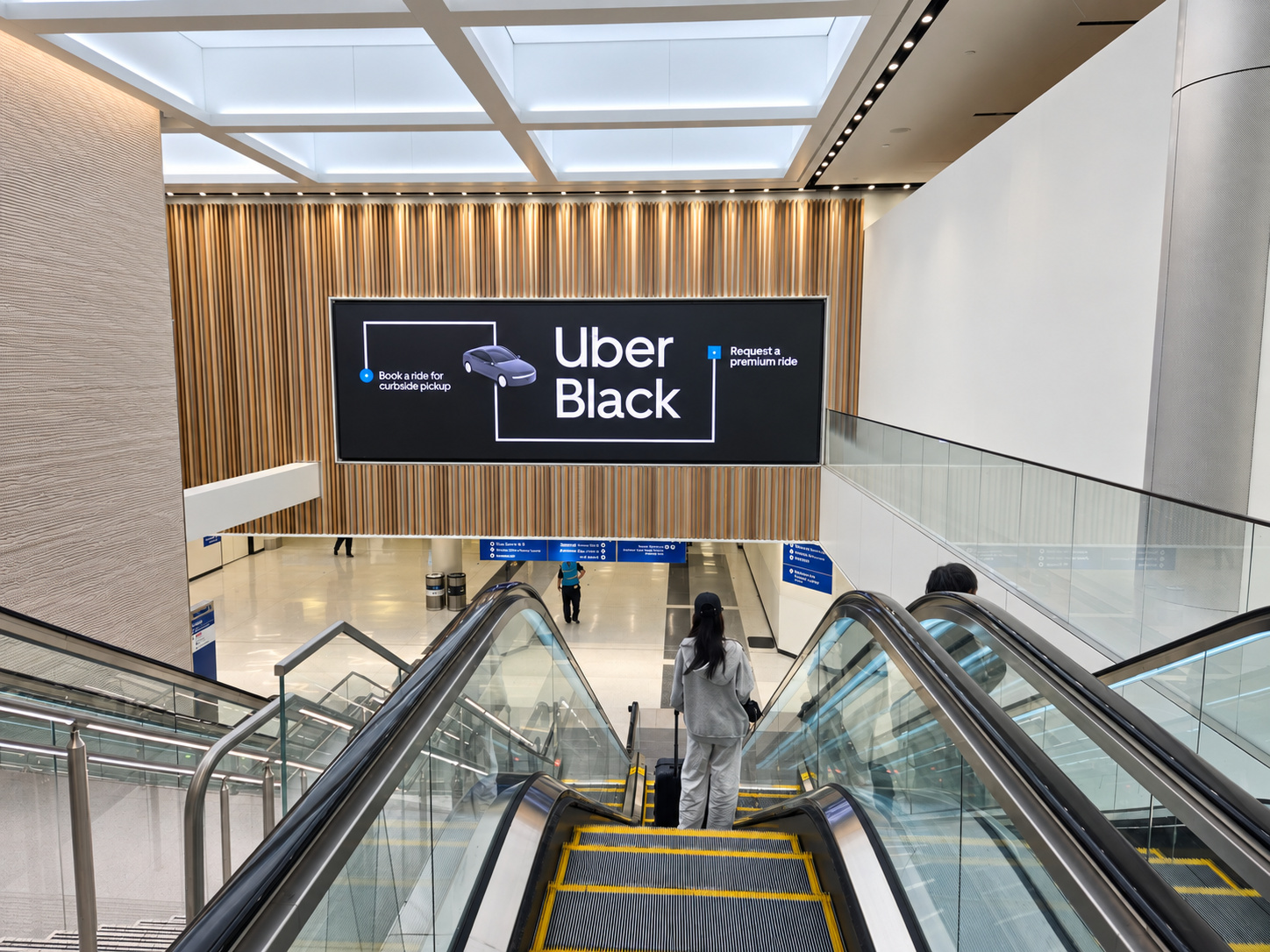
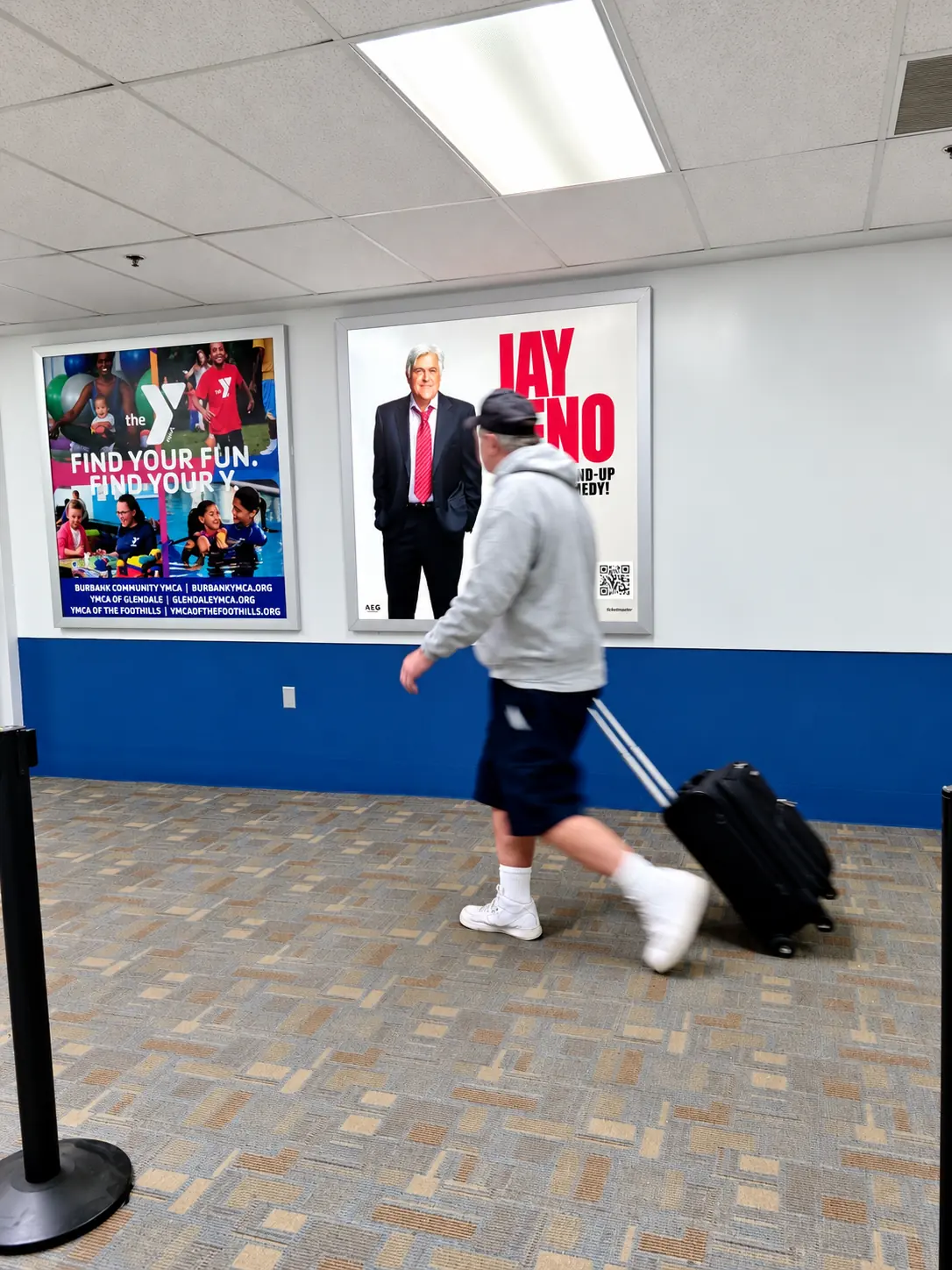
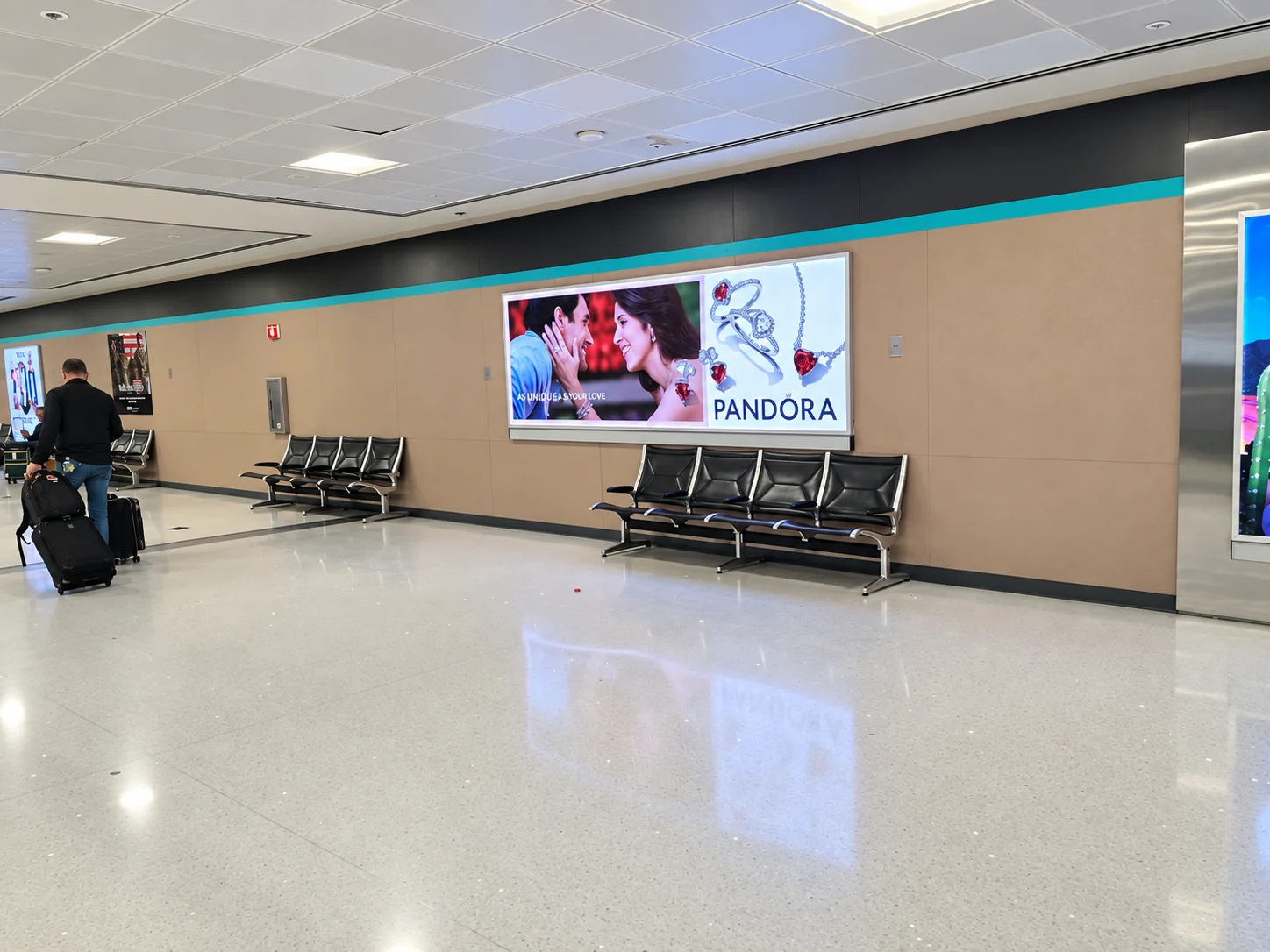
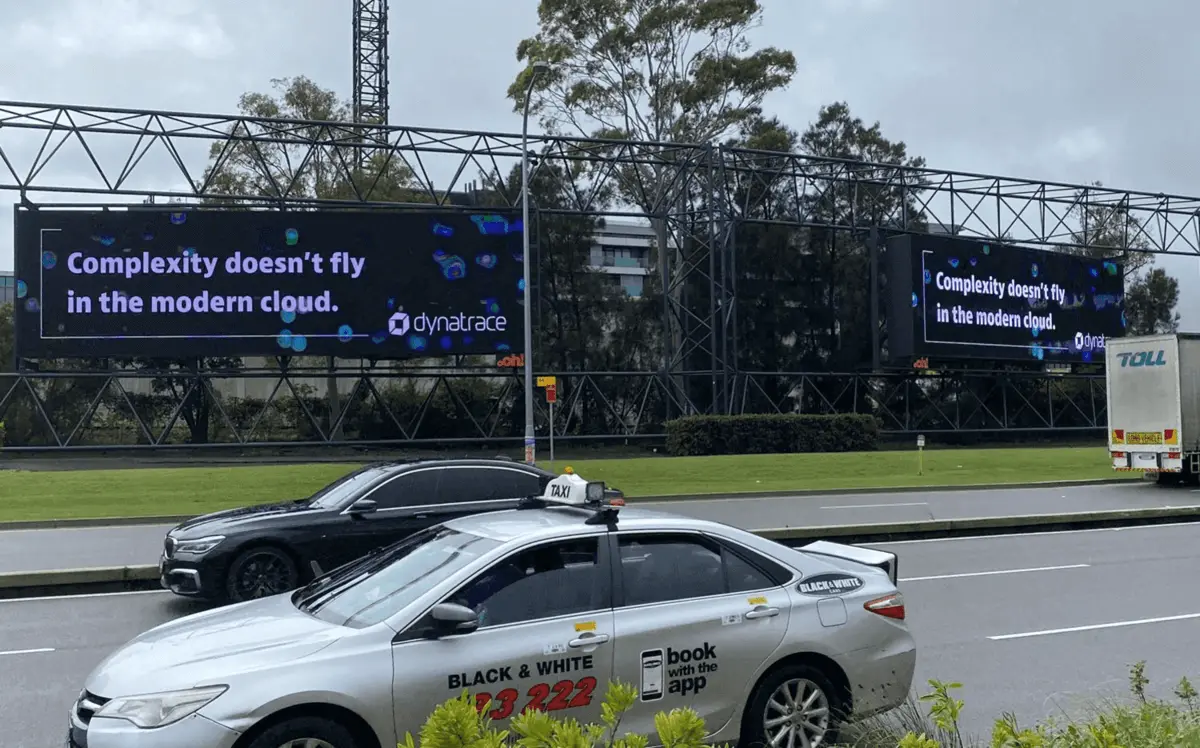
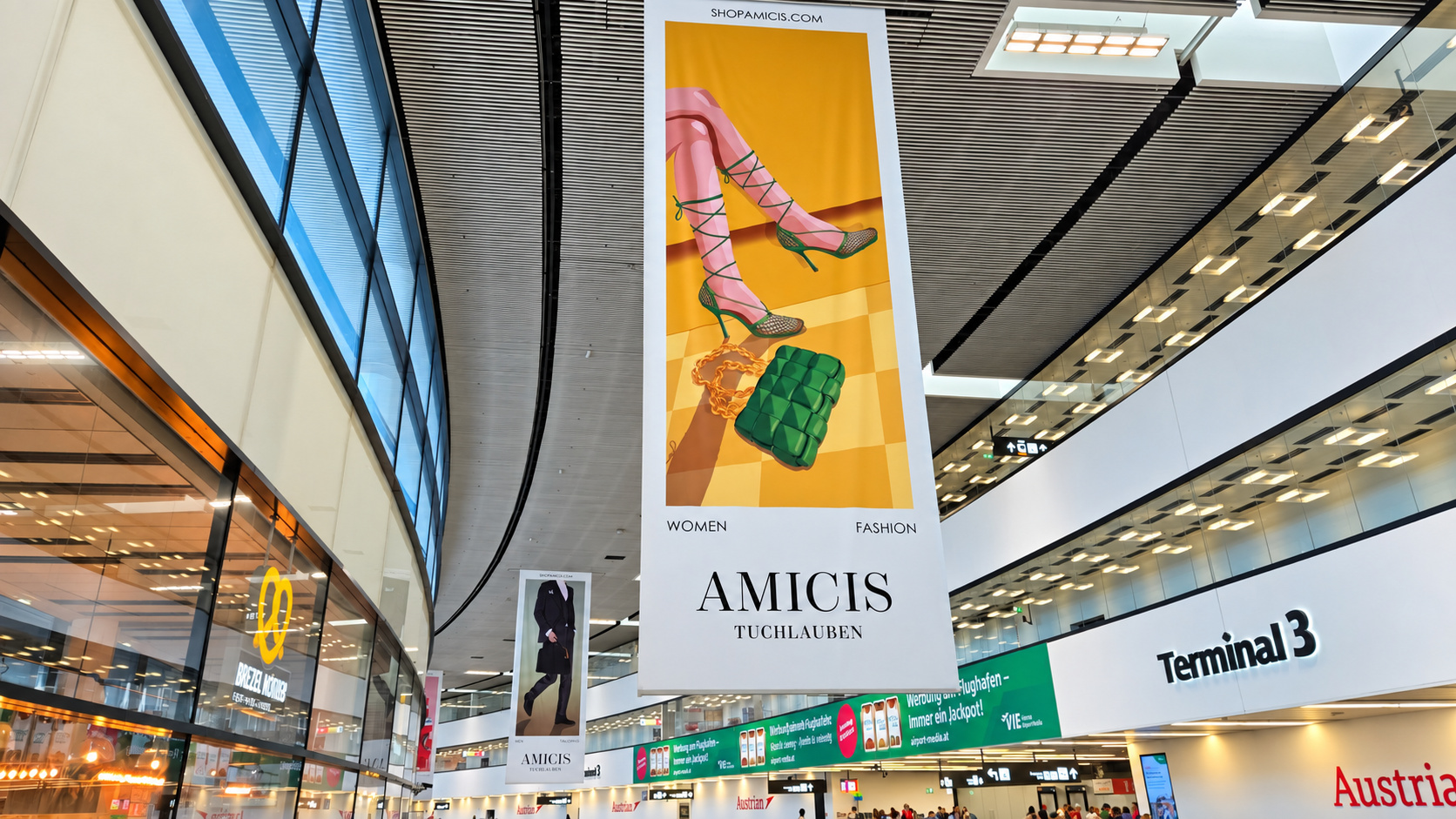
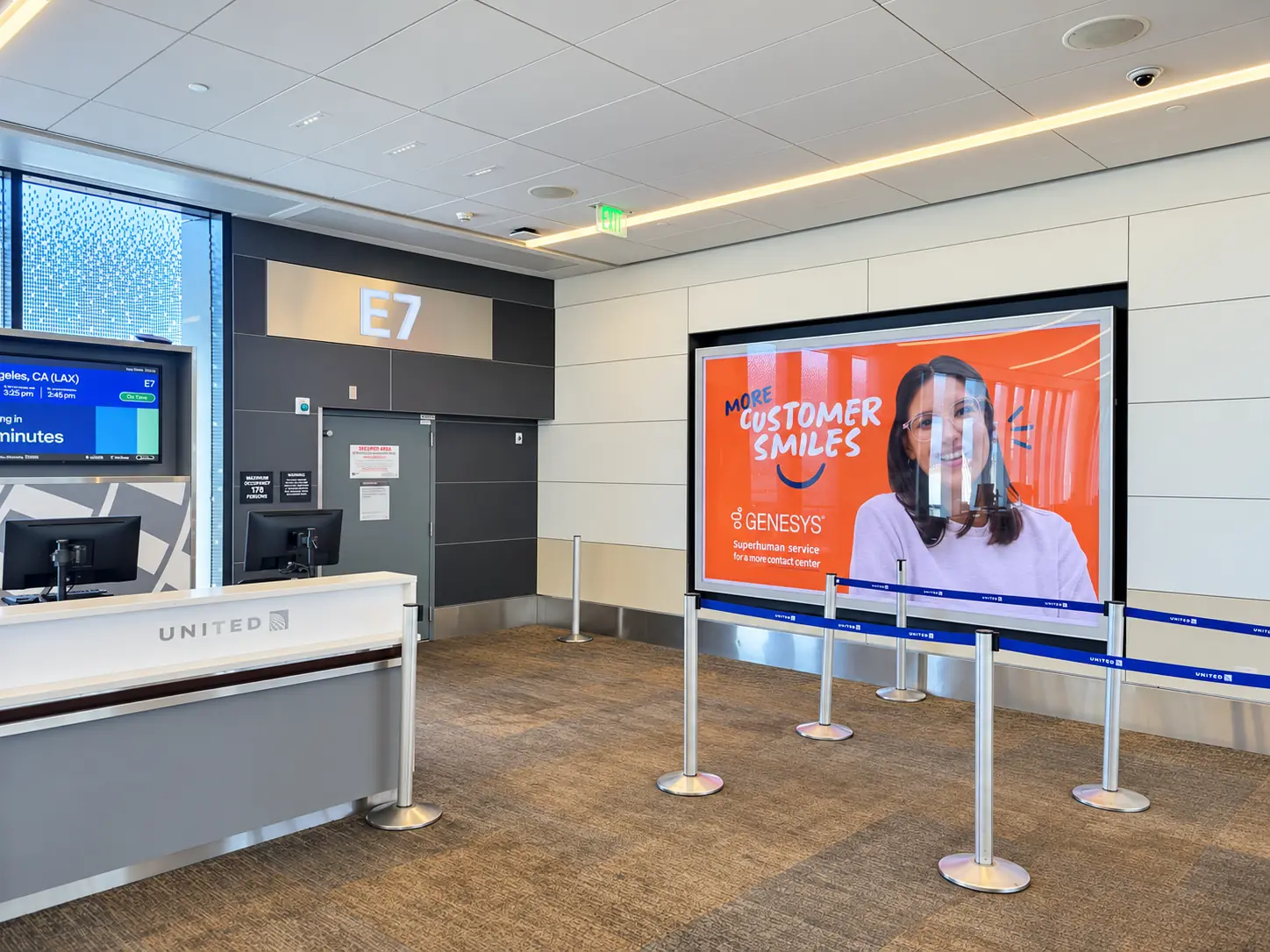
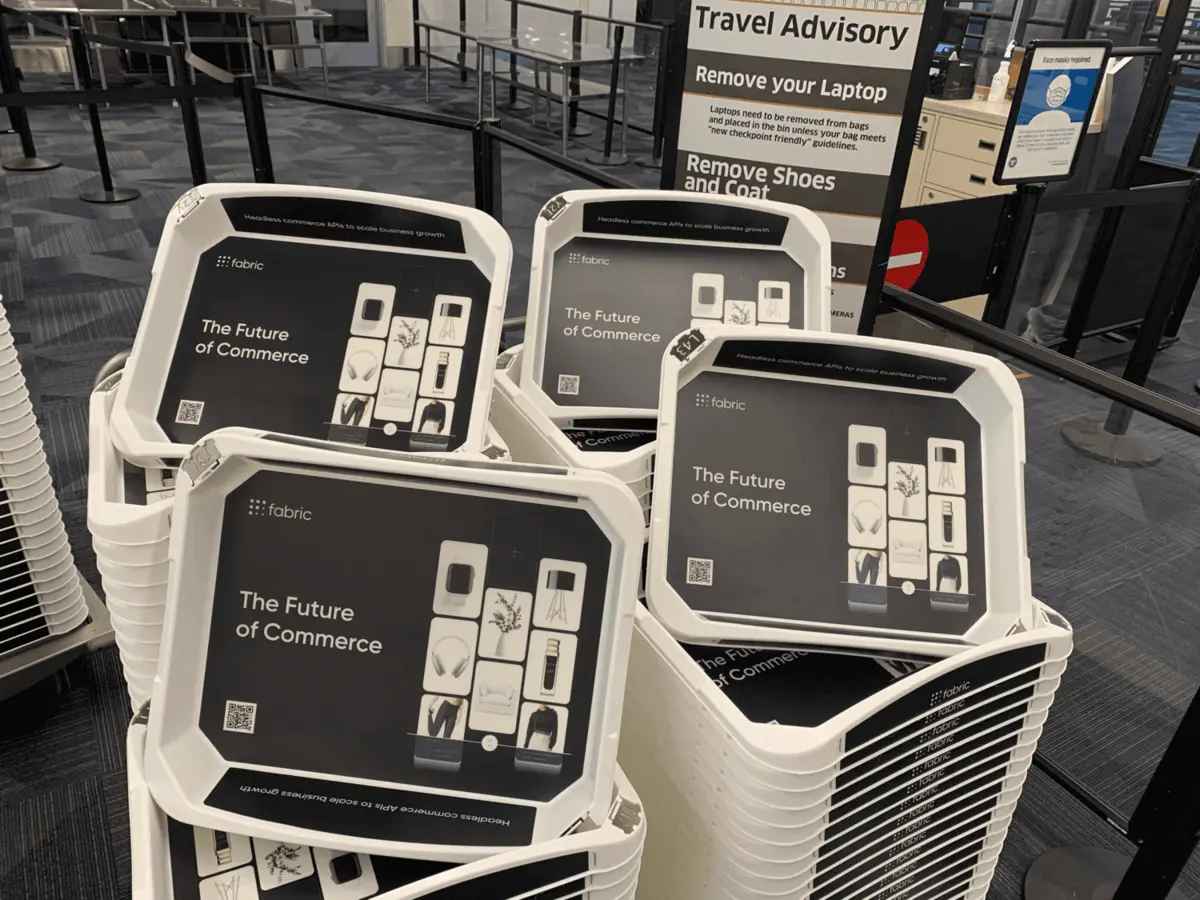
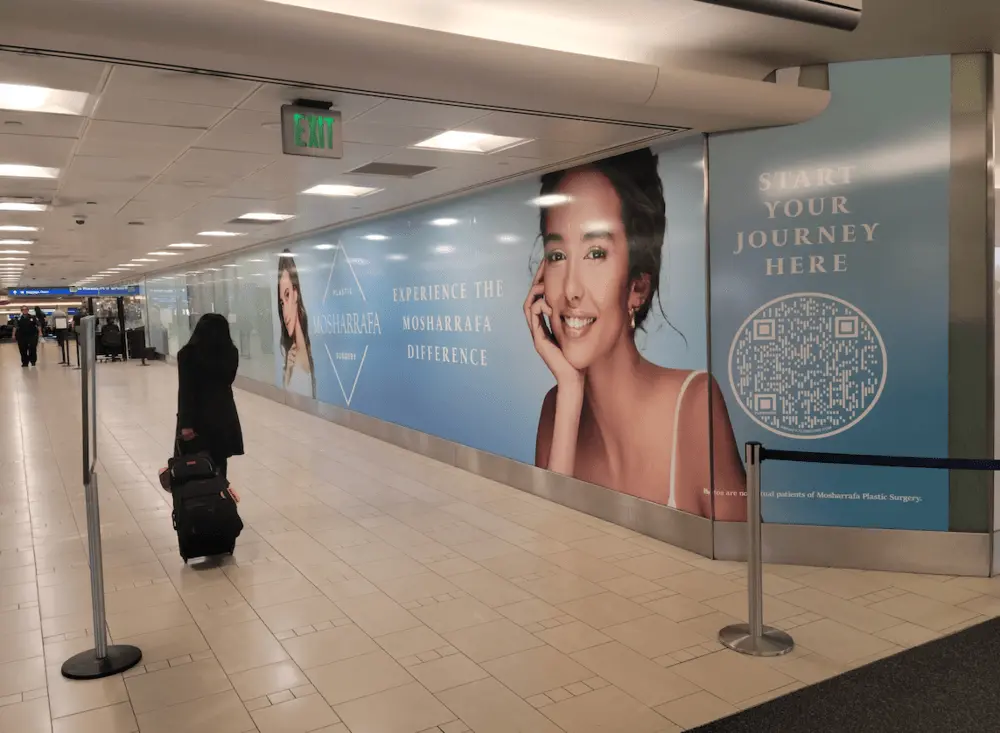
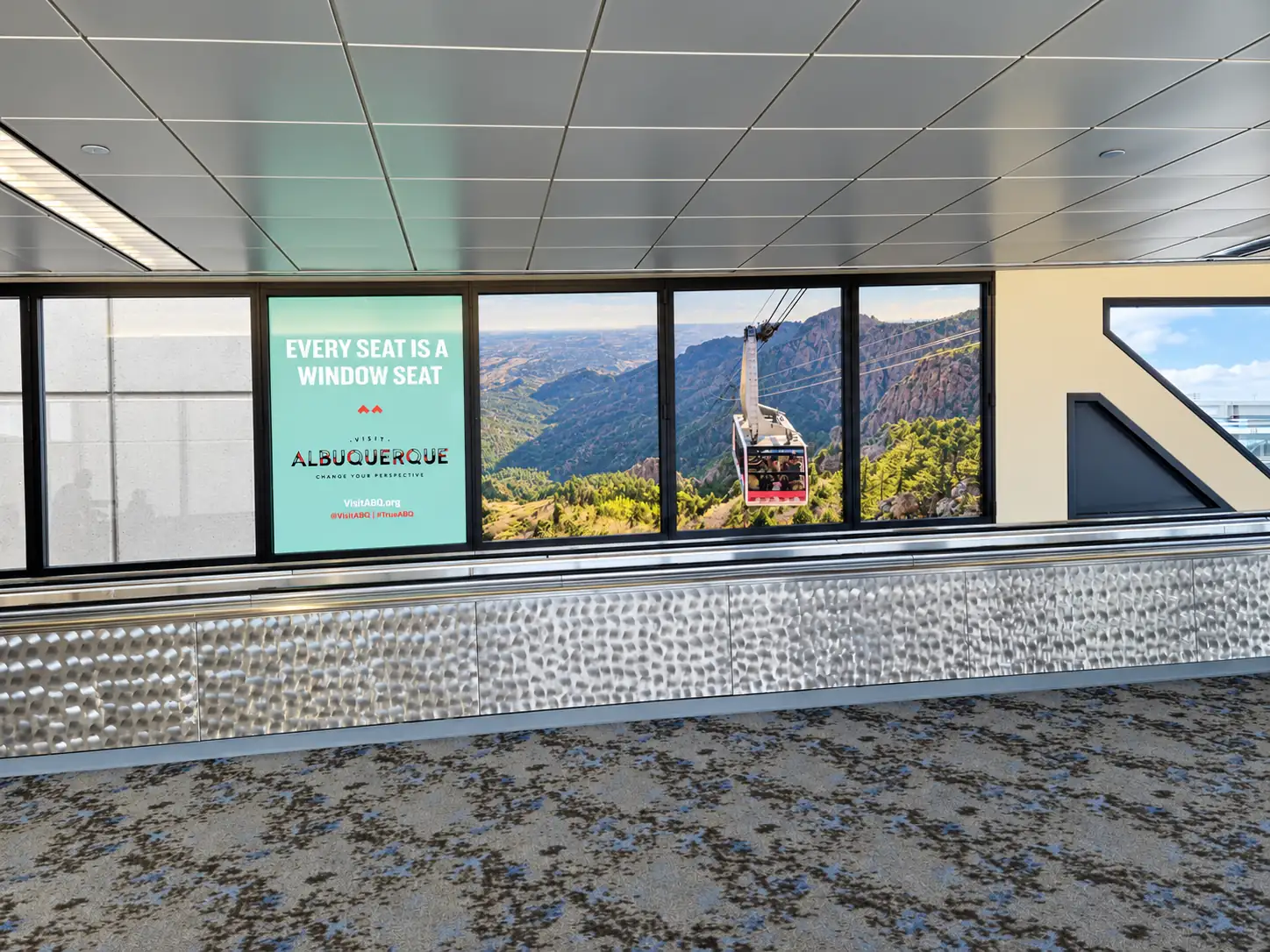
Airport advertising in practice, photographed across many airports. Availability at IAH varies by format.

Real brands. Real campaigns.

Which brands have run airport campaigns
with EAM Advertising?

Campaigns across several countries and media owners, each bought through one contract. Swipe or use the arrows for the markets, the scope, and the result.

“EAM made a nationwide airport campaign feel much easier to manage. The team was responsive, organized, and always on top of the details. They helped us make smart decisions with the budget, kept everything moving, and ultimately delivered exactly what we were looking for.”

Chief Marketing OfficerFortinet · nationwide airport campaign

These examples show past EAM campaigns—not a minimum campaign size, a forecast, or a guarantee of results. One-airport briefs are welcome, too.

Cost

What does Houston airport
advertising cost?

$25,000–$120,000 for a single unit or network per four-week period. $75,000–$200,000 for a two- or three-unit package per period. North of $240,000 for full-airport digital domination (88 screens on the current kit) per period. Rates are for space. Production and installation on static units are priced separately at quote. Those are planning ranges, not a rate card.

Sold in four-week periodsAn energy week still sits inside the four-week block that contains it, unless a shorter unit is released at quote.

Everything on the January 2026 proposal face is quoted on a four-week buying unit. That is the natural fit for a branding brief: you buy periods, not days. An energy-week brief that only needs show week still pays for the four-week block that contains it unless a shorter unit is released at quote time.

What a budget buys at IAH

Planning ranges per four-week period. Pick the one closest to your brief and we’ll build the plan from it.

$25,000–$120,000

A single unit or network

What it is
One placement for four weeks: a Terminal C claim or Club banner, the funnel LEDs, or the gate-hold charging network
For
A focused United or mixed-domestic presence
Plan at this budget
$75,000–$200,000

A two- or three-unit package

What it is
Two or three placements for four weeks, usually Terminal C static plus one digital network
For
Always-on energy and corporate branding, or a period that covers CERAWeek or OTC
Plan at this budget
$240,000 and up

Full-airport digital domination

What it is
The full-airport digital network on the current kit, cited as 88 screens
For
Hub-network frequency, knowing a share of delivery never enters Houston
Plan at this budget

These are planning ranges, not packages or a rate card. Actual plans depend on the terminal, the period, and what is open when you book.

Contract realitiesHolds, cancellation, and proof of posting are set at contract. Creative deadlines follow the hub rule.

Buying unit: four weeks. Rates shown as net space. Production and installation on static units are priced separately at quote. Hold expiry, cancellation, proof-of-posting photo terms, and any annual-contract discount are set in the quote and written into the contract. Digital creative is due 14–18 business days before start; static creative is due 21–28 days before start. Competitive separation may be possible, but it isn't guaranteed; ask when booking and write it into the contract. Creative is subject to airport authority approval.

What this page will not publishUnit rates and week-specific quotes come back as a quote, not on this page.

Unit-level rates, loop-position premiums, and week-specific quotes. Those numbers move with availability and with the period. What you can plan against: a four-week buying unit; $25,000–$120,000 for a single placement; $75,000–$200,000 for a two- or three-unit package; north of $240,000 for full-airport digital domination. Specific units and periods come back as a quote.

Compare all 6 units in one tableTerminal, where, type, spot, best for
IAH placements on the current kit
UnitTerminalsWhere it sitsTypeYour spotBest for
Baggage-claim banner packageTerminal CUnder the claim information boards, either side of the info booth, Terminal CStatic, 2 banners, about 65.5 in × 224 inFull facePrimary United domestic arrival read for people entering Houston
United Club–adjacent banner, South RetailTerminal CNext to the United Club, Terminal C South RetailStatic, 1 banner; size not stated on the kitFull faceAffluent United departures and arrivals with retail dwell
United Club–adjacent banner, North RetailTerminal COutside the United Club, Terminal C North RetailStatic, 1 banner; size not stated on the kitFull faceThe same affluent United path on the north retail side
Large funnel LED networkTerminals A, B, C, and ETicketing, TSA, and other high-dwell funnel zonesDigital, 8 large LED screens, various sizes10-second spot in a 60-second loopDeparture frequency across United and the mixed domestics
Gate-hold charging-station networkTerminals A, C, and DDouble-sided screens in gate holdsDigital, 44 screens, about 32 in10-second spot in a 60-second loopHigh-dwell departures and connections, including international D
Full-airport digital networkTerminals A, B, C, and DArrivals, departures, and major gate holdsDigital network; the kit cites 88 screens and, in one line, 69 — confirm the live count10-second spot in a 60-second loopDomination-scale frequency, including connectors who never enter Houston

Timing

When should you buy IAH,
and how far ahead?

For a branding buy, the resident energy, Medical Center, and corporate base matters more than any single week. CERAWeek, OTC, and the holidays thicken United terminals. Hold those periods 3–5 months out. Standard always-on periods are often workable at 6–10 weeks.

Dates checked October 2026.

Houston periods and what they mean for the buy
EventTimingWho arrivesWhat it means for the buy
Always-on energy, corporate, and Medical CenterYear-roundResidents, weekly United flyers, inbound partnersThe branding spine. Stack four-week periods. Weight Terminal C Club and claim.
Holiday and winter corporate travelLate November through early JanuaryResidents, visiting family, year-end corporateFour-week periods covering Thanksgiving through New Year. Arrival and departure both work.
CERAWeek by S&P GlobalMarch 8–12, 2027, HoustonEnergy CEOs, policymakers, technology and finance leadersA short overlay on the energy base. United Terminals B, C, and E. Book the four-week period that covers the week.
OTC and URTeCMay 3–5, 2027, NRG CenterOffshore and unconventional energy operators, suppliers, technologistsAn energy inbound overlay on the same United spine. Do not rebuild the annual plan from OTC alone.
Spring energy clusterFebruary–May patternIndustry plus the resident mixAn efficient window to thicken always-on before the summer shoulder.
Summer shoulderJune through early SeptemberResidents; a lighter visitor mix outside special eventsAn efficient always-on window. Confirm any construction impacts on C and E.
Houston Livestock Show and RodeoMarch 2–21, 2027, NRG Park (World’s Championship Bar-B-Que Contest February 25–27)Local and regional leisure, plus corporate hospitalityA consumer and hospitality overlay in the same four-week period as CERAWeek; twenty days of nightly rodeo and concerts.
EAM's takeBuy the United and energy base first. A conference week is weight, not the strategy.

The mistake at IAH is buying one energy week and calling it a Houston strategy — or copying a Hobby Southwest brief onto Terminal C. CERAWeek and OTC fill hotel rooms for a few days. They do not replace the Energy Corridor employee who flies every month. Brands that treat IAH like an events-only market overpay for a peak and miss the audience that lives here. Buy four-week periods against the United, energy, and Medical Center base first. Add the conference week as weight when the brief names that audience. Keep DFW and Hobby on their own briefs.

How far ahead should you book?

Energy weeks (CERAWeek, OTC) and holiday periods: hold 3–5 months out. Standard always-on periods: 6–10 weeks is often enough. Confirm windows at quote against a real IAH buy. The kit does not publish a separate event-week rate card. The premium shows up as availability pressure on Terminal C claim banners, Club-adjacent faces, and the large funnel LEDs.

Peak periods sell the United path firstClaim banners, Club statics, and funnel LEDs go first around CERAWeek, OTC, and the holidays.

The proposal shows flat four-week net rates, not a printed event multiplier. The practical energy-season premium is availability. Terminal C statics and the best digital networks sell first when CERAWeek and OTC overlap corporate travel. Multi-period bookings protect presence through the spring cluster. Single peak periods take what is left.

Booking windows at IAH
TierExamplesHold byWhat sells firstPricing character
PeakCERAWeek week; OTC week; Thanksgiving through New Year3–5 monthsTerminal C claim banners, Club-adjacent statics, large funnel LEDsOpen four-week rates; contested United inventory
HighBroader February–May energy and corporate season; major Medical Center or civic peaks once dates lock3–4 monthsTerminal C arrival path; gate-hold digital on A, C, and DStandard four-week rates; contested in United terminals
StandardSummer shoulder; quiet mid-weeks outside the energy cluster6–10 weeksMost networks and static faces openStandard four-week rates; the window to start always-on before spring

Ready to plan?

Start your IAH plan.
Send the brief.

Tell us who you need to reach, where, and when. We come back with current availability at every airport in the plan and a recommended mix.

Airports, start date and duration, campaign goal, budget range, and anything else you can share. A few lines is plenty.

We come back with current availability and a recommended mix.

Placement

Where should your ads run
inside IAH?

In the terminal your audience flies, along the path they walk. United-heavy energy and corporate briefs center Terminals B, C, and E, with Terminal C claim and Club-adjacent faces as the branding spine on this kit. Mixed-domestic briefs add Terminal A. International inbound centers D and E reclaim after inspection.

The IAH arrival and departure sequence
StepZone and unitsWhat the passenger is doingPriority
1. Off the plane, United hubGate-hold charging screens; the move through Terminal C or EWalking to a connection or to the exitMedium for origin-and-destination; high for connecting-audience briefs
2. Toward baggage claimTerminal C claim approach and the info-booth corridorDescending to claim, scanning for bags and ridesHighest for visitor and destination brands on United domestic
3. Baggage claim dwellTerminal C claim banner package, both sides of the info boothWaiting for bags and deciding ground transportHighest for arrival-moment services; strong for hospitality and healthcare
4. International reclaim and curbPublic areas after inspection on D and E pathsClearing customs, meeting greeters, booking the rideHigh for international origin-and-destination; the last read before the city
Departure sideClub-adjacent South and North retail statics; funnel LEDs at ticketing and TSA; gate-hold digitalCheck-in, Club, security, and the gate waitHigh for resident, recruiting, university, financial, and energy brands
Terminal C is the static heartClaim banners and Club-adjacent faces are the always-on United read.

Arrivals move to baggage claim under the information boards. The two-banner static package sits on that path. Departures and connections move through South and North retail past the United Clubs. Club-adjacent banners catch affluent dwell. This is the kit’s static heart and the natural always-on read for energy and corporate brands.

B and E complete United; A and D complete the restE is United international. A is the non-United domestic mix. D is foreign-flag.

Terminals B and E complete United coverage. E carries international United. Large funnel LEDs in the kit include E. Confirm the federal inspection path versus public claim for international arrivals at contract. Terminal A is American, Delta, Spirit, and the non-United domestic mix. Terminal D is foreign-flag international. Gate-hold charging screens on the A, C, and D network reach both without buying every face in C.

Skyway and Subway link all five terminals, airside and landside. Useful when the brief needs passengers changing buildings. Not a substitute for knowing which terminal the airline uses.

Hub connectors are not the cityGate-hold units reach people who may never claim a bag in Houston.

IAH is a true connecting hub, not an origin-and-destination airport alone. United banks domestic, Latin America, and long-haul traffic through Terminals B, C, and E. Concourse and gate-hold units reach everyone on those concourses, including connectors who never claim a bag in Houston. Baggage claim, meeters and greeters, and the curb reach people entering the metro. Airline and hub-network briefs can live airside. Hotel, destination, and people-actually-in-Houston briefs must weight the origin-and-destination path.

Why this airport

Why do brands advertise at
George Bush Intercontinental (IAH)?

Because Houston’s energy, Medical Center, and corporate workforce — and the United hub they fly — live at Bush, not at Hobby. About 48 million passengers a year move through five terminals at IAH. Brands that need the people who work the Energy Corridor, staff the Texas Medical Center, and run Houston’s industrial base buy Bush continuously, then thicken the buy when energy weeks pack the city.

A United hub and an origin city at onceTerminal C reaches the affluent United flyer without buying every network in A.

IAH is both a hometown United hub and a large origin-and-destination airport for the metro. United carries the majority of IAH’s commercial traffic. Terminals B, C, and E carry the hub heart. Terminal C holds the Clubs, South and North retail, and the domestic claim path the static program leans on.

The curb is the Energy Corridor and the Medical CenterHobby is a real Southwest airport. It is not this page’s spine.

What makes the market worth an always-on flight is who lives and works on the other side of the curb. The Energy Corridor and downtown energy headquarters, Texas Medical Center, port and logistics employers, and the university systems recruit, serve patients, open accounts, and fly weekly — and they leave through Bush. Hobby is useful for Southwest-weighted leisure briefs. DFW is American’s North Texas story on its own page.

The calendar thickens the same building. CERAWeek and the Offshore Technology Conference pull energy decision-makers into Houston for defined weeks. Holiday and winter corporate travel fill the United terminals. A branding buy treats those peaks as weight, not as the reason to be in the market.

Audience

Who actually flies
through IAH?

About 48 million passengers in 2025, heavily United. Terminals B, C, and E carry the hub. Terminal A carries mixed domestics. Terminals D and E carry the international mix. Hobby across town takes the Southwest-heavy close-in domestic share, about 14 million of the 62 million system total. The useful audience for a branding buy is the Houston energy, Medical Center, and corporate resident, and the inbound visitor who actually enters the city.

IAH terminals, traffic, and airlines
TerminalRoleAirlines (confirm at contract)What it means for the buy
Terminal AMixed domesticsAmerican, Delta, Spirit, Frontier, Alaska, Air Canada, and others as publishedNeeded when the brief names those carriers, or when a full-airport plan requires the non-United domestic mix
Terminal BUnited regional and Express emphasisUnited and United Express as assignedPart of the United hub spine. Pair with C and E for United coverage.
Terminal CUnited domestic hub heartUnited; United Clubs; South and North retailClaim banners and Club-adjacent statics live here. Highest affluent United dwell for branding.
Terminal DInternational and foreign-flag coreAeromexico, Air France, British Airways, Emirates, KLM, Lufthansa, Qatar, Turkish, Volaris, and others as publishedInternational origin-and-destination and partner flows. Gate-hold digital on A, C, and D reaches D.
Terminal EUnited internationalUnited international; Polaris and Club presence as publishedLong-haul United departures and arrivals. Funnel LEDs in the kit include E. Confirm claim versus the inspection path.
International is a record, not a separate airport12.4 million international passengers in 2025, about 26% of IAH.

Houston Airports reported a 62 million system total for 2025: IAH about 48 million and HOU about 14 million. International passengers at Bush were 12.4 million. Public reclaim and the curb after inspection are the arrival read. Gate holds are the departure read.

Business travelers in an airport terminal

Energy, Medical Center, and corporate Houston (year-round)

Energy Corridor and downtown energy employers, Texas Medical Center systems, port and industrial logistics, professional services, and the university base. They fly weekly on United and return through the same terminals. This is the audience for recruiting, healthcare, financial, and business-to-business presence. Departure-side and Club-adjacent weight in Terminal C reaches them with dwell. Full United coverage adds B and E.

International travelers in an airport arrivals hall

International and Latin America visitors (D and E)

Record international volume at Bush in 2025. Useful for inbound destination, telecom, banking, and energy-partner brands. Public reclaim and the curb after inspection are the arrival read. Gate holds are the departure read.

Conference travelers in an airport terminal

United hub connectors (airside)

A material share of United traffic is connecting. Gate-hold charging screens and concourse digital reach people who may never enter Houston. Use airside for airline, network, and always-on brand frequency. Do not mistake that delivery for local reach.

Students and families in an airport terminal

Students and universities (semester calendar)

Rice, University of Houston, Texas Southern, and the Medical Center training pipeline. Education brands EAM has placed in airports include Wharton, BYU, the University of Michigan, the University of Pittsburgh, and UT Dallas. Weight August, January, and commencement on departure-side inventory.

Who advertises

What kinds of brands advertise at IAH,
and what are they trying to do?

Energy and industrial employers recruiting the corridor; healthcare brands against the Medical Center; financial and wealth brands on the United departure side; universities; destination and hospitality greeting visitors who actually enter the city; arrival-moment services at claim; business-to-business brands against the corporate flyer; and short overlays for CERAWeek and OTC. Always-on rows lead. Energy-week rows follow.

How brands use IAH, by objective
ObjectiveWho buys itWho it reachesWhat the buy usually looks like
Recruiting and employer brandEnergy operators and suppliers, Medical Center systems, industrials, professional servicesHouston residents departing and returning on UnitedDeparture-side and Club-adjacent Terminal C; four-week periods year-round, thickened in spring
Healthcare and specialty careTexas Medical Center systems, specialty clinics, medical travelResidents and inbound patients and familiesClaim path for arrivals; departure path for residents; always-on
Financial and wealthBanks, wealth managers, fintech, energy financeAffluent United flyers with Club and retail dwellTerminal C Club-adjacent static plus gate-hold digital; multi-period flights
Universities and executive educationLocal and out-of-state programs; executive certificatesStudents, parents, alumni, working professionalsDeparture-side weight in August, January, and commencement
Account-based and business-to-businessEnterprise software, cybersecurity, industrial suppliers selling into energyBusiness travelers on United through B, C, and EAlways-on United digital plus a CERAWeek or OTC period overlay
Energy-week inboundExhibitors, operators, technology suppliers, economic-development brandsIndustry arriving for CERAWeek or OTC, and the energy workforce year-roundThe four-week period covering the show dates; Terminal C plus United digital
Destination, hospitality, and arrival servicesVisit Houston, hotels, attractions, rideshare, rental cars, connectivityOrigin-and-destination visitors entering the metroTerminal C claim and the public reclaim path; winter and energy-season weight
Direction follows the objectiveClaim for people entering Houston. Club and gate-hold for the weekly flyer and the connector.

The corridor and the Medical Center make IAH a recruiting and business-to-business market every week. Departure-side and Club-adjacent inventory is not a leftover. For these buyers it is the point. People actually in Houston: overweight Terminal C claim, public reclaim, and the curb. United’s connecting network: B, C, and E gate-hold frequency is fine, knowing a share of impressions never enter the city.

CERAWeek and OTC turn Houston’s industry into calendar peaks inside the airport those employees already use. Cover show week with a four-week period, and keep a lighter always-on flight for the workforce that stays. For Texas-region reach, Austin and Dallas/Fort Worth add state-capital and American-hub traffic, and EAM buys them as one plan when a brief needs it. That is a scoping conversation, not a reason to send a Houston buyer somewhere else.

How EAM works

How does EAM run
an IAH campaign?

One call, one plan, one contract. We follow up to learn who you need to reach and the objective, then come back with current availability and a recommended mix.

  1. Step 01

    Scope the week.

    Always-on versus an energy-week or holiday period; Terminal C only versus United B, C, and E versus the full airport; arrivals, departures, or both; Bush only, or part of a Houston plan that also looks at Hobby because the brief needs both doors.

    You getThe period, the terminal, and the direction

  2. Step 02

    Check avails and loop position.

    Which networks and static faces are open, how crowded the digital loops are, whether Terminal B or E construction affects a unit, and whether category separation is possible. Competitive separation may be possible, but it isn't guaranteed; ask when booking and write it into the contract.

    You getAvailability and loop crowding

  3. Step 03

    Quote the mix.

    Formats, share of voice, and a range, not a scraped rate card. After we know who you need to reach, we come back with current availability and a plan you can take inside.

    You getA range and a mix you can take inside

  4. Step 04

    Contract and traffic creative.

    Specs across every screen shape and banner size in the buy, airport authority approval, and files in on the materials date in the contract. Digital creative is due 14–18 business days before start; static creative is due 21–28 days before start.

    You getSpecs, approval, and a materials date

  5. Step 05

    Go live and close the loop.

    Confirm posting before the first arrival wave. Deliver proof of posting and play logs after the flight.

    You getProof of posting and play logs

An independent media agency

EAM Advertising is an independent airport and in-flight media agency, founded in 2015. We specialize in airport and in-flight media and nothing else, and we do not own media assets at IAH or any airport. That independence is why the recommendations hold up. We plan and buy across 125+ airports and 45+ airlines worldwide, which is the leverage and the current-availability knowledge a one-time IAH buyer does not have. Clients include Fortinet, Dynatrace, Rubrik, McGraw-Hill, and Wharton. When the strategy extends beyond Houston — a Texas roadshow with Austin and Dallas/Fort Worth, a multi-city employer-brand launch, a Latin America gateway push with Miami or Mexico City — the same relationship covers the other markets.

For agencies and consultants

Your client. Your plan.
We handle the airports.

Agencies and consultants bring EAM Advertising in as the airport specialist behind a client’s plan. The client relationship stays with you. We plan, buy, and report under NDA, and can work white-label.

Get our media kit
  • Your client stays yours.We work behind your team, not around it.
  • White-label and NDA.Plans and reporting can go out under your name.
  • One contract, one invoice.Every airport and media owner in the plan, under one set of terms.
  • Numbers before the client commits.Current availability and planning ranges at the proposal stage.

Measurement

How do you measure
an IAH campaign?

Proof of posting and digital play logs are factual. Delivered impressions are modeled. A brand-lift study is the only method that speaks to effect, and it has to be fielded before the flight. Direct pipeline attribution is not reliably available. Perception is the return a resident market can actually defend.

Measurement at IAH
MeasureWhat it actually tells youWhen to set it upConfidence
Proof of postingPhotographic confirmation that every unit ran, in the right place, for the full period.Written into the contract before signingHigh — factual
Delivered impressionsModeled audience delivery from airport traffic and unit position. An estimate, not a count of people who looked. Concourse units overweight connectors.Requested at proposal stageModerate — modeled
Digital play logsActual spot counts and share of voice on digital networks. The check on whether the loop crowding you planned against actually happened.Requested at contractingHigh — logged
Brand lift studySurvey-based awareness or perception change against a control. The only method that measures effect rather than exposure.Fielded before the flight, for a baselineModerate — needs budget and lead time
Direct attribution to pipelineNot reliably available. Airport media has no click, and the same brands run other touchpoints at the same time.Do not plan the buy around itLow — treat claims here with skepticism
A resident market can support a panelA Houston geo-fenced lift study is more meaningful than a pure convention-week panel.

Because so much of the useful IAH branding audience lives in the Houston metro and returns through United terminals, a geo-fenced brand-lift panel is more meaningful here than in a pure convention market. Energy-week flights are messier to panel and lean harder on proof of posting, play logs, and modeled delivery. Decide which audience you are buying — connector or origin-and-destination — before you decide what to measure.

The honest framing: proof of posting and play logs prove the campaign ran as bought, delivered impressions size the audience, and a lift study is the only line that speaks to effect. A vendor promising attributed pipeline from airport media is overselling. EAM contracts proof of posting and delivery reporting on every campaign as standard.

Questions

Frequently asked questions
about IAH

How much does it cost to advertise at Houston airport (IAH)?

A single unit or network runs $25,000–$120,000 per four-week period, depending on format and location. A two- or three-unit package runs $75,000–$200,000 per period. Full-airport digital domination (88 screens on the current kit) runs north of $240,000 per period. Production and installation on static units are priced separately at quote. Those are planning ranges; specific units and periods are quoted against current availability.

How is IAH airport advertising sold?

In four-week periods on the current proposal face. Digital networks are shown as ten-second spots in a sixty-second loop, about one of six if the loop is full. Static Terminal C claim and Club-adjacent banners are full-face for the period. Digital creative is due 14–18 business days before start; static creative is due 21–28 days before start. Competitive separation may be possible, but it isn't guaranteed; ask when booking and write it into the contract.

Which terminal should I advertise in at IAH?

Terminal C for most United domestic and affluent Club dwell. It is the static heart of the current kit. Add Terminals B and E for full United coverage, Terminal A for American, Delta, Spirit, and the mixed domestics, and Terminal D for foreign-flag international. A full-airport digital plan spans A, B, C, and D, and funnel LEDs into E. Confirm airline assignments against the current airport map at contract.

Can I reach connecting passengers at IAH?

Yes, on United concourse and gate-hold units in Terminals B, C, and E, and on multi-terminal digital networks. Those passengers may never claim a bag in Houston. For people actually entering the metro, weight Terminal C claim, public reclaim after international inspection, and the curb.

How is IAH different from Hobby (HOU)?

Bush is the United hub and international gateway: about 48 million passengers, Energy Corridor and Medical Center traffic, Latin America and long-haul. Hobby is the close-in Southwest-heavy domestic airport: about 14 million. Branding buyers who need energy, corporate, or United weight IAH. Southwest-leisure briefs often land at HOU. EAM can scope both when a brief needs Houston’s two doors.

How far in advance should I book IAH for energy season or holidays?

CERAWeek, OTC, and holiday periods: hold three to five months out. Standard always-on starts are often workable inside six to ten weeks. Confirm windows at quote against a real IAH buy. Scope multi-period flights that cover the spring energy cluster before Terminal C statics sell.

Is IAH good for business-to-business advertising?

Yes, as an always-on market against Houston’s energy, industrial, and Medical Center employer base, with CERAWeek and OTC as the peaks that concentrate the industry. It is not a long events calendar. Show-only briefs buy the four-week period that contains the show. Workforce briefs buy periods through the year.

Do universities advertise at IAH?

Yes. Out-of-state recruiting, executive programs, and alumni campaigns. Houston’s universities and the Medical Center training pipeline make the metro a recruiting market every semester. Education brands EAM has placed in airports include Wharton, BYU, the University of Michigan, the University of Pittsburgh, and UT Dallas. Weight late August, mid-January, and May.

When is creative due for an IAH flight?

Digital creative is due 14–18 business days before start; static creative is due 21–28 days before start. Expect multiple specs in a mixed buy: wide claim banners, Club-adjacent statics, portrait gate-hold screens, and large funnel LEDs.

What does EAM handle on an IAH campaign?

Everything after the objective. We check what's open for the week, which loops are crowded and which units will sell out, and where on the arrival path your audience actually walks. We recommend the mix, secure the units, traffic the creative through airport approval, confirm posting on day one, and deliver proof of posting and play logs after. If IAH is one market in a larger plan, the same relationship covers the others.

Does IAH publish competitive separation?

Competitive separation may be possible, but it isn't guaranteed; ask when booking and write it into the contract. Separation is written into the contract where it is granted.

How many passengers use IAH?

About 48 million passengers in 2025, inside a Houston Airports system of about 62 million with Hobby, and a record 12.4 million international at Bush. United carries the majority of them.

Independent airport advertising media agency. Est. 2015.

One airport or twelve.
Start with the media kit.

Send your work email for the media kit: formats, planning ranges, and how EAM works. We’ll follow up to learn who you need to reach and when, then come back with current availability and a recommended mix.

We’ll follow up to learn who you need to reach and when.

Independent since 2015 · 125+ airports · 40+ media vendors

Sources

Sources and
methodology

  1. Passenger and cargo totals: Houston Airports newsroom. System 62 million passengers in 2025 (IAH about 48 million, HOU about 14 million). IAH international 12.4 million. https://www.fly2houston.com/airport-business/newsroom/articles/item/houston-airports-closes-2025-with-strong-international-growth-record-cargo/
  2. Houston Airports council and economic-development briefings: IAH about 48 million including 12.4 million international; HOU about 14 million; Terminal E ticketing lobby; Terminal B transformation. https://cohips.houstontx.gov/council/committees/econdev/20260122/HAS-Presentation.pdf
  3. Carrier mix is not published as a hard share on this page. A secondary compilation put mainline United near 57.8% of 2025 enplanements. Confirm against Houston Airports or DOT primary tables before using a percentage. https://dwuconsulting.com/info/data/t100/airport/IAH
  4. Terminal roles and airline directories: fly2houston IAH maps. Assignments drift. Verify at contract. https://www.fly2houston.com/iah/airport-maps/
  5. Events: CERAWeek by S&P Global, March 8–12, 2027. OTC and URTeC, May 3–5, 2027, NRG Center. Houston Livestock Show and Rodeo, March 2–21, 2027 (rodeohouston.com).
  6. Unit descriptions, screen counts, sizes, the 10-second spot in a 60-second loop, and four-week net space ranges: January 2026 IAH media proposal on file. Unit rates are not published on this page. The finished 2026 FIFA host-city window is not a buy reason.
  7. Pricing ranges and booking windows: EAM Advertising planning and buying data, 2015–2026.