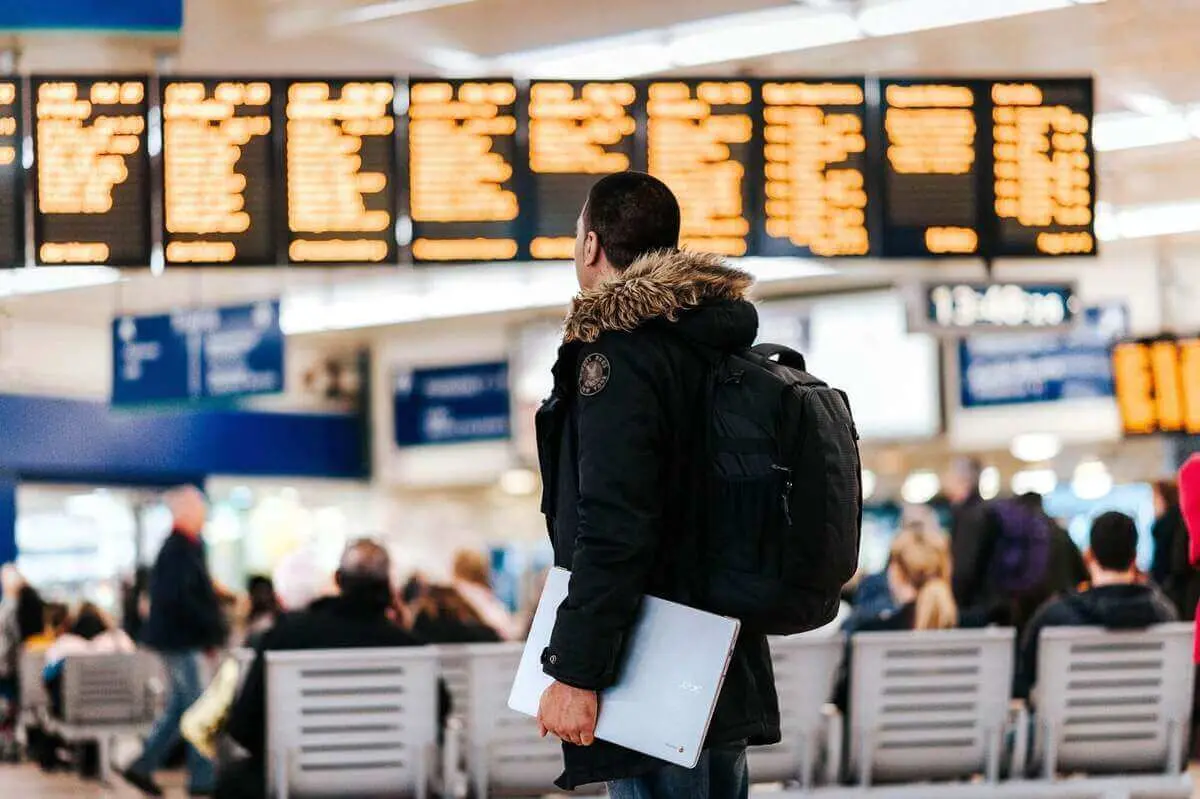
Airport advertising at John F. Kennedy International Airport (JFK) New York Meets the World Here.

About 62.6 million passengers a year: New York’s long-haul workforce and universities flying out, international visitors and inbound executives flying in, and Fashion Week, the US Open, and holiday peaks on top. Get the JFK media kit for formats, planning ranges, and booking windows.

We’ll follow up with the kit and next steps for your campaign.

  • 125+Airports worldwide
  • 40+Media vendors
  • 62.6MJFK passengers in 2025

You’re in good company

  • Thomson Reuters
  • Invest in Canada
  • Dynatrace
  • Fortinet
  • Motorola
  • BYU

At a glance

New York airport advertising
at a glance

JFK is the New York region’s primary international gateway and its busiest airport. The resident workforce and the calendar inbound share the same separate terminal buildings.

  1. 1

    JFK handled 62,629,455 passengers in 2025, reported on this page as 62.6 million. That was 1.0% below the 2024 record of 63.3 million. It is the busiest airport in the New York metro and the region’s primary international gateway. International traffic was 34.5 million, about 55% of traffic. Domestic was 28.1 million. Delta, JetBlue, and American are the three largest carriers.

  2. 2

    Five active passenger terminals (1, 4, 5, 7, and 8), linked by AirTrain. There is no shared post-security hall. Delta anchors Terminal 4. JetBlue anchors Terminal 5. American and British Airways anchor Terminal 8. Terminal 1 carries a Star Alliance–heavy international mix and is being replaced by New Terminal One, with Phase A targeted for early 2027. Terminal 6 enters inventory as it opens. Terminal 7 still hosts a mixed set while Terminal 6 is built. Airline assignment decides the buy.

  3. 3

    The always-on audience is metro New York — finance, media, tech, fashion, healthcare, and higher education — flying out and flying in. Business travel runs both directions. The New York–Newark–Jersey City metro employs about 10 million people. LaGuardia takes much of the short-haul domestic business traffic. JFK is where the long-haul trip starts and ends.

  4. 4

    The calendar thickens the same buildings. New York Fashion Week runs February 8–12, 2027, with the next September edition expected in September 2027. The US Open runs August 29–September 12, 2027. Thanksgiving through New Year contests arrival-path loops. The UN General Assembly opens September 7, 2027, with the General Debate from September 21, 2027.

  5. 5

    Planning ranges: a single unit or network runs $15,000–$350,000 per 28-day period. A two- or three-unit package runs $80,000–$500,000 per period. Multi-network or exhibit domination runs north of $500,000 per period. Production, install, and removal are extra on most static and exhibit units. Production often runs roughly $2,000–$125,000 per install cycle. Those are planning ranges, not a rate card.

  6. 6

    Inventory is sold in 28-day periods (1 period = 28 days). Digital runs 10-second spots in loops of 40, 120, or 180 seconds. Static faces and wraps are full-face. Rates are non-cancellable. Annual increases apply to multi-year agreements. Pricing is valid 30 days from proposal. Holds expire 5 business days after confirmation. Proof of posting is within 5 business days of initial posting. Digital creative is due 14–18 business days before start; static creative is due 21–28 days before start. Competitive separation may be possible, but it isn't guaranteed; ask when booking and write it into the contract. Broadcast hours are confirmed at quote.

  • 62.6MJFK passengers in 2025 (62,629,455), 1.0% below the 2024 recordPort Authority Airport Traffic Report 2025
  • 34.5MInternational passengers in 2025, about 55% of JFK trafficPort Authority Airport Traffic Report 2025
  • 28 daysBuying unit. Digital loops are 40, 120, or 180 secondsCurrent JFK media specifications

What you can run

What can you run
at JFK?

The current specifications are a terminal-by-terminal set, not one airport-wide network. Terminal 4 carries the Delta and deep-international digital and wraps. Terminal 5 carries the JetBlue tunnel and claim. Terminal 8 carries American and oneworld. Terminal 1 carries international soffits. Terminal 6 is listed as it opens. A 10-second spot is one of 4, one of 12, or one of 18 depending on the loop. No single unit reaches every terminal.

Terminal 4 · Digital

International arrivals iconic LED

Curved video wall on the exit from T4 international bag claim toward the exits

Type
1 wall, about 365 in × 120 in (2400 × 800)
Your spot
10-second spot in a 40-second loop, one of 4, about 25% share of voice
Best for
International inbound at the Delta hub

Terminal 4 · Static

International arrivals wall-wrap domination

Wall wraps flanking the T4 customs and immigration exit

Type
4 faces, mixed spans about 131–364 in
Your spot
Full face
Best for
Immersive international arrivals, paired with the iconic LED

Terminal 4 · Digital and static

Arrivals digital and domestic claim static

Six LCDs atop three domestic carousels, a head-on tension fabric, and a column-wrap pair

Type
6 × 75 in digital; tension fabric about 377 in × 127 in; 2 columns
Your spot
Digital: 10 seconds in a 180-second loop, about 6% share of voice. Static: full face
Best for
Delta domestic claim dwell, including some pre-cleared international arrivals

Terminal 4 · Digital

Premier vertical digital network

30 portrait LCDs in gate holds and walkways on Concourses A and B

Type
30 screens, about 65 in vertical (1080 × 1920)
Your spot
10-second spot in a 120-second loop, one of 12, about 8% share of voice
Best for
Frequency across Delta hub departures. Boarding banners share the screen during boarding

Terminal 4 · Digital

Video walls and retail-hall digital

Three concourse-entrance LEDs and four LED faces on two double-sided retail-hall columns

Type
Mixed spans about 115–456 in
Your spot
10-second spot in a 120-second loop, about 8% share of voice
Best for
Departure presence near retail and dining

Terminal 4 · Static and experiential

Glass wraps, exterior banner, and exhibits

Elevator glass near TSA and VIP check-in; garage roadway banner; arrivals and retail exhibit footprints

Type
2 glass faces about 116.5 in × 313 in; banner about 295 in × 481 in; exhibits about 15 ft × 15 ft to 20 ft × 50 ft
Your spot
Full face
Best for
Departure sightlines, the roadway, and brand moments. Exhibit lead is 4–6 months

Terminal 5 · Digital and static

Immersive tunnel, claim digital, and wall wraps

Two lit fabrics, an overhead escalator fabric, a full-share vertical digital, 12 carousel LCDs, and large wall wraps

Type
Tunnel package with an 86 in digital; 12 × 75 in; 2 wraps about 675 in × 124 in
Your spot
Tunnel digital is a 10-second spot in a 10-second loop (full share of voice). Claim is 10 seconds in a 180-second loop, about 6%. Wraps are full face
Best for
JetBlue arrivals and both-direction static

Terminal 8 · Digital

Premier digital and video walls

32 LCDs in gate holds and walkways, plus a large post-TSA LED

Type
32 × 75 in, plus 1 or 2 walls. One wall is shared with flight information
Your spot
10-second spot in a 120-second loop, about 8% share of voice
Best for
American, British Airways, and oneworld departures

Terminal 8 · Static

Arrivals tension fabric, claim domination, AirTrain wraps

Head-on soffit above the escalators to claim; optional full claim takeover; 14 AirTrain connector wraps

Type
Tension fabric about 397 in × 72 in; domination 28 faces; 14 AirTrain wraps
Your spot
Full face
Best for
American hub domestic arrivals and AirTrain riders

Terminal 1 · Static

Welcome-to-NYC and arrival soffit packages

Soffit fabrics in the T1 customs queue and head-on claim soffits

Type
3 plus 3 faces; spans up to about 1909 in × 82 in
Your spot
Full face
Best for
International arrivals dwell at Terminal 1

Terminal 6 · Digital

Arrivals video wall, premier digital, and claim digital

Arrivals hall video wall, a 16-screen departure network, and a 4-screen claim digital. The kit noted a second-quarter 2026 terminal timing

Type
Mixed. Confirm which faces are actually open
Your spot
10 seconds in a 120- or 180-second loop, depending on the unit
Best for
The JetBlue and partner mix as Terminal 6 opens. Confirm live before a period is held
How the loops differA 40-second loop is about 25% share of voice. A 180-second claim loop is about 6%.

Digital loops run ten-second spots. A 10-second spot in a 40-second loop is one of 4, about 25% share of voice, on the Terminal 4 international arrivals iconic LED. A 10-second spot in a 120-second loop is one of 12, about 8%. A 10-second spot in a 180-second loop is one of 18, about 6%, on claim networks. The Terminal 5 tunnel’s vertical digital runs 10 seconds in a 10-second loop, full share of voice on that screen. Static fabrics, wraps, glass wraps, and exhibits are full-face for the period.

Read the caveats before a dominationOne LED is one terminal’s exit. One wall shares the screen with flight information.

The Terminal 4 international LED is one terminal’s exit, not whole-airport coverage. Pair it with Terminal 1 soffits when the brief needs more than Delta’s international exit. Terminal 4 premier verticals carry boarding banners during boarding. The single Terminal 8 video wall shares the screen with flight information. The Terminal 4 exterior banner has a six-week lead after both approvals, and install only above 40°F with no rain or snow. Exhibits need 4–6 months, approval from the Port Authority and the terminal operator, and ambassadors on site in two daily shifts if they are used. Terminal 8 arrivals domination has an eight-week print lead; install can take more than 2 days; production is quoted separately and can run well into six figures. Elevator glass wraps carry advertiser restrictions. Terminal 6: confirm open status and live faces before locking a period.

This pack is not the whole airportThe specifications are a recommended set. Confirm anything beyond them at quote.

Static wraps, glass wraps, and exhibits are a major share of this pack. Branding plans often mix one digital network for motion and play logs with static faces for continuous presence. The pack is a recommended set from the current media specifications, not the full year-round inventory. Confirm anything beyond this set at quote.

Every airport format, with specs and lead times

The digital, static, experiential, and exterior units brands buy in airports. For JFK we plan specific units and dates against what is open at the time.

Examples

What does airport advertising
look like?

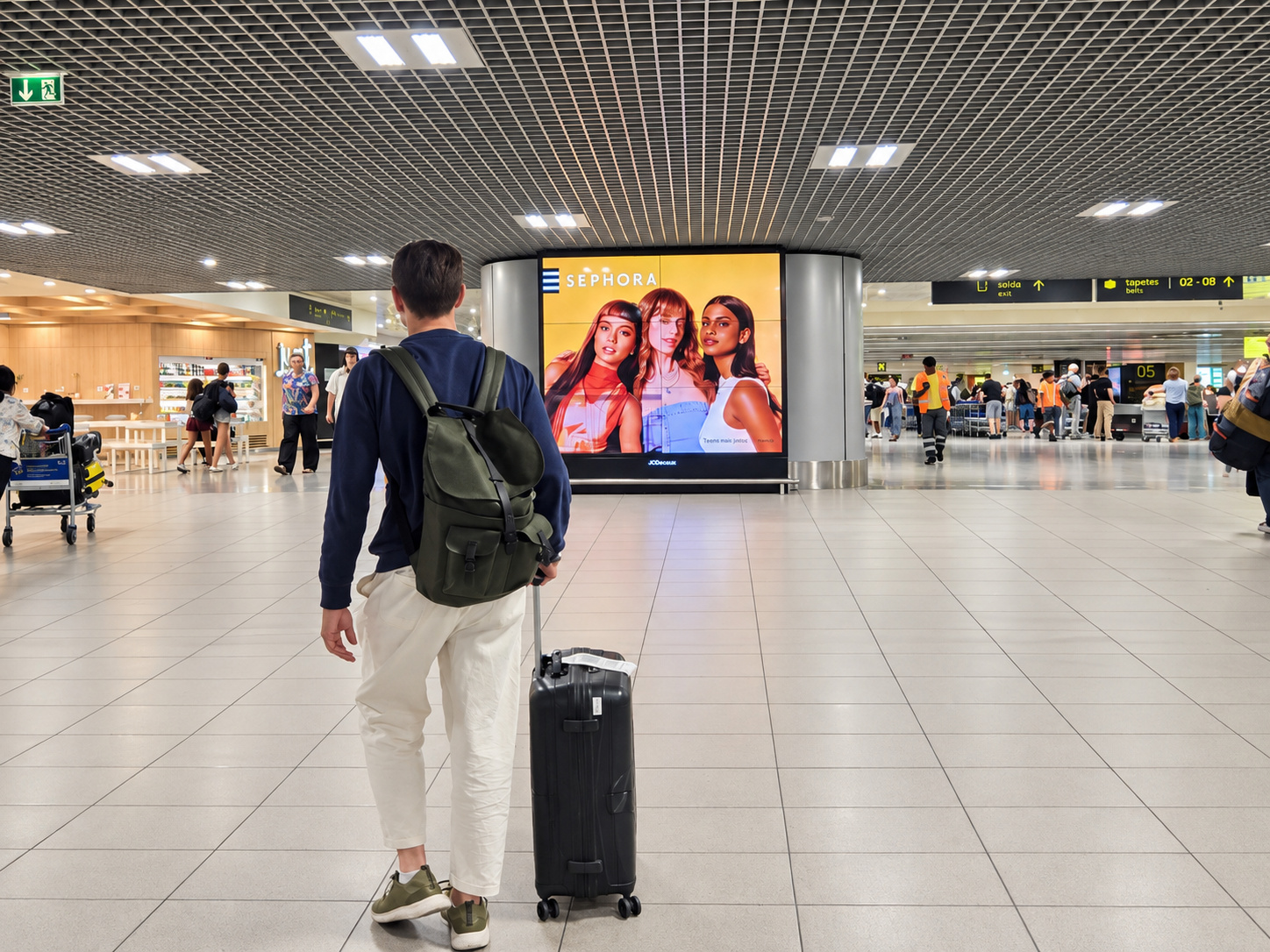
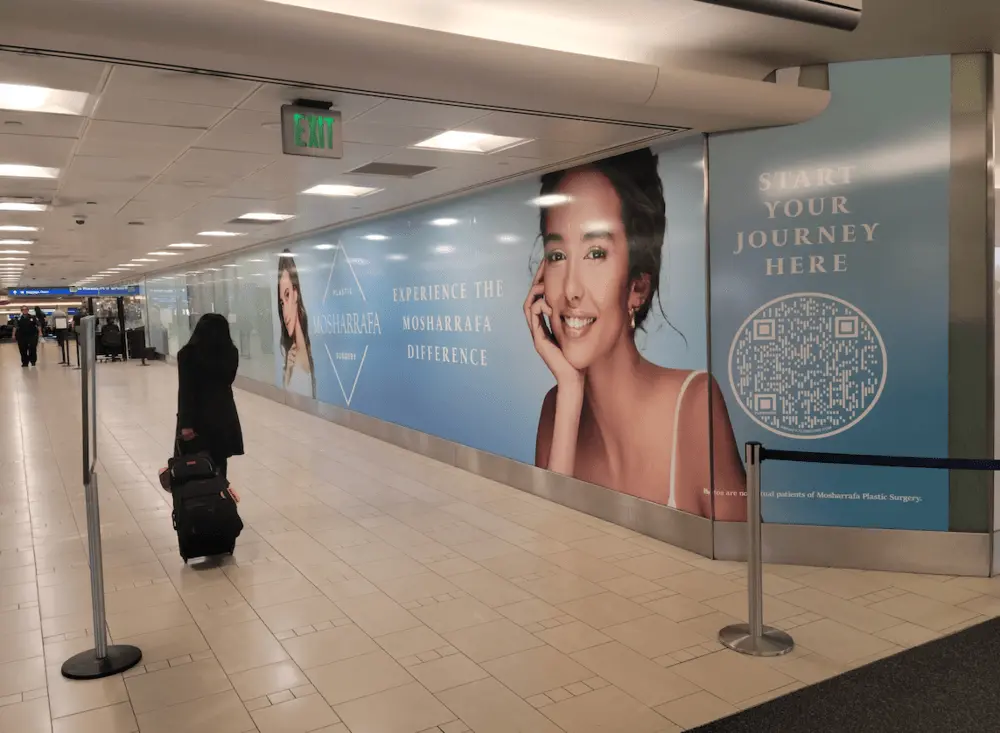
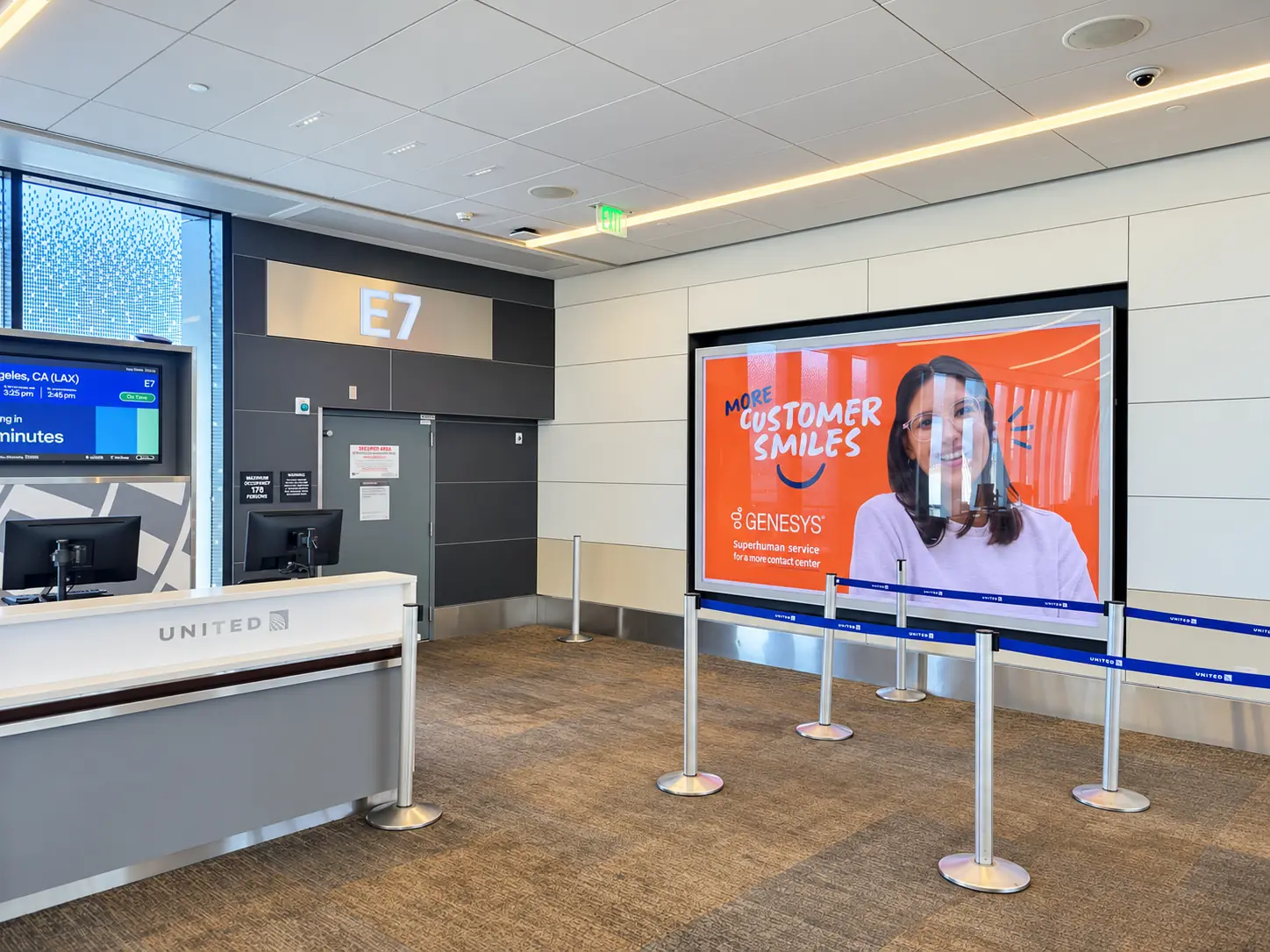
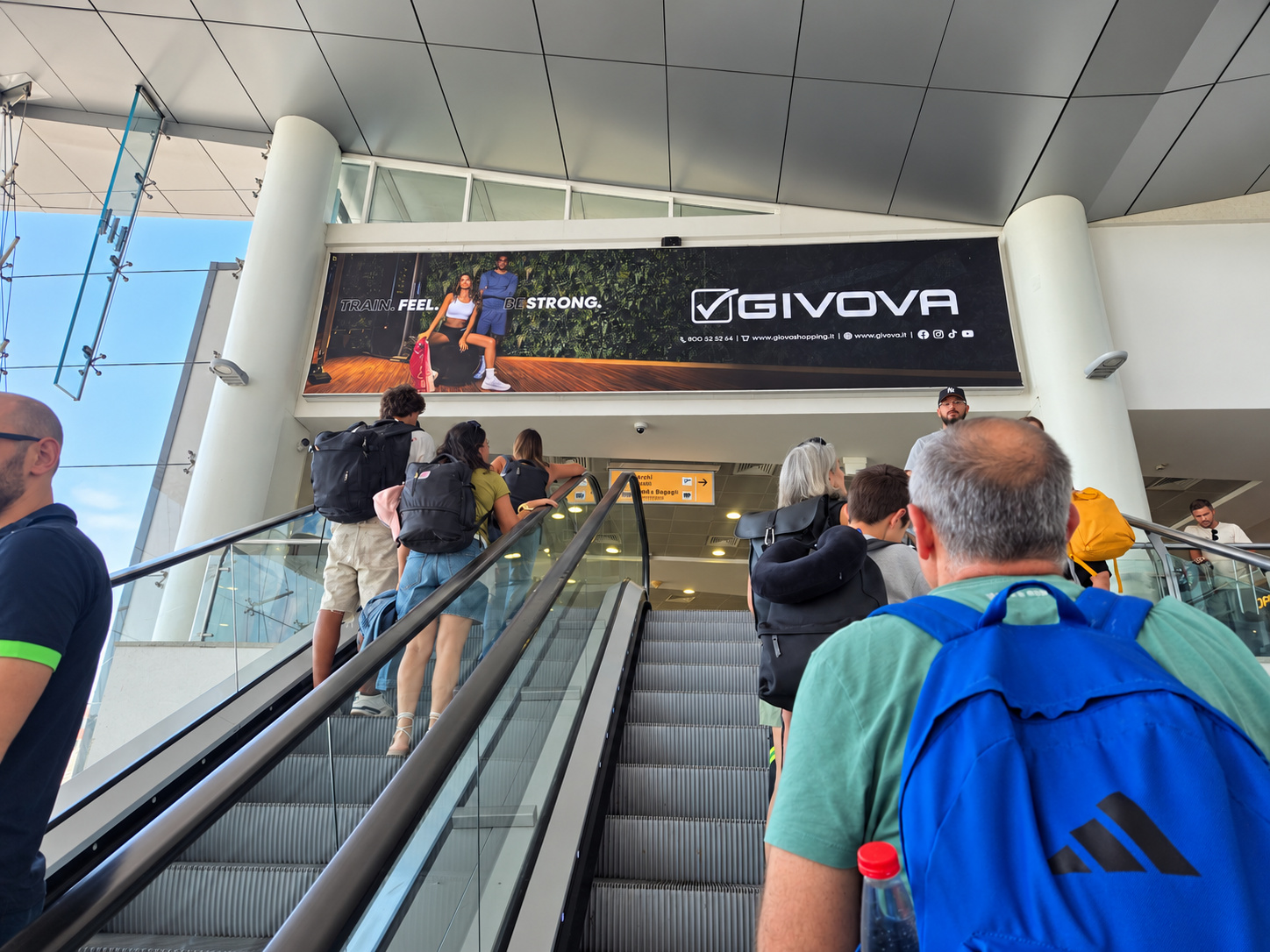
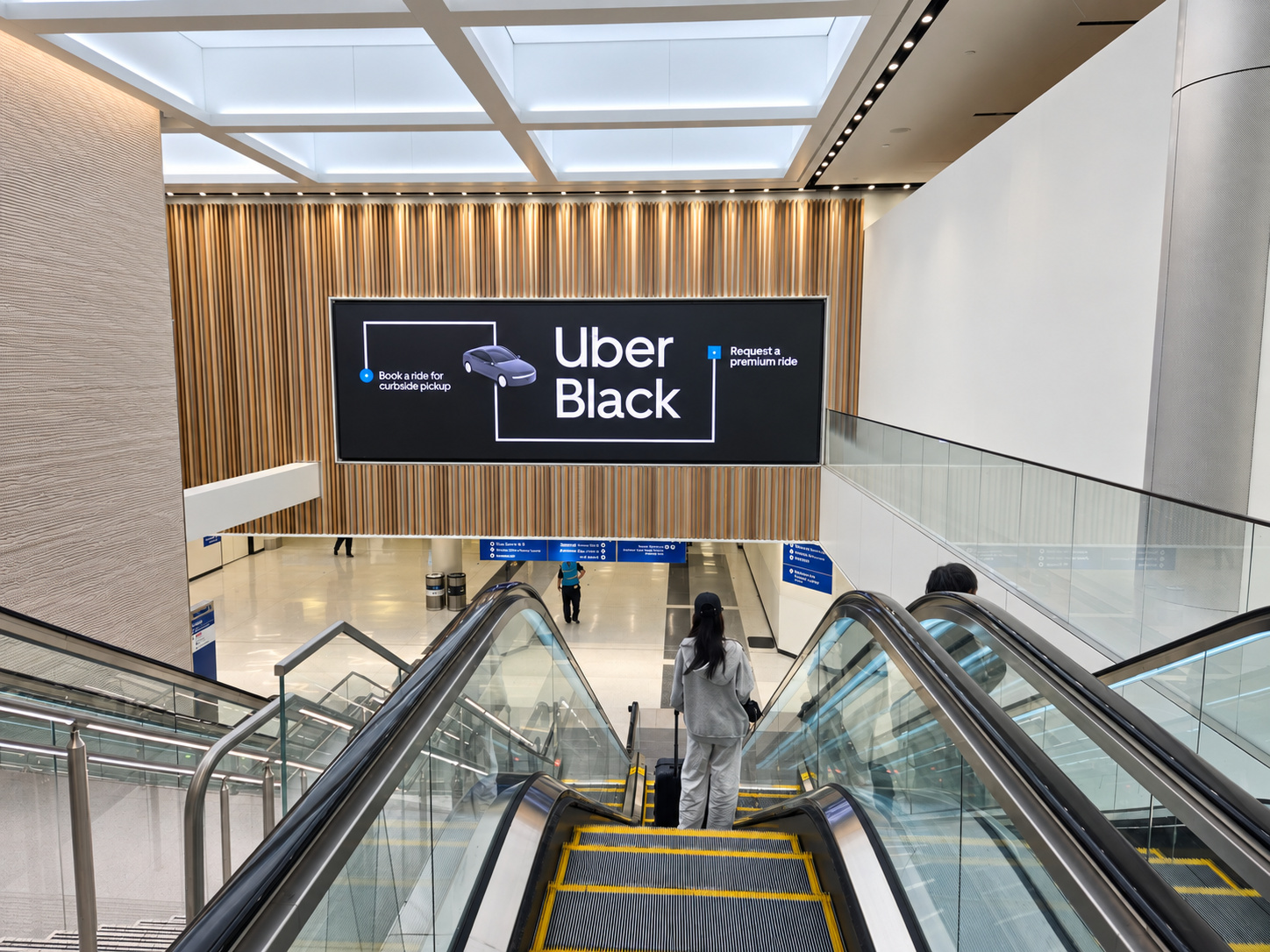
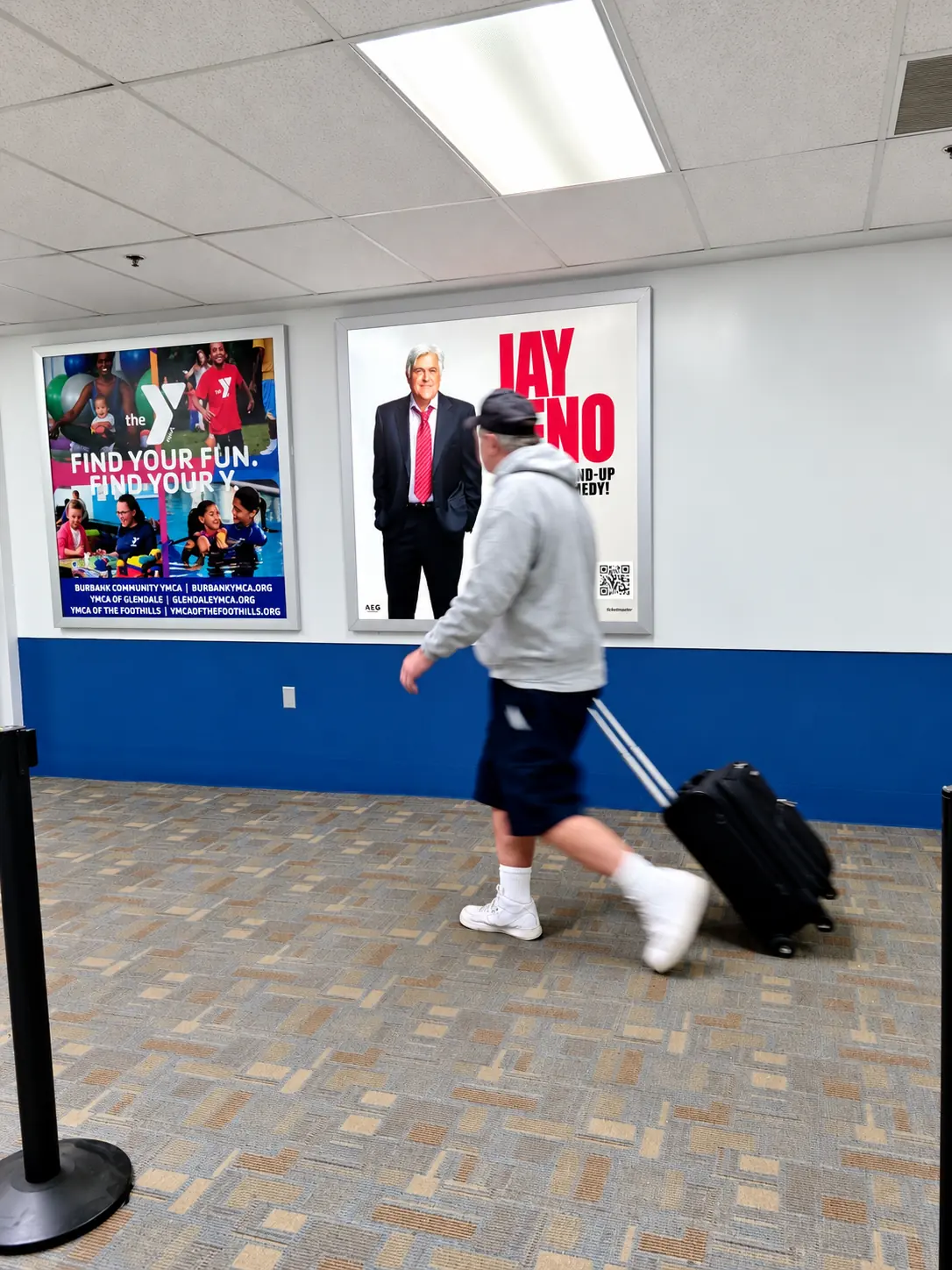
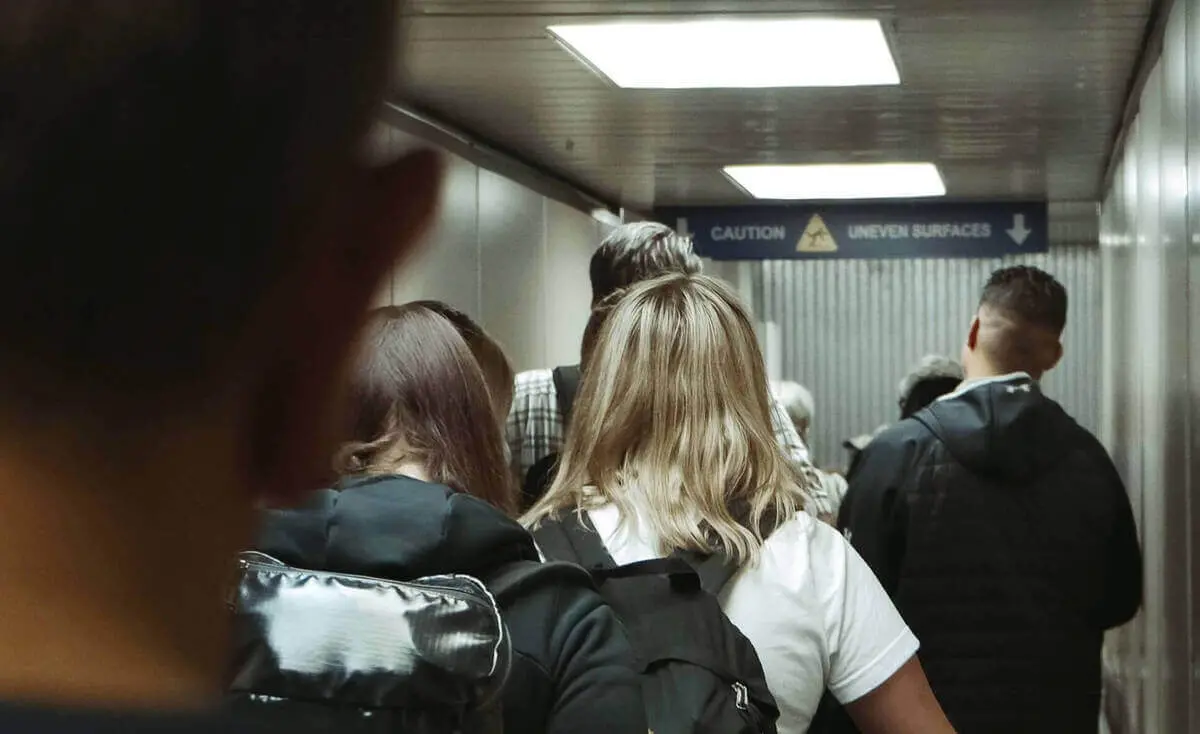
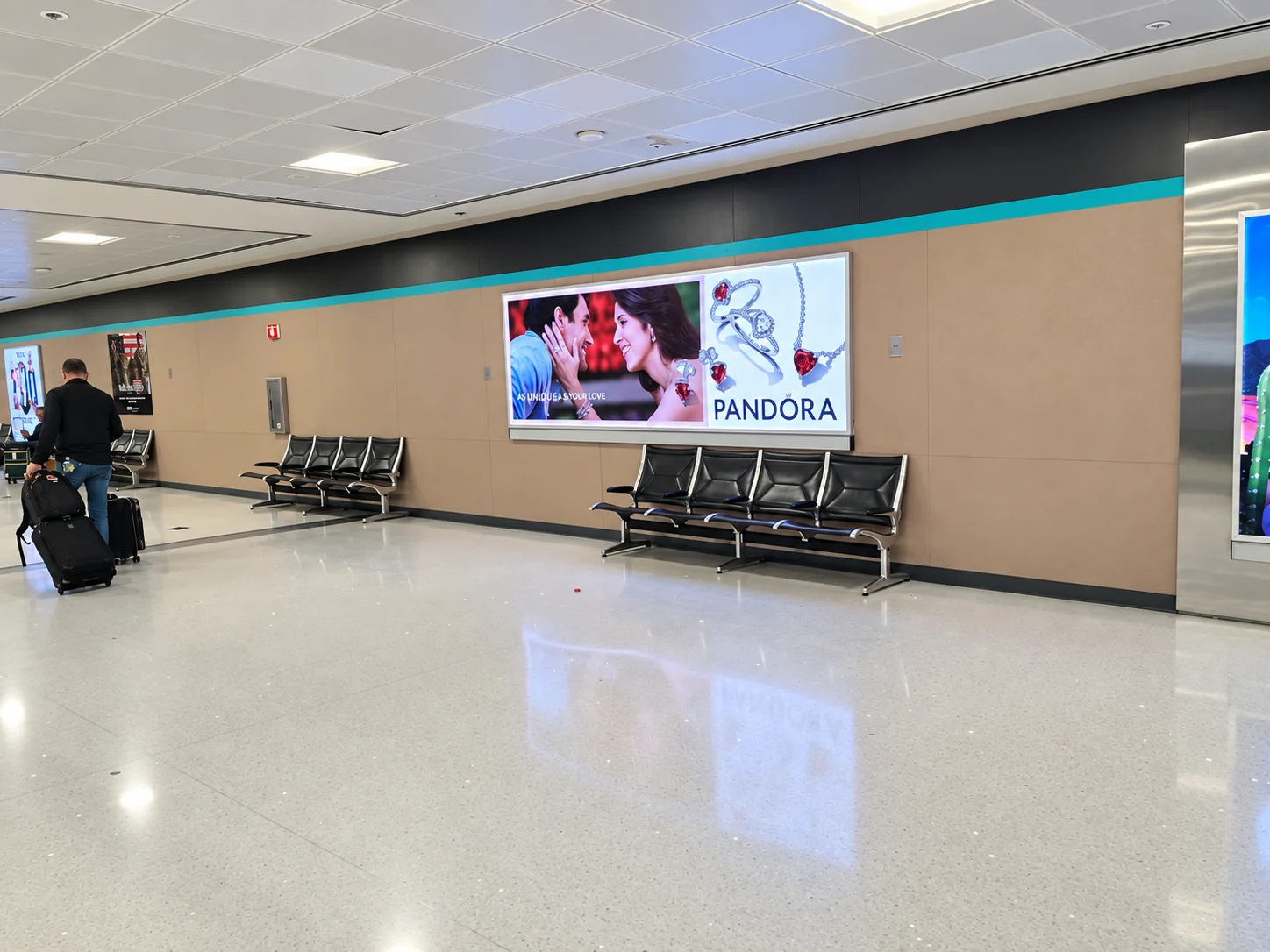
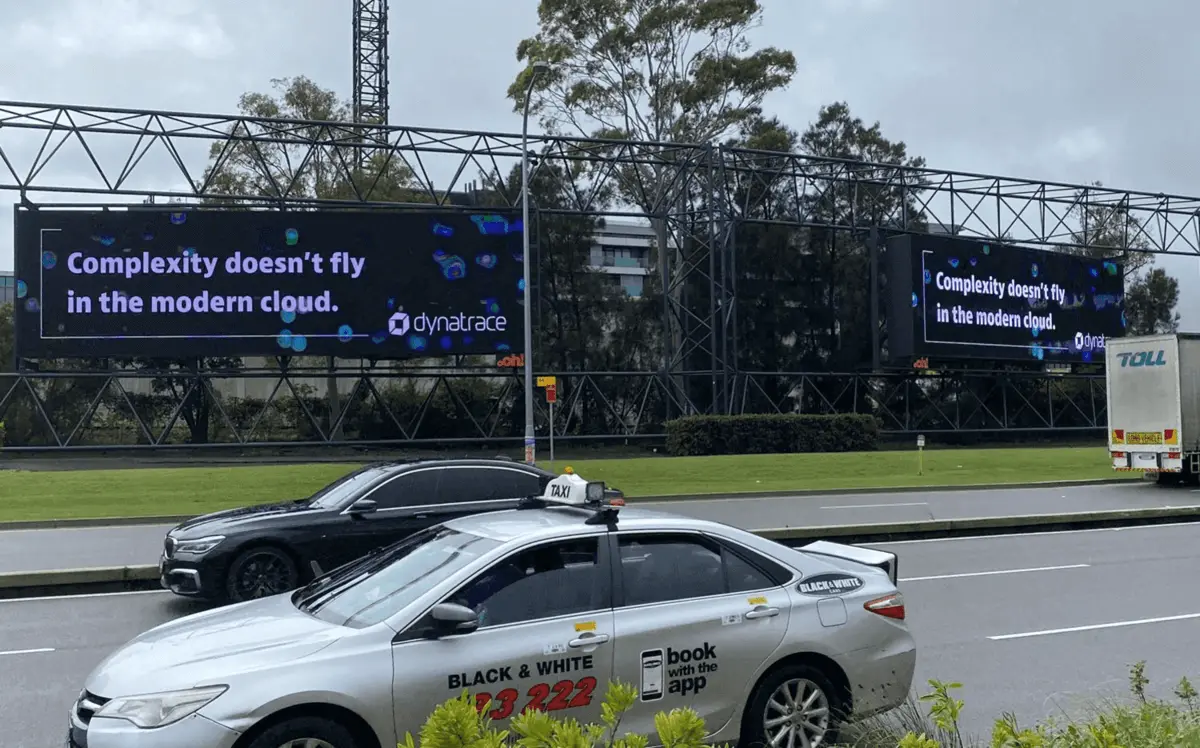
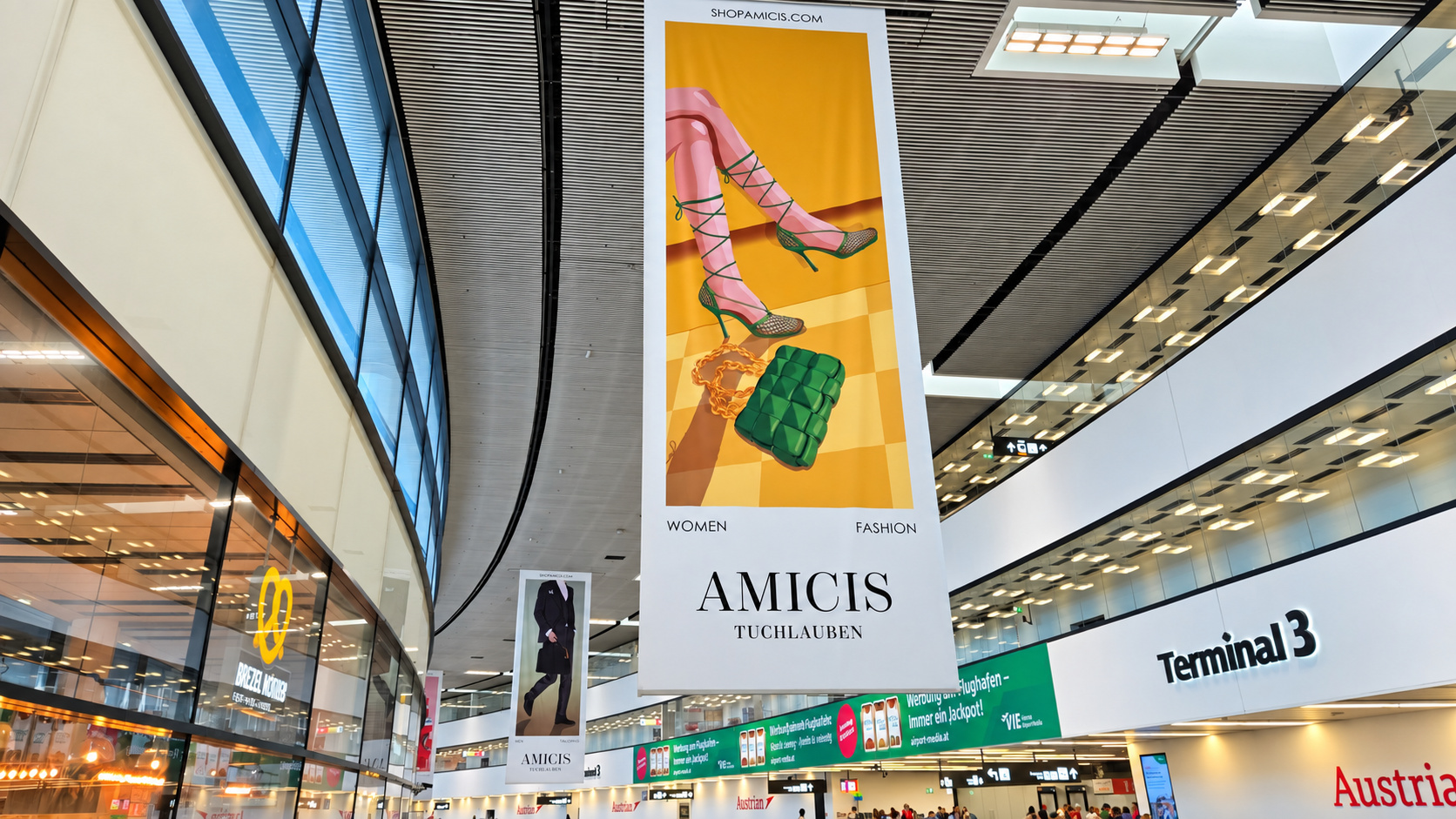
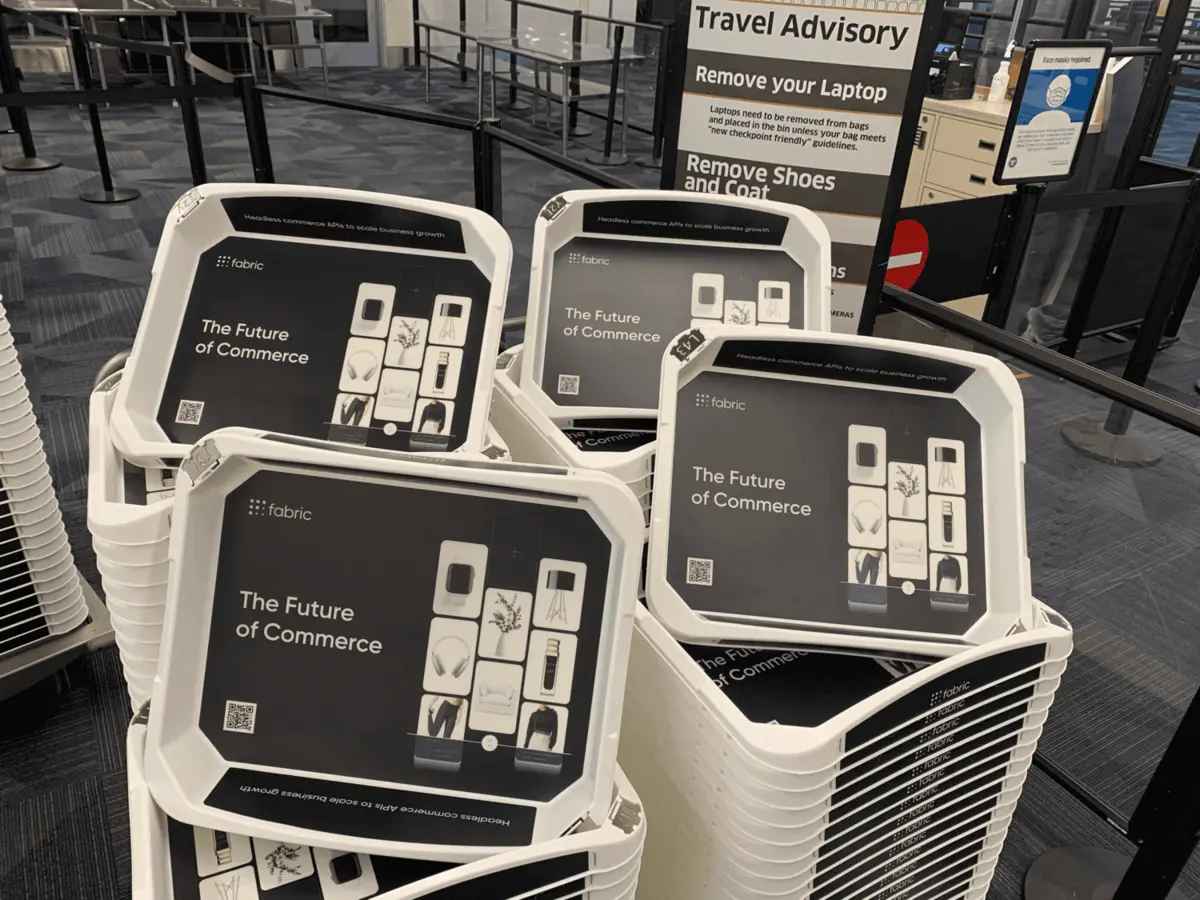
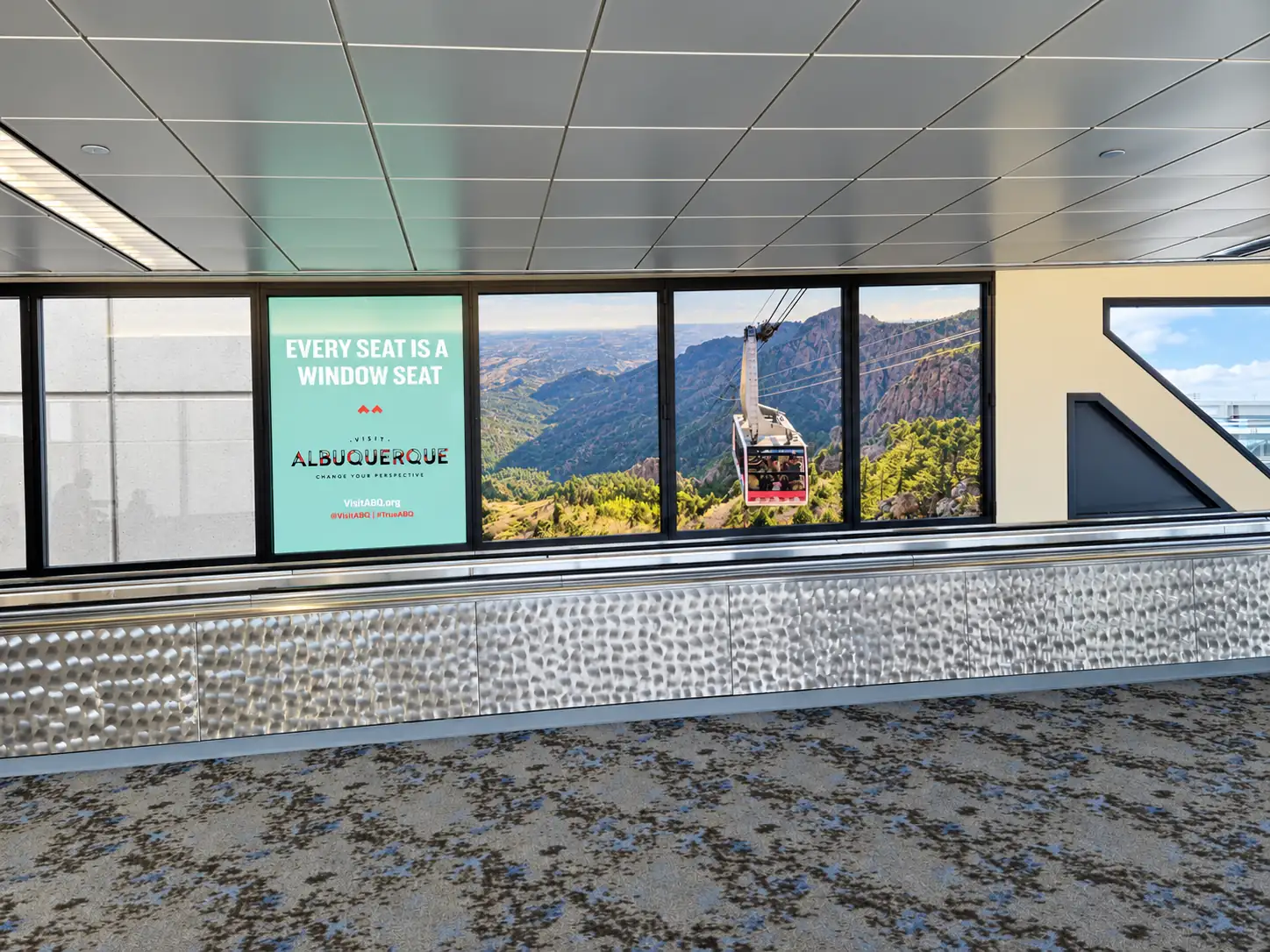
Airport advertising in practice, photographed across many airports. Availability at JFK varies by format.

Real brands. Real campaigns.

Which brands have run airport campaigns
with EAM Advertising?

Campaigns across several countries and media owners, each bought through one contract. Swipe or use the arrows for the markets, the scope, and the result.

“EAM made a nationwide airport campaign feel much easier to manage. The team was responsive, organized, and always on top of the details. They helped us make smart decisions with the budget, kept everything moving, and ultimately delivered exactly what we were looking for.”

Chief Marketing OfficerFortinet · nationwide airport campaign

These examples show past EAM campaigns—not a minimum campaign size, a forecast, or a guarantee of results. One-airport briefs are welcome, too.

Cost

What does New York airport
advertising cost?

$15,000–$350,000 for a single unit or network per 28-day period. $80,000–$500,000 for a two- or three-unit package per period. North of $500,000 for a multi-network or exhibit domination per period. Production, install, and removal are extra on most static, wrap, and exhibit units. Digital share of voice depends on the loop, from one of 4 to one of 18. Those are planning ranges, not a rate card.

Sold in 28-day periodsA one-week show still sits inside the 28-day period that contains it, unless a shorter unit is released at quote.

Everything in the current JFK specifications is quoted on a 28-day buying unit. Buy the period that covers the show or the match, or stack periods for always-on. A one-week show still pays for the period that contains it unless a shorter unit is released at quote. Confirm whether a partial period is ever released.

What a budget buys at JFK

Planning ranges per 28-day period. Pick the one closest to your brief and we’ll build the plan from it.

$15,000–$350,000

A single unit or network

What it is
One placement for 28 days: a claim network, a vertical digital package, a soffit, or a wrap
For
A focused terminal, matched to the airline the audience flies
Plan at this budget
$80,000–$500,000

A two- or three-unit package

What it is
Two or three placements for 28 days inside the terminal that matters
For
Fashion Week, a sports window, the holidays, or an always-on employer brand
Plan at this budget
$500,000 and up

Multi-network or exhibit domination

What it is
A period that takes several networks, or an exhibit footprint with its lead time
For
A launch or a week you want to own inside one terminal, not across every building
Plan at this budget

These are planning ranges, not packages or a rate card. Actual plans depend on the terminal, the period, and what is open when you book.

Contract realitiesRates are non-cancellable. Creative deadlines follow the hub rule, not a 7-day materials line.

Buying unit: 28 days. Rates are non-cancellable. Annual increases apply to multi-year agreements. Proposal pricing is valid 30 days. Holds expire 5 business days after confirmation. Proof of posting is due within 5 business days of initial posting. Plan digital creative 14–18 business days before start and static creative 21–28 days before start; the airport’s own materials deadline is 7 business days before posting, and the longer windows leave room for Port Authority and terminal-operator approval. Competitive separation may be possible, but it isn't guaranteed; ask when booking and write it into the contract. Broadcast hours are confirmed at quote. Creative needs airport authority approval.

What this page will not publishUnit rates and week-specific quotes come back as a quote, not on this page.

Unit-level rates, loop-position premiums, and week-specific quotes. Those numbers move with availability and with the period. What you can plan against: a 28-day buying unit; $15,000–$350,000 for a single placement; $80,000–$500,000 for a two- or three-unit package; north of $500,000 for a multi-network or exhibit domination. Specific units and periods come back as a quote.

Compare all 11 units in one tableTerminal, where, type, spot, best for
JFK placements on the current specifications
UnitTerminalWhere it sitsTypeYour spotBest for
International arrivals iconic LEDTerminal 4Curved video wall on the exit from T4 international bag claim toward the exits1 wall, about 365 in × 120 in (2400 × 800)10-second spot in a 40-second loop, one of 4, about 25% share of voiceInternational inbound at the Delta hub
International arrivals wall-wrap dominationTerminal 4Wall wraps flanking the T4 customs and immigration exit4 faces, mixed spans about 131–364 inFull faceImmersive international arrivals, paired with the iconic LED
Arrivals digital and domestic claim staticTerminal 4Six LCDs atop three domestic carousels, a head-on tension fabric, and a column-wrap pair6 × 75 in digital; tension fabric about 377 in × 127 in; 2 columnsDigital: 10 seconds in a 180-second loop, about 6% share of voice. Static: full faceDelta domestic claim dwell, including some pre-cleared international arrivals
Premier vertical digital networkTerminal 430 portrait LCDs in gate holds and walkways on Concourses A and B30 screens, about 65 in vertical (1080 × 1920)10-second spot in a 120-second loop, one of 12, about 8% share of voiceFrequency across Delta hub departures. Boarding banners share the screen during boarding
Video walls and retail-hall digitalTerminal 4Three concourse-entrance LEDs and four LED faces on two double-sided retail-hall columnsMixed spans about 115–456 in10-second spot in a 120-second loop, about 8% share of voiceDeparture presence near retail and dining
Glass wraps, exterior banner, and exhibitsTerminal 4Elevator glass near TSA and VIP check-in; garage roadway banner; arrivals and retail exhibit footprints2 glass faces about 116.5 in × 313 in; banner about 295 in × 481 in; exhibits about 15 ft × 15 ft to 20 ft × 50 ftFull faceDeparture sightlines, the roadway, and brand moments. Exhibit lead is 4–6 months
Immersive tunnel, claim digital, and wall wrapsTerminal 5Two lit fabrics, an overhead escalator fabric, a full-share vertical digital, 12 carousel LCDs, and large wall wrapsTunnel package with an 86 in digital; 12 × 75 in; 2 wraps about 675 in × 124 inTunnel digital is a 10-second spot in a 10-second loop (full share of voice). Claim is 10 seconds in a 180-second loop, about 6%. Wraps are full faceJetBlue arrivals and both-direction static
Premier digital and video wallsTerminal 832 LCDs in gate holds and walkways, plus a large post-TSA LED32 × 75 in, plus 1 or 2 walls. One wall is shared with flight information10-second spot in a 120-second loop, about 8% share of voiceAmerican, British Airways, and oneworld departures
Arrivals tension fabric, claim domination, AirTrain wrapsTerminal 8Head-on soffit above the escalators to claim; optional full claim takeover; 14 AirTrain connector wrapsTension fabric about 397 in × 72 in; domination 28 faces; 14 AirTrain wrapsFull faceAmerican hub domestic arrivals and AirTrain riders
Welcome-to-NYC and arrival soffit packagesTerminal 1Soffit fabrics in the T1 customs queue and head-on claim soffits3 plus 3 faces; spans up to about 1909 in × 82 inFull faceInternational arrivals dwell at Terminal 1
Arrivals video wall, premier digital, and claim digitalTerminal 6Arrivals hall video wall, a 16-screen departure network, and a 4-screen claim digital. The kit noted a second-quarter 2026 terminal timingMixed. Confirm which faces are actually open10 seconds in a 120- or 180-second loop, depending on the unitThe JetBlue and partner mix as Terminal 6 opens. Confirm live before a period is held

Timing

When should you buy JFK,
and how far ahead?

For a branding buy, the resident and the international visitor fly every week, and the 28-day period is the unit. Fashion Week, the US Open, and Thanksgiving through New Year change who is in the building. Hold those peaks 4–6 months out.

The 2026 High-Level Week and Climate Week are over.

New York periods and what they mean for the buy
EventTimingWho arrivesWhat it means for the buy
Holiday and winter travelLate November through early JanuaryResidents, visiting family, international leisureConsumer and hospitality. Contested claim and retail-hall loops.
Spring break and spring conferencesMarch–AprilFamilies, students, Javits inboundLeisure and mid-tier business-to-business. An efficient always-on window.
Summer leisure and sports peaksJune through early AugustLeisure, international visitors, sports hospitalityConsumer and destination. Terminal 4 international arrivals, the Terminal 5 tunnel, Terminal 8 claim. One or two 28-day periods cover a summer overlay.
US OpenAugust 29–September 12, 2027Tennis fans, sponsors, hospitalityConsumer and luxury. Claim path and Terminal 4 and Terminal 8 retail. Sponsors host clients; it is not a consumer-only week.
UN General Assembly and Climate WeekLate September 2027Heads of state, delegations, NGOs, finance and climate executives, and the pressThe densest executive week of the year on the international terminals; hold early, both directions
New York Fashion WeekFebruary 8–12, 2027; September 2027Fashion buyers, press, talent, brand teamsLuxury, retail, and beauty. Terminal 4 retail hall and international arrivals. Hold the 28-day period once the dates lock.
Always-on metro and international baseYear-roundNew York workforce, finance, media, tech, universities, long-haul visitorsThe branding spine. Stack periods, and thicken them around peaks.
EAM's takeBuy the resident and the gateway first. A calendar week is weight, not the whole strategy.

The mistake at JFK is buying one calendar week and calling it a New York strategy, or buying twelve quiet months and ignoring Fashion Week and the sports windows. The resident who flies every Tuesday is why always-on works. The crowd that lands for Fashion Week and the US Open is why the calendar still matters. Buy 28-day periods against the resident and the international gateway first. Add the peak period when the brief names that audience. Terminals do not share a post-security hall. A Terminal 5 buy does not reach a Terminal 4 passenger.

How far ahead should you book?

Fashion Week, the US Open, and Thanksgiving through New Year: hold 4–6 months out. Mid-tier conference weeks: 8–12 weeks. Standard periods: 6–10 weeks is often enough. Exhibits need a separate 4–6 month concept clock.

The premium is availability, not a printed event multiplierInternational arrivals, the retail hall, and the Terminal 5 tunnel sell first.

During Fashion Week, the US Open, and the holidays, Terminal 4 international arrivals digital and wraps, Terminal 4 retail-hall units, and the Terminal 5 immersive tunnel are contested. Other categories often find secondary static or Terminal 1 soffits less contested outside those peaks. Plan share of voice explicitly. Claim digital is already about 6%.

Booking windows at JFK
TierExamplesHold byWhat sells firstPricing character
PeakFashion Week once dates lock; US Open 2027; Thanksgiving through New Year4–6 monthsTerminal 4 international arrivals, Terminal 4 retail hall, Terminal 5 tunnel, Terminal 8 claimOpen 28-day rates; contested arrival paths
HighMid-tier conference weeks; summer leisure and sports overlays8–12 weeksClaim digital and hub concourse networksStandard 28-day rates; contested in the hub terminals
StandardQuiet weeks outside the calendar peaks6–10 weeksMost networks and static faces openStandard 28-day rates; the window to start always-on

Ready to plan?

Start your JFK plan.
Send the brief.

Tell us who you need to reach, where, and when. We come back with current availability at every airport in the plan and a recommended mix.

Airports, start date and duration, campaign goal, budget range, and anything else you can share. A few lines is plenty.

We come back with current availability and a recommended mix.

Placement

Where should your ads run
inside JFK?

In the terminal your audience’s airline uses. The terminals are separate buildings around a dual-ring roadway, linked by AirTrain. Buy the terminal, not “JFK” as one corridor. International arrivals clear federal inspection before public advertising at claim, the curb, and AirTrain.

Where a JFK passenger can actually be reached
PathWhere the units areWho is therePriority
International arrival, after inspectionTerminal 4 iconic LED and wall wraps; Terminal 1 Welcome-to-NYC soffitsLong-haul passengers entering New YorkHighest for destination, luxury, and arrival-moment brands on those airlines
Domestic and pre-cleared claimTerminal 4 domestic claim digital and static; Terminal 5 claim; Terminal 8 claim dominationDelta, JetBlue, and American origin-and-destination arrivalsHigh for people ending a trip in New York
Departure and connection, inside one terminalTerminal 4 verticals and retail hall; Terminal 8 premier digital; Terminal 5 tunnel for JetBlue arrivals and both directionsResidents departing, and connectors who may never see another terminalHigh for employer brand and account-based presence. An upper bound if the brief is only people in the city
Between terminalsAirTrain connector wraps at Terminal 8, and the train itselfPassengers changing buildingsUseful, and not a substitute for the terminal the airline uses
Airline assignment is the planDelta in 4, JetBlue in 5, American and British Airways in 8, Star Alliance–heavy carriers in 1.

Terminal 4 is the Delta hub plus a deep international mix: Emirates, Etihad, KLM, Singapore, Virgin Atlantic, LATAM, Avianca, and others as the kit lists them. Confirm the current map. Terminal 5 is JetBlue, with T5i for JetBlue international arrivals. Terminal 8 is American, British Airways, and oneworld partners. Terminal 1 is the international cluster being replaced by New Terminal One. Terminal 7’s airlines move as Terminal 6 opens. The kit cites Aer Lingus, Lufthansa, Air Canada, ANA, and Cathay among Terminal 6 targets. Confirm the live map.

Connections stay inside one buildingA Terminal 4 connection may never see Terminal 8, or the curb.

Connecting passengers may stay airside: concourse units reach everyone; bag claim, customs exits, and the curb reach only people starting or ending a trip in New York. Connections that stay inside one terminal may never see another terminal’s inventory. If the brief is New York residents only, weight origin-and-destination claim and the curb, and treat hub-concourse delivery as an upper bound. August 2025 set a monthly record at 6.2 million passengers. That is volume, not a reason to buy every terminal.

Why this airport

Why do brands advertise at
John F. Kennedy (JFK)?

Because the New York metro has one primary international front door that both the resident workforce and the calendar inbound share. About 62.6 million passengers a year move through JFK. Brands that need people who live and work here buy continuously. Brands that need a Fashion Week or US Open window buy the 28-day period that covers it.

More than half the building is international34.5 million international passengers in 2025. Foreign-flag carriers fill Terminals 1, 4, and 8.

JFK is the busiest airport in the Port Authority system and the region’s long-haul gateway. Delta carried about 18.5 million passengers, about 30%. JetBlue about 14.5 million. American about 7.4 million. British Airways, Avianca, Virgin Atlantic, Air France, and Emirates lead the foreign-flag list. Confirm exact 2025 carrier shares against the Port Authority table at quote. The Port Authority attributes about $35 billion in annual economic activity in the New York and New Jersey region to JFK.

The workforce leaves through JFK when the trip is long-haulFinance, media, tech, fashion, healthcare, and higher education recruit and sell year-round.

They fly weekly on Delta, JetBlue, and American. Departure-side weight follows the airline: Terminal 4, Terminal 5, or Terminal 8. The calendar — Fashion Week, the US Open, Thanksgiving through New Year — thickens the same buildings. Direction follows the audience. The 28-day period follows the brief.

Audience

Who actually flies
through JFK?

About 62.6 million passengers a year, shaped by three hub carriers and a dense international network. The useful branding audience is the New York resident and the international visitor. The useful calendar audience is the crowd arriving that week, not the annual total.

JFK terminals, role, and airlines
TerminalRoleAirlinesWhat it means for the buy
Terminal 1International cluster; being replaced by New Terminal One, Phase A targeted early 2027Air France, Lufthansa, Turkish, Korean Air, SWISS, and peersArrival soffits and Welcome-to-NYC domination on customs and claim. International for most movements
Terminal 4Delta hub plus deep international. The retail hall is the commercial heartDelta, plus Emirates, Etihad, KLM, Singapore, Virgin Atlantic, LATAM, Avianca, and others on the kitPremier verticals, video walls, retail-hall digital, international arrivals LED and wraps, claim digital, exhibits
Terminal 5JetBlue hub. T5i handles JetBlue international arrivalsJetBlue; Cape Air and Sun Country as currently assignedImmersive arrivals tunnel, claim digital, wall wraps in both directions
Terminal 6New build opening in phases. The kit listed inventory with a second-quarter 2026 timingJetBlue and partners as assigned. Confirm the live mapArrivals video wall, premier digital, claim digital. Confirm what is open
Terminal 7Mixed domestic and international. The site feeds Terminal 6 Phase 2Aer Lingus, ANA, Air Canada, Icelandair, and peers, moving as Terminal 6 opensLimited coverage in this pack. Confirm against the current map
Terminal 8American hub plus British Airways and oneworld partnersAmerican, British Airways, Alaska, Qatar, Iberia, Cathay PacificPremier digital, video walls, arrivals tension fabric, AirTrain wraps, claim domination

Airline-by-terminal assignments can shift with seasonal schedules; confirm the live map when you hold a period.

Students are a semester buy, not a side noteNew York educates roughly 500,000 students across 100-plus institutions.

NYU, Columbia, CUNY, Cornell Tech, and the broader metro. Education brands EAM has placed in airports include Wharton, BYU, the University of Michigan, the University of Pittsburgh, and UT Dallas. Weight August, January, and commencement on departure-side inventory.

Business travelers in an airport terminal

New York residents and the local workforce (year-round)

Finance, media, tech, fashion, healthcare, and professional services across the five boroughs, Long Island, Westchester, and northern New Jersey. They fly weekly on Delta, JetBlue, and American. This is the audience for recruiting, employer brand, financial, healthcare, and business-to-business work. Departure-side follows the airline: Terminal 4, 5, or 8.

Conference travelers in an airport terminal

Conference, fashion, and event inbound

Fashion Week and the Javits and Midtown calendar. Buy the 28-day period covering the week. The claim path and retail-hall digital are the inbound read. Hub concourse digital is the outbound read.

International travelers in an airport arrivals hall

International visitors

About 34.5 million international passengers in 2025. Transatlantic, Latin America, Middle East, and Asia concentrate in Terminals 1, 4, and 8. Public claim and the curb after inspection are the arrival read. Retail halls and concourse digital are the departure read.

Travelers in an airport retail hall

Sports and major-event visitors

The US Open fortnight and other stadium peaks. Weight claim, immersive arrivals, and the international path. Do not build the annual plan from the overlay alone. Sponsors and team partners host executives that week. It is not a consumer-only buy.

Who advertises

What kinds of brands advertise at JFK,
and what are they trying to do?

Employer brands and business-to-business companies against the New York workforce; luxury, retail, and beauty against Fashion Week; destination and hospitality against international arrivals and the holidays; universities on the semester calendar; and sponsors against the US Open, including the clients those sponsors host. Always-on rows lead. Calendar rows follow.

How brands use JFK, by objective
ObjectiveWho buys itWho it reachesWhat the buy usually looks like
Recruiting and employer brandFinance, media, tech, fashion, healthcare, professional servicesNew York residents on Delta, JetBlue, and AmericanDeparture-side in the terminal the airline uses; stacked 28-day periods
Account-based and business-to-businessEnterprise software, cybersecurity, professional servicesBusiness travelers in Terminals 4, 5, and 8Always-on concourse digital, plus a peak period when the brief names that crowd
Luxury, retail, and beautyFashion, beauty, premium consumerFashion Week buyers, press, and brand teams, and holiday international arrivalsTerminal 4 retail hall and international arrivals; the 28-day period that covers the week
Destination and hospitalityHotels, attractions, arrival-moment servicesInternational and domestic visitors entering the cityClaim, soffits, and the curb after inspection
UniversitiesOut-of-state programs and alumni campaignsStudents, parents, and alumniDeparture-side in late August, January, and May
Sports and sponsorshipSponsors, hospitality, luxuryFans plus the executives and clients sponsors hostClaim path and Terminal 4 or 8 retail for the US Open period. Not a consumer-only week
Luxury does not own the building every weekOutside the peaks, secondary static and Terminal 1 soffits are less contested.

During Fashion Week, the US Open, and the holidays, the best arrival units are contested. That does not make the rest of the year a leftover. Employer brand and account-based presence work on the Delta, JetBlue, and American spines in ordinary weeks. Plan share of voice explicitly rather than assuming a digital face is yours alone.

How EAM works

How does EAM run
a JFK campaign?

One call, one plan, one contract. We follow up to learn who you need to reach and the objective, then come back with current availability and a recommended mix.

  1. Step 01

    Scope the week.

    Always-on versus a Fashion Week, US Open, or holiday period; which terminal the audience’s airline uses; arrivals, departures, or both; JFK alone or with LaGuardia or Newark when the brief needs more than the long-haul door.

    You getThe period, the terminal, and the direction

  2. Step 02

    Check avails and loop position.

    Which networks and static faces are open, how crowded the 40-, 120-, and 180-second loops are, whether Terminal 6 faces are actually live, and whether category separation is possible. Competitive separation may be possible, but it isn't guaranteed; ask when booking and write it into the contract.

    You getAvailability and loop crowding

  3. Step 03

    Quote the mix.

    Formats, share of voice, and a range, not a scraped rate card. After we know who you need to reach, we come back with current availability and a plan you can take inside.

    You getA range and a mix you can take inside

  4. Step 04

    Contract and traffic creative.

    Specs across every screen shape, fabric size, and exhibit footprint, airport authority approval, and files in on the contract date. Digital creative is due 14–18 business days before start; static creative is due 21–28 days before start. Exhibits and the Terminal 4 exterior banner carry a longer lead on top of that.

    You getSpecs, approval, and a materials date

  5. Step 05

    Go live and close the loop.

    Confirm posting before the first arrival wave. Deliver proof of posting and play logs after the flight.

    You getProof of posting and play logs

An independent media agency

EAM Advertising is an independent airport and in-flight media agency, founded in 2015. We specialize in airport and in-flight media and nothing else, and we do not own media assets at JFK or any airport. That independence is why the recommendations hold up. We plan and buy across 125+ airports and 45+ airlines worldwide, which is the leverage and the current-availability knowledge a one-time JFK buyer does not have. Clients include Fortinet, Dynatrace, Rubrik, McGraw-Hill, and Wharton. When the strategy extends beyond New York — a Northeast roadshow with LaGuardia, Newark, or Boston, a multi-city employer-brand launch, an international push that continues past the gateway — the same relationship covers the other markets.

For agencies and consultants

Your client. Your plan.
We handle the airports.

Agencies and consultants bring EAM Advertising in as the airport specialist behind a client’s plan. The client relationship stays with you. We plan, buy, and report under NDA, and can work white-label.

Get our media kit
  • Your client stays yours.We work behind your team, not around it.
  • White-label and NDA.Plans and reporting can go out under your name.
  • One contract, one invoice.Every airport and media owner in the plan, under one set of terms.
  • Numbers before the client commits.Current availability and planning ranges at the proposal stage.

Measurement

How do you measure
a JFK campaign?

Proof of posting and digital play logs are factual. Delivered impressions are modeled. A brand-lift study is the only method that speaks to effect, and it has to be fielded before the flight. Direct pipeline attribution is not reliably available.

Measurement at JFK
MeasureWhat it actually tells youWhen to set it upConfidence
Proof of postingPhotographic confirmation that every unit ran, in the right place, for the full period. The specifications call for proof within 5 business days of initial posting. Write the photo terms into the contract.Written into the contract before signingHigh — factual
Delivered impressionsModeled audience delivery from airport traffic and unit position. An estimate. A terminal’s traffic is not the whole airport, and concourse units include connectors.Requested at proposal stageModerate — modeled
Digital play logsActual spot counts and share of voice. The check on a 40-, 120-, or 180-second loop.Requested at contractingHigh — logged
Brand lift studySurvey-based awareness or perception change against a control. The only method that measures effect rather than exposure.Fielded before the flight, for a baselineModerate — needs budget and lead time
Direct attribution to pipelineNot reliably available. Airport media has no click, and the same brands run other touchpoints at the same time.Do not plan the buy around itLow — treat claims here with skepticism
Ask for play logs on every digital networkThe loop length on the face is not the live advertiser count.

A 10-second spot in a 180-second loop is about 6% share of voice only if the loop is full in the way the spec describes. Live advertisers-per-loop still move. Delivered impressions sized from airport traffic overweight connecting passengers on concourse units. Treat that delivery as an upper bound on the local audience. Decide connector versus origin-and-destination before you decide what to measure.

Questions

Frequently asked questions
about JFK

How much does it cost to advertise at New York airport (JFK)?

A single unit or network runs $15,000–$350,000 per 28-day period. A two- or three-unit package runs $80,000–$500,000 per period. A multi-network or exhibit domination runs north of $500,000 per period. Production, install, and removal are extra on most static and exhibit units. Those are planning ranges; specific units and periods are quoted against current availability.

How is JFK airport advertising sold?

In 28-day periods. Digital networks run 10-second spots in loops of 40, 120, or 180 seconds, about 25%, 8%, or 6% share of voice. Static fabrics, wraps, glass wraps, and exhibits are full-face. Rates are non-cancellable. Holds expire in 5 business days. Digital creative is due 14–18 business days before start; static creative is due 21–28 days before start. Broadcast hours are confirmed at quote. Competitive separation may be possible, but it isn't guaranteed; ask when booking and write it into the contract.

Which terminal should I advertise in at JFK?

Terminal 4 for Delta-heavy briefs and much of the deep international mix. Terminal 5 for JetBlue, and Terminal 6 as it opens. Terminal 8 for American, British Airways, and oneworld partners. Terminal 1 for the Star Alliance–heavy cluster. Airline assignments can shift; see the note under the terminal table.

Can I reach international arrivals at JFK?

Yes, on the public side after federal inspection. Primarily the Terminal 4 international arrivals iconic LED and wall wraps, and the Terminal 1 Welcome-to-NYC soffit packages. Gate and retail-hall units reach international departures more directly than arrivals. Domestic claim digital also reaches pre-cleared international arrivals on some terminals.

Can I reach connecting passengers at JFK?

Yes, especially on Delta connections inside Terminal 4 and American and British Airways connections inside Terminal 8. Connections that stay inside one terminal may never see another terminal or the curb. If the brief is New York residents only, weight origin-and-destination claim and the curb, and treat hub-concourse delivery as an upper bound.

How far in advance should I book JFK for Fashion Week or a major sports window?

Four to six months for Fashion Week, the US Open, and Thanksgiving through New Year. Mid-tier conference weeks: 8–12 weeks. Standard periods: 6–10 weeks is often enough. Exhibits need a separate 4–6 month concept clock.

Is JFK good for business-to-business advertising?

Yes. Always-on against New York finance, media, and tech, and by the period when Fashion Week or a defined sports crowd fills the region. Outside those weeks, business-to-business still works as employer brand and account-based presence on the Delta, JetBlue, and American spines.

Do luxury and travel brands dominate the best units?

During Fashion Week, the US Open, and the holidays, Terminal 4 international arrivals digital and wraps, Terminal 4 retail-hall units, and the Terminal 5 immersive tunnel are contested. Other categories often find secondary static or Terminal 1 soffits less contested outside those peaks. Plan share of voice explicitly. Claim digital is already about 6%.

Do universities advertise at JFK?

Yes. Out-of-state recruiters, executive programs, and alumni campaigns around commencement. New York educates roughly 500,000 students across 100-plus institutions. Education brands EAM has placed include Wharton, BYU, the University of Michigan, the University of Pittsburgh, and UT Dallas. Natural periods: late August, January, and May.

When is creative due for a JFK flight?

Digital creative is due 14–18 business days before start; static creative is due 21–28 days before start. Expect multiple fabric sizes and several digital pixel shapes in a mixed buy: 1080×1920 on Terminal 4 verticals, 1920×1080 on claim networks, and 2400×800 on the Terminal 4 international LED. All creative needs airport authority approval. Exhibits and the Terminal 4 exterior banner carry longer lead times on top of that.

Can I get category exclusivity at JFK?

Competitive separation may be possible, but it isn't guaranteed; ask when booking and write it into the contract. Do not assume exclusivity, and do not expect this page to point you at the media seller.

What does EAM handle on a JFK campaign?

Everything after the objective. We check what's open for the week, which loops are crowded and which units will sell out, and where on the arrival path your audience actually walks. We recommend the mix, secure the units, traffic the creative through airport approval, confirm posting on day one, and deliver proof of posting and play logs after. If JFK is one market in a larger plan, the same relationship covers the others.

Independent airport advertising media agency. Est. 2015.

One airport or twelve.
Start with the media kit.

Send your work email for the media kit: formats, planning ranges, and how EAM works. We’ll follow up to learn who you need to reach and when, then come back with current availability and a recommended mix.

We’ll follow up to learn who you need to reach and when.

Independent since 2015 · 125+ airports · 40+ media vendors

Sources

Sources and
methodology

  1. Port Authority of New York and New Jersey, 2025 Airport Traffic Report: JFK 62,629,455 passengers, 1.0% below 2024; domestic 28.1 million; international 34.5 million; August record 6.2 million; about $35 billion in regional economic activity.
  2. Port Authority year-end 2025 coverage: JFK’s second-busiest year; LaGuardia 32.8 million; Newark 47.0 million.
  3. Carrier shares in trade coverage of 2025: Delta about 18.5 million (about 30%), JetBlue about 14.5 million, American about 7.4 million. Confirm against the Airport Traffic Report table before treating the shares as final.
  4. JFK terminal pages for airline groupings in Terminals 1, 4, 5, 7, and 8. New Terminal One Phase A is targeted for early 2027. Terminal 6 first gates were discussed for 2026. Confirm what is open.
  5. New York City population about 8.585 million as of July 2025, NYC Department of City Planning. NYCEDC: 100-plus higher-ed institutions and about 500,000 students; tech ecosystem 360,000-plus jobs.
  6. Event dates used here: US Open August 29–September 12, 2027 (WTA/ATP calendars). New York Fashion Week February 8–12, 2027 (CFDA Fashion Calendar). September 2027 Fashion Week dates not yet published. UN General Assembly High-Level Week, late September 2027 (un.org).
  7. Unit descriptions, screen counts, loop structure, contract terms, production notes, exhibit lead times, and construction caveats: current JFK airport media specifications, November 2025. Unit rates are not published. Pricing ranges and booking windows: EAM Advertising planning and buying data, 2015–2026.