





The single-source solution for airport advertising Airport Advertising. You choose where. We handle the rest.

EAM Advertising plans, secures, and runs airport advertising campaigns for brands and agencies, at one airport or across ten. We give you one contact, one contract, and one team accountable from start to finish. Get our media kit for formats, planning ranges, and booking windows.

We’ll follow up with the kit and next steps for your campaign.

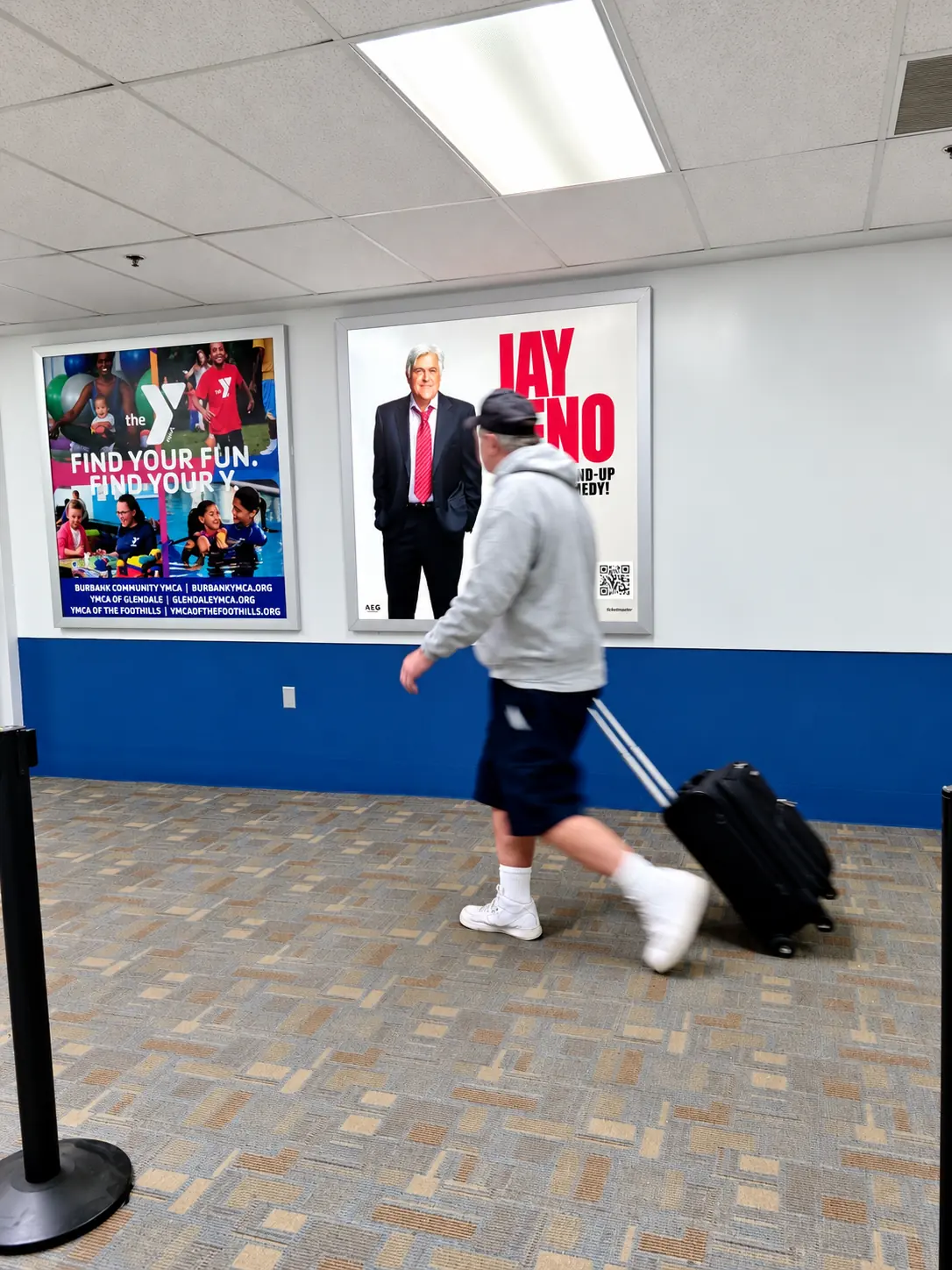
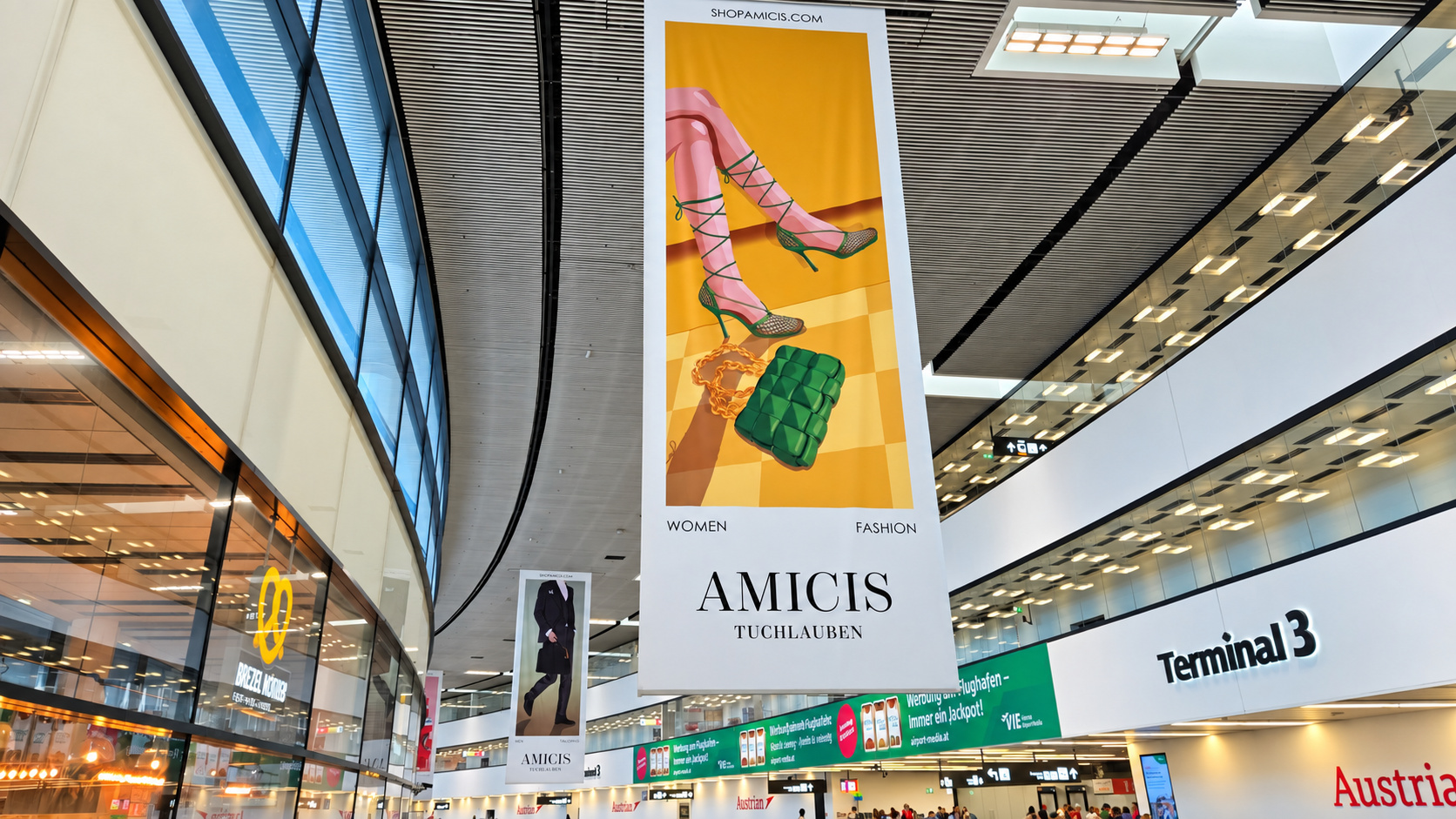
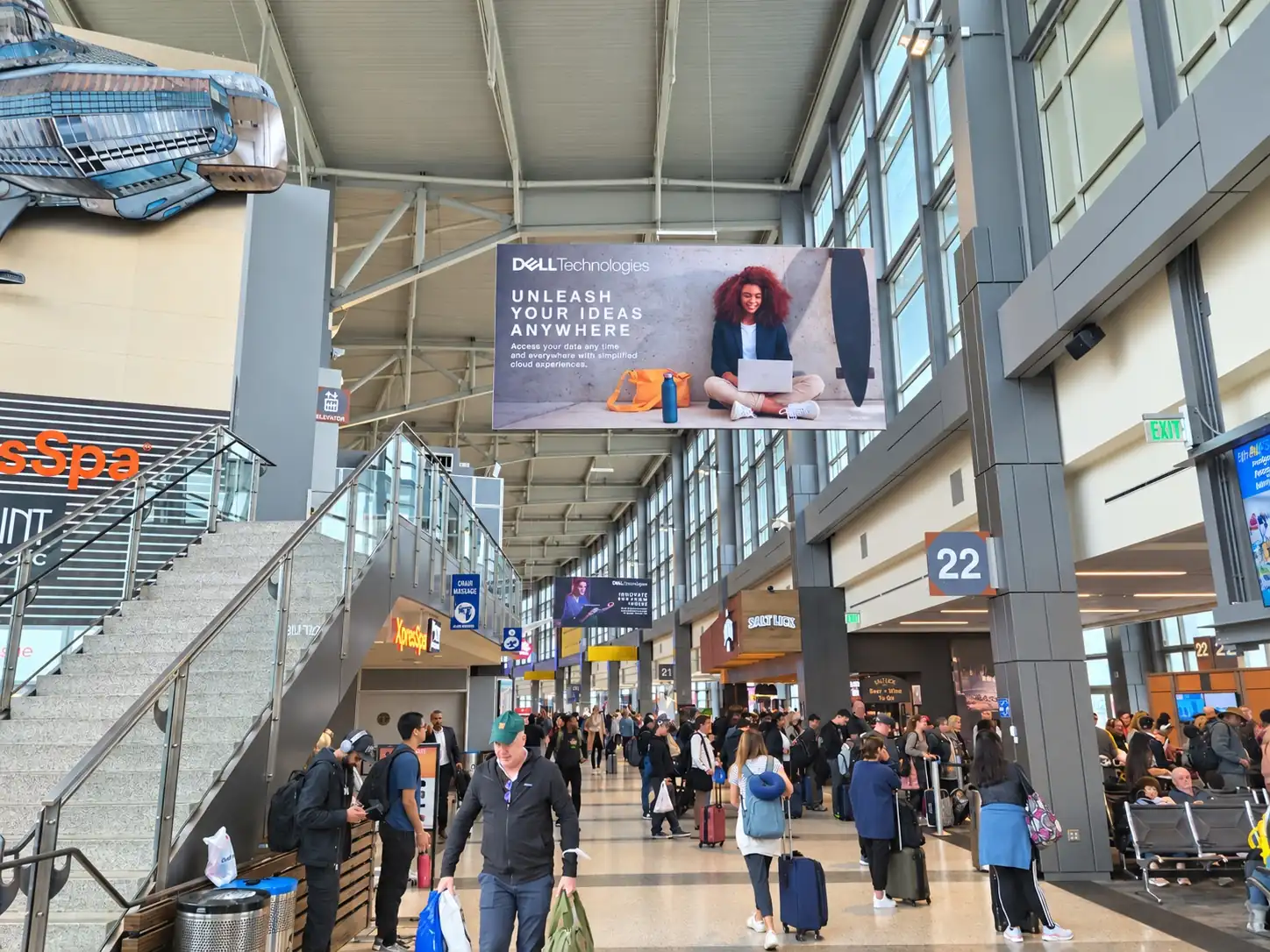
Example of overhead banner packages in an airport terminal
Dell advertising in Austin-Bergstrom International Airport (AUS).
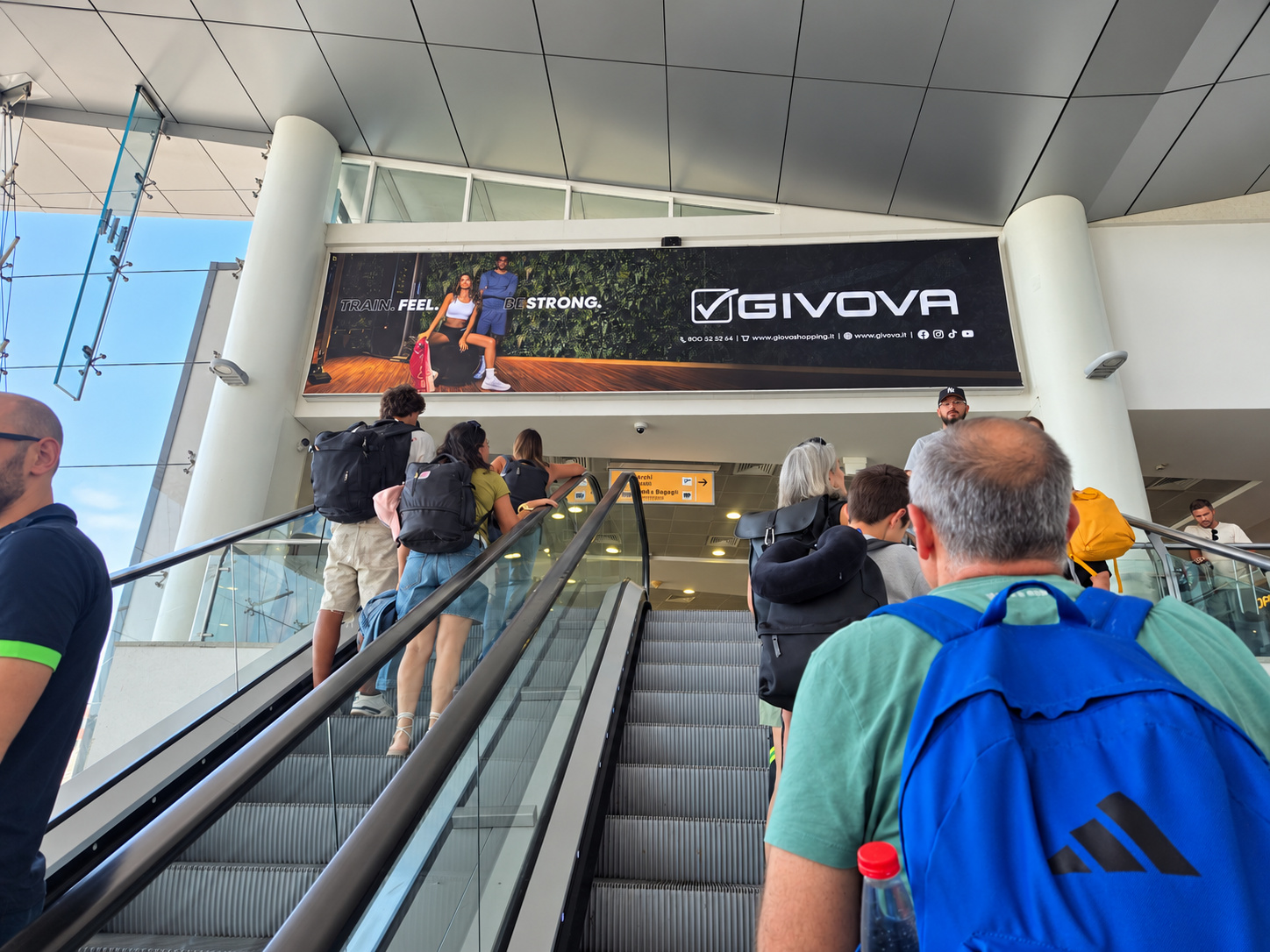
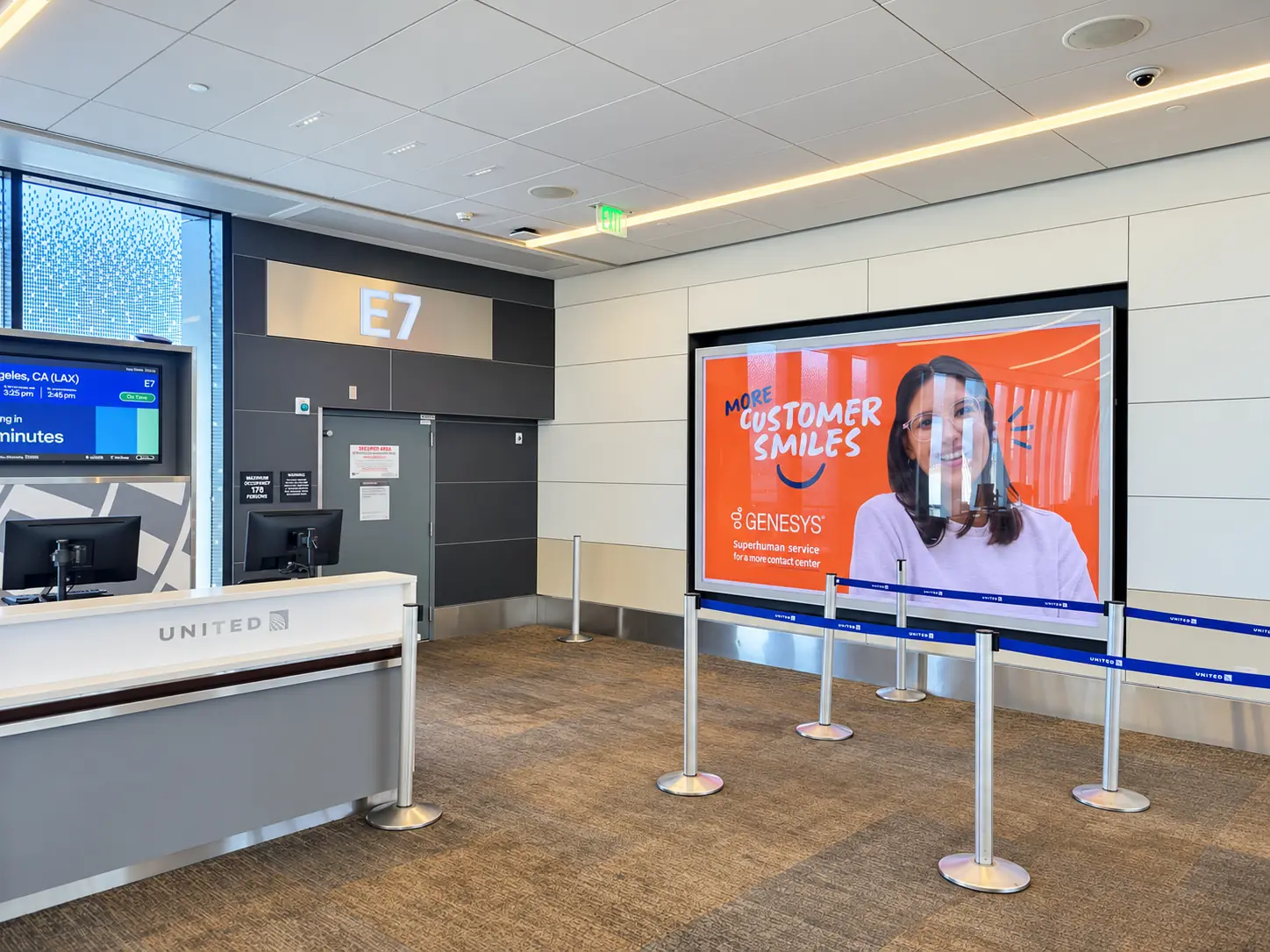
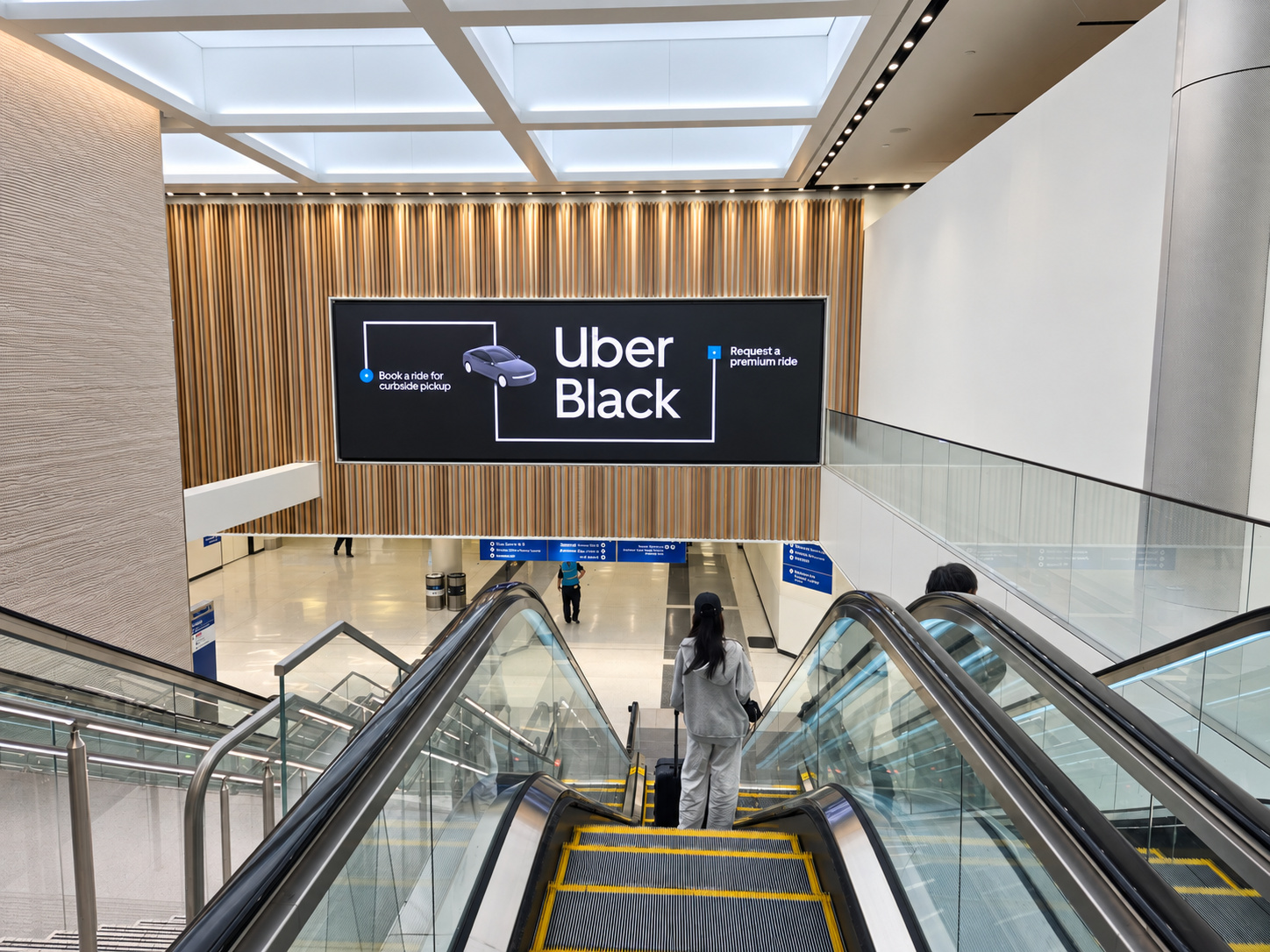
Example of digital escalator spectaculars in an airport terminal

  • 125+Airports worldwide
  • 40+Media vendors
  • 5Continents served

You’re in good company

  • Thomson Reuters
  • AMD
  • Dynatrace
  • Fortinet
  • Motorola
  • BYU

Start here

How many airports
are in your plan?

Several airports, national or global

Best forProduct launches, conference circuits, and brand programs that follow your buyers from city to city.

  • One plan and one contract for every airport
  • Availability checked at every airport at the same time
  • One invoice and one proof-of-posting report

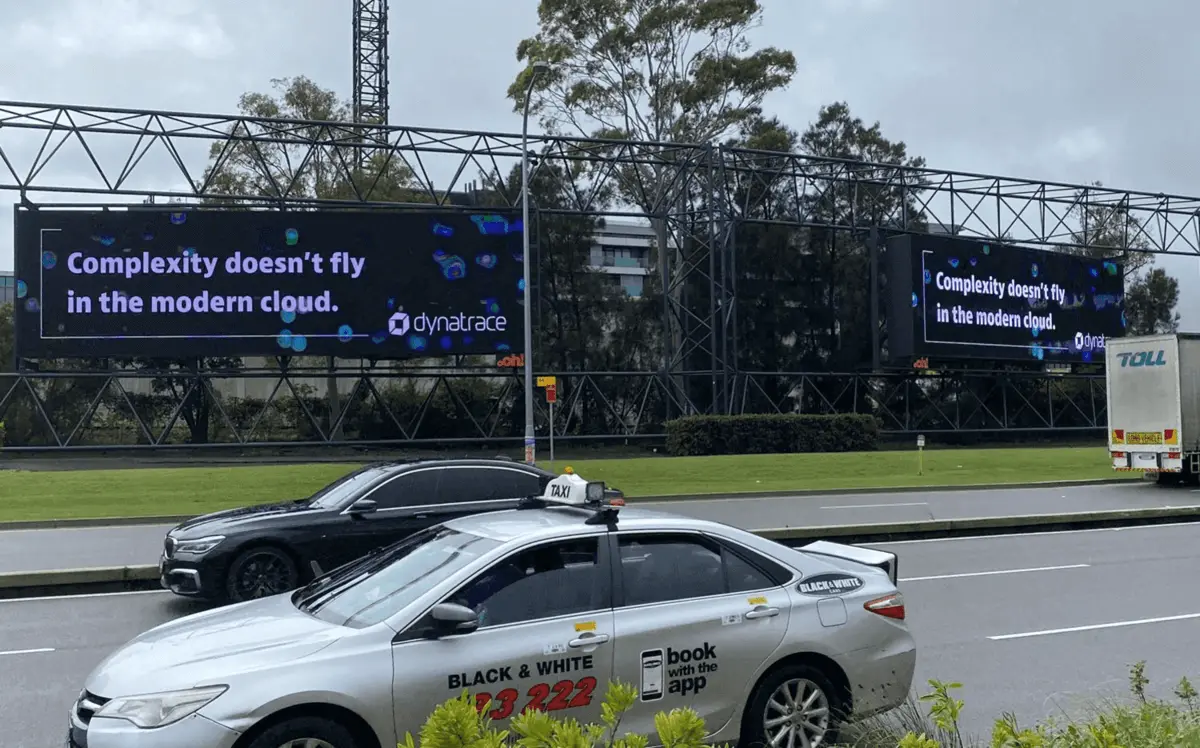
Client exampleDynatrace ran one airport campaign across five continents and reached over 60 million people.
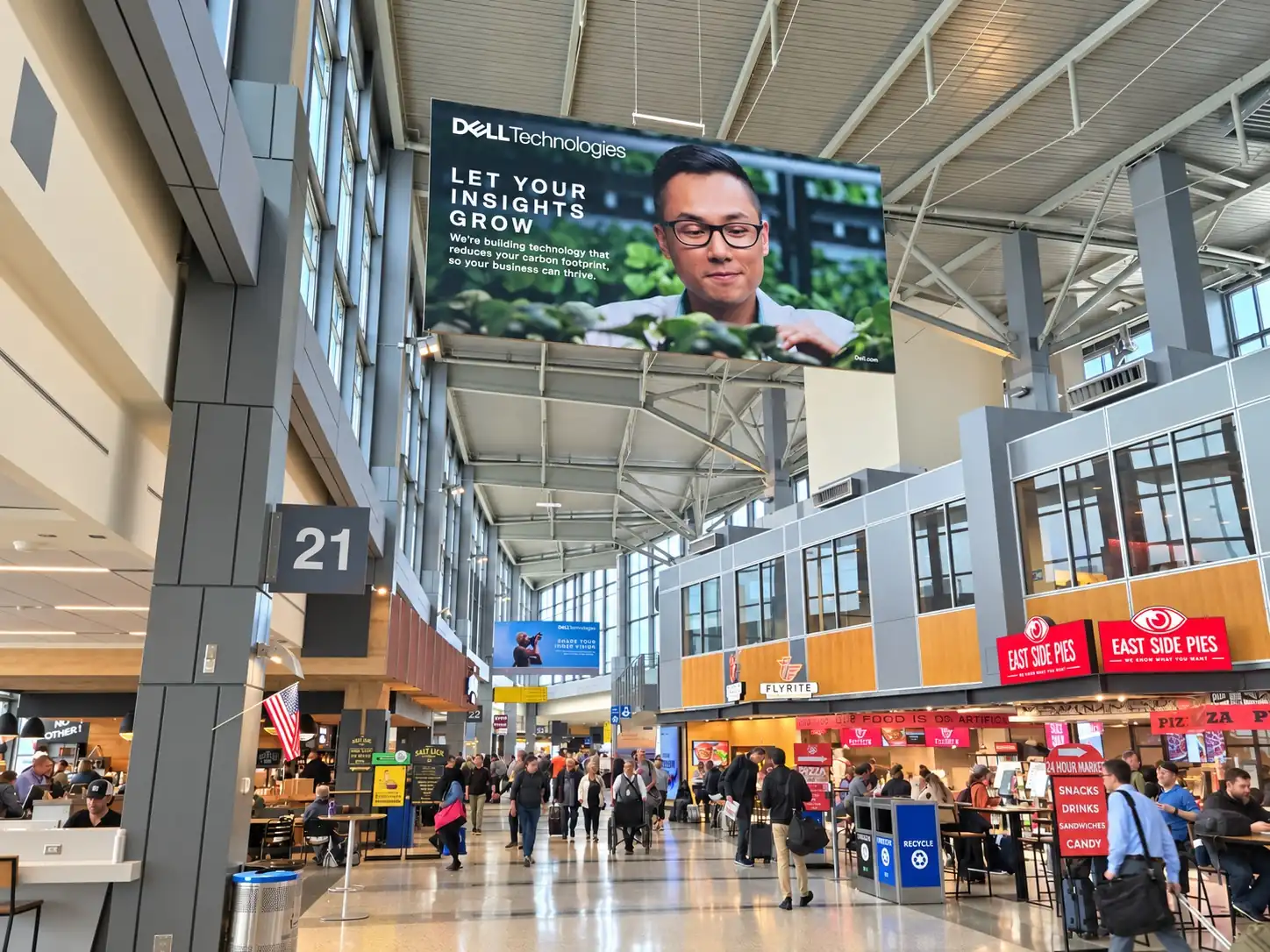
Dell advertising in Austin-Bergstrom International Airport (AUS).

One or two airports

Best forYour home market, a single event week, or a first test of airport media.

  • What is open at that airport for your dates
  • Which formats reach your audience there
  • A planning range before you commit

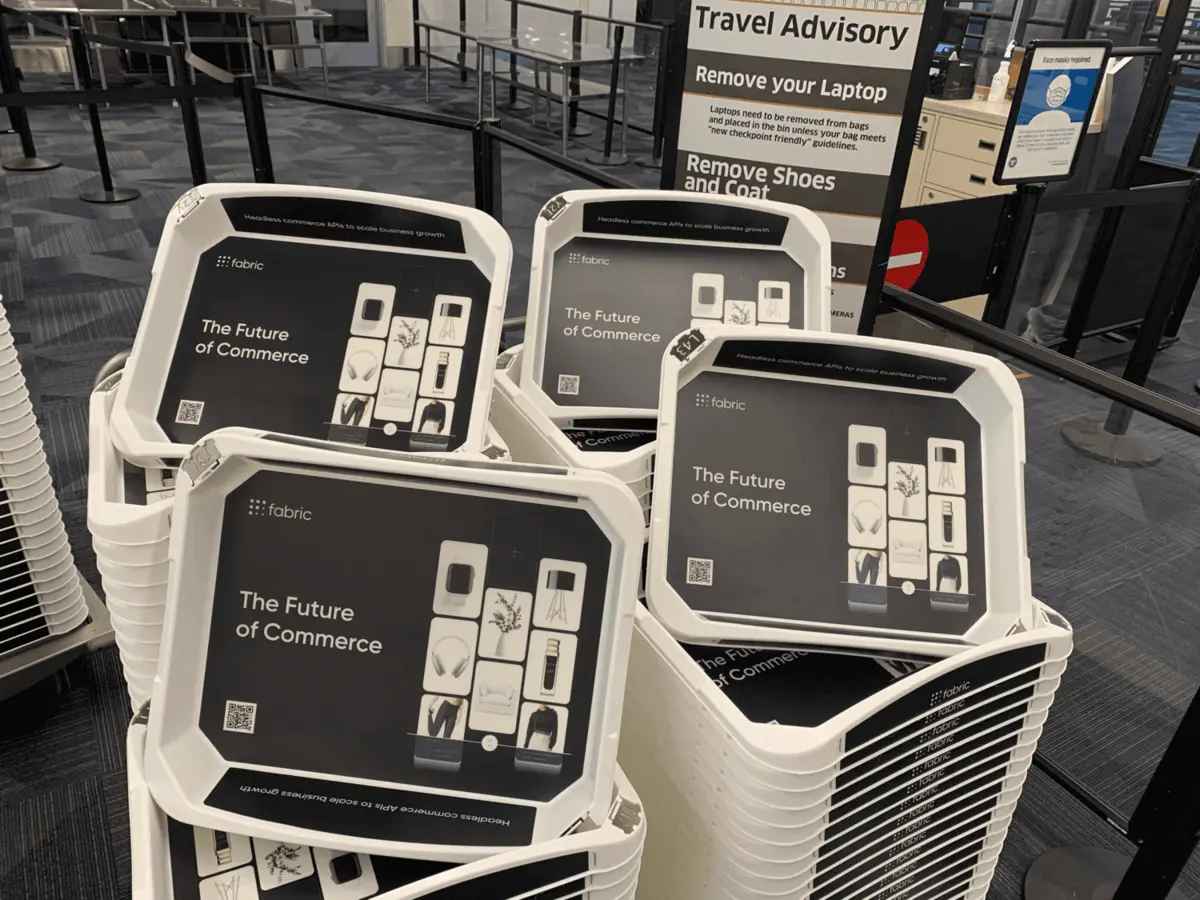
Client exampleFabric took over every digital screen and all 760 security trays at San Jose airport.

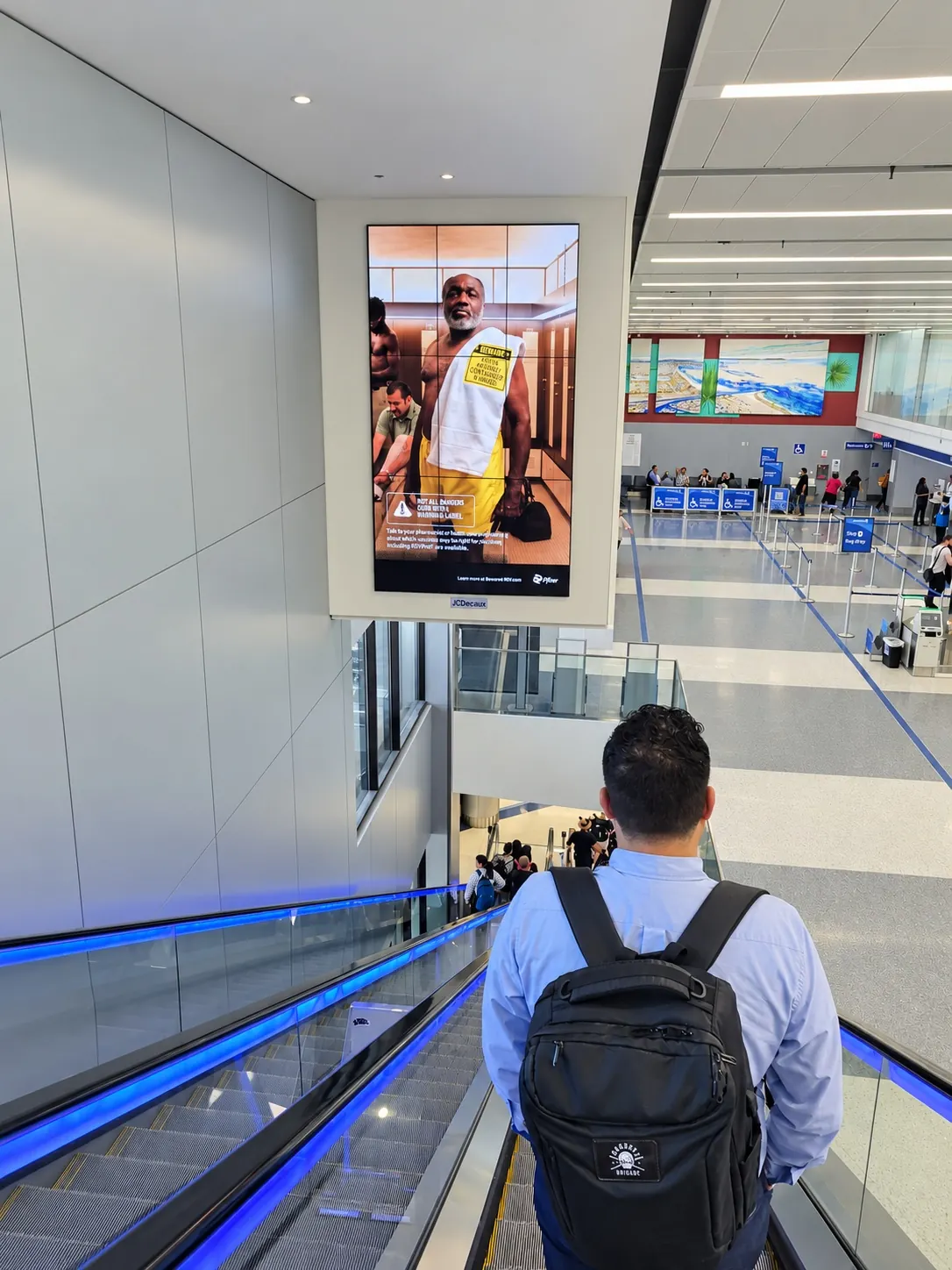
Pfizer digital screen above an arrivals escalator

Working for a client? See how we work with agencies. Buying in-flight too? See in-flight advertising on 45+ airlines.

The basics

What is airport advertising,
and how is it bought?

Airport advertising is out-of-home media placed inside and around airport terminals: digital screens, banners, wall wraps, baggage-claim displays, security trays, lounge screens, and roadside billboards. It reaches travelers with time to look, from 45 minutes to several hours per visit. It is sold by airport, by format, and by period, usually four weeks, by the media owner that holds that airport’s concession. EAM plans and buys it for you across any of 125+ airports under one contract.

Where the ads run

Every airport sells the same path in different units. On the departure side: check-in halls, the walk to security, the security checkpoint itself (trays and overhead screens), the concourses and gate holds, and airline lounges. On the arrival side: the walk from the gate, baggage claim, the exit doors, and the curb. Concourse and lounge units reach everyone, including passengers connecting through a hub; baggage claim and the curb reach only people starting or ending a trip in that city. That distinction decides most plans: a brand selling to the city buys arrivals, a brand selling to the traveler buys departures, and a launch buys both.

What the formats look like

Tap any format to see photos, how it is sold, and its artwork lead time. Specific units and sizes vary by airport.

Formats and what they cost

Planning ranges for one unit or one network at one airport, for a four-week period, from EAM’s buying across 125+ airports. Rates move with the airport, the season, and availability; specific units come back as a quote. For every format and more airports, see the full airport advertising cost breakdown.

Airport advertising formats, where they sit, and planning cost ranges (four weeks, one airport)
FormatWhere it sitsWhat you getPlanning rangeBest for
Digital screen networksConcourses, gate holds, check-in, baggage claimA 10- to 15-second spot in a loop of 6 to 24 advertisers across 20 to 100+ screens$5,000–$150,000Frequency across a whole terminal; B2B and launches
Large-format digital and video wallsCheck-in halls, central concourse, arrivals exitsOne dominant screen or wall, shared with 4 to 10 advertisers$15,000–$150,000A single big read; brand launches
Baggage-claim digital and carousel wrapsArrivals hall, over and around the carouselsScreens or printed wraps at the one place every arriving passenger stops$5,000–$75,000Reaching visitors and inbound business travelers
Security traysThe checkpoint, in passengers’ handsPrinted tray inserts, 100% share of voice at that checkpoint$10,000–$60,000Every departing passenger, once, up close
Banners, wall wraps, and tension-fabric displaysConcourse walls, escalator banks, walkwaysOne static face, full share of voice for the period$5,000–$60,000Always-on presence; one message held for weeks
Spectaculars, mini-spectaculars, and dioramasBaggage claim, corridors, waiting areasBacklit static displays, full share of voice$2,000–$40,000Entry budgets; directional and local messages
Airline lounge screens and bannersInside airline clubsScreens and displays in front of seated premium travelers for 90 minutes or more$5,000–$40,000Executives and frequent flyers
Terminal dominations and takeoversEvery face in a terminal or concourseAll digital and static units on one path, one brandNorth of $150,000A launch or event week
Exterior and roadside digitalApproach roads, parking structures, curbDigital billboards reaching passengers, meeters, and the local commute$5,000–$75,000Local reach beyond the terminal

Production and installation are extra on static units, from a few hundred dollars for a tray or diorama to $40,000 for a large wrap. Digital units run your files as supplied.

What it costs by airport size

Planning ranges by airport size, four weeks, excluding production
Airport sizeExamplesOne unit or networkTwo- to three-unit planDomination
Largest hubsJFK, LAX, ORD, SFO, MIA, ATL$15,000–$150,000$50,000–$300,000North of $300,000
Large airportsSEA, PHL, MCO, LAS, DFW, IAH, EWR$8,000–$125,000$30,000–$200,000North of $150,000
Mid-size airportsAUS, BNA, FLL, PBI, PHX, LGA$3,000–$80,000$15,000–$110,000North of $100,000
Multi-airport campaigns3 to 10 airports$75,000–$100,000 for three airports; $150,000–$250,000 across five major hubs; $500,000 and up for eight to ten. See the multi-airport cost guide

Your airports, your dates

Get current pricing and availability for the airports you need. Send your work email for the media kit. We’ll follow up to learn who you need to reach and when, then come back with live availability and a recommended mix.

Sent within minutes.

How to choose

Conference or event week
Buy the arrivals path the days before the show opens and the departure lounges on the last day; book three to six months ahead at convention airports
Always-on B2B
Departure-side digital networks and lounges, in 28-day periods, at the airports where your customers actually fly
Recruiting and employer brand
Both directions at the airports in your hiring markets, so the same professionals see you leaving and coming home
Reaching a city’s visitors
Baggage claim, the exit doors, and the curb, because those reach only people entering the city
A launch or brand moment
A domination or large-format digital in one terminal for one period, then a lighter always-on presence
Holiday or seasonal push
Arrivals and baggage claim at leisure-heavy airports through the peak weeks, booked two to three months ahead

How it is measured

Proof of posting and digital play logs show the campaign ran as bought. Delivered impressions are modeled from the airport’s passenger counts and the unit’s position, so treat them as audience sizing. A brand-lift study, fielded before the flight, is the only method that measures effect. Direct attribution to sales is not reliably available for airport media, and anyone promising it is overselling. EAM contracts proof of posting and delivery reporting on every campaign.

Where to advertise

Which airports should
you advertise in?

The airports your audience actually flies through, in the weeks they fly. A B2B brand follows its buyers’ home airports and conference cities; a consumer brand follows its markets and the leisure peaks. Each airport sells differently, so every link below goes to a guide with that airport’s formats, peak weeks, and planning ranges.

Airport guides, with who you reach and the weeks that sell out first

  • Los Angeles (LAX)Year-round

    Entertainment, tech, and the transpacific traveler

  • Las Vegas (LAS)CES, Black Hat, F1

    Whole industries in town for a week, plus F1 sponsors and their guests

  • San Francisco (SFO)JPM, RSAC, Dreamforce

    Bay Area tech, biotech, and finance, both directions

  • Chicago (ORD)PACK EXPO, RSNA

    The Chicago workforce plus travelers connecting across the country

  • Atlanta (ATL)Year-round

    The world’s busiest airport, with a large hometown business base

  • Dallas (DFW)Year-round

    Corporate Texas and American Airlines’ largest hub

  • Houston (IAH)CERAWeek, OTC

    Energy, the Texas Medical Center, and international business

  • Miami (MIA)Art Week, F1 Miami

    Miami residents, visitors, and Latin American business travelers

  • Orlando (MCO)Convention weeks, Q4

    Convention industries and the vacation market, on two calendars

  • Austin (AUS)SXSW, F1, ACL

    Tech and business travel in both directions, one terminal

  • Mexico City (MEX)Grand Prix, Banamex shows

    Mexico’s business capital and its trade-show calendar

  • Madrid (MAD)FITUR, Grand Prix

    Spain’s government and corporate headquarters, plus trade fairs

Timing

How far ahead should
you book?

Four to eight weeks for a standard four-week flight at one airport. Three to six months when the plan includes a convention week, a Grand Prix, a holiday peak, or several airports at once. What sells out first is the arrival path and the large-format digital at the host airport.

Working back from your launch date

  1. 3–6 months out

    Event weeks and holiday peaks: hold the strongest arrival-path units at the host airport before the show’s exhibitors start buying.

  2. 1–2 months out

    Standard four-week flights: confirm the airports, check what is open, and approve the mix.

  3. 3–4 weeks out

    Static artwork, banners, wraps, and security trays go to print and installation.

  4. 2–3 weeks out

    Digital creative is due, usually 14–18 business days before start, and the airport approves every piece.

  5. Launch

    Posting confirmed before the first arrival wave.

  6. After the flight

    Proof of posting and play logs, in one report.

Who sells it

Who sells airport advertising,
and who works for you?

Three kinds of companies sell airport advertising. Media owners such as JCDecaux, Clear Channel Airports, and oOh!media hold each airport’s advertising concession and sell their own screens and signs. Self-serve platforms list some of that inventory online. Agencies like EAM Advertising own no inventory, work for the advertiser, and buy across every media owner, which matters most when a plan covers more than one airport. See how an airport advertising agency runs a multi-airport campaign.

Airport advertising sellers compared
Compared onMedia ownerSelf-serve platformEAM AdvertisingAirport media agency
What it sellsIts own units, at the airports where it holds the concessionWhatever inventory is listedAny unit at any of 125+ airports
Who it works forIts sales targets and the airportThe platformYou, the advertiser
Advice on what to buyFrom its own inventory onlyNoneWhat fits your audience, across every owner
Several airportsA separate rep and contract at each ownerLimited to what is listedOne plan, one contract, one invoice
Creative and approvalsIts own specs; you manage each airportYou manage themOne spec sheet; EAM moves every approval
Proof it ranIts own reportPlatform reportingProof of posting from every airport, in one report

The evidence

Does airport
advertising work?

For awareness and perceived stature with travelers, yes: airport audiences notice the ads, remember them, and rate the brands behind them as bigger and more trustworthy. Most published research is paid for by the media owners, so read it as directional, and plan a brand-lift study if you need to prove effect for your own campaign.

Published research, and who paid for it

82%read airport ads61% remember them · 57% act afterward

Frequent flyers who saw airport advertising: how many read it, recalled it, and took action after.

Nielsen for Clear Channel Outdoor (2025)Funded by Clear Channel Outdoor, a media ownerRead the study
113prestige index

Travelers rated airport advertising highest for perceived value and prestige among the advertising channels tested.

ResearchBods for JCDecaux (2021)Funded by JCDecaux, a media ownerRead the study
GlobalSuccessfulInnovativeTrustworthy

The words travelers use for brands they see advertised in airports.

EAM’s take

Airport advertising works best when the audience is concentrated (an industry’s conference week, a company’s home airport, the lounges of a financial center), the message lands in a few seconds, and the brand wants to look like the leader in its category. It works least well as direct response. More on airport advertising effectiveness.

Real brands. Real campaigns.

What campaigns has
EAM Advertising run?

Campaigns across several countries and media owners, each bought through one contract. Swipe or use the arrows for the markets, the scope, and the result.

“EAM made a nationwide airport campaign feel much easier to manage. The team was responsive, organized, and always on top of the details. They helped us make smart decisions with the budget, kept everything moving, and ultimately delivered exactly what we were looking for.”

Chief Marketing OfficerFortinet · nationwide airport campaign

These examples show past EAM campaigns—not a minimum campaign size, a forecast, or a guarantee of results. One-airport briefs are welcome, too.

Who we are

What is
EAM Advertising?

EAM Advertising is an airport and in-flight media agency, founded in 2015. It plans, secures, and executes campaigns for brands and agencies across 125+ airports, 45+ airlines, and 40+ media vendors. It owns no advertising inventory, which is what keeps its recommendations independent.

What it is
An airport and in-flight media agency that owns no inventory
What it does
Plans, secures, and executes campaigns for brands and agencies
What it doesn’t do
Own or sell advertising inventory at any airport or on any airline

How EAM works

How does EAM Advertising
run a campaign?

EAM Advertising runs every campaign as one call, one plan, and one contract. We follow up to learn who you need to reach and when, then come back with current availability and a recommended mix.

  1. Step 01

    Scope the campaign.

    Who you need to reach, where, and when. We follow up to learn the objective and the budget range, and map the airports to where your audience travels.

    You getThe objective, budget range, and airport map

  2. Step 02

    Check avails and loop position.

    What is open for your dates at every airport in the plan, which loops are crowded, and which units are likely to sell out first.

    You getAvailability and sell-out risk at every airport

  3. Step 03

    Quote the mix.

    Formats and placement at each airport, along the arrival and departure path, with a quoted range. We come back with current availability and a plan you can take inside.

    You getA quoted plan you can take inside

  4. Step 04

    Contract and traffic creative.

    One contract with EAM covers every media owner in the plan. We supply one spec sheet for every unit and move creative through each airport's approval.

    You getOne contract and one spec sheet

  5. Step 05

    Go live and close the loop.

    Confirm posting before the first arrival wave at every airport. Deliver proof of posting and play logs from every airport in one report.

    You getProof of posting and play logs in one report

Send a brief

Tell us about
your campaign.

Tell us who you need to reach, where, and when. We come back with current availability at every airport in the plan and a recommended mix.

125+ airports · 40+ media vendors · Since 2015

Airports, start date and duration, campaign goal, budget range, and anything else you can share. A few lines is plenty.

We come back with current availability and a recommended mix.

For agencies and consultants

Your client. Your plan.
We handle the airports.

Agencies and consultants bring EAM Advertising in as the airport specialist behind a client’s plan. The client relationship stays with you. We plan, buy, and report under NDA, and can work white-label.

Get our media kit
  • Your client stays yours.We work behind your team, not around it.
  • White-label and NDA.Plans and reporting can go out under your name.
  • One contract, one invoice.Every airport and media owner in the plan, under one set of terms.
  • Numbers before the client commits.Current availability and planning ranges at the proposal stage.

Questions

Questions about airport
advertising and EAM

What is airport advertising?

Out-of-home advertising placed inside and around airport terminals: digital screen networks, video walls, banners and wall wraps, baggage-claim displays, security trays, airline lounge screens, and roadside billboards. It reaches travelers with 45 minutes to several hours of dwell time, and it is sold by airport, by format, and by period, usually four weeks, by the media owner that holds each airport’s concession.

How much does airport advertising cost?

A single unit or network at one airport runs about $3,000 to $150,000 for four weeks, depending on the airport’s size and the format: dioramas and mini-spectaculars at the low end, large-format digital and video walls at the top. A two- or three-unit plan at a major hub runs $50,000 to $300,000, and a terminal domination starts north of $150,000. Multi-airport campaigns start around $75,000 to $100,000 for three airports. Production on static units is extra. These are planning ranges from EAM’s buying across 125+ airports, not a rate card.

Which airport advertising format works best?

It depends on who you need to reach and where they walk. Concourse digital networks and lounges reach departing and connecting travelers, which suits B2B and recruiting. Baggage claim, exit doors, and the curb reach only people entering the city, which suits tourism, hospitality, and local consumer brands. Security trays reach every departing passenger once, up close. Dominations and large-format digital suit a launch. EAM recommends the mix after learning the objective, not before.

How do you buy airport advertising?

Each airport’s inventory is sold by the media owner that holds its concession, so buying several airports directly means several contracts, several spec sheets, and several invoices. Through EAM it is one contract: we check current availability and loop position, recommend the units, secure them, traffic the creative through airport approval, confirm posting, and deliver proof of posting after the flight. Peak periods at convention and event airports sell out three to six months ahead; standard periods need four to eight weeks.

What is EAM Advertising?

EAM Advertising is an airport and in-flight media agency, founded in 2015. It plans, secures, and executes campaigns for brands and agencies across 125+ airports, 45+ airlines, and 40+ media vendors. It owns no advertising inventory, which is what keeps its recommendations independent.

Is EAM Advertising an agency or a media owner?

An agency. EAM Advertising represents the advertiser and owns no screens, signage, or in-flight placements. Media owners such as JCDecaux, oOh!media, Times OOH, Boingo, and Clear Channel Airports hold the contracts and sell their own space; EAM buys across them for the advertiser.

Does EAM Advertising handle in-flight advertising?

Yes. EAM plans and buys on 45+ airlines: seatback, personal-device, Wi-Fi portal, and print placements, bought through the airline’s media partner or the airline directly, depending on the carrier.

What does a multi-airport campaign cost?

Entry-level multi-airport campaigns start around $75,000 to $100,000 for three airports and $150,000 to $250,000 across five major U.S. hubs, for four weeks with static and digital unit options. These are planning ranges, not a rate card.

Does EAM Advertising work with marketing agencies?

Yes. Agencies bring EAM in as the airport and in-flight specialist for a client’s plan. The client relationship stays with the agency; EAM plans, buys, and reports under NDA and can work white-label.

How do I start a campaign?

Send your work email for the media kit, or send a brief. We follow up to learn who you need to reach and when, then come back with current availability and a recommended mix.

Airport advertising media agency. 125+ airports. Est. 2015.

One airport or twelve.
Start with the media kit.

Send your work email for the media kit: formats, planning ranges, and how EAM works. We’ll follow up to learn who you need to reach and when, then come back with current availability and a recommended mix.

We’ll follow up to learn who you need to reach and when.

125+ airports · 40+ media vendors · Since 2015