
Terminal 1 · Static
Pedestrian-bridge static set
T1 road-zone bridge toward gate 5
- Type
- Static, multi-face
- Your spot
- Full face
- Best for
- National and international vehicle and pedestrian flows; exit-side impact noted on the kit
44 million passengers a year, Aeroméxico’s hub, and the front door to Centro Banamex, the World Trade Center, and the Grand Prix. Get the MEX media kit for formats, planning ranges, and booking windows.


You’re in good company






At a glance
Benito Juárez is Mexico’s busiest airport and the door the capital’s corporate base and the Banamex calendar share. Felipe Ángeles is a different airport and a different buy.
AICM handled 44.6 million passengers in 2025, Mexico’s busiest airport: 27.1 million domestic and 17.5 million international, about 39%. Through August 2026 traffic is up 1.5%, led by international travel (up 3.9%), and in August the international count passed its 2019 level for the first time. Aeroméxico hubs in Terminal 2; Terminal 1 carries the low-cost carriers and most foreign airlines. Felipe Ángeles (AIFA), the second Mexico City airport, handled about 7.1 million in 2025 and is a separate buy.
Two terminals, split by airline and about three kilometres apart. Terminal 2 is Aeroméxico’s hub, with Delta, LATAM, Copa, and Wingo. Terminal 1 carries Volaris, Viva, and most foreign airlines: United, American, Air Canada, Air France, KLM, Lufthansa, Iberia, British Airways, Emirates, Turkish, and Avianca. Connecting Aeroméxico passengers often stay airside in Terminal 2; immigration, international bag claim, and the curb reach people actually entering the capital. The airport’s renovation runs through 2027, so confirm unit locations and sightlines at contract.
Business travel runs both directions. Reforma, Polanco, and Santa Fe fly out every week, and the executives, buyers, and partners who meet them fly in. Tourism and the metro employer base are the always-on audience. Banamex and World Trade Center weeks change who is in immigration and bag claim. They do not replace the resident base.
The calendar ahead: Expo CIHAC October 14–16, Expo Beauty Show October 24–26, the Mexico City Grand Prix October 30–November 1 at a circuit about five kilometres from the terminals (the same weekend as Día de Muertos), and Plastimagen November 10–13, 2026; then ZONAMACO February 3–7, Intertraffic Mexico June 8–10, and Expo Seguridad in June 2027, with EXPOMED and ibtm Americas in August 2027.
Planning ranges, in U.S. dollars: a single unit or network runs $6,500–$25,000 per month. A two- or three-unit package runs $15,000–$50,000 per month. Domination runs north of $55,000 per month. Print production and installation on static faces run about $50–$850. Those are planning ranges, not a rate card; media is planned in monthly periods.
Digital spots are 10 seconds in a 2-minute loop, about one of twelve, about 8% share of voice if one advertiser holds that slot. Hold expiry, materials deadlines, and proof-of-posting terms are set at contract. Competitive separation may be possible, but it isn't guaranteed; ask when booking and write it into the contract. Creative needs airport authority approval. Rates exclude local VAT where it applies. EAM contracts in U.S. dollars.
Start your MEX plan
Three ways to start, depending on where you are.
What you can run
Sixteen placements across the two terminals: immigration screens, international bag-claim walls and circuits, arrivals walksides, the security filter, duty-free and lounge videowalls, the Terminal 1 bridge, and the Terminal 2 roadside screen. Every digital spot is 10 seconds in a 2-minute loop. The terminal your audience’s airline uses decides which units reach them.
Terminal 1 · Static
T1 road-zone bridge toward gate 5
Terminal 1 · Static
T1 international bag claim
Terminal 1 · Digital
T1 bridge between the national and international zones
Terminal 1 · Digital
T1 gates 25–28 and 29–36
Terminal 1 · Digital
T1 duty free, toward the last waiting areas
Terminal 1 · Digital
T1 claim areas 14–18, 20 screens
Terminal 2 · Static
T2 international arrivals, toward immigration
Terminal 2 · Static
T2 hallway to the last waiting areas
Terminal 2 · Static
T2 toward the international outpatient area, opposite the food court
Terminal 2 · Digital
T2 main access road
Terminal 2 · Digital
T2 outpatient area and international filter
Terminal 2 · Digital
T2 hall, last waiting, VIP area
Terminal 2 · Digital
T2 international departure lounge
Terminal 2 · Digital
T2 immigration
Terminal 2 · Digital
T2 international bag claim
Terminal 2 · Digital
T2 outpatient clinic for international arrivals
Digital runs a 10-second spot in a 2-minute loop: twelve slots, so about 8% share of voice when one advertiser holds one slot. This page uses about 8%. Ask how many of the twelve are sold for your month. In a Banamex week the loop fills. The spot still plays on the same cycle, and it shares the screen with more competitors. Confirm the live count at quote.
Print on the catalog is vinyl or lona, with separate print-and-install lines on several statics, about $50–$850. Digital production is not separately priced on the face. Confirm at quote. File types called out on digitals include .MOV and .MP4 and, on several Terminal 2 units, .PSD or .AI.
The structural fact is the hub split plus the arrivals path. A plan that buys AIFA units is not a Benito Juárez plan.
The digital, static, experiential, and exterior units brands buy in airports. For MEX we plan specific units and dates against what is open at the time.

Digital screens and video walls in airline business club lounges reach affluent business decision-makers and high-net-worth travelers in a captive setting.
Travelers often spend 90 minutes or more in the club. Screens in dining and seated areas and larger video walls (about 84–100 inches) give the brand both frequency and a dominant face.
Full motion or static creative can rotate through the loop while the audience is already seated.
* Differs depending on the airport.

Target high-level decision-makers and affluent individuals with entrance banners in airport business club lounges.
Engage with a discerning audience in a premium, brand-safe environment.
Showcase innovations for business-to-business brands or emphasize luxury for high-end brands.
* Differs depending on the airport.
Baggage claim digital network screens provide a unique opportunity to connect with travelers at a prime moment.
Strategically placed in high-traffic areas throughout the baggage claim area, these screens ensure maximum exposure for your brand.
By using baggage claim digital network screens, you can deliver your message to travelers multiple times, building frequency and driving engagement.
* Differs depending on the airport.

Packages can range in screen size and quantity. Strategically positioned throughout central airport concourses.
These screens can target 100% of arriving and departing traffic as passengers move towards airport exits and a large percentage of departing traffic as passengers move through the concourses and frequent favorite concessions in the area.
* Differs depending on the airport.
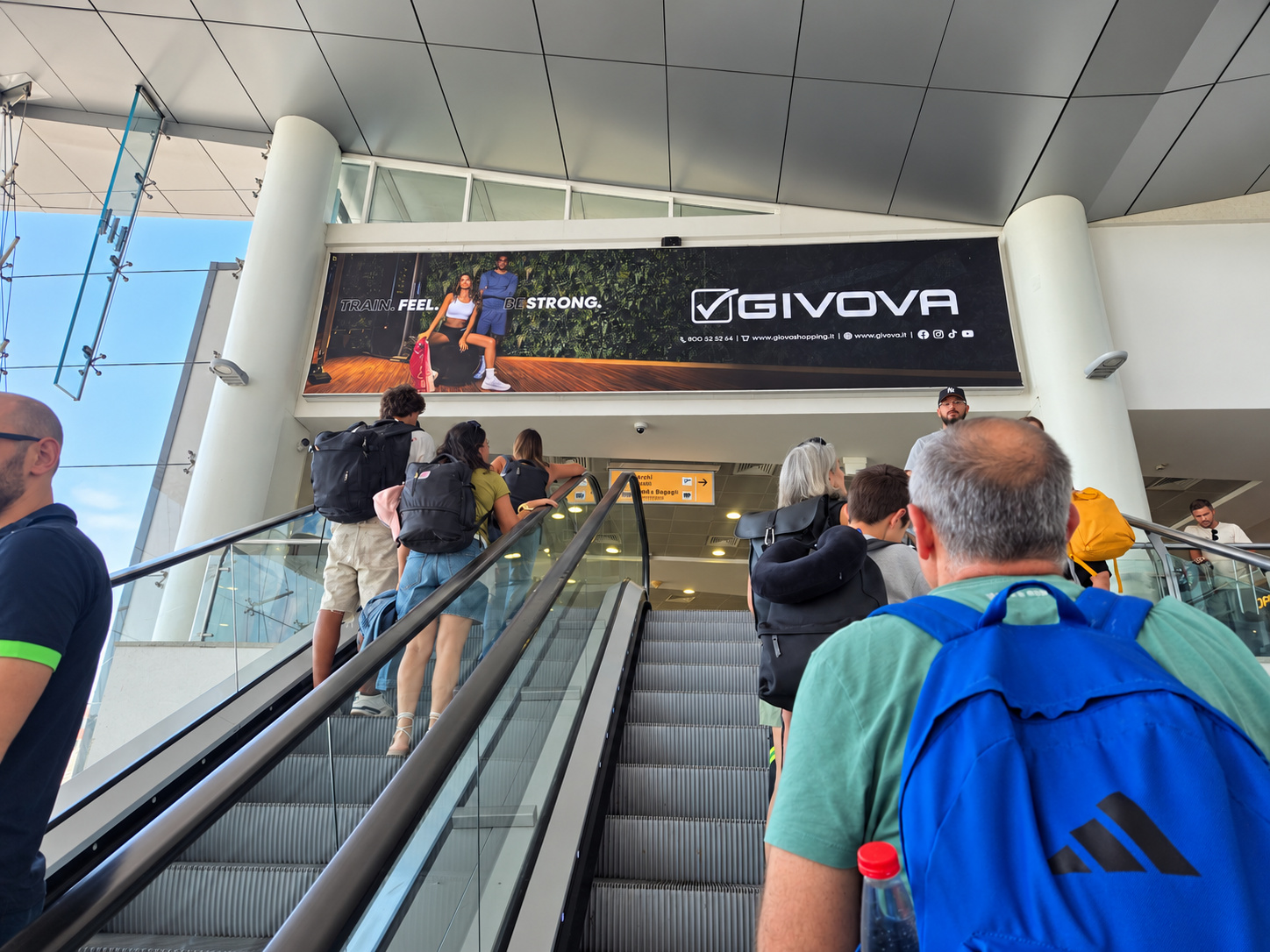
Large format banners offer a large, eye-catching space that can capture the attention of everyone walking through the airport.
They can be strategically placed on walls or hung from ceilings throughout the airport, ensuring maximum exposure for your brand.
With large format banners, you have the opportunity to own 100% of the share of voice in that area.
* Differs depending on the airport.

Experiential advertising at airports lets the brand interact with a captive audience through immersive installations.
Activations can include brand ambassadors, tech-focused displays, and product sampling.
Exhibit space is the same idea: a physical footprint where travelers can engage face-to-face.
* Differs depending on the airport.

Digital charging network screens are a highly effective advertising tool for brand marketers looking to reach a captive audience of travelers.
Travelers engage with the screens while charging devices, which adds dwell to the impression.
* Differs depending on the airport.
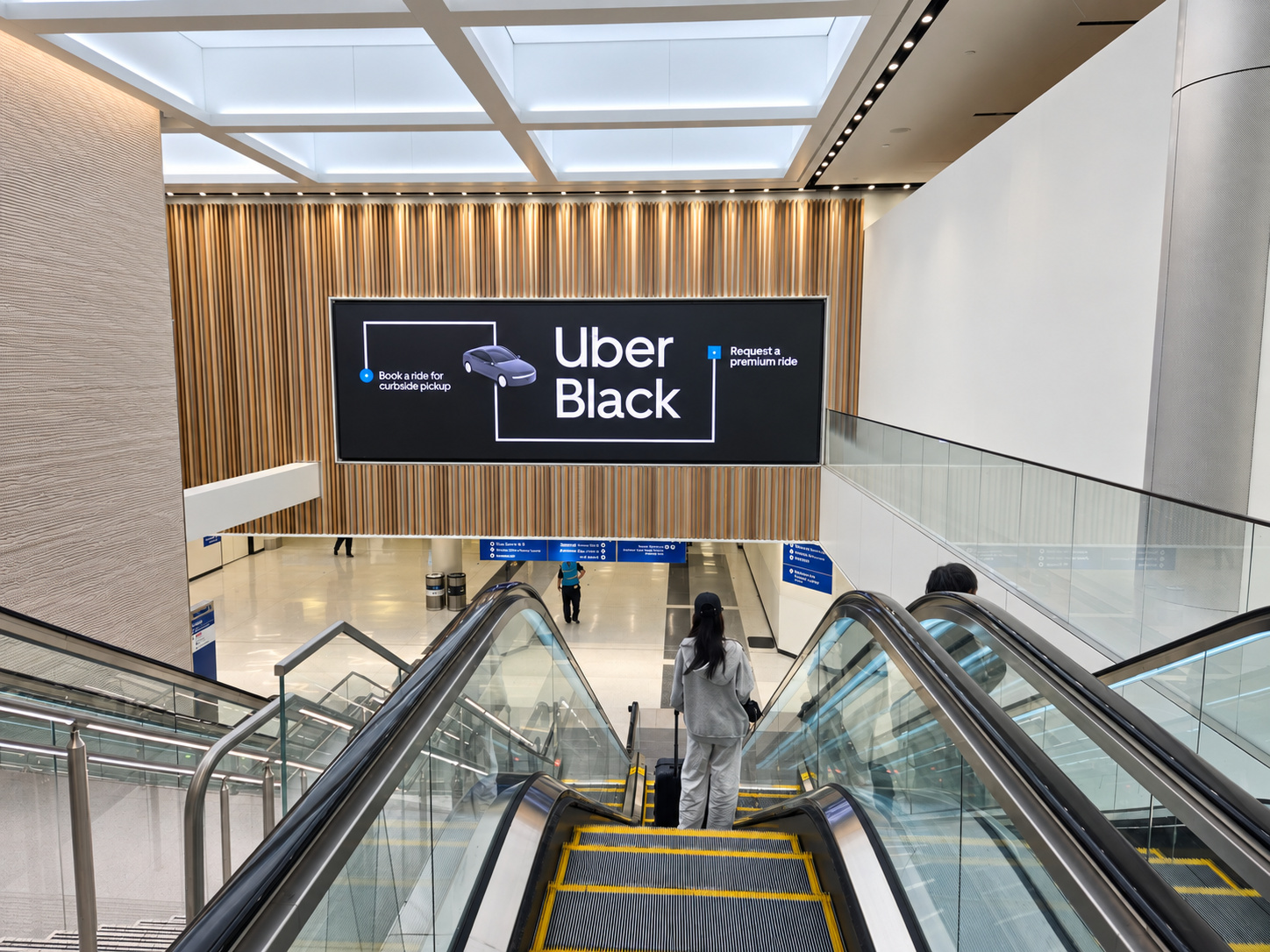
Digital spectacular screens offer a powerful advertising tool to capture significant attention in airports.
Strategically located in high-traffic areas, these screens provide maximum visibility and impact for your brand.
With their attention-grabbing size and creative flexibility, digital spectacular screens hold the attention of travelers and drive engagement.
* Differs depending on the airport.

By using digital network screens, you can deliver your message to travelers multiple times throughout their journey.
Strategically placed in high-traffic areas, these screens ensure maximum exposure for your brand.
These screens build frequency and drive engagement, making them an effective advertising option.
* Differs depending on the airport.
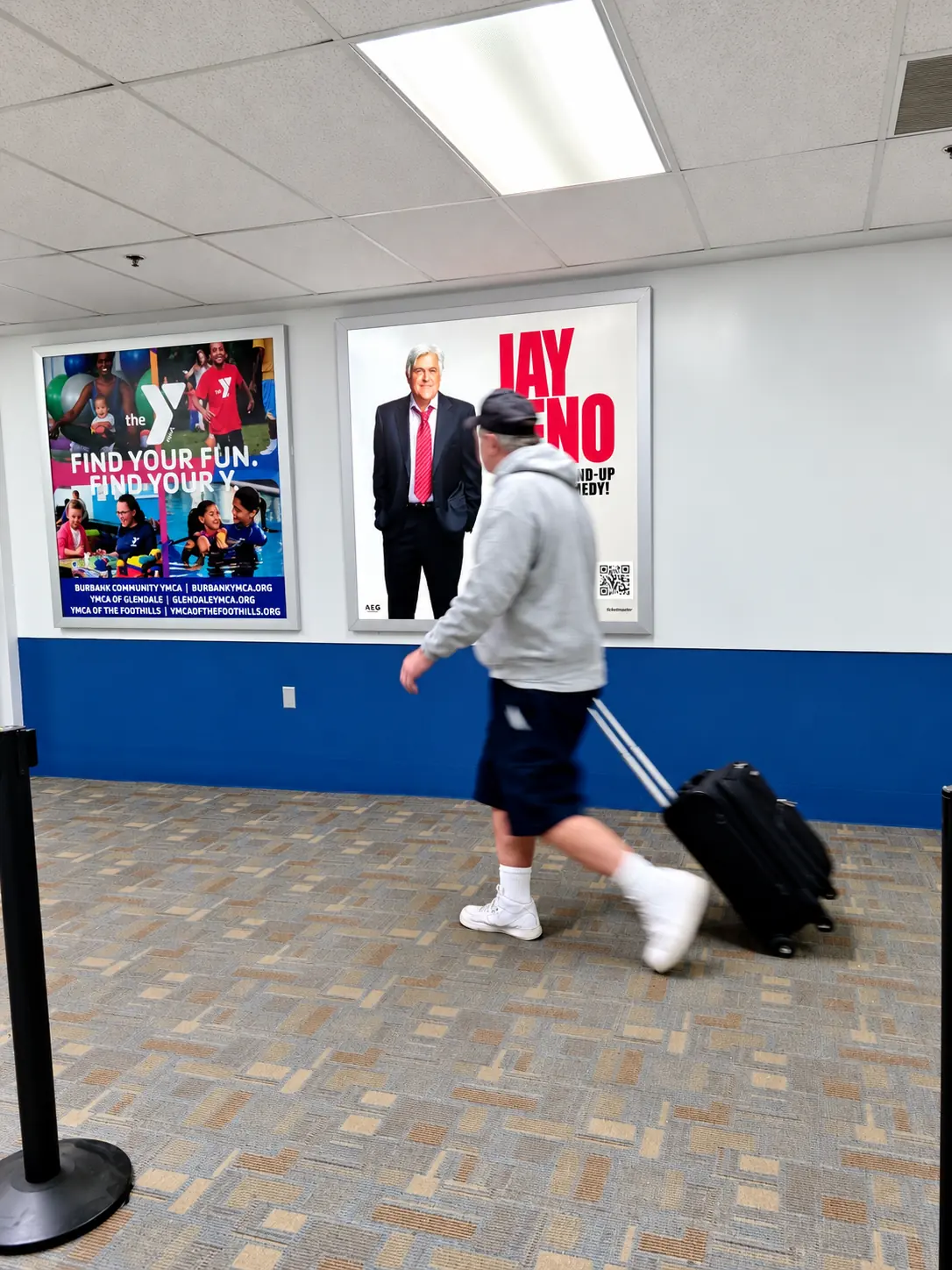
Dioramas are backlit displays at eye level in corridors and holdrooms.
They offer a lit, poster-scale face with 100% share of voice on that unit.
* Differs depending on the airport.

Leverage exterior signage to engage airport visitors as they arrive or depart, keeping the brand visible on the campus.
High-impact banners on the building or approach create a lasting impression before travelers enter the terminal.
* Differs depending on the airport.

Flight information screens are some of the most frequently viewed screens in the airport, where passengers already look for gate and time updates.
Advertising on these screens puts the message next to information travelers are actively reading.
* Differs depending on the airport.
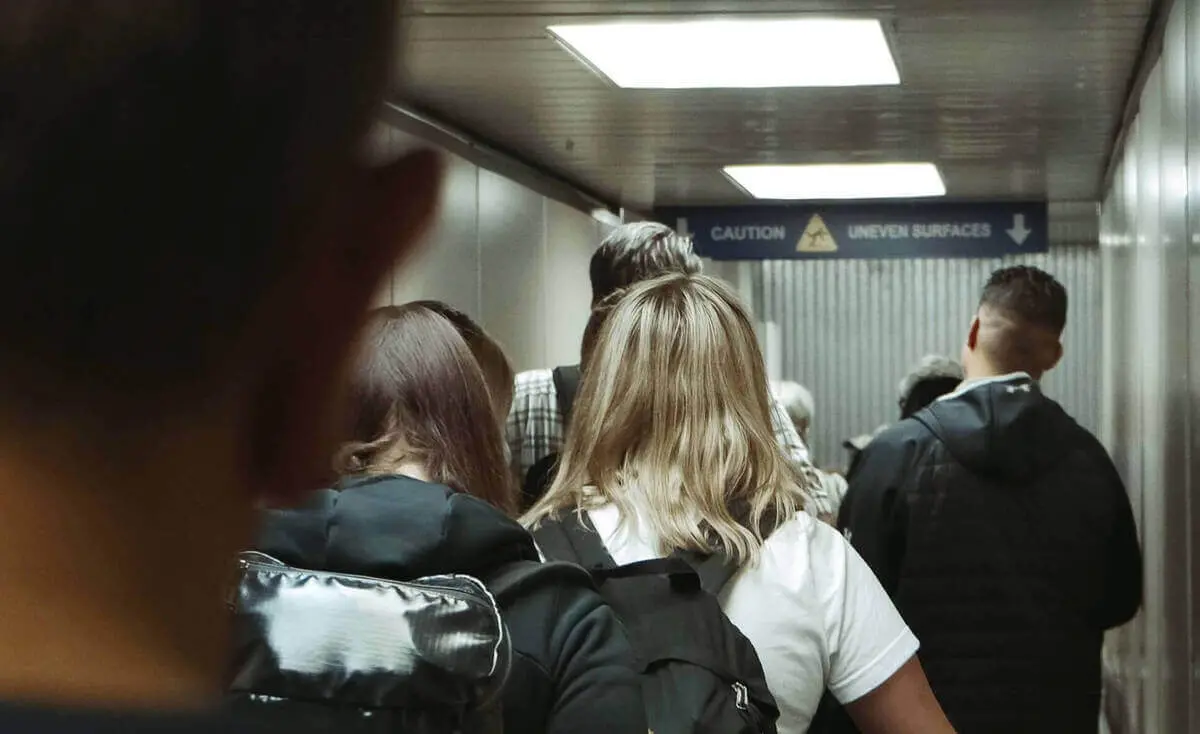
Jet bridge wraps put the brand on the walk between gate and aircraft.
The space is captive and sequential: every boarded passenger on that gate walks the length of the wrap.
* Differs depending on the airport.

Large format digital screens offer a unique opportunity to make a lasting impression on travelers.
These screens have the wow factor needed to capture your target audience's attention and inspire them to engage with your brand.
Large format digital screens offer creative flexibility to showcase your brand's messaging and art in a way that resonates with your target audience.
* Differs depending on the airport.
Large format banners offer a large, eye-catching space that can capture the attention of everyone walking through the airport.
They can be strategically placed on walls or hung from ceilings throughout the airport, ensuring maximum exposure for your brand.
With large format banners, you have the opportunity to own 100% of the share of voice in that area.
* Differs depending on the airport.
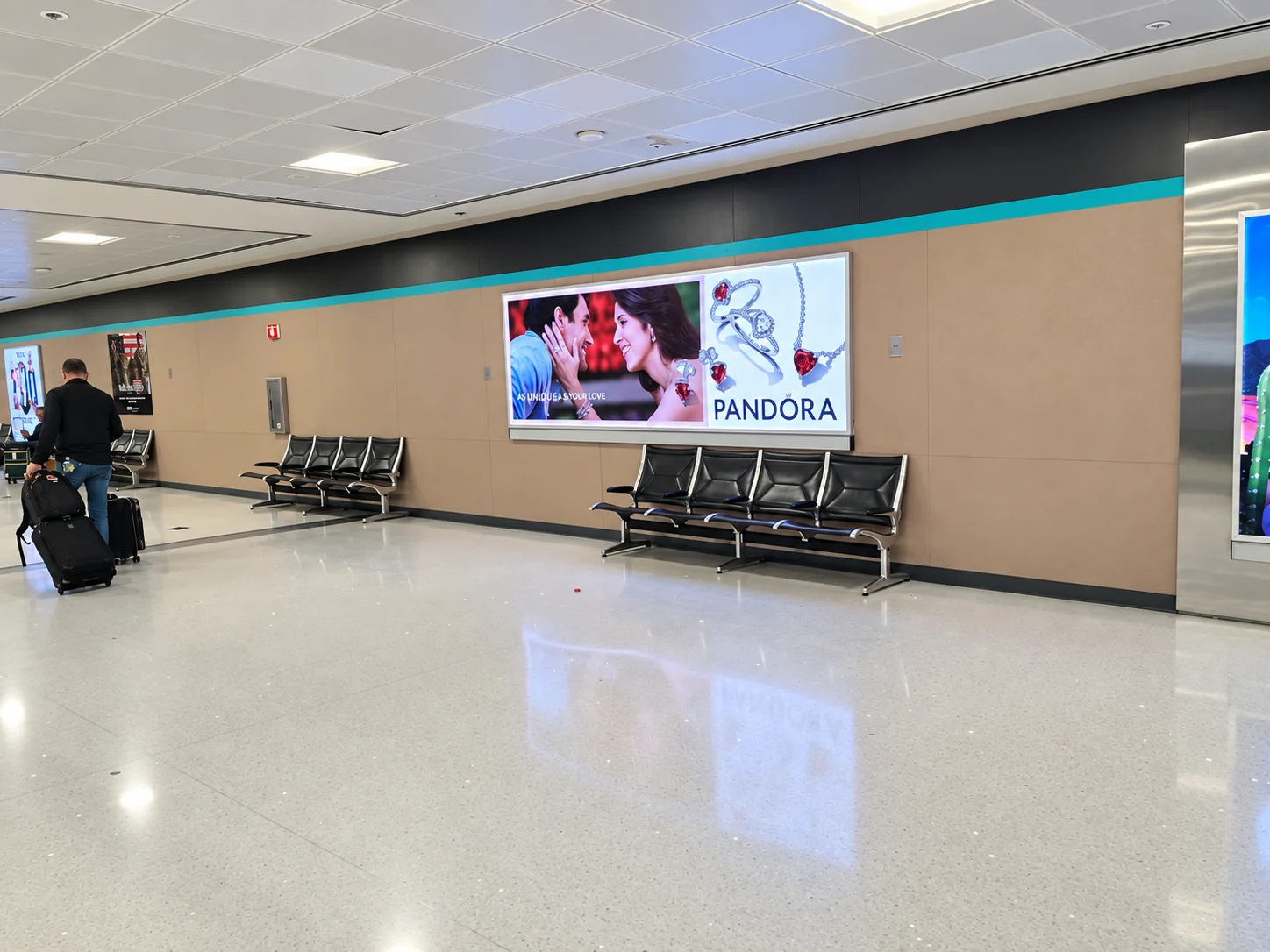
Mini-spectaculars are smaller spectacular units that still dominate a sightline without a full-wall takeover.
They own share of voice on that face and work in tighter terminal pockets.
* Differs depending on the airport.
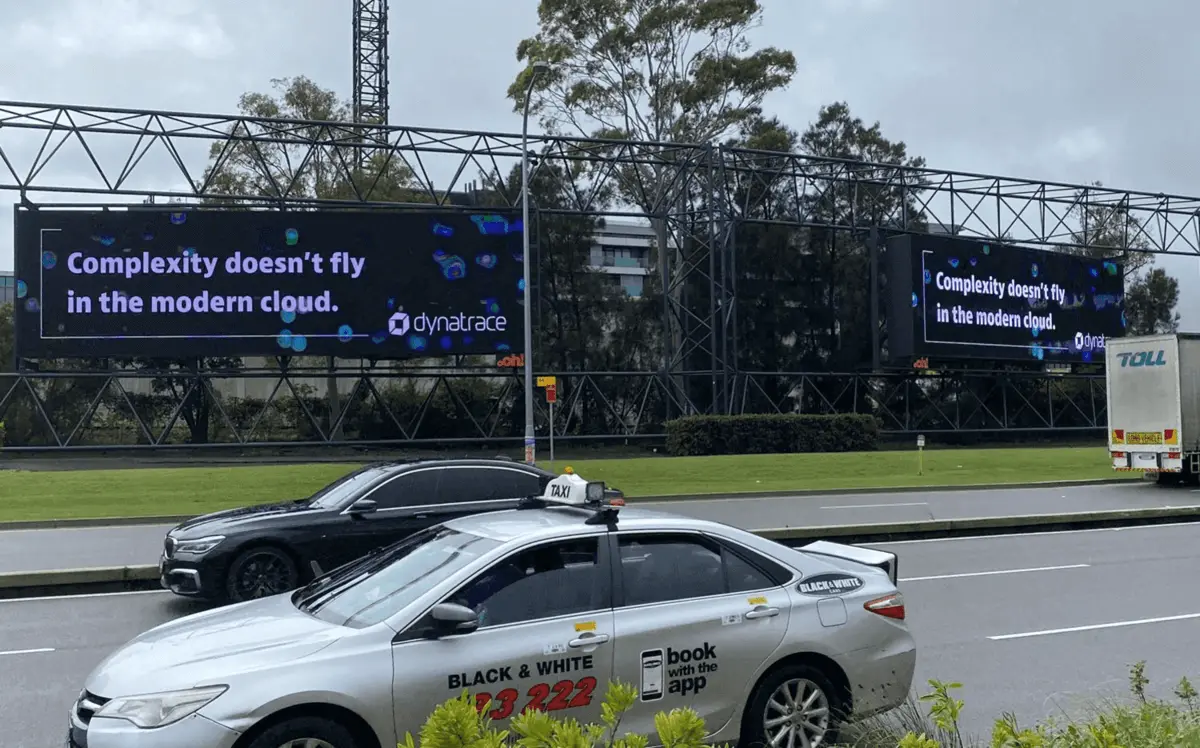
Exterior digital billboards at the airport engage a wide mix of travelers on the approach and campus roads.
Creative on digital billboards can run full motion or static.
* Differs depending on the airport.
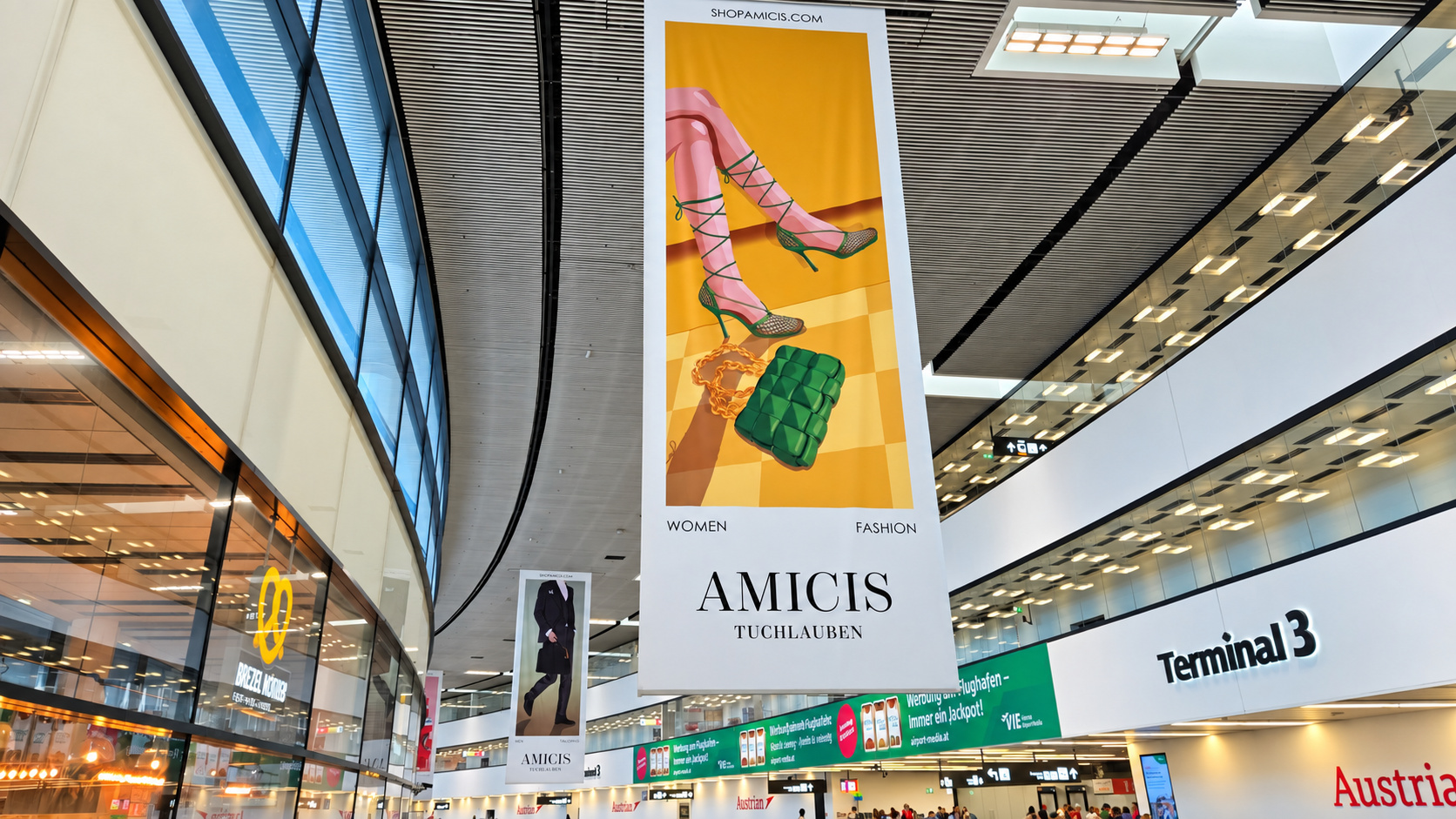
Large format banners offer a large, eye-catching space that can capture the attention of everyone walking through the airport.
An overhead banner package is sequenced across multiple faces so the brand owns a stretch of the travel journey and a specific airport area, which is what creates the wow effect.
They can be placed on walls or hung from ceilings, with 100% share of voice in that zone.
* Differs depending on the airport.
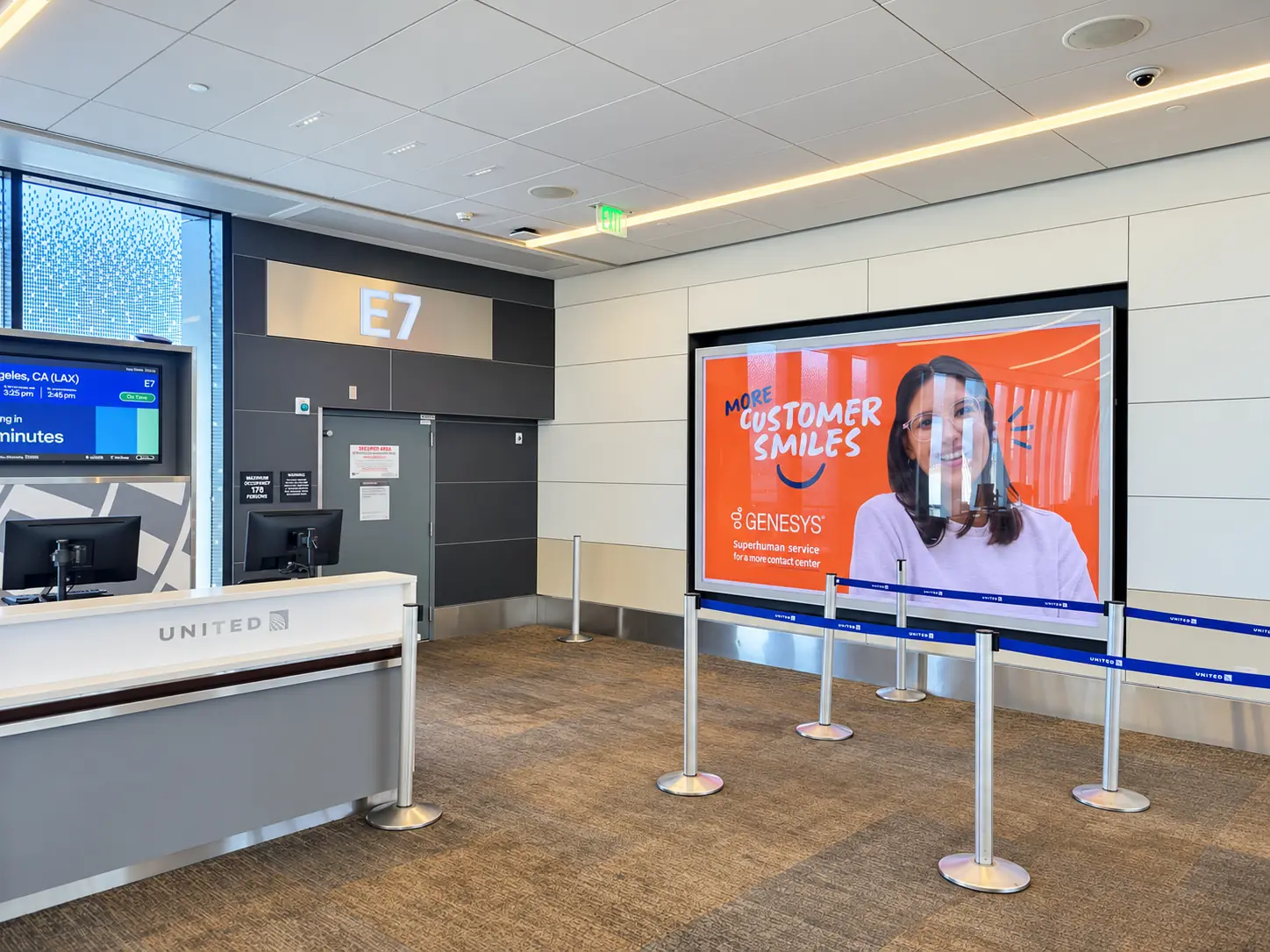
Spectaculars are large-format displays built for a single dominant face in a high-traffic terminal space.
With the ability to own 100% of the share of voice, your message is the only one being seen by travelers in that area.
* Differs depending on the airport.

Tension fabric displays are a visually stunning way to showcase your brand or product in the airport.
They command attention in a crowded terminal and offer a cost-effective way to reach a large audience.
With tension fabric displays, you have the opportunity to own 100% of the share of voice in that area.
* Differs depending on the airport.
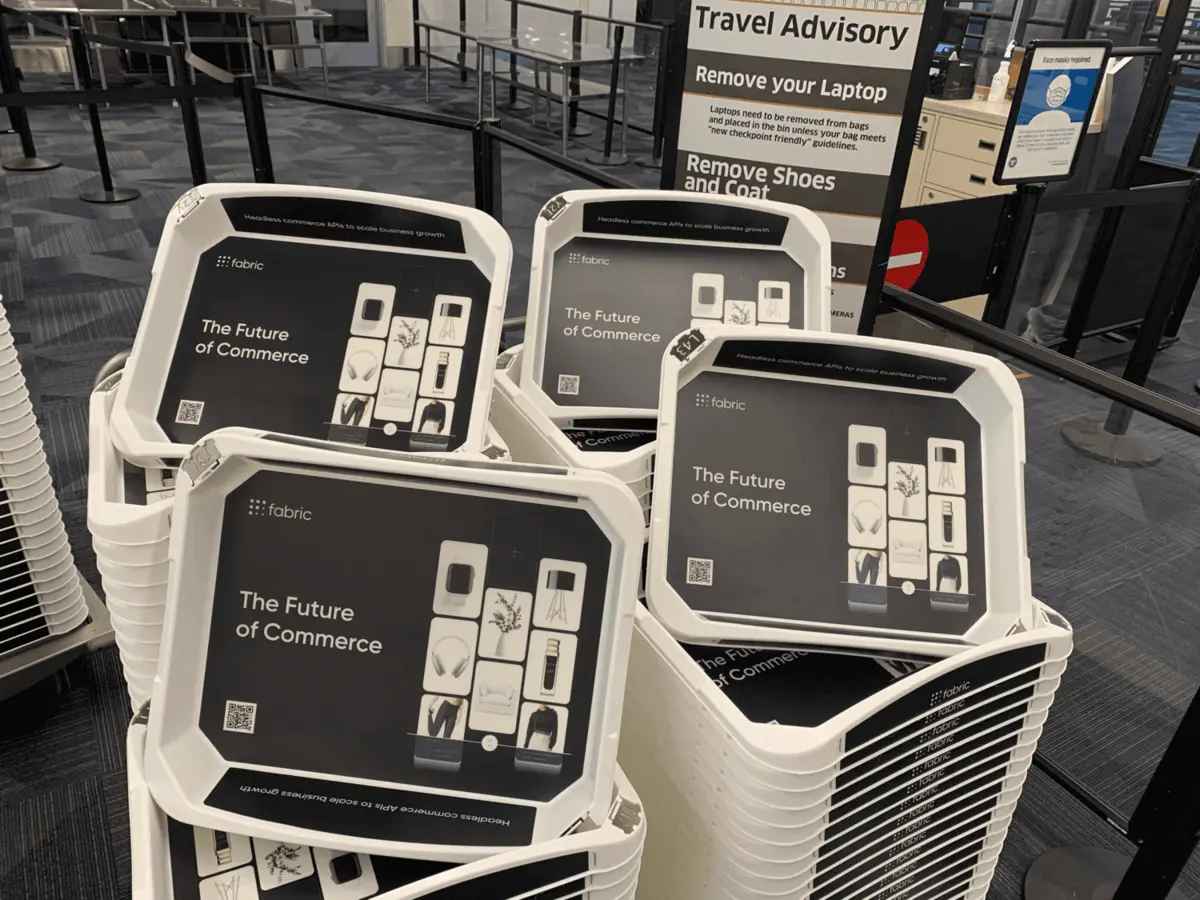
By advertising on airport security trays, the brand reaches travelers during an essential part of the departing journey.
Every passenger who uses that lane handles the tray.
* Differs depending on the airport.

By using vertical digital network screens, you can deliver your message to travelers multiple times throughout their journey.
These are vertical units with a different view profile: most sit at eye level and read with a poster feel.
Strategically placed in high-traffic areas, they build frequency as passengers walk the concourse.
* Differs depending on the airport.
Video walls are strategically positioned in high-traffic areas of the airport, ensuring maximum visibility and engagement for your brand.
These high-impact screens provide maximum visibility for your brand, making a lasting impression on travelers.
* Differs depending on the airport.
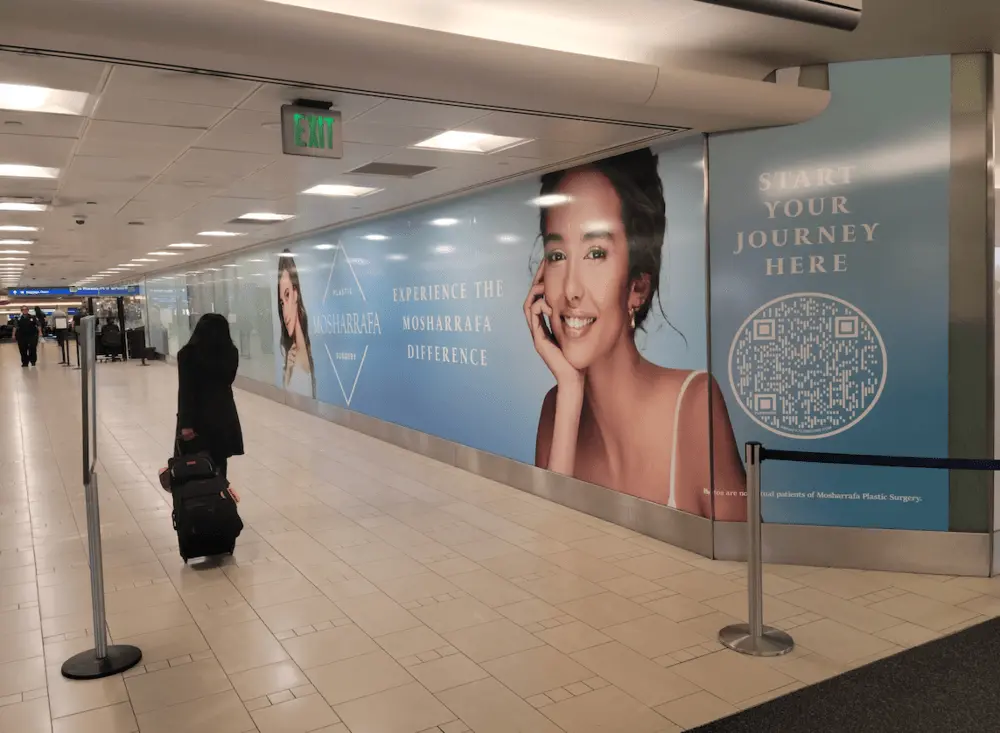
Wall wraps offer a visually striking and modern way to showcase your brand in the airport, with the ability to customize them to your brand.
Strategically placed in high-traffic areas, wall wraps capture attention and own 100% of the share of voice on that surface.
* Differs depending on the airport.

Sponsoring Wi-Fi access at airports engages travelers on their personal devices.
Call-to-action pages can be video or static, which is what turns access into a media placement.
* Differs depending on the airport.
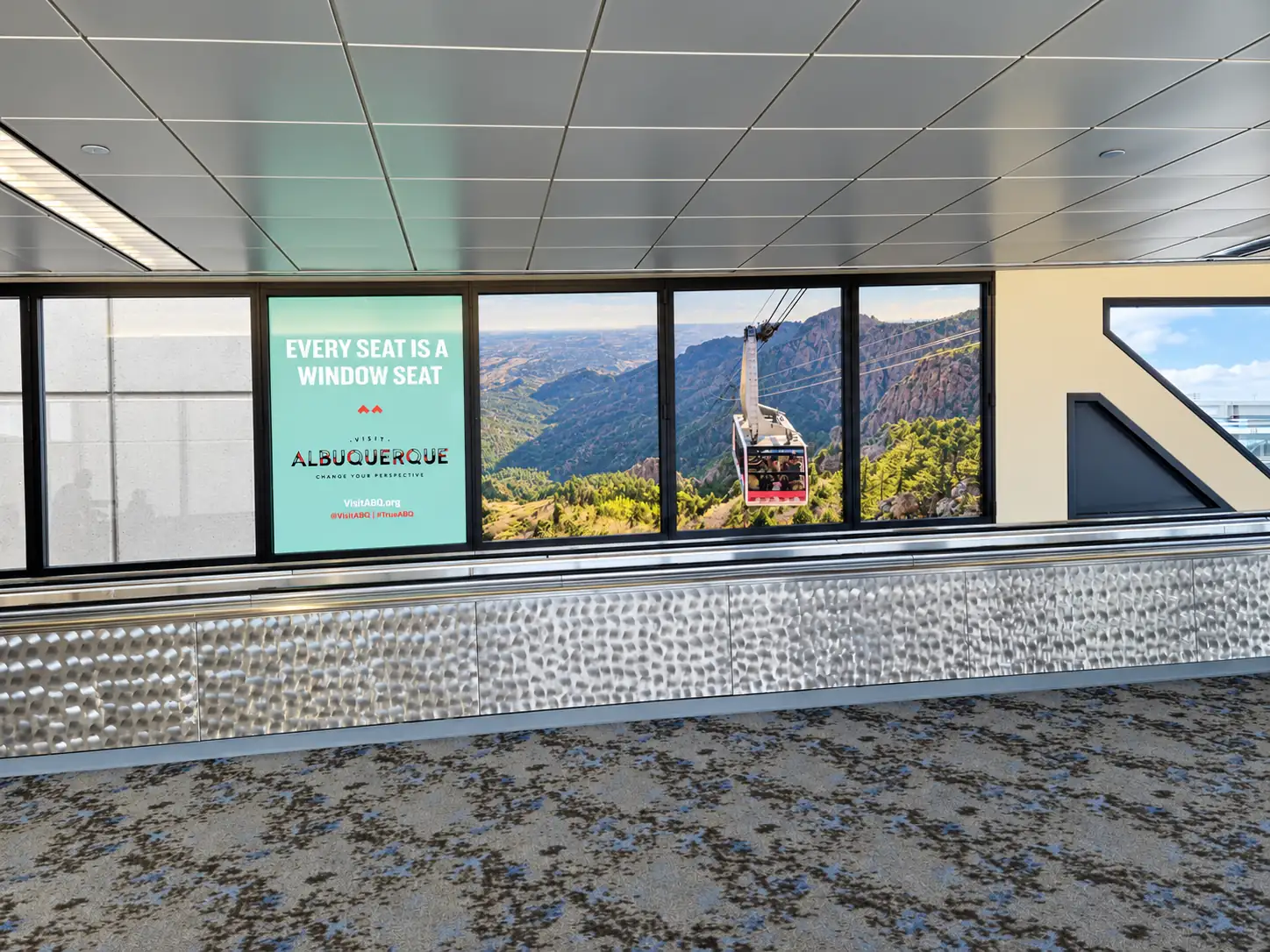
Window wraps offer a visually striking and modern way to showcase your brand on terminal glass, with the ability to customize them to your brand.
Strategically placed on windows in high-traffic areas, they capture attention from the interior walkway or the curb and own 100% of the share of voice on that glass.
* Differs depending on the airport.
Examples
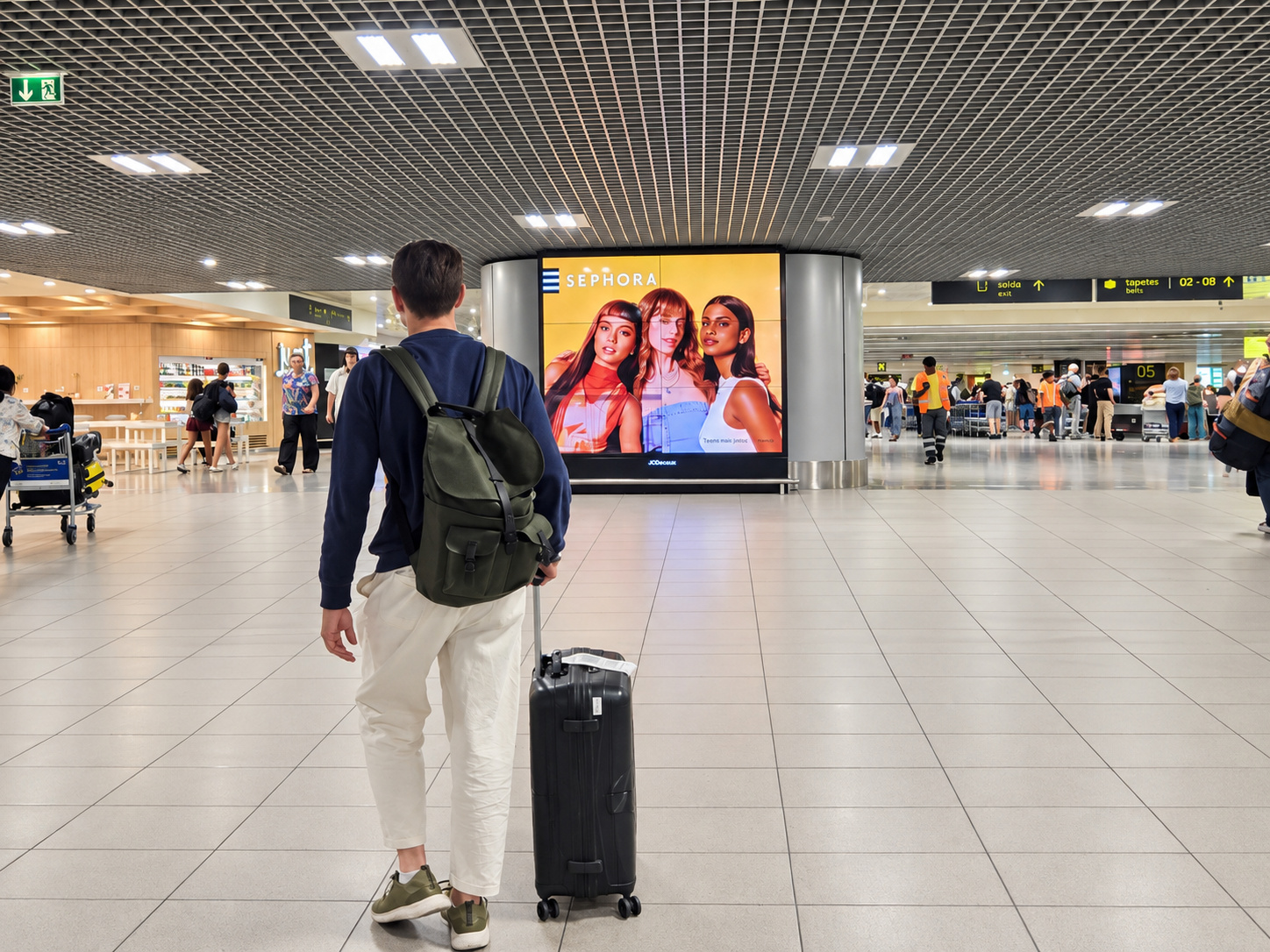
Airport advertising in practice, photographed across many airports. Availability at MEX varies by format.
Real brands. Real campaigns.
Campaigns across several countries and media owners, each bought through one contract. Swipe or use the arrows for the markets, the scope, and the result.
 U.S. + Canada

Multiple media owners.
One coordinated buy.
EAM brought a U.S. and Canada airport campaign together across multiple media owners.
 Five continents

Different markets.
One media partner.
Large-format digital and screen networks across five continents, including London, Paris, Tokyo, and São Paulo.
 Airports + airline lounges

Airports and lounges.
One coordinated plan.
A combined airport and airline-lounge presence across the U.S., Europe, and the Middle East.
 Five U.S. airports
A year of visibility.
One coordinated rollout.
EAM bought year-long security-tray takeovers across five major U.S. airports.
 Latin America
Four airports.
One regional campaign.
EAM planned digital and physical branding across Buenos Aires, Santiago, Bogotá, and Mexico City.
 San Jose · SJC
One airport.
A complete takeover.
EAM coordinated a full San Jose airport takeover across digital displays and all 760 security trays.
 Airline lounges · 7 U.S. cities
Executive education.
Reached in the lounge.
EAM planned and executed a lounge campaign for Wharton Executive Education in United, Delta, and American clubs across Philadelphia, New York, Dallas, Atlanta, Denver, Minneapolis, and San Diego.
 4 markets · Year-round
Four markets.
A full year on screen.
EAM built a year-round enrollment campaign on airport digital video: always on in Salt Lake City, rotating through Dallas, Chicago, and Washington, D.C.
 U.S. + Spain
An album launch.
Two countries at once.
For the Saturno release, EAM planned and executed airport advertising in Miami, New York, Chicago, Madrid, and Barcelona, plus an in-flight buy across the JetBlue fleet.
“EAM made a nationwide airport campaign feel much easier to manage. The team was responsive, organized, and always on top of the details. They helped us make smart decisions with the budget, kept everything moving, and ultimately delivered exactly what we were looking for.”
Chief Marketing OfficerFortinet · nationwide airport campaign“This was one of the most challenging campaigns we had ever managed, launching during COVID and the unprecedented freeze in air travel. EAM was an incredible partner throughout the entire process. They worked closely with the airports and media partners to protect our placements and ensure our space was held until travel resumed. Their persistence, communication, and attention to detail made an extremely difficult situation manageable. Without EAM, navigating this campaign would have been a nightmare.”
Chief Marketing OfficerInvest in Canada · airports and airline lounges“We ran a security tray advertising program across several key airports, and EAM was a tremendous partner throughout the process. Their team helped secure the space, manage renewals, and coordinate the campaign seamlessly from start to finish.”
Chief Executive OfficerFlexispot · security tray programThese examples show past EAM campaigns—not a minimum campaign size, a forecast, or a guarantee of results. One-airport briefs are welcome, too.
Cost
$6,500–$25,000 for a single unit or network per month. $15,000–$50,000 for a two- or three-unit package per month. North of $55,000 for domination per month. Digital spots are 10 seconds in a 2-minute loop, about 8% share of voice if one of twelve. Print-and-install on listed statics runs about $50–$850. Those are planning ranges from published catalog faces in U.S. dollars, not a rate card. Local VAT is excluded where it applies.
The current catalog lists faces in U.S. dollars without an explicit buying-period label. Plan against a monthly period until a quote confirms month versus 28-day versus four-week. For a Banamex brief, that usually means the period that covers show open plus the arrival days before it. For branding, contiguous periods on the same path.
What a budget buys at MEX
Planning ranges per month, in U.S. dollars, excluding local VAT where it applies. Pick the one closest to your brief and we’ll build the plan from it.
A single unit or network
A two- or three-unit package
A domination
These are planning ranges, not packages or a rate card. Actual plans depend on the terminal, the period, and what is open when you book.
Media is priced in U.S. dollars. The buying period is planned as a month until the quote confirms it. Hold expiry, cancellation, materials deadlines, and proof of posting are not on the kit face; they are set at contract. Competitive separation may be possible, but it isn't guaranteed; ask when booking and write it into the contract. Creative needs airport authority approval. Rates exclude local VAT where it applies. EAM contracts in U.S. dollars. Static faces print on vinyl or lona, with production and installation priced separately, about $50–$850 per face where the catalog lists it.
Unit-level rates, loop-position premiums, and week-specific quotes. What you can plan against: a monthly planning period until confirmed; $6,500–$25,000 for a single placement; $15,000–$50,000 for a two- or three-unit package; north of $55,000 for a domination. Specific units and months come back as a quote.
| Unit | Terminal | Where it sits | Type | Your spot | Best for |
|---|---|---|---|---|---|
| Pedestrian-bridge static set | Terminal 1 | T1 road-zone bridge toward gate 5 | Static, multi-face | Full face | National and international vehicle and pedestrian flows; exit-side impact noted on the kit |
| International bag-claim wall | Terminal 1 | T1 international bag claim | Static | Full face | Passengers entering claim |
| National–international bridge digital | Terminal 1 | T1 bridge between the national and international zones | Digital | 10-second spot in a 2-minute loop | Vehicles and passengers moving between zones |
| International departure lounge videowalls | Terminal 1 | T1 gates 25–28 and 29–36 | Digital | 10-second spot in a 2-minute loop | Boarding dwell. Some faces also sit near the claim path |
| Duty-free videowall | Terminal 1 | T1 duty free, toward the last waiting areas | Digital | 10-second spot in a 2-minute loop | Retail path before the final holdrooms |
| International bag-claim digital circuit | Terminal 1 | T1 claim areas 14–18, 20 screens | Digital network | 10-second spot in a 2-minute loop | Luggage wait, high dwell |
| International arrivals walkside | Terminal 2 | T2 international arrivals, toward immigration | Static | Full face | The pre-immigration walk |
| Pre-gate and VIP-elevator walkside | Terminal 2 | T2 hallway to the last waiting areas | Static | Full face | Near the VIP-lounge elevator |
| Outpatient and food-court walkside | Terminal 2 | T2 toward the international outpatient area, opposite the food court | Static | Full face | Shops and the outpatient path |
| Outdoor roadside screen | Terminal 2 | T2 main access road | Digital, outdoor | 10-second spot in a 2-minute loop | Arrivals and Boulevard Puerto Aéreo |
| International outpatient and security-filter videowalls | Terminal 2 | T2 outpatient area and international filter | Digital | 10-second spot in a 2-minute loop | The path into international security |
| Last-waiting and VIP videowall | Terminal 2 | T2 hall, last waiting, VIP area | Digital | 10-second spot in a 2-minute loop | Domestic and international passengers circulate here |
| Large international departure lounge videowalls | Terminal 2 | T2 international departure lounge | Digital | 10-second spot in a 2-minute loop | Gate-surrounded dwell, including connectors |
| Immigration-area screens | Terminal 2 | T2 immigration | Digital | 10-second spot in a 2-minute loop | Queue dwell for people entering the city |
| International bag-claim Circuit C | Terminal 2 | T2 international bag claim | Digital circuit | 10-second spot in a 2-minute loop | Luggage wait |
| International arrivals outpatient mega videowall | Terminal 2 | T2 outpatient clinic for international arrivals | Digital | 10-second spot in a 2-minute loop | A domination-class face for waiting passengers |
Timing
For business-to-business buyers, the Centro Banamex and World Trade Center shows and the Grand Prix, when sponsors host clients and partners. For branding, every week: tourism and corporate travel do not wait for a show. Plastimagen, CIHAC, ZONAMACO, Expo Seguridad, EXPOMED, ibtm Americas, and the holidays: hold 4–6 months out.
Dates checked October 2026.
| Event | Timing | Who arrives | What it means for the buy |
|---|---|---|---|
| Expo CIHAC | October 14–16, 2026, Centro Banamex | Construction and housing industry; 50,000-plus visitors | A large industrial inbound. Arrive early on claim and the Terminal 2 roadside screen |
| Expo Beauty Show | October 24–26, 2026, Centro Banamex | Beauty and personal-care trade | Consumer-brand and trade mix. Lounge and claim frequency |
| Mexico City Grand Prix (F1) | October 30–November 1, 2026, Autódromo Hermanos Rodríguez | About 400,000 across the weekend, including team partners and sponsors, many of them enterprise technology, financial, and automotive brands, and the executives and clients they host | A B2B hosting week and a luxury week at once. Arrivals Wednesday to Friday, departures Monday; the circuit is about five kilometres from the terminals |
| Día de Muertos | October 31–November 2, 2026 | Domestic and international visitors for the parade and celebrations | The same weekend as the Grand Prix; tourism and consumer weight on arrivals |
| CleanTec, InfoComm, and Cerveza México | October 2026, World Trade Center | Cleaning, pro AV, and beverage trade | A second campus in the same weeks as the Banamex beauty cluster |
| Plastimagen México | November 10–13, 2026, Centro Banamex | Plastics industry; about 28,000 professionals | A multi-day industrial show. Hold arrivals paths ahead of opening |
| Holiday and winter leisure | Late November through early January | Tourism and year-end business | Always-on consumer and corporate lift. No single show required |
| ZONAMACO | February 3–7, 2027, Centro Banamex | Art-fair collectors, galleries, sponsors | Cultural and luxury inbound. Immigration and claim first |
| Intertraffic Mexico | June 8–10, 2027, Centro Banamex | Mobility and traffic infrastructure | An industrial Banamex week |
| Expo Seguridad México | June 2027; 2026 ran June 2–4, Centro Banamex | Security technology buyers, integrators, and distributors; the largest security show in Latin America | Cyber and physical security brands |
| EXPOMED México | August 2027; 2026 ran August 18–20, Centro Banamex | Medical devices and hospital buyers | Healthcare inbound |
| ibtm Americas | August 2027; 2026 ran August 19–20, Centro Banamex | Meetings and incentives | Meetings-industry presence on the Banamex campus, overlapping EXPOMED |
| Always-on tourism and corporate | Year-round | Visitors and the metro workforce | The baseline branding buy. Banamex weeks are weight |
The mistake at MEX is buying as if one finished sports window or a single Banamex week were the product. The capital’s visitor and corporate base runs every week. Banamex and World Trade Center dates change who is in immigration and bag claim. They do not decide whether the airport is worth buying. Weight arrivals for expo inbound. Keep a departure-side always-on layer for the resident employer and for tourism brands that do not care which hall is open. Do not conflate AIFA inventory with Benito Juárez.
Plastimagen, CIHAC, ZONAMACO, Expo Seguridad, EXPOMED, ibtm Americas, and Thanksgiving through New Year: hold 4–6 months out. Mid-tier Banamex and World Trade Center weeks and semester peaks: 8–12 weeks. Standard always-on periods: 4–8 weeks is usually enough. The catalog does not publish week-specific uplifts. Peak weeks sell international bag-claim circuits, immigration screens, and Terminal 2 arrivals walksides first.
Banamex open weeks and year-end leisure do not always raise the face rate. They clear the arrivals inventory buyers ask for first. Brands that wait for a show floor plan often find claim and immigration already held.
| Tier | Examples | Hold by | What sells first | Pricing character |
|---|---|---|---|---|
| Peak | Plastimagen, CIHAC, ZONAMACO, Expo Seguridad, the EXPOMED and ibtm cluster, late November through early January | 4–6 months | Terminal 1 and 2 international bag-claim circuits, immigration screens, Terminal 2 arrivals walkside, Terminal 2 outdoor screen | Same catalog faces; scarcity on the arrivals path |
| High | 8–12 weeks | Lounge videowalls and claim | Availability-driven | |
| Standard | Always-on tourism and corporate months away from major opens | 4–8 weeks | A mix of lounge and claim, as open | Catalog planning ranges |
Ready to plan?
Tell us who you need to reach, where, and when. We come back with current availability at every airport in the plan and a recommended mix.
Placement
In the terminal your audience’s airline uses. Terminal 2 is Aeroméxico and SkyTeam. Terminal 1 is much of the foreign-flag mix plus domestic low-cost carriers. Immigration, international bag claim, arrivals walksides, and the curb reach people entering the city. Departure-lounge videowalls also reach connectors who never clear immigration.
| Step | Zone and units | What the passenger is doing | Priority |
|---|---|---|---|
| 1. International arrival walk | Terminal 2 arrivals walkside; Terminal 1 bridge and claim approach | Walking toward immigration or claim | High for expo and tourism inbound |
| 2. Immigration queue | Terminal 2 immigration screens | Waiting to clear | Highest dwell for foreign arrivals on the Aeroméxico side |
| 3. Bag claim | Terminal 1 wall and 20-screen circuit; Terminal 2 Circuit C; the outpatient mega videowall | Waiting for bags | Highest for arrival-moment, hospitality, and show delegates |
| Departure and connection | Lounge videowalls, security-filter screens, duty free, VIP walksides | Residents leaving, and Aeroméxico connectors who may never see claim | High for employer brand and SkyTeam frequency. Not a substitute for claim if the brief is downtown |
Domestic and international flows inside each terminal still pass duty free, the last waiting areas, VIP-lounge elevators, and bag claim. Connecting Aeroméxico passengers often stay airside in Terminal 2 lounges and gate holds. They see departure-lounge videowalls and may never see immigration or claim. The roadside screen on the Terminal 2 access road reaches arrivals traffic and Boulevard Puerto Aéreo.
Why this airport
Because the capital’s tourism and corporate base, and the Centro Banamex and World Trade Center calendar, share one primary airport. About 44.6 million passengers a year move through Benito Juárez. Brands buy the resident and visitor base on departure and claim paths, and the expo inbound on immigration and international bag claim.
Mexico City International Airport, officially Benito Juárez, remains Mexico’s busiest airport. International traffic near 17.5 million is the scale a branding buyer plans against every week: hotel and destination traffic, Reforma and Polanco business travelers, and the metro’s own workforce on domestic banks.
Centro Banamex in Lomas de Sotelo and the World Trade Center in Nápoles pull industrial, beauty, plastics, security, medical, and meetings audiences into the capital. Those delegates arrive on foreign-flag and SkyTeam banks. The current catalog concentrates on that path. Tourism and destination briefs weight the same origin-and-destination path. Network and SkyTeam briefs can live on Terminal 2 departure lounges.
Audience
About 44.6 million passengers a year across two terminals. Aeroméxico concentrates in Terminal 2. Terminal 1 carries much of the foreign-flag international mix plus domestic low-cost carriers. The useful audience for a Banamex brief is the industry landing that week. For a branding brief it is the tourism, corporate, and metro workforce that uses these terminals every week.
| Terminal | Role | Airlines | What it means for the buy |
|---|---|---|---|
| Terminal 1 | Low-cost carriers and most foreign airlines; the larger, older building | Volaris, Viva, Magnicharters; United, American, Air Canada, Air France, KLM, Lufthansa, Iberia, British Airways, Emirates, Turkish Airlines, Avianca | International arrivals walls, bag-claim circuits, duty-free and lounge videowalls. Inbound visitors and Banamex delegates on non-Aeroméxico banks |
| Terminal 2 | Aeroméxico’s hub and its partners | Aeroméxico, Aeroméxico Connect, Delta, LATAM, Copa, Wingo | Immigration walksides, security-filter and lounge videowalls, bag-claim Circuit C, and the roadside screen |
Terminal shares are about 46% and 54% of the 44.6 million. Use those figures together. Do not also cite a different system total.

Hotel, destination, and experience brands buy the visitor who is actually entering the capital, not the connector who never clears immigration. International bag claim and arrivals walksides are the first long dwell after the flight. Holiday and summer leisure thicken the same units.
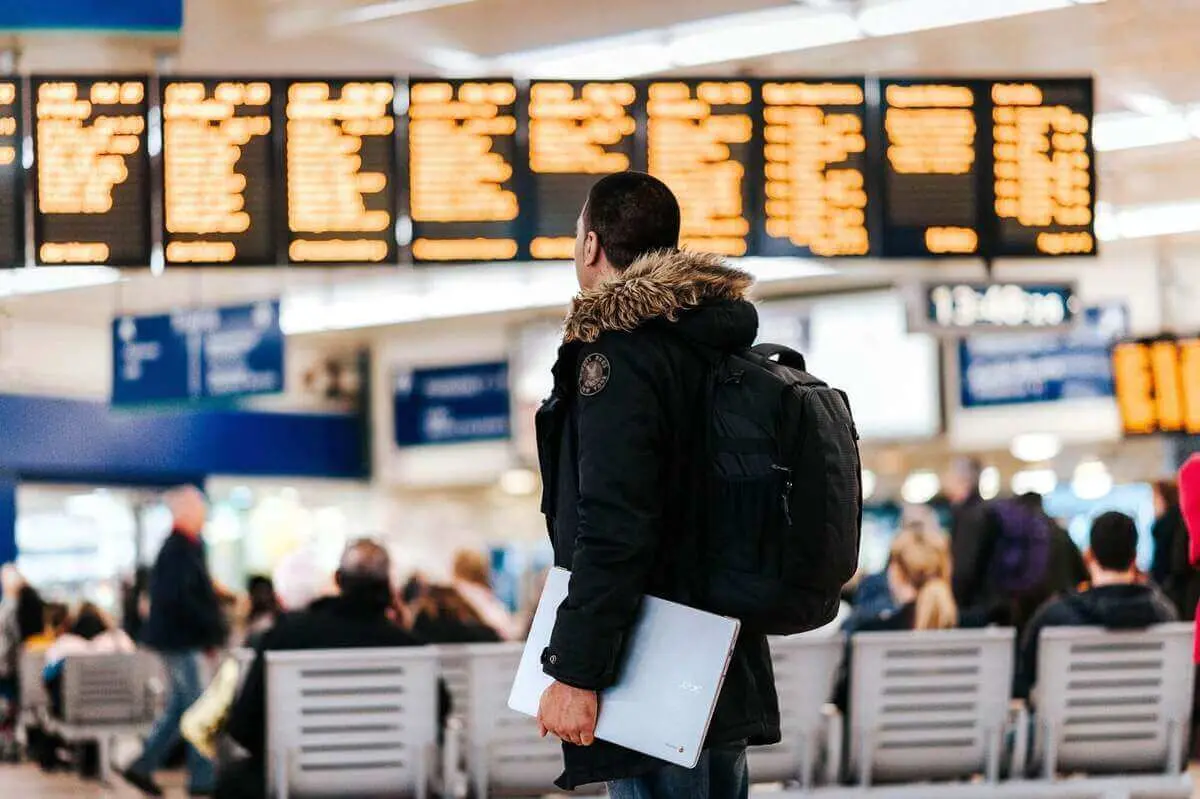
Exhibitors, sponsors, and buyers for CIHAC, Plastimagen, Beauty, ZONAMACO, Expo Seguridad, EXPOMED, ibtm Americas, and the World Trade Center calendar. Immigration and international bag claim are the arrival-moment buy. Departure-lounge frequency is a secondary layer.

Reforma, Polanco, Santa Fe, and the broader corporate base fly these terminals weekly, out to customers and in to meetings. Departure-side security-filter and lounge inventory weights the resident decision maker. Banamex industrial weeks overlay the same paths.

UNAM, IPN, ITAM, Tec de Monterrey’s Mexico City campuses, and executive-education flows. Education brands EAM has placed in airports include Wharton, BYU, the University of Michigan, the University of Pittsburgh, and UT Dallas.
Who advertises
Tourism and hospitality on the arrivals path; employer brand and finance on the departure lounges; industrial, medical, security, and meetings brands in the Banamex weeks that match their buyers; universities on the semester calendar. Always-on rows lead. Show rows follow.
| Objective | Who buys it | Who it reaches | What the buy usually looks like |
|---|---|---|---|
| Destination and hospitality | Hotels, attractions, experience brands | Visitors actually entering the capital | International bag claim and arrivals walksides, year-round, heavier in holidays |
| Employer brand and finance | Corporate, banks, professional services | Reforma, Polanco, and Santa Fe flyers, both directions | Security-filter and lounge videowalls; multi-month flights |
| Industrial and trade shows | Buyers landing that week | The month covering the show. Immigration and claim | |
| Security, medical, and meetings | Technology, hospital, and meetings brands | Expo Seguridad, EXPOMED, and ibtm Americas audiences | The months of those shows, on the arrivals path |
| Luxury and culture | Galleries, sponsors, premium consumer | ZONAMACO collectors and sponsors | February 2027 month. Immigration and claim first |
| Universities | Local and foreign programs | Students, parents, alumni | Departure side in August, January, and commencement |
Destination and hospitality book claim early for holidays. That does not make claim unavailable for Banamex exhibitors. It means peak months clear first. Departure lounges stay more open for employer and financial frequency between shows.
How EAM works
One call, one plan, one contract. We follow up to learn who you need to reach and the objective, then come back with current availability and a recommended mix.
Step 01
A Banamex or World Trade Center window versus an always-on Mexico City brand flight; Terminal 1’s foreign-flag mix or Terminal 2’s Aeroméxico; arrivals, departures, or both; Benito Juárez alone or part of a wider plan. AIFA is a separate scope.
You getThe period, the terminal, and the direction
Step 02
Which claim circuits, immigration screens, and lounge videowalls are open, how crowded the two-minute loops are, and whether category separation is possible. Competitive separation may be possible, but it isn't guaranteed; ask when booking and write it into the contract.
You getAvailability and loop crowding
Step 03
Formats, share of voice, and a range in U.S. dollars, not a scraped rate card. After we know who you need to reach, we come back with current availability and a plan you can take inside.
You getA range and a mix you can take inside
Step 04
Specs across lounge videowalls, claim circuits, and outdoor faces. They do not share one template. Airport authority approval, and files in on the date the contract sets. The kit face does not publish a standard lead time.
You getSpecs, approval, and a materials date
Step 05
Confirm posting before the first arrival wave. Deliver proof of posting and play logs after the flight.
You getProof of posting and play logs
EAM Advertising is an independent airport and in-flight media agency, founded in 2015. We specialize in airport and in-flight media and nothing else, and we do not own media assets at MEX or any airport. That independence is why the recommendations hold up. We plan and buy across 125+ airports and 45+ airlines worldwide, which is the leverage and the current-availability knowledge a one-time MEX buyer does not have. Clients include Fortinet, Dynatrace, Rubrik, McGraw-Hill, and Wharton. When the strategy extends beyond Mexico City — a Latin America roadshow, a U.S.–Mexico launch, a multi-city employer-brand flight — the same relationship covers the other markets.
For agencies and consultants
Agencies and consultants bring EAM Advertising in as the airport specialist behind a client’s plan. The client relationship stays with you. We plan, buy, and report under NDA, and can work white-label.
Get our media kitMeasurement
Proof of posting and digital play logs are factual. Delivered impressions are modeled. A brand-lift study is the only method that speaks to effect, and it has to be fielded before the flight. Direct pipeline attribution is not reliably available. Play logs matter here because a 2-minute loop of twelve only delivers about 8% share of voice when the slot math holds.
| Measure | What it actually tells you | When to set it up | Confidence |
|---|---|---|---|
| Proof of posting | Photographic confirmation that every unit ran, in the right place, for the full period. The kit face does not publish the photo terms. Write them into the contract. | Written into the contract before signing | High — factual |
| Delivered impressions | Modeled audience delivery from airport traffic and unit position. An estimate. Terminal 2 lounge counts include connectors who never enter the city. | Requested at proposal stage | Moderate — modeled |
| Digital play logs | Actual spot counts and share of voice on the 2-minute loop. The check on whether twelve slots were actually twelve. | Requested at contracting | High — logged |
| Brand lift study | Survey-based awareness or perception change against a control. The only method that measures effect rather than exposure. | Fielded before the flight, for a baseline | Moderate — needs budget and lead time |
| Direct attribution to pipeline | Not reliably available. Airport media has no click, and the same brands run other touchpoints at the same time. | Do not plan the buy around it | Low — treat claims here with skepticism |
If the brief is hub frequency, measure the lounge logs. If the brief is people entering the city for a show or a hotel, measure claim and immigration, and do not let airside delivery stand in for that audience.
Questions
Plan against $6,500–$25,000 for a single unit or network per month, $15,000–$50,000 for a two- or three-unit package per month, and north of $55,000 for domination per month. Print-and-install on listed statics runs about $50–$850. Those are planning ranges from published catalog faces, not a rate card. Specific units and months come back as a quote. Rates exclude local VAT where it applies. EAM contracts in U.S. dollars.
Media is priced in U.S. dollars and planned in monthly periods. Digital runs a 10-second spot in a 2-minute loop, one of twelve slots, about 8% share of voice. Hold expiry, cancellation, materials deadlines, and proof-of-performance terms are set at contract. Competitive separation may be possible, but it isn't guaranteed; ask when booking and write it into the contract. Creative needs airport authority approval.
The one your audience’s airline uses. Terminal 2 is Aeroméxico, Delta, LATAM, Copa, and Wingo. Terminal 1 is Volaris, Viva, and most foreign airlines, including United, American, Air Canada, Air France, KLM, Lufthansa, Iberia, British Airways, Emirates, and Turkish. A show audience flying in from the U.S. and Europe often splits across both, so immigration and international claim in each terminal is the safer plan. Confirm the live map at contract.
Yes. That is where much of the current catalog concentrates. Terminal 2 arrivals walksides and immigration screens, Terminal 1 and Terminal 2 international bag-claim walls and circuits, and the Terminal 2 arrivals outpatient mega face are built for people entering the city. Departure-lounge videowalls reach a different audience, including connectors who never clear immigration.
On Terminal 2 departure-lounge and gate-adjacent videowalls, yes. On immigration and bag claim, usually no. Those units reach origin-and-destination passengers entering the city. If the brief is hub frequency rather than a downtown arrival, say so at scoping so the mix does not overweight claim.
For Plastimagen, CIHAC, ZONAMACO, Expo Seguridad, EXPOMED, ibtm Americas, and the December holidays, hold 4–6 months out. Other Banamex and World Trade Center weeks: 8–12 weeks. Always-on months: 4–8 weeks is usually enough. International claim and immigration sell first.
Yes. Mexico City is the country’s business capital. Its corporate base flies out every week, and the executives and buyers who meet it fly in. Expo CIHAC, Plastimagen, Expo Seguridad, EXPOMED, and ibtm Americas are defined business populations. Always-on business-to-business work also runs on the departure lounges and the security filter between shows.
Yes, more than most B2B marketers expect. Race weekend brings the teams’ partners and sponsors, many of them enterprise technology, financial, and automotive brands, along with the executives and clients they host in hospitality suites and at the Paddock Club. Client dinners and partner meetings cluster around it, so the Wednesday-to-Monday arrival and departure waves carry a dense executive audience alongside roughly 400,000 fans. The circuit is about five kilometres from the terminals. Buy the month containing the race, weight arrivals Wednesday to Friday and departures on Monday, and expect to share the loop with luxury and automotive brands.
Destination and hospitality are natural buyers of international bag claim and arrivals walksides, and they book early for holidays. That does not make claim unavailable for Banamex exhibitors or arrival-moment services. It means peak months clear first. Departure lounges remain more open for employer and financial frequency.
Yes. The metro’s student and alumni base makes departure-side semester flights a real recruiting buy. Education brands EAM has placed in airports include Wharton, BYU, the University of Michigan, the University of Pittsburgh, and UT Dallas.
By the deadline set at contract, with time built in for airport authority approval; plan digital creative 14–18 business days before start and static creative 21–28 days before start. Expect several screen shapes in a multi-unit buy. Lounge videowalls, claim circuits, and the roadside screen do not share one template, and static faces need print lead time on top. EAM traffics the creative once the mix is contracted.
No. Felipe Ángeles (AIFA) is a separate airport with its own audience mix and its own media program; it handled about 7.1 million passengers in 2025 against Benito Juárez’s 44.6 million. This page is Benito Juárez only.
Everything after the objective. We check what's open for the week, which loops are crowded and which units will sell out, and where on the arrival path your audience actually walks. We recommend the mix, secure the units, traffic the creative through airport approval, confirm posting on day one, and deliver proof of posting and play logs after. If MEX is one market in a larger plan, the same relationship covers the others.
Independent airport advertising media agency. Est. 2015.
Send your work email for the media kit: formats, planning ranges, and how EAM works. We’ll follow up to learn who you need to reach and when, then come back with current availability and a recommended mix.
Independent since 2015 · 125+ airports · 40+ media vendors
Sources