
PHX · Unit
Terminal 4 escalator digital network
Escalators to baggage claim, rideshare, and ground transport in T4
- Screens or type
- Your spot
- Best for
- Primary arrival read in the busiest terminal; always-on and winter weight
51.6 million passengers a year: Valley companies flying out, visitors and partners flying in, and winter and convention peaks on top. Get the PHX media kit for formats, planning ranges, and booking windows.


You’re in good company






At a glance
PHX handled 51.6 million passengers in 2025, the second year above 50 million (2024 record: 52.3 million). About 13th in North America for passenger traffic. Most passengers are flying to or from the Phoenix metro rather than connecting past it.
Two terminals: Terminal 4 (Barry M. Goldwater) handled about 36.7 million in 2025 and hosts American and Southwest; Terminal 3 (John S. McCain III) handled about 12.1 million with Delta, United, Alaska, Frontier, and most other domestics. International traffic was about 2.8 million.
The always-on audience is the Valley itself — semiconductors, aerospace, Banner Health, finance, and ASU — thickened every winter by snowbirds and leisure visitors. Sports and convention weeks add peaks on top.
Inventory is sold in four-week periods across digital, wraps, bag-claim units, banners, backlits, and sponsorships. Annual (52-week) contracts carry a lower period rate than a one-off flight.
Planning ranges: a single unit or network runs $3,000–$80,000 per four-week period. A two- or three-unit package runs $15,000–$50,000 per period. A domination or multi-network takeover runs north of $100,000 per period. Production and installation are extra. Those are planning ranges, not a rate card.
Creative deadlines, hold expiry, proof-of-performance terms, competitive separation, and the digital loop floor (spot length, loop length, share of voice) are not published in the kit.
Start your PHX plan
Three ways to start, depending on where you are.
What you can run
The units on the current PHX specifications include Terminal 4 escalator digital network; Terminal 3 escalator digital display; Concourse digital network; Baggage claim digital network; Directory digital network; Terminal 4 escalator banners (static); Bag-claim and concourse static set. Digital loops and static faces are bought as those specifications describe them. Share of voice depends on the loop length for that unit. The descriptions are planning context, not a rate card.
PHX · Unit
Escalators to baggage claim, rideshare, and ground transport in T4
PHX · Unit
T3 atrium toward bag claim and ground transport
PHX · Unit
Post-security in Terminals 3 and 4
PHX · Unit
Bag claim across Terminals 3 and 4
PHX · Unit
Central Terminal 4 near information points
PHX · Unit
High-profile T4 escalators
PHX · Unit
Overhead claim banners (6), flight-info banners pre-security (2), concourse overhead banners (2), bag-claim wall banners
PHX · Unit
T4 Sky Train stations; T3/T4 window and wall wraps including large soffit runs
PHX · Unit
Moving sidewalks, claim walls, Sky Train, and T3 columns
PHX · Unit
T3/T4 carousels (single or takeover); escalator floor decals at claim
PHX · Unit
Gate areas and pre/post-security in T3 and T4
PHX · Unit
T4 pre- and post-security pads; vehicle display; amenity sponsorships (pet relief, hydration, play area)
Share of voice on digital depends on the loop. The kit lists units and screen counts but not spot length, loop length, or guaranteed SOV. Plan digital as a network buy and require play-log terms at contracting.
The digital, static, experiential, and exterior units brands buy in airports. For PHX we plan specific units and dates against what is open at the time.

Digital screens and video walls in airline business club lounges reach affluent business decision-makers and high-net-worth travelers in a captive setting.
Travelers often spend 90 minutes or more in the club. Screens in dining and seated areas and larger video walls (about 84–100 inches) give the brand both frequency and a dominant face.
Full motion or static creative can rotate through the loop while the audience is already seated.
* Differs depending on the airport.

Target high-level decision-makers and affluent individuals with entrance banners in airport business club lounges.
Engage with a discerning audience in a premium, brand-safe environment.
Showcase innovations for business-to-business brands or emphasize luxury for high-end brands.
* Differs depending on the airport.
Baggage claim digital network screens provide a unique opportunity to connect with travelers at a prime moment.
Strategically placed in high-traffic areas throughout the baggage claim area, these screens ensure maximum exposure for your brand.
By using baggage claim digital network screens, you can deliver your message to travelers multiple times, building frequency and driving engagement.
* Differs depending on the airport.

Packages can range in screen size and quantity. Strategically positioned throughout central airport concourses.
These screens can target 100% of arriving and departing traffic as passengers move towards airport exits and a large percentage of departing traffic as passengers move through the concourses and frequent favorite concessions in the area.
* Differs depending on the airport.
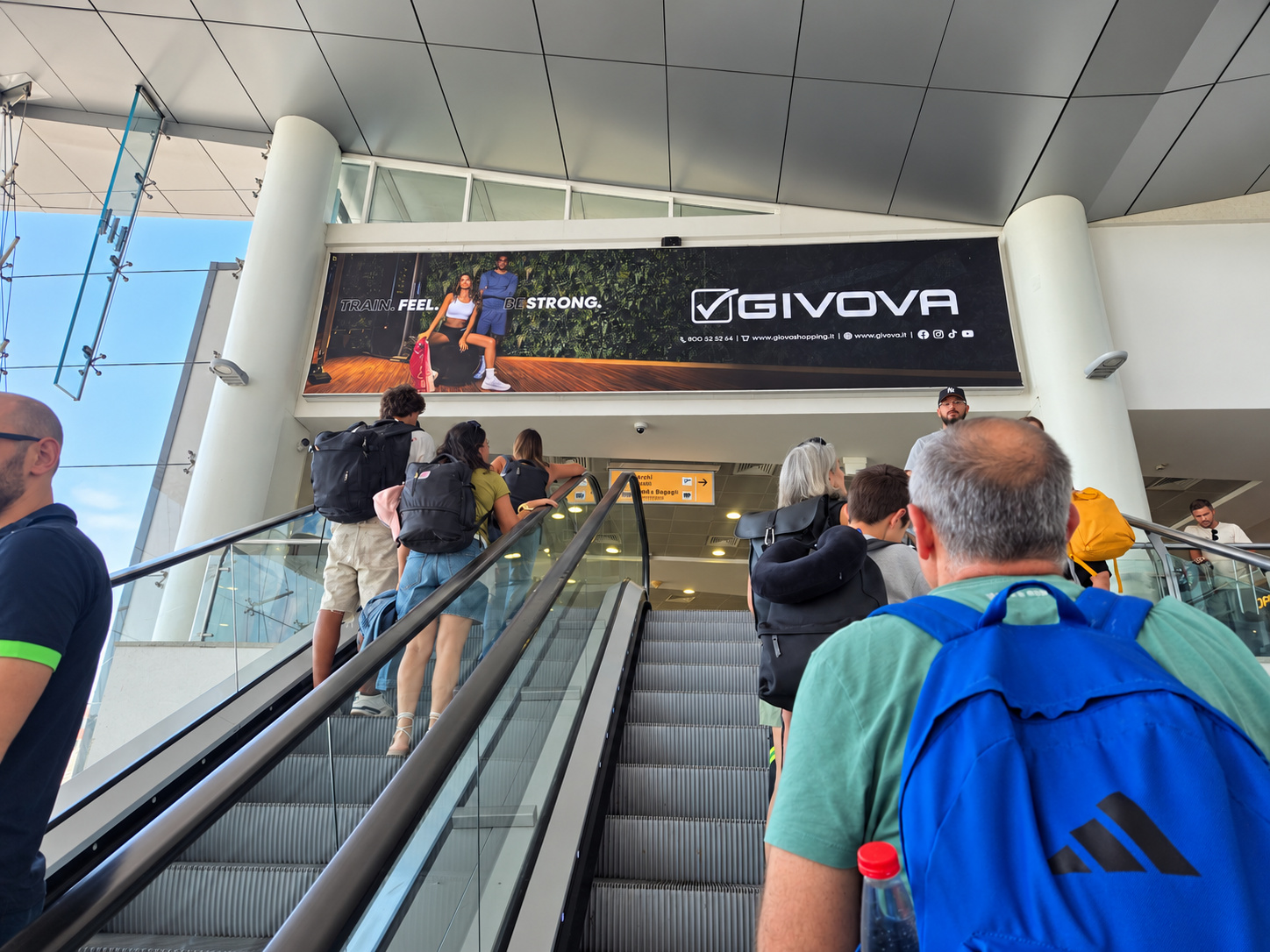
Large format banners offer a large, eye-catching space that can capture the attention of everyone walking through the airport.
They can be strategically placed on walls or hung from ceilings throughout the airport, ensuring maximum exposure for your brand.
With large format banners, you have the opportunity to own 100% of the share of voice in that area.
* Differs depending on the airport.

Experiential advertising at airports lets the brand interact with a captive audience through immersive installations.
Activations can include brand ambassadors, tech-focused displays, and product sampling.
Exhibit space is the same idea: a physical footprint where travelers can engage face-to-face.
* Differs depending on the airport.

Digital charging network screens are a highly effective advertising tool for brand marketers looking to reach a captive audience of travelers.
Travelers engage with the screens while charging devices, which adds dwell to the impression.
* Differs depending on the airport.
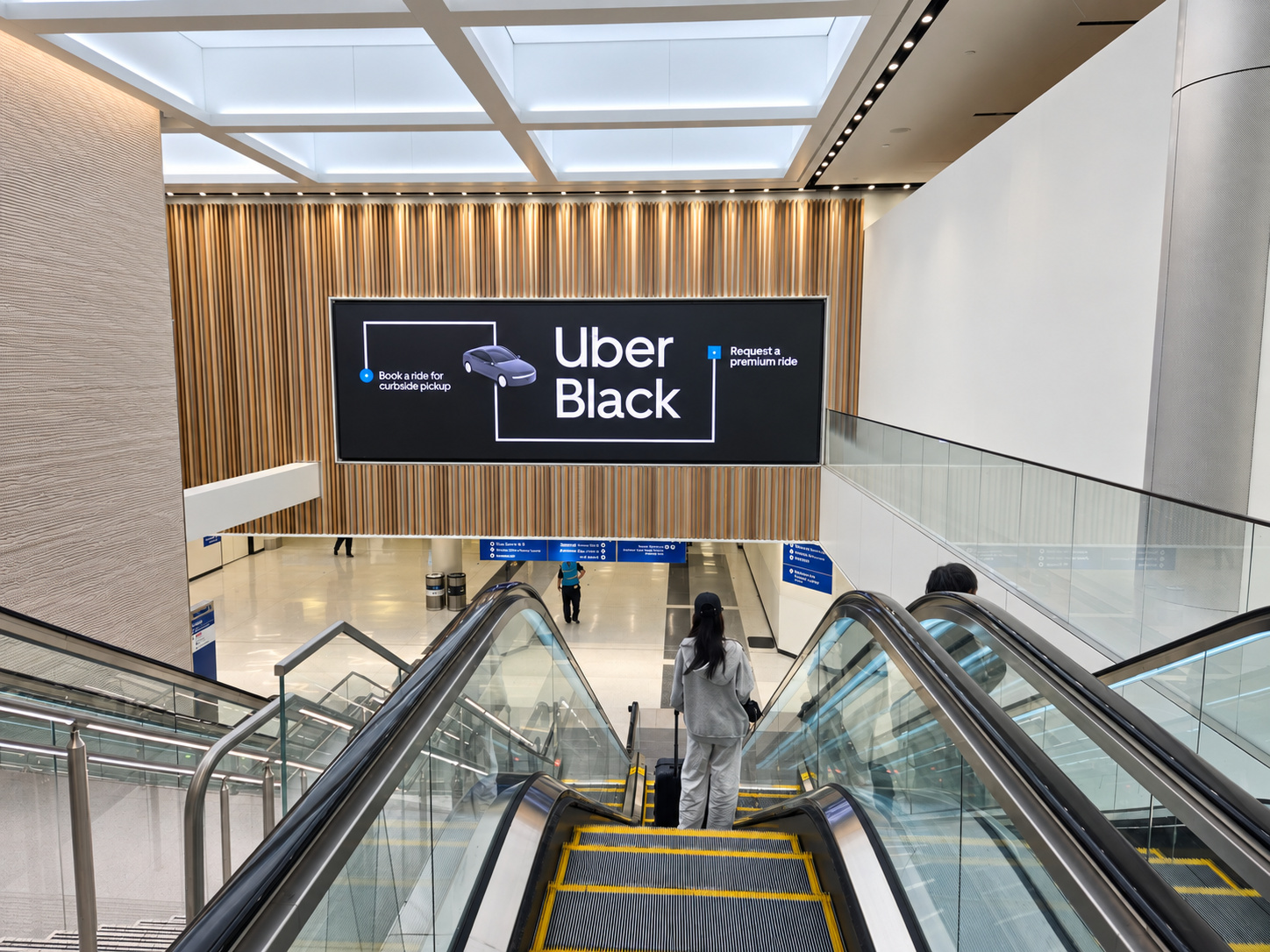
Digital spectacular screens offer a powerful advertising tool to capture significant attention in airports.
Strategically located in high-traffic areas, these screens provide maximum visibility and impact for your brand.
With their attention-grabbing size and creative flexibility, digital spectacular screens hold the attention of travelers and drive engagement.
* Differs depending on the airport.
By using digital network screens, you can deliver your message to travelers multiple times throughout their journey.
Strategically placed in high-traffic areas, these screens ensure maximum exposure for your brand.
These screens build frequency and drive engagement, making them an effective advertising option.
* Differs depending on the airport.
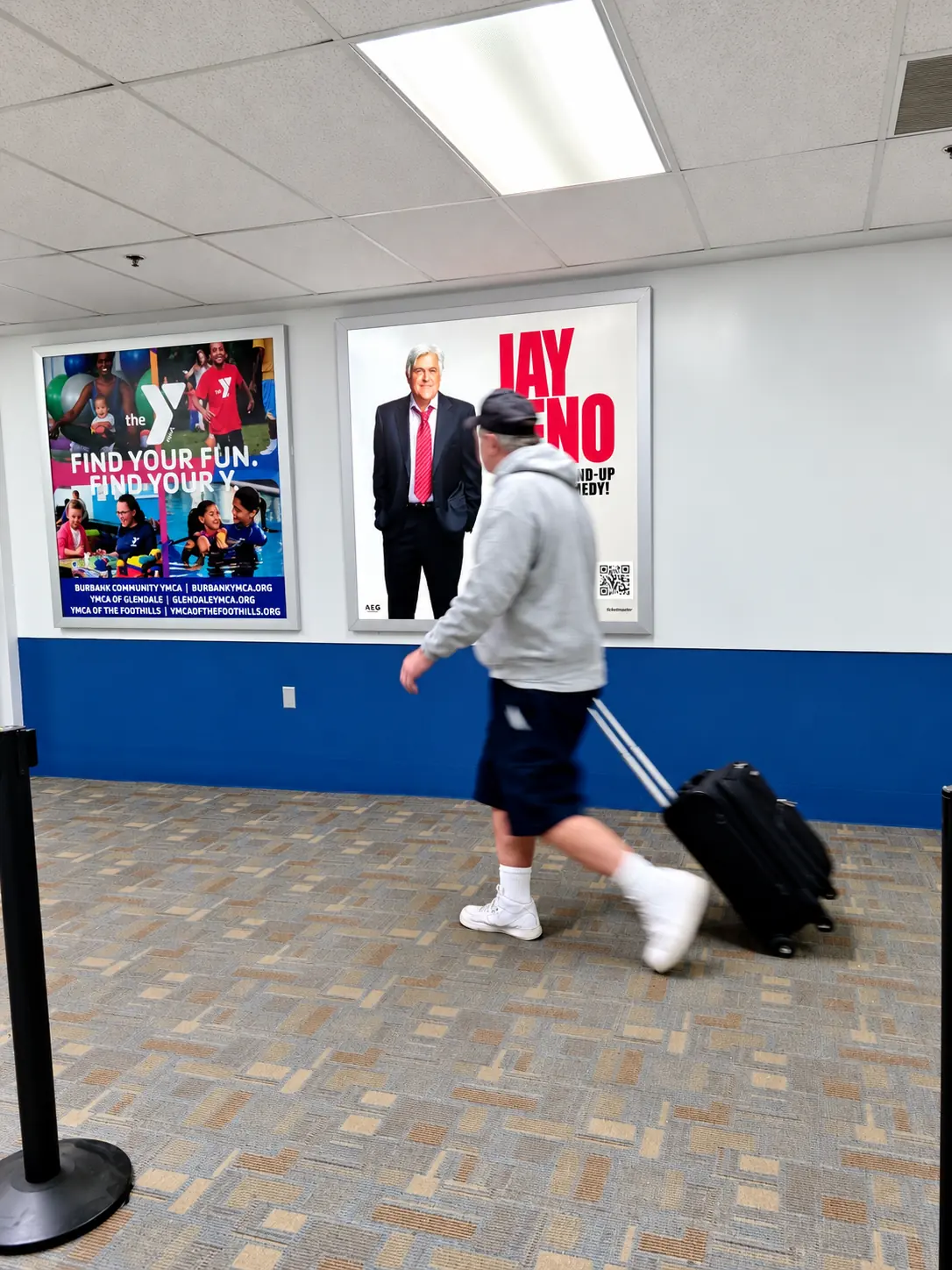
Dioramas are backlit displays at eye level in corridors and holdrooms.
They offer a lit, poster-scale face with 100% share of voice on that unit.
* Differs depending on the airport.

Leverage exterior signage to engage airport visitors as they arrive or depart, keeping the brand visible on the campus.
High-impact banners on the building or approach create a lasting impression before travelers enter the terminal.
* Differs depending on the airport.

Flight information screens are some of the most frequently viewed screens in the airport, where passengers already look for gate and time updates.
Advertising on these screens puts the message next to information travelers are actively reading.
* Differs depending on the airport.
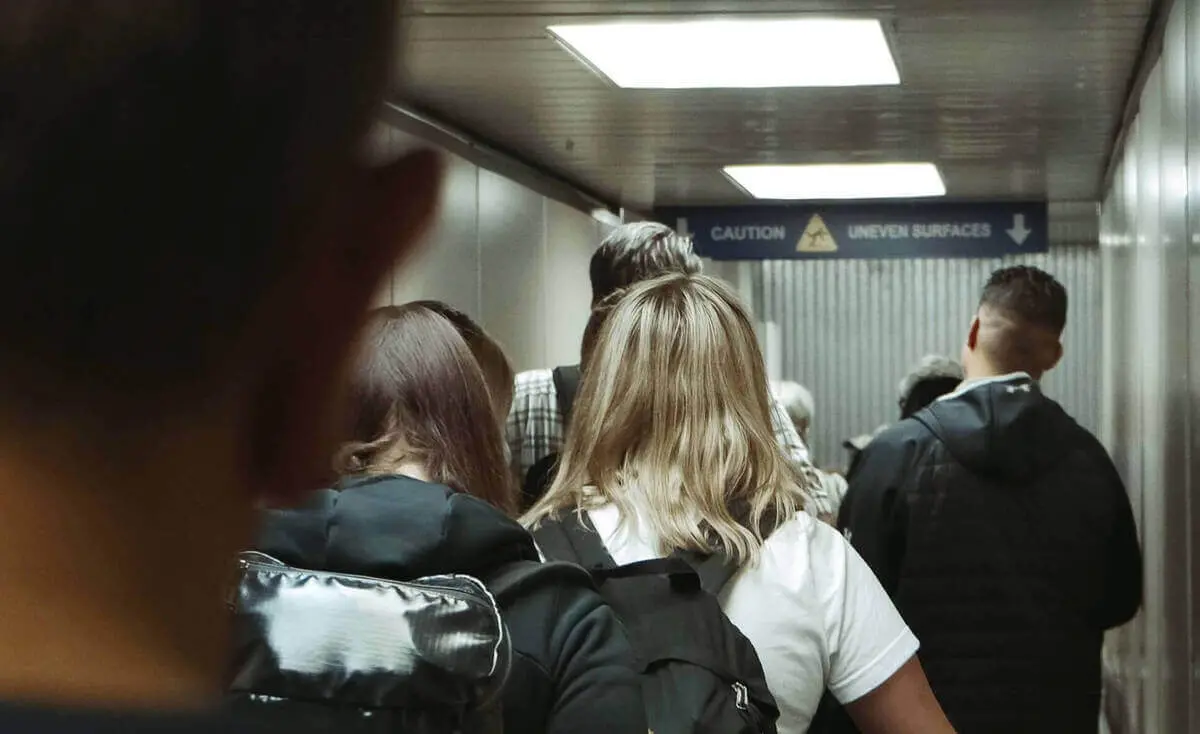
Jet bridge wraps put the brand on the walk between gate and aircraft.
The space is captive and sequential: every boarded passenger on that gate walks the length of the wrap.
* Differs depending on the airport.
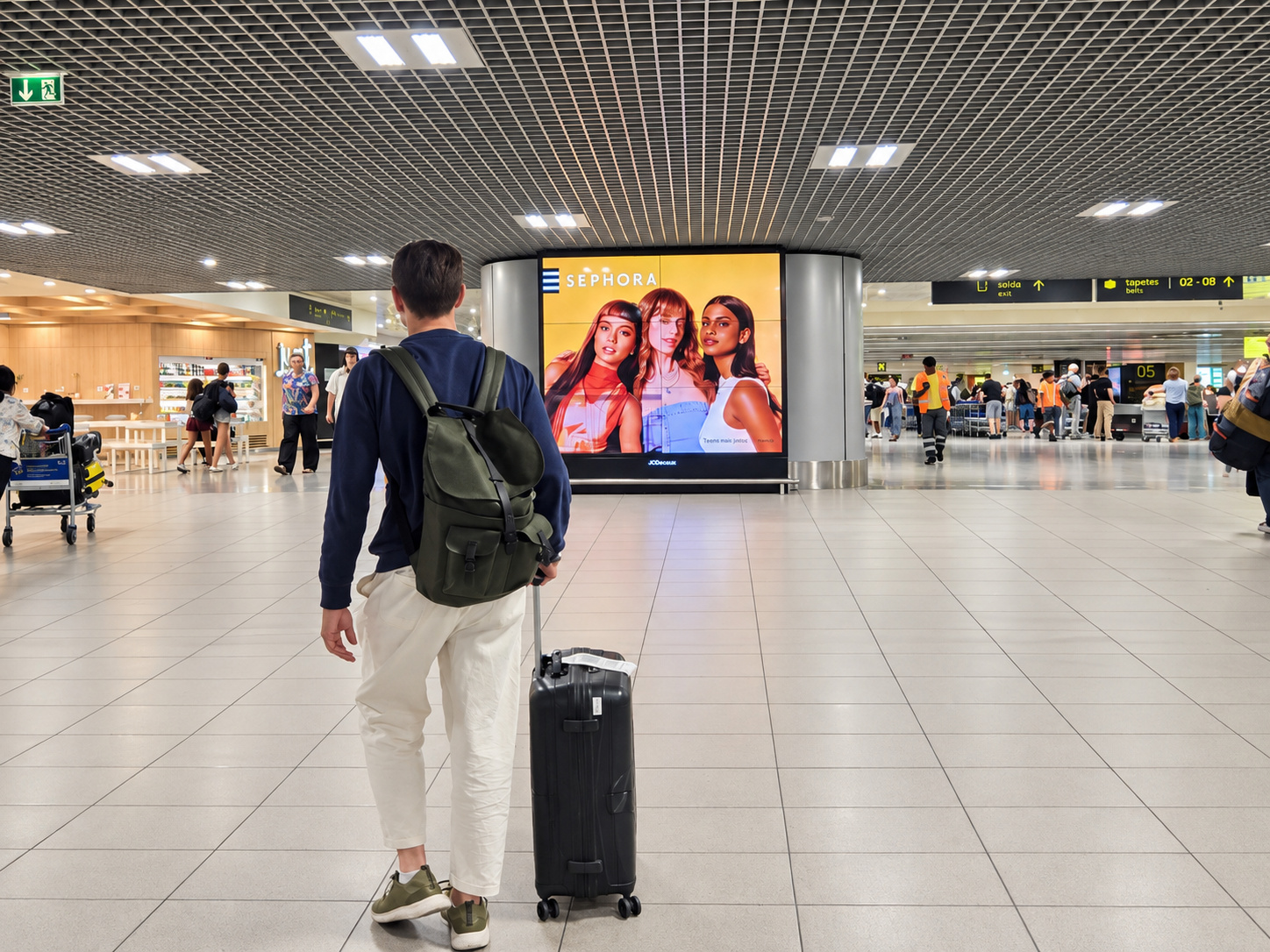
Large format digital screens offer a unique opportunity to make a lasting impression on travelers.
These screens have the wow factor needed to capture your target audience's attention and inspire them to engage with your brand.
Large format digital screens offer creative flexibility to showcase your brand's messaging and art in a way that resonates with your target audience.
* Differs depending on the airport.

Large format banners offer a large, eye-catching space that can capture the attention of everyone walking through the airport.
They can be strategically placed on walls or hung from ceilings throughout the airport, ensuring maximum exposure for your brand.
With large format banners, you have the opportunity to own 100% of the share of voice in that area.
* Differs depending on the airport.
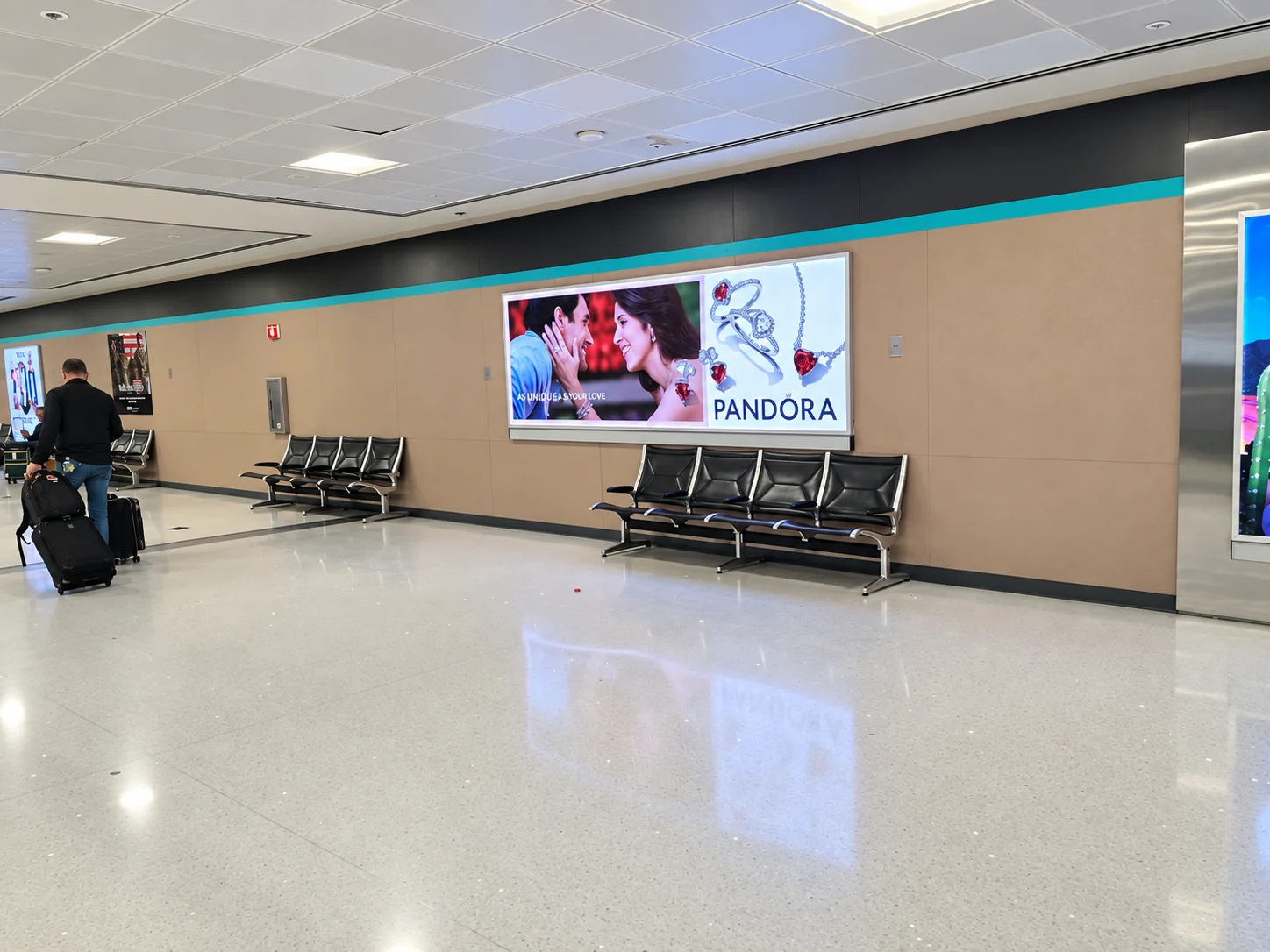
Mini-spectaculars are smaller spectacular units that still dominate a sightline without a full-wall takeover.
They own share of voice on that face and work in tighter terminal pockets.
* Differs depending on the airport.
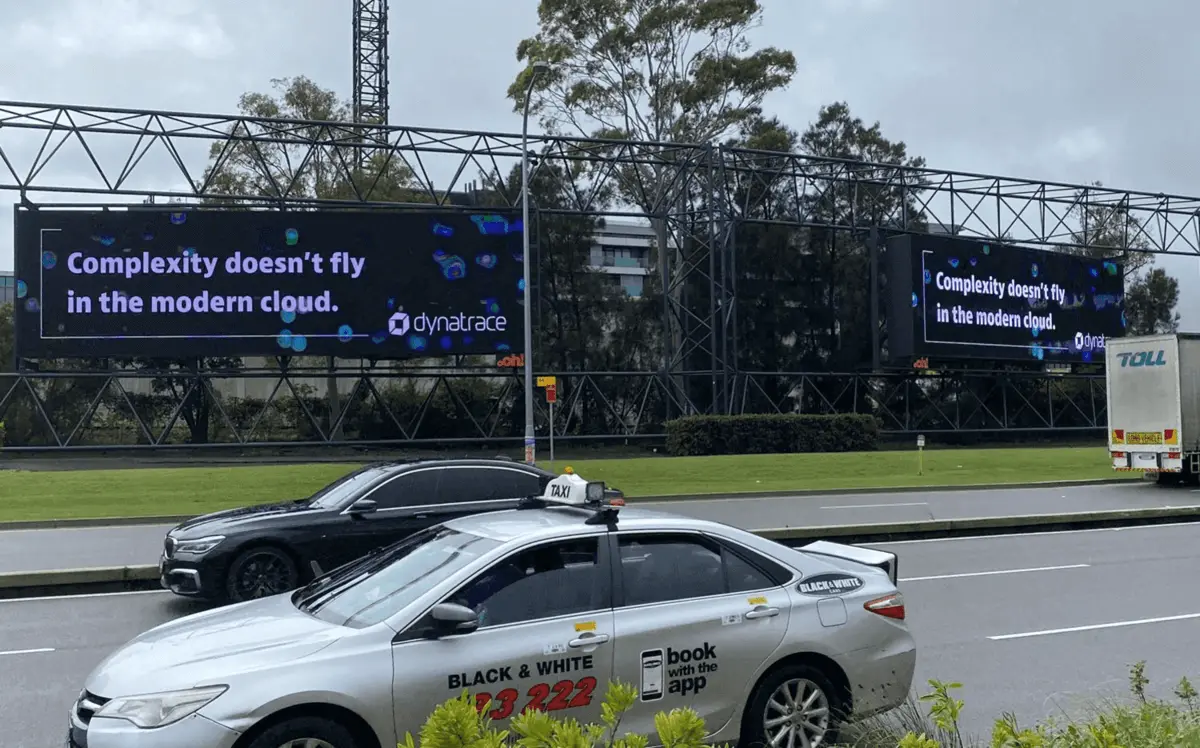
Exterior digital billboards at the airport engage a wide mix of travelers on the approach and campus roads.
Creative on digital billboards can run full motion or static.
* Differs depending on the airport.
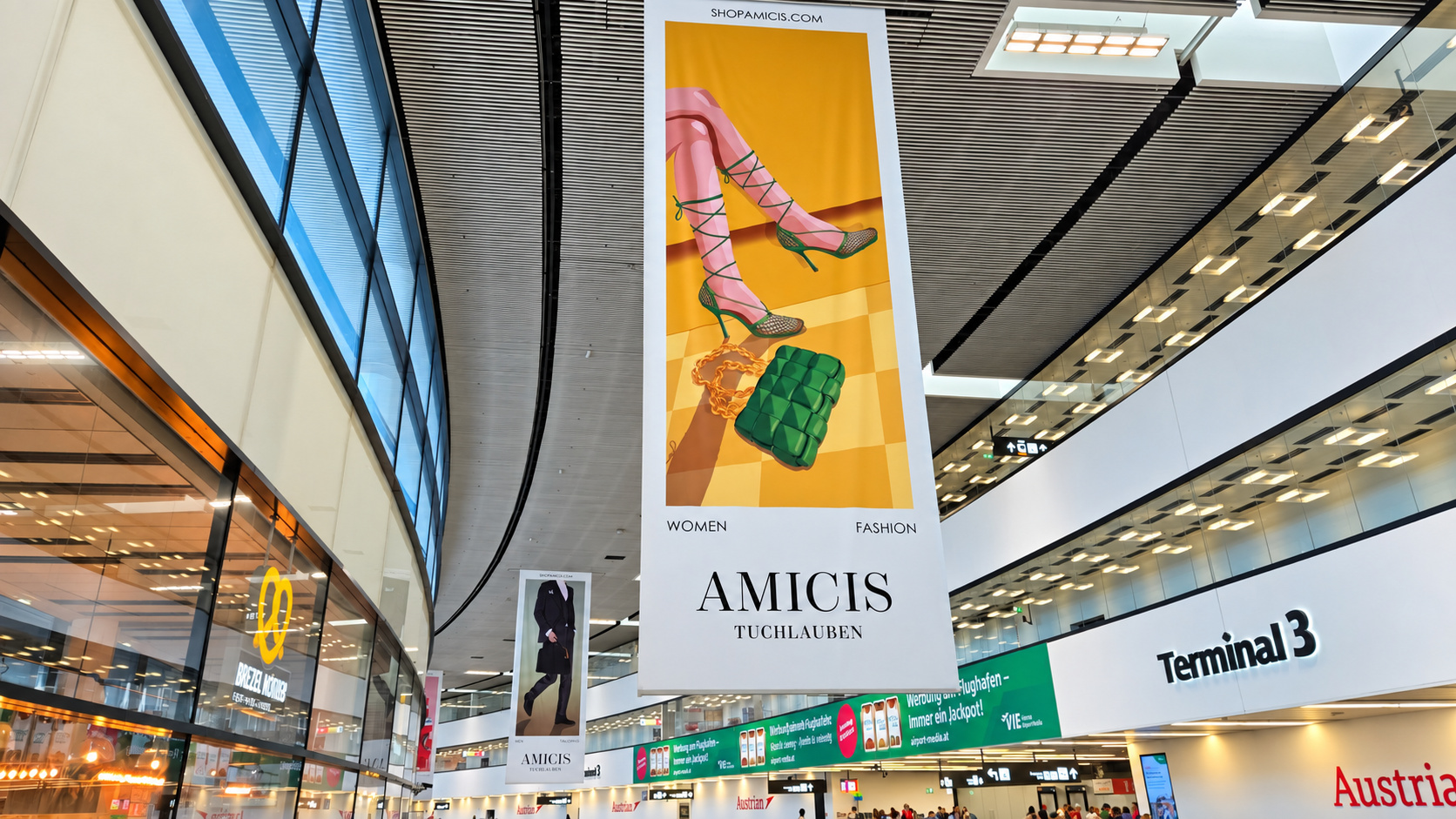
Large format banners offer a large, eye-catching space that can capture the attention of everyone walking through the airport.
An overhead banner package is sequenced across multiple faces so the brand owns a stretch of the travel journey and a specific airport area, which is what creates the wow effect.
They can be placed on walls or hung from ceilings, with 100% share of voice in that zone.
* Differs depending on the airport.
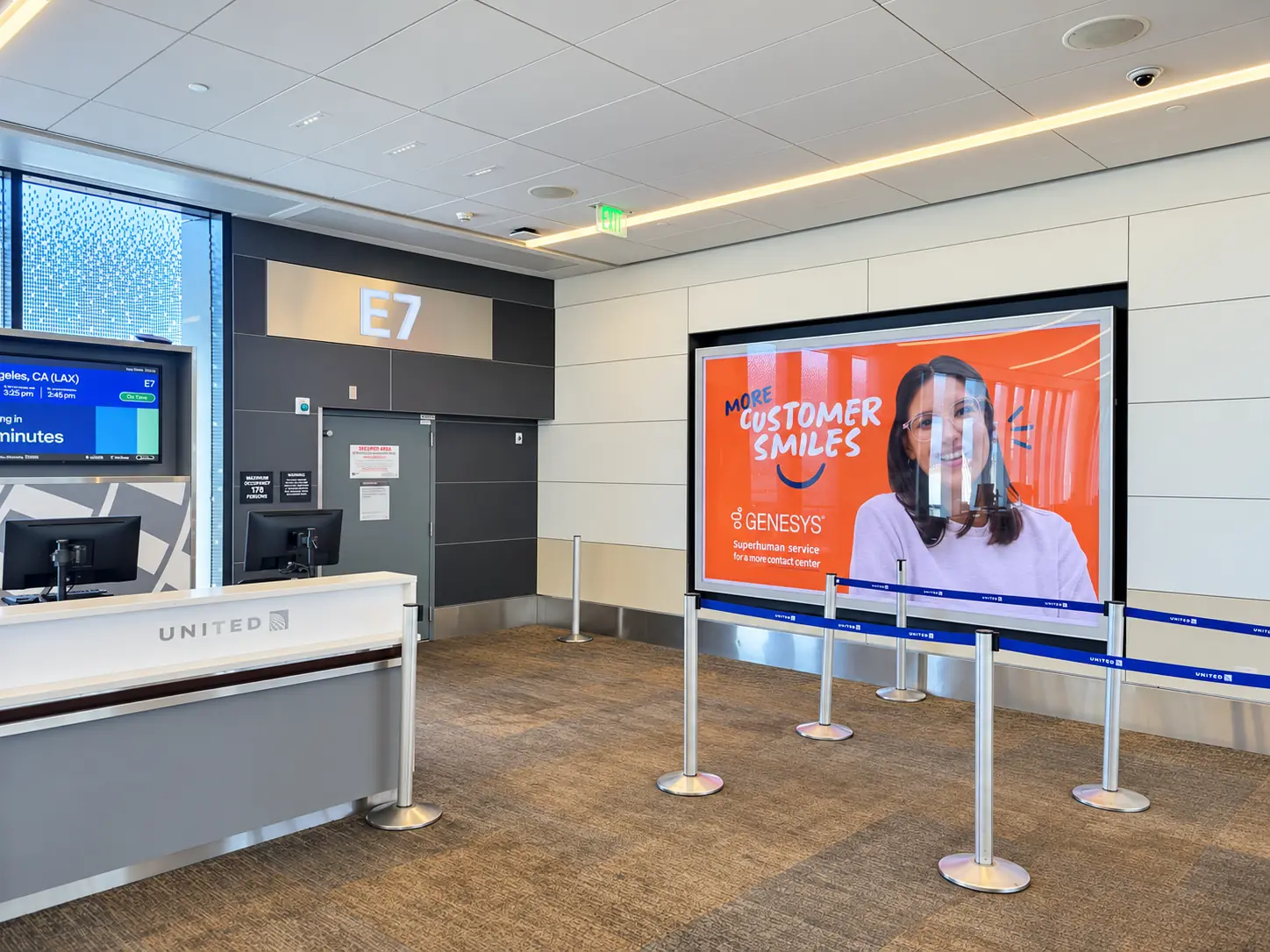
Spectaculars are large-format displays built for a single dominant face in a high-traffic terminal space.
With the ability to own 100% of the share of voice, your message is the only one being seen by travelers in that area.
* Differs depending on the airport.

Tension fabric displays are a visually stunning way to showcase your brand or product in the airport.
They command attention in a crowded terminal and offer a cost-effective way to reach a large audience.
With tension fabric displays, you have the opportunity to own 100% of the share of voice in that area.
* Differs depending on the airport.
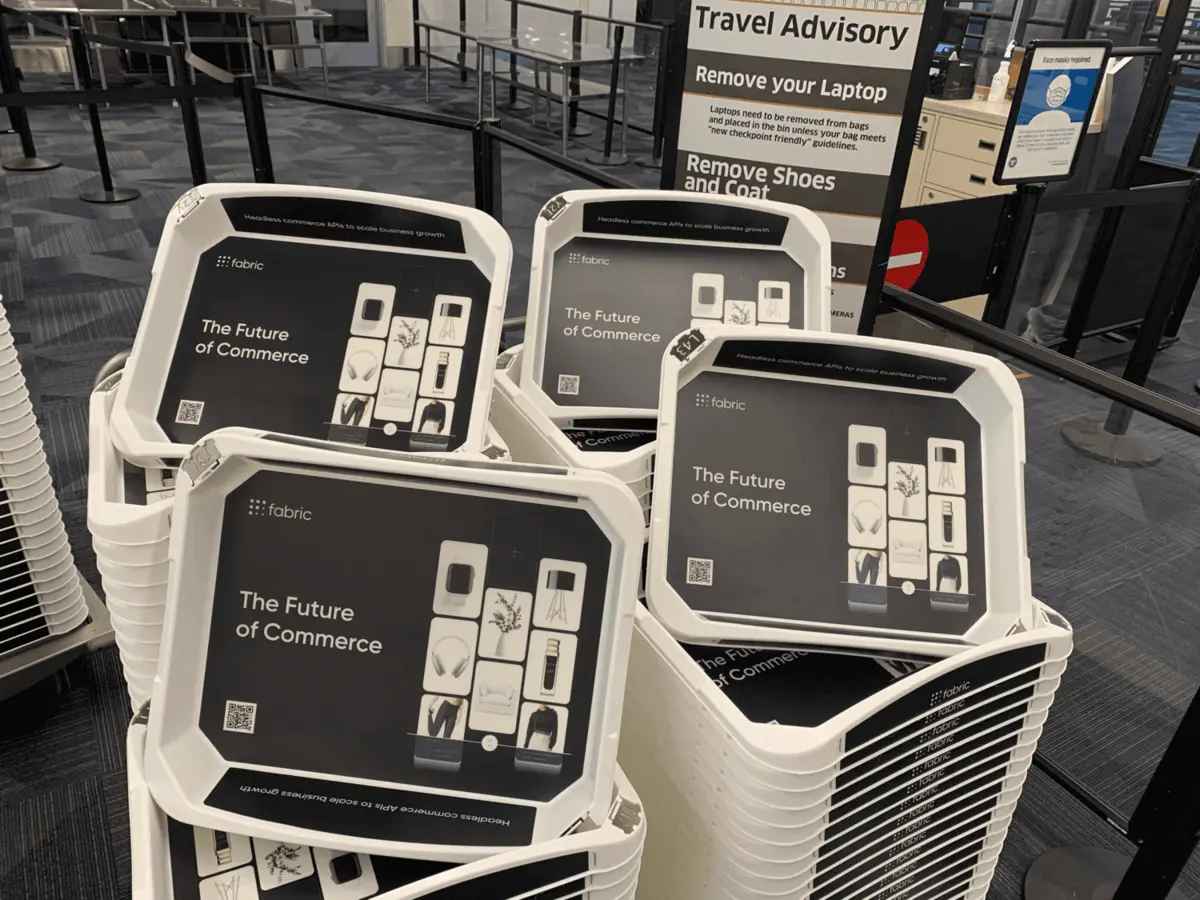
By advertising on airport security trays, the brand reaches travelers during an essential part of the departing journey.
Every passenger who uses that lane handles the tray.
* Differs depending on the airport.
By using vertical digital network screens, you can deliver your message to travelers multiple times throughout their journey.
These are vertical units with a different view profile: most sit at eye level and read with a poster feel.
Strategically placed in high-traffic areas, they build frequency as passengers walk the concourse.
* Differs depending on the airport.
Video walls are strategically positioned in high-traffic areas of the airport, ensuring maximum visibility and engagement for your brand.
These high-impact screens provide maximum visibility for your brand, making a lasting impression on travelers.
* Differs depending on the airport.
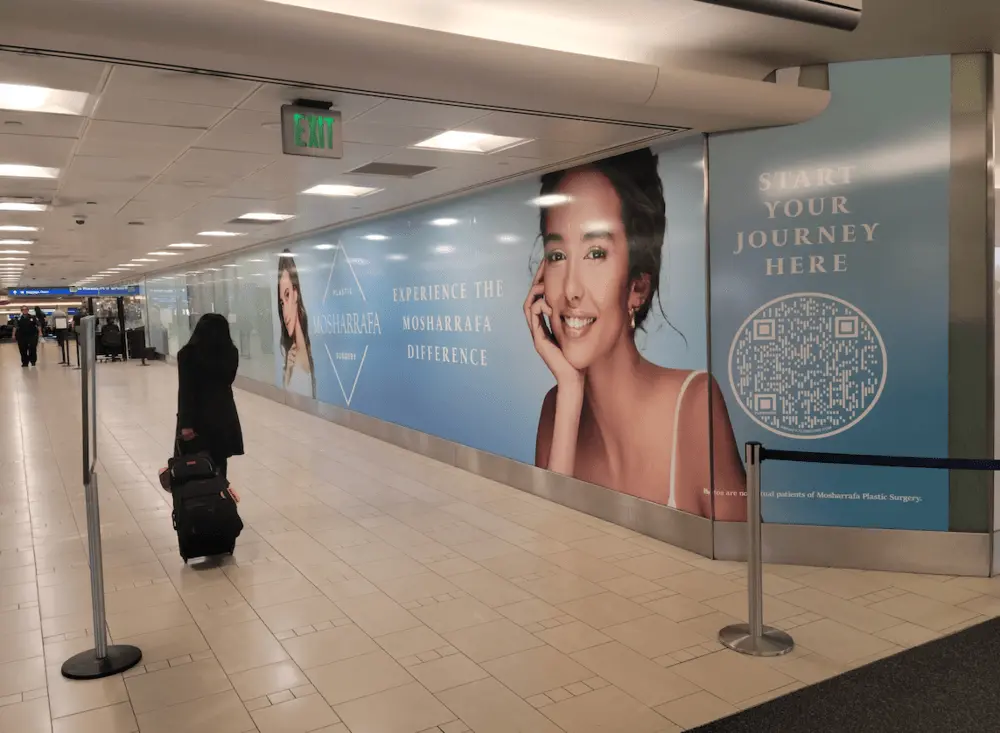
Wall wraps offer a visually striking and modern way to showcase your brand in the airport, with the ability to customize them to your brand.
Strategically placed in high-traffic areas, wall wraps capture attention and own 100% of the share of voice on that surface.
* Differs depending on the airport.

Sponsoring Wi-Fi access at airports engages travelers on their personal devices.
Call-to-action pages can be video or static, which is what turns access into a media placement.
* Differs depending on the airport.
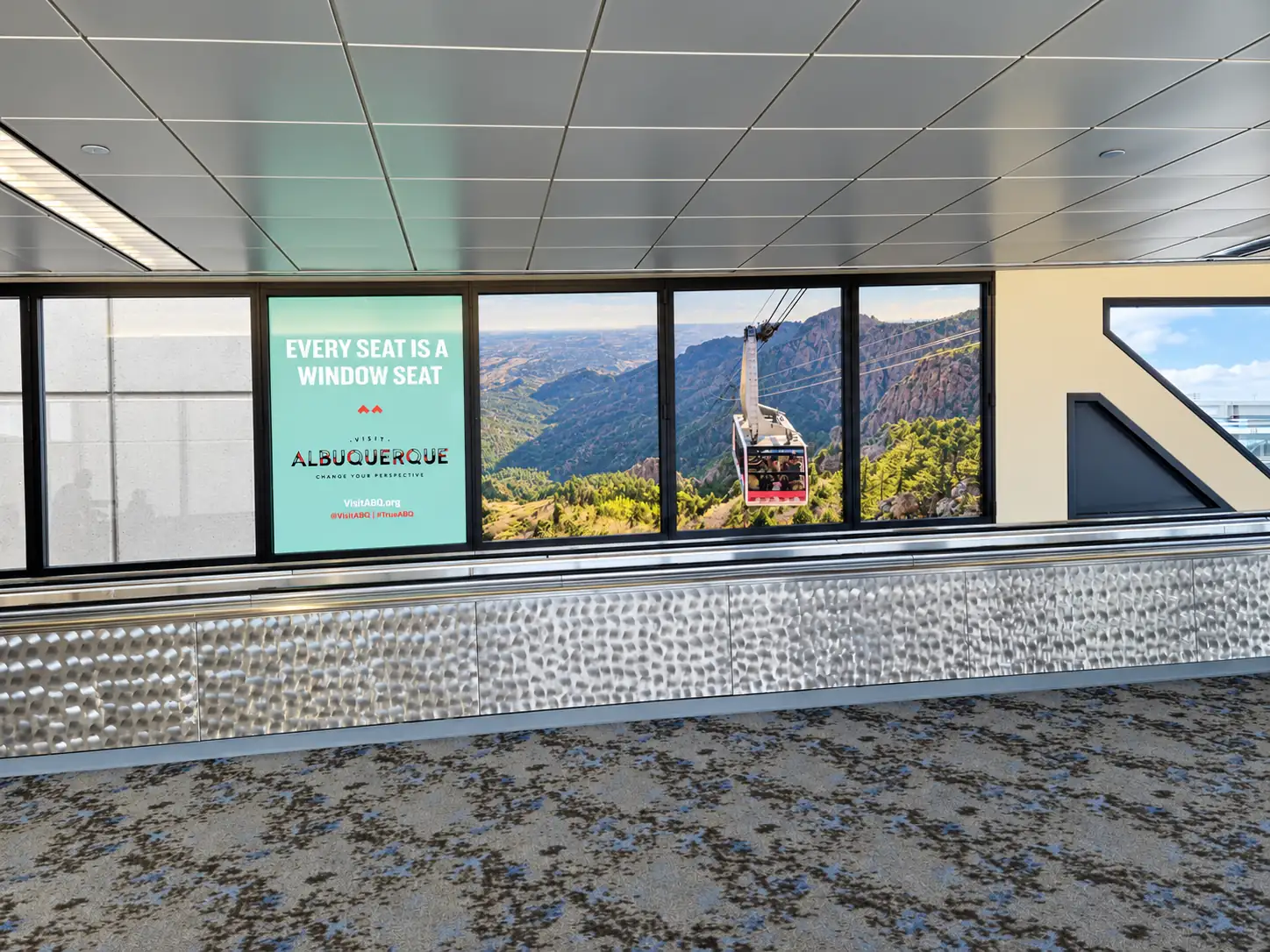
Window wraps offer a visually striking and modern way to showcase your brand on terminal glass, with the ability to customize them to your brand.
Strategically placed on windows in high-traffic areas, they capture attention from the interior walkway or the curb and own 100% of the share of voice on that glass.
* Differs depending on the airport.
Examples
Airport advertising in practice, photographed across many airports. Availability at PHX varies by format.
Real brands. Real campaigns.
Campaigns across several countries and media owners, each bought through one contract. Swipe or use the arrows for the markets, the scope, and the result.
 U.S. + Canada

Multiple media owners.
One coordinated buy.
EAM brought a U.S. and Canada airport campaign together across multiple media owners.
 Five continents

Different markets.
One media partner.
Large-format digital and screen networks across five continents, including London, Paris, Tokyo, and São Paulo.
 Airports + airline lounges

Airports and lounges.
One coordinated plan.
A combined airport and airline-lounge presence across the U.S., Europe, and the Middle East.
 Five U.S. airports
A year of visibility.
One coordinated rollout.
EAM bought year-long security-tray takeovers across five major U.S. airports.
 Latin America
Four airports.
One regional campaign.
EAM planned digital and physical branding across Buenos Aires, Santiago, Bogotá, and Mexico City.
 San Jose · SJC
One airport.
A complete takeover.
EAM coordinated a full San Jose airport takeover across digital displays and all 760 security trays.
 Airline lounges · 7 U.S. cities
Executive education.
Reached in the lounge.
EAM planned and executed a lounge campaign for Wharton Executive Education in United, Delta, and American clubs across Philadelphia, New York, Dallas, Atlanta, Denver, Minneapolis, and San Diego.
 4 markets · Year-round
Four markets.
A full year on screen.
EAM built a year-round enrollment campaign on airport digital video: always on in Salt Lake City, rotating through Dallas, Chicago, and Washington, D.C.
 U.S. + Spain
An album launch.
Two countries at once.
For the Saturno release, EAM planned and executed airport advertising in Miami, New York, Chicago, Madrid, and Barcelona, plus an in-flight buy across the JetBlue fleet.
“EAM made a nationwide airport campaign feel much easier to manage. The team was responsive, organized, and always on top of the details. They helped us make smart decisions with the budget, kept everything moving, and ultimately delivered exactly what we were looking for.”
Chief Marketing OfficerFortinet · nationwide airport campaign“This was one of the most challenging campaigns we had ever managed, launching during COVID and the unprecedented freeze in air travel. EAM was an incredible partner throughout the entire process. They worked closely with the airports and media partners to protect our placements and ensure our space was held until travel resumed. Their persistence, communication, and attention to detail made an extremely difficult situation manageable. Without EAM, navigating this campaign would have been a nightmare.”
Chief Marketing OfficerInvest in Canada · airports and airline lounges“We ran a security tray advertising program across several key airports, and EAM was a tremendous partner throughout the process. Their team helped secure the space, manage renewals, and coordinate the campaign seamlessly from start to finish.”
Chief Executive OfficerFlexispot · security tray programThese examples show past EAM campaigns—not a minimum campaign size, a forecast, or a guarantee of results. One-airport briefs are welcome, too.
Cost
$3,000–$80,000 for a single unit or network per four-week period. $15,000–$50,000 for a two- or three-unit package per period. North of $100,000 for a domination or multi-network takeover per period. Rates are for space only; production and installation are extra. Annual (52-week) contracts price each four-week period lower than a one-off flight. Those are planning ranges, not a rate card.
Creative deadlines, hold expiry, proof-of-performance terms, competitive separation, and the digital loop floor (spot length, loop length, share of voice) are not published in the kit.
What a budget buys at PHX
Planning ranges. Pick the one closest to your brief and we’ll build the plan from it.
A single unit or network, one period
A two- or three-unit package, one period
Domination-scale mix, one period
These are planning ranges, not packages or a rate card. Actual plans depend on the unit, the period, and what is open when you book.
Everything at PHX in the current media specifications is quoted on a four-week buying unit, with a parallel column for the four-week rate under a 52-week contract. That is the natural fit for a branding brief: you buy periods, not days. An event brief that only needs show week still pays for the four-week block that contains it unless a shorter unit is agreed at quote time.
Print and static inventory is a major share of the PHX program — banners, wraps, backlits, carousels, floor units — not an afterthought. Branding plans often mix one digital network for motion and play logs with static wraps or banners for continuous presence.
Before you buy the large escalator banners or Sky Train wraps: among the highest-priced faces in the building. Confirm sightlines and nearby construction at contract; T3 north concourse work runs into 2027.
Contract realities. Buying unit: four weeks, with lower per-period rates under 52-week contracts. Rates are space only (no production or installation).
For pricing methodology across airports and tiers, see the .
Unit rates, loop-position premiums, and period-specific quotes. Those numbers move with availability. Specific units and periods come back as a quote.
| Unit (plain description) | Where it reaches them | Faces or screens(approx. size) | Your spot in the loop | Best for |
|---|---|---|---|---|
| Terminal 4 escalator digital network | Escalators to baggage claim, rideshare, and ground transport in T4 | 2 displaysabout 20′ × 5′ | Primary arrival read in the busiest terminal; always-on and winter weight | |
| Terminal 3 escalator digital display | T3 atrium toward bag claim and ground transport | 1 video wallabout 20′ × 12′ | T3 arrivals (Delta/United/Alaska); pair with T4 for both buildings | |
| Concourse digital network | Post-security in Terminals 3 and 4 | 4 displaysabout 75″ | Arrivals on the walk from gate areas; frequency across both terminals | |
| Baggage claim digital network | Bag claim across Terminals 3 and 4 | 42 displaysabout 75″ | Long dwell (kit cites ~20–40 minutes); arrival-moment and destination brands | |
| Directory digital network | Central Terminal 4 near information points | 2 displaysabout 75″ | Southwest-heavy T4 frequency; arrivals and departures | |
| Terminal 4 escalator banners (static) | High-profile T4 escalators | 2 bannersabout 40′ × 7′ | Static — full face | Domination-scale brand presence on the T4 arrival path |
| Bag-claim and concourse static set | Overhead claim banners (6), flight-info banners pre-security (2), concourse overhead banners (2), bag-claim wall banners | Mixed sizes~10′–32′ wide | Static — full face | Continuous presence through claim dwell and the departure retail heart |
| Sky Train signs and wraps | T4 Sky Train stations; T3/T4 window and wall wraps including large soffit runs | Station signs ~10′ × 6′; wraps in multiple sizes | Static — full face | Passengers changing terminals, rental cars, parking, light rail |
| Window, wall, and column wraps | Moving sidewalks, claim walls, Sky Train, and T3 columns | From ~8′ × 7′ up to large premium walls | Static — full face | Large-format storytelling; confirm sightlines at contract |
| Carousel wraps and claim floor decals | T3/T4 carousels (single or takeover); escalator floor decals at claim | Custom carousels; floor units ~15′ × 10′ | Static — full face | Captive claim dwell; takeover rows are the domination play on the claim floor |
| Backlit spectaculars and wall signs | Gate areas and pre/post-security in T3 and T4 | From ~5′ × 3.5′ to ~12′ × 4′ | Static — full face | First message off the jetbridge; smaller units for zone frequency |
| Custom / vehicle display and sponsorships | T4 pre- and post-security pads; vehicle display; amenity sponsorships (pet relief, hydration, play area) | Pads ~15′ × 10′; sponsorships custom | Experiential / sponsorship | Launches and always-on amenity presence; typically longer contracts |
Timing
For a branding buy, seasons matter more than any single week. Winter and spring (October–April, March often the peak) are when residents plus inbound leisure fill the building. Sports and convention weeks add short overlays. Always-on four-week flights beat chasing one event unless the brief is literally that audience for that week.
| Event | Timing | Who arrives | What it means for the buy |
|---|---|---|---|
| Winter visitor season | October through April; heaviest mid-winter into March | Snowbirds, golf and leisure visitors, visiting family | The core thickening of the branding buy. Arrival-side Terminal 4; four-week periods through the season rather than a one-week spike |
| WM Phoenix Open | February 8–14, 2027 at TPC Scottsdale | Golf fans, sponsors, corporate hospitality; one of the largest crowds on the PGA Tour | Consumer, hospitality, and sponsor brands; a short overlay on the winter season, not a reason to skip always-on |
| Fiesta Bowl / CFP window | CFP Quarterfinal at the Vrbo Fiesta Bowl December 30, 2026 | College football fans, alumni, corporate hospitality | Arrival-side weight the week of the game; Terminal 4 carries most of the volume |
| Phoenix Fan Fusion | June 4–6, 2027 at Phoenix Convention Center | Fans, media, university communities | Consumer and entertainment overlay; short weight on always-on |
| Spring training and spring break | February–March, rolling | Baseball fans, families, students | Consumer/hospitality; overlaps heaviest airport months |
| SEMICON West (Phoenix home) | March 30–April 1, 2027 at Phoenix Convention Center; long-term Phoenix dates continue after | Semiconductor industry: fabs, suppliers, buyers, investors | The B2B week that now belongs to Phoenix the way the industry belongs to the Valley. Terminal 4 and Terminal 3 both matter; book as a four-week period that covers show week |
| Summer shoulder | June–early September | Residents; lighter visitor mix | Efficient always-on window before winter inventory contests |
| Fall return and holiday travel | Late November through early January | Residents, visiting family, Fiesta Bowl inbound | Holiday four-week periods; departure and arrival both work |
The table is calendar order and shorter than an events-market table on purpose: the resident and winter visitor are the reason to be here; events are weight.
The mistake at PHX is buying one sports week and calling it a Phoenix strategy. Open week and Fan Fusion weekends fill the curb for a few days; they do not replace the resident who flies every month or the snowbird who lands every January. Brands that treat PHX like an events-only market overpay for a peak and miss the audience that lives here. Buy four-week periods against the resident and winter visitor first; add the event week as weight when the brief names that audience.
Winter visitor months, Open week, and major sports weekends: hold 3–5 months out. SEMICON West and other convention peaks: 3–4 months. Standard summer periods: 6–10 weeks is often enough. PHX does not publish a separate event-week rate card in the kit; premium shows up as availability pressure on the best Terminal 4 arrival units, and as the value of locking a 52-week contract before winter.
| Tier | Examples | Hold by | What sells first | Pricing character |
|---|---|---|---|---|
| Peak | January–March winter visitor months; WM Phoenix Open week; Fiesta Bowl / major sports weekends; NBA All-Star 2027 | 3–5 months | Terminal 4 escalator digital, bag-claim digital, large escalator banners, Sky Train wraps | Open four-week rates; annual contracts protect period cost if signed earlier |
| High | SEMICON West week, Fan Fusion 2027, fall holiday periods | 3–4 months | Terminal 4 arrival path; Terminal 3 atrium digital when the audience flies Delta/United | Standard four-week rates; contested in the relevant terminal |
| Standard | Summer shoulder; quiet mid-weeks outside sports | 6–10 weeks | Most networks and static faces open | Standard four-week rates; best window to start an always-on flight before winter |
The PHX specifications show a flat four-week rate and a discounted four-week rate under annual contract — not a printed event multiplier. The practical winter premium is availability: escalator digitals, bag-claim networks, and large T4 banners sell first when snowbirds and Open week overlap. Fifty-two-week contracts protect period cost through the peak; single winter periods pay the open rate and take what is left.
Unit-level rates, loop-position premiums, and week-specific quotes. Those numbers move with availability and with the period. What you can plan against: four-week buying unit; $3,000–$80,000 for a single placement; $15,000–$50,000 for a two- or three-unit package; north of $100,000 for a domination. Specific units and periods come back as a quote.
Ready to plan?
Tell us who you need to reach, where, and when. We come back with current availability at every airport in the plan and a recommended mix.
Placement
In the terminal your audience flies, along the path they walk. Most Valley residents and winter visitors move through Terminal 4 with American or Southwest. Terminal 3 catches Delta, United, Alaska, Frontier, and the rest of the domestic mix. Baggage claim and the Terminal 4 escalators are the arrival spine; pre-security flight-info banners and gate-area backlits are the departure spine; the Sky Train catches anyone changing buildings or heading to rental cars and light rail.
| Step | Zone and units | What the passenger is doing | Priority |
|---|---|---|---|
| Off the plane | Gate-area backlit spectaculars in Terminal 4; concourse digital in T3/T4 | Walking from the jetbridge, phone out, still airside | Medium for arrivals; also reaches departing dwell at the gate |
| Toward baggage claim | Terminal 4 escalator digital and escalator banners; Terminal 3 atrium digital wall; floor decals at claim escalators | Descending to claim, scanning for bags and rides | Highest for visitor and destination brands |
| Baggage claim dwell | Bag-claim digital network (42 screens); overhead claim banners; carousel wraps; wall wraps at claim | Waiting 20–40 minutes for bags (per kit); deciding ground transport | Highest for arrival-moment services; strong for hospitality and healthcare |
| Ground transport, Sky Train, curb | Sky Train station signs and wraps; directory digital in central T4 | Moving to rideshare, rental car, light rail, or pickup | High; last read before the city |
| Departure side | Pre-security flight-info banners; directory digital; concourse overhead banners; gate backlits; vehicle and custom display pads | Check-in, coffee, security line, gate wait | High for resident, recruiting, university, and financial brands — the weekly flyer lives here |
Terminal 4. Arrivals descend to baggage claim, then to rideshare, ground transport, or the Sky Train — escalator digital and large banners sit on that path; bag-claim digital and overhead banners cover the wait. Departures move through ticketing and the retail heart (flight-info banners), then to security and concourse backlits near the gates. American and Southwest concentration means a T4-only plan still reaches most passengers.
Terminal 3. Essential when the brief names Delta, United, Alaska, or Frontier. The atrium escalator digital wall is the signature arrival unit; wraps and bag-claim units extend it. A second north concourse is under construction through 2027, so maps will shift.
Sky Train. Links both terminals to the rental car center, long-term parking, and light rail. Station signs and wraps reach passengers who might miss a single terminal's claim hall.
Direction follows the objective. Recruiting, employer brand, universities, and financial products lean departure-side, where Valley residents spend time every week. Destination, hospitality, and arrival-moment services lean arrival-side, especially Terminal 4 in winter. Healthcare often buys both. SEMICON West and sports overlays follow the carriers the audience flies, then mirror a standard arrival-path plan for show week.
T3's second north concourse (construction from April 2025, expected 2027) will add shops, restaurants, and a lounge. Longer-range plans include a West Terminal on the former Terminals 1 and 2 site, with a potential opening around 2033 and American as primary carrier. Confirm unit locations against the current map at contract; T3 north concourse work runs into 2027.
Why PHX
About 52 million passengers a year move through two terminals at Sky Harbor, most of them Valley residents, winter visitors, or leisure travelers flying to or from metro Phoenix. Brands that need the people who live and work here — and the people who keep coming back — buy the building continuously, then thicken the buy when sports and conventions pack the city.
PHX is both a hometown hub and an origin-and-destination airport. American is the largest carrier, with roughly 40% of traffic and a major hub operation out of Terminal 4. Southwest is the second-largest carrier and also sits in Terminal 4. That concentration matters: a Terminal 4 arrival-path buy reaches most of the building without buying every network in Terminal 3.
What makes the market worth an always-on flight is who lives on the other side of the curb. Maricopa County alone is above 4.6 million residents. Semiconductor manufacturing (Intel, TSMC, and suppliers), Banner Health and the hospital systems, aerospace, finance, and Arizona State University sit inside that metro. They recruit, serve patients, open accounts, and enroll students year-round — and they leave through Sky Harbor.
The calendar thickens the same building. Winter visitors fill the terminals from fall through spring — March 2026 was the busiest month in airport history. The WM Phoenix Open, Fiesta Bowl weekend, All-Star years, Fan Fusion, and SEMICON West's move to Phoenix add peaks on top of the resident base. A branding buy treats those peaks as weight, not as the reason to be in the market. Two terminals, T4 roughly three times T3, American and Southwest dominating T4, and a Sky Train tying both to rental cars and light rail: direction follows the audience; the period follows the season.
Audience
About 51.6 million passengers in 2025, heavily concentrated in Terminal 4. American and Southwest together account for roughly three-quarters of the airport. International traffic is modest — about 2.8 million — but growing, with new Asia service in 2025. The useful audience for a branding buy is the resident workforce and the winter visitor, not a connecting crowd that never enters the city.
| Terminal | 2025 passengers | Airlines | What it means for the buy |
|---|---|---|---|
| Terminal 4 (Barry M. Goldwater) | About 36.7 million | American, Southwest, British Airways, Aeromexico, Air France, WestJet, Volaris, Contour, China Airlines, STARLUX, others as published | The bulk of the airport. American hub traffic and Southwest's Phoenix base. Arrival-side and escalator units here reach most of the building. International long-haul currently concentrates here |
| Terminal 3 (John S. McCain III) | About 12.1 million | Delta, United, Alaska, Frontier, JetBlue, Allegiant, Hawaiian, Sun Country, Breeze, Air Canada, Porter, and regional partners | The domestic legacy and low-cost mix outside American and Southwest. Needed when the brief targets Delta or United flyers, or when a full-airport plan requires both buildings |
| International flows | About 2.8 million | Routed through the terminals above; federal inspection on arrival | International arrivals reach public advertising after inspection, at baggage claim and ground transportation. Gate and concourse units reach international departures more cleanly than arrivals |

Semiconductor fabs and suppliers, Banner Health and the hospital systems, aerospace, finance, government, and logistics. They fly weekly and return through the same terminals. This is the audience for recruiting, healthcare, financial, and B2B presence. Departure-side weight reaches them with dwell; Terminal 4 reaches most of them because American and Southwest dominate local flying.

Snowbirds, golf travelers, spring-training fans, and leisure visitors who thicken the terminals through the cooler months. March 2026 set a monthly record at the airport. Arrival-side baggage claim and escalator units in Terminal 4 are the natural read. Consumer, hospitality, healthcare, and destination brands weight the buy here rather than chasing a single event week.
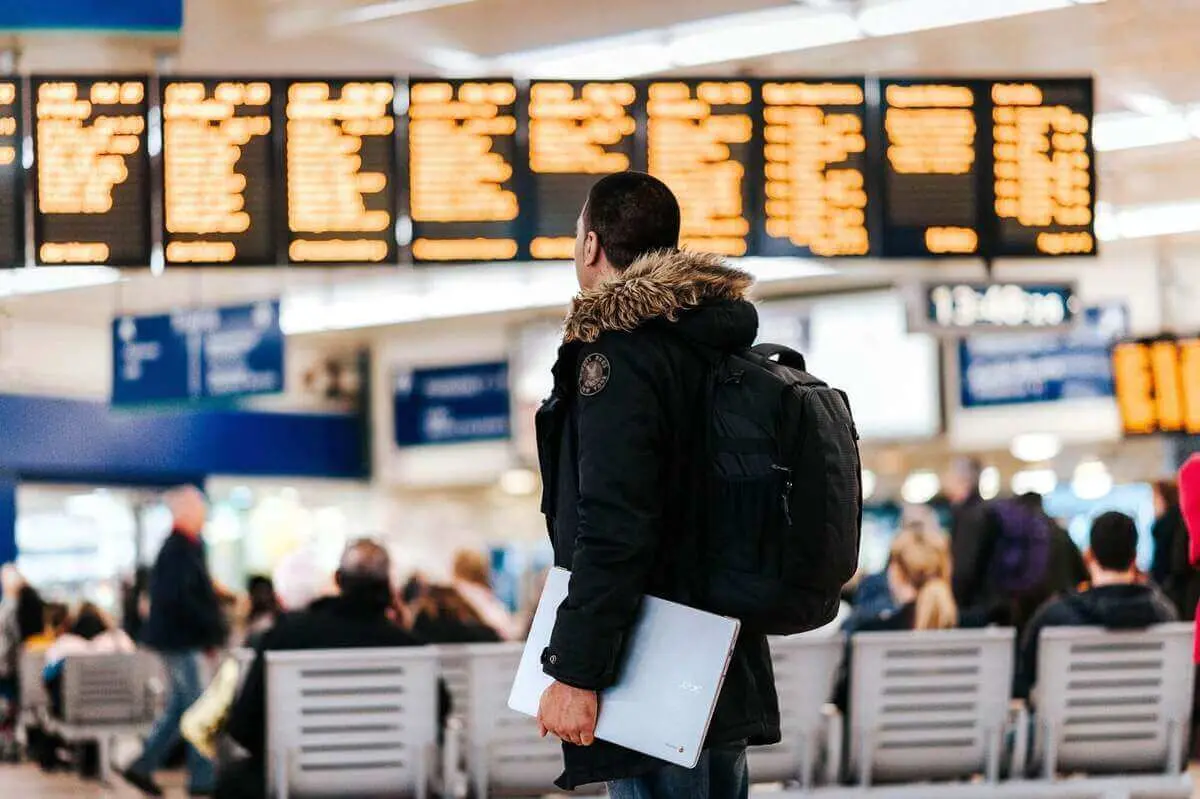
SEMICON West's long-term move to the Phoenix Convention Center (March 30–April 1, 2027), Fan Fusion, and the sports calendar bring industry and fans in concentrated weeks. They fly the same carriers as everyone else. Treat these as overlays on the resident base, not as the spine of the buy.
Arizona State University enrolls more than 200,000 students annually and is one of Arizona's largest employers. Grand Canyon University and out-of-state programs recruiting Valley students sit alongside it. Education brands EAM has placed in airports include Wharton, BYU, the University of Michigan, the University of Pittsburgh, and UT Dallas. The audience is the resident student and family. Weight August, January, and commencement on departure-side inventory.
International visitors remain a growing minority — about 2.8 million in 2025, with first nonstop Asia service noted by the airport that year plus Mexico, Canada, UK, and Europe service. Useful for inbound destination and financial brands, but not large enough to justify ignoring Terminal 4 domestic. Public bag claim and curb are the international-arrival read.
PHX served 51,618,649 passengers in 2025, down about 1.4% from the 2024 record of 52,325,266. International passengers were about 2.8 million (~5%). The airport lists itself about 13th in North America and 39th worldwide. American carried about 20.9 million passengers in 2025 (~40.5%); Southwest about 17.2 million (~33%).
Terminals 3 and 4 are separate buildings linked by the PHX Sky Train (also rental cars, long-term parking, light rail). Arrivals claim bags in their airline's terminal, then move to ground transport or the Sky Train. American-hub connections may never see the curb — treat them as a share of T4 traffic. What matters for advertisers is which terminal the audience uses, and whether the brief is always-on or winter-weighted.
Who advertises
Employers and universities recruiting the Valley workforce, healthcare and financial brands reaching residents, destination and hospitality greeting winter visitors, arrival-moment services at bag claim, semiconductor/B2B around SEMICON West, and consumer brands on the sports calendar. Always-on rows lead; event rows follow.
| Objective | Who buys it | Who it reaches at PHX | What the buy usually looks like |
|---|---|---|---|
| Recruiting and employer brand | Semiconductor fabs and suppliers, aerospace, hospitals, logistics, professional services | Valley residents departing and returning; candidates flying in for interviews | Departure-side weight in Terminal 4; flight-info banners and directory digital; four-week periods year-round with winter thickening |
| Healthcare and specialty care | Banner Health and regional systems, specialty clinics, medical tourism | Residents and winter visitors deciding on care | Bag-claim digital and escalator units, always-on; arrival path for visitors, departure path for residents |
| Financial and wealth | Banks, credit unions, wealth managers, fintech | Residents with dwell on departure; snowbirds on arrival | Mixed direction; Terminal 4 frequency; multi-period flights |
| Universities and executive education | ASU-related programs, out-of-state universities recruiting Valley students, executive certificates | Students, parents, alumni, working professionals | Departure-side and directory units; August, January, and commencement weight. Education brands EAM has placed in airports include Wharton, BYU, the University of Michigan, the University of Pittsburgh, and UT Dallas |
| Account-based and B2B presence | Enterprise software, cybersecurity, industrial suppliers selling into the Valley's employer base | Business travelers on American and Southwest through Terminal 4 | Always-on Terminal 4 digital plus a SEMICON West period overlay |
| Semiconductor / SEMICON West inbound | Exhibitors, fabs, equipment suppliers, economic-development brands | Industry arriving for show week and the broader semiconductor workforce year-round | Four-week period covering show dates; both terminals if the audience splits carriers |
| Destination and attractions | Visit Phoenix / Visit Arizona, resorts, golf, spring training, parks | Winter visitors and leisure arrivals | Arrival-side Terminal 4; escalator digital and bag claim; October–April weight |
| Arrival-moment services | Hotels, rideshare, rental cars, connectivity, ticket sellers | Every arrival deciding the next hour | Bag-claim digital, carousel wraps, escalator approaches; always-on |
| Luxury, retail, and launch moments | Retail, auto, premium consumer, product launches | Departing residents and inbound visitors with dwell | Pre-security banners, vehicle/custom display, premium wraps; one or two periods for launches |
| Sports-week overlay | Sponsors and consumer brands around Open, Fiesta Bowl, Fan Fusion, All-Star | Fans and hospitality guests that week | Short weight on top of an existing always-on; do not build the annual plan from the overlay alone |
| International inbound | Airlines, telecom, banks, destination brands | International arrivals after inspection; international departures at gates | Public bag claim and curb for arrivals; concourse digital for departures |
On the resident workforce. Intel, TSMC, Banner Health, and ASU together make PHX a recruiting and healthcare market every week. Departure-side inventory is not a leftover; for these buyers it is the point.
On winter visitors. Snowbirds share the Terminal 4 arrival path for several months. A hospitality or healthcare brand that only buys Open week misses the winter periods that actually fill hotels and clinics.
On SEMICON West. The show's long-term Phoenix home turns a Valley industry into a calendar peak inside the airport those employees already use. Cover show week with a four-week period, and keep a lighter always-on for the workforce that stays.
For Southwest-region reach, LAS and SAN add leisure and coastal business traffic, and EAM buys them as one plan when a brief needs it. That is a scoping conversation, not something this page needs to argue.
How EAM works
One call, one plan, one contract. We follow up to learn who you need to reach and the objective, then come back with current availability and a recommended mix.
Step 01
Always-on versus a winter or SEMICON West period; Terminal 4, Terminal 3, or both; arrivals, departures, or both; one airport or part of a Southwest-region plan.
You getThe period, the audience, and the direction
Step 02
Which networks and static faces are open, how crowded the digital loops are, whether Terminal 3 concourse construction affects a unit, and whether category separation is possible.
You getAvailability and loop position
Step 03
Formats, share of voice, and a range, not a scraped rate card. After we know who you need to reach, we come back with current availability and a plan you can take inside.
You getA quoted plan you can take inside
Step 04
Specs across every screen shape and wrap size in the buy, airport approval, files in business days before the flight.
You getOne contract and one spec sheet
Step 05
Confirm posting before the first arrival wave. Deliver proof of posting and play logs after the flight.
You getProof of posting and play logs in one report
EAM Advertising is an independent airport and in-flight media agency, founded in 2015. We specialize in airport and in-flight media and nothing else, and we do not own media assets at PHX or any airport. That independence is why the recommendations hold up. We plan and buy across 125+ airports and 45+ airlines worldwide, which is the leverage and the current-availability knowledge a one-time PHX buyer does not have. Clients include Fortinet, Dynatrace, Rubrik, McGraw-Hill, and Wharton. When the strategy extends beyond Phoenix — a roadshow, a multi-city launch, an international push — the same relationship covers the other markets. See the airport advertising hub.
For agencies and consultants
Agencies and consultants bring EAM Advertising in as the airport specialist behind a client’s plan. The client relationship stays with you. We plan, buy, and report under NDA, and can work white-label.
Get our media kitMeasurement
Proof of posting and digital play logs are factual. Delivered impressions are modeled. Brand lift is the only method that speaks to effect, and it has to be fielded before the flight. Direct pipeline attribution is not reliably available. An always-on audience in a defined metro allows a geo-targeted survey panel that a pure event-week market cannot match as cleanly.
| Measure | What It Actually Tells You | When to Set It Up | Confidence |
|---|---|---|---|
| Proof of posting | Photographic confirmation that every unit ran, in the right place, for the full period. | Written into the contract before signing | High — factual |
| Delivered impressions | Modeled audience delivery based on airport traffic and unit position. An estimate built from traffic data, not a count of people who looked. | Requested at proposal stage | Moderate — modeled |
| Digital play logs | Actual spot counts and share of voice on digital networks. The check on whether the loop crowding you planned against actually materialized. | Requested at contracting | High — logged |
| Brand lift study | Survey-based awareness or perception change against a control. The only method that measures effect rather than exposure. | Fielded pre-flight for a baseline | Moderate — needs budget and lead time |
| Direct attribution to pipeline | Not reliably available. Airport media has no click, and the same brands run other touchpoints at the same time. | Low — treat claims here with skepticism |
Ask for play logs on every digital network at contracting — the kit does not publish a loop floor, so the log is how you learn share of voice delivered. Delivered impressions sized from airport traffic will overweight connecting passengers on American-hub concourse units; treat that delivery as an upper bound on local audience.
Because so much of the PHX audience lives in Maricopa County and returns through the same terminals, a geo-fenced brand-lift panel is more meaningful here than in a pure convention market. Winter-visitor flights are messier to panel and lean harder on proof of posting, play logs, and modeled delivery. Decide which audience you are buying before you decide what to measure.
The honest framing for anyone defending this spend internally: proof of posting and play logs prove the campaign ran as bought, delivered impressions size the audience, and a lift study is the only line that speaks to effect. A vendor promising attributed pipeline from airport media is overselling. EAM contracts proof of posting and delivery reporting on every campaign as standard and will tell you plainly when a proposed measurement approach won't produce a number worth presenting.
Questions
A single unit or network runs $3,000 to $80,000 per four-week period, depending on format and location. A two- or three-unit package runs $15,000 to $50,000 per period. A domination or multi-network takeover runs north of $100,000 per period. Production and installation are extra. Those are planning ranges; specific units and periods are quoted against current availability.
In four-week periods. The media specifications also publish a lower four-week rate under a 52-week contract. Digital networks, wraps, banners, backlits, carousels, custom displays, and sponsorships all sit on that buying unit. Broadcast hours, loop length, and share of voice for digital are confirmed at quote time because they are not printed as a stable loop floor in the kit.
Terminal 4 for most Valley residents, Southwest and American flyers, and winter visitors — it carries about 70% of passengers. Terminal 3 when the audience flies Delta, United, Alaska, Frontier, or the other T3 carriers. A full-airport plan uses both plus Sky Train inventory for passengers moving between buildings and to rental cars. Confirm airline assignments against the current airport map at contract.
Yes, on the public side after federal inspection — bag claim, escalators to ground transport, and the curb. Gate and concourse units reach international departures more directly. International volume is about 2.8 million a year, so most branding plans still center Terminal 4 domestic and add international-capable units when the brief names that audience.
Winter and major sports weekends: hold three to five months out. SEMICON West and similar peaks: three to four months. Summer always-on starts are often workable inside two months. Scope annual contracts that cover winter before the peak sells.
Yes, as an always-on market against the Valley's employer base — semiconductors, aerospace, healthcare administration, finance — with SEMICON West as the peak that concentrates the industry. It is not a fifteen-week events calendar. Show-only briefs buy the four-week period that contains the show; workforce briefs buy periods through the year.
They are active from fall through spring on arrival-side Terminal 4, alongside healthcare and consumer brands. Recruiting and financial brands usually find more room on departure-side units and in summer, or share the arrival path with a non-competing message.
Yes — out-of-state recruiting, executive programs, and alumni campaigns. ASU's scale makes the metro a recruiting market every semester. Education brands EAM has placed in airports include Wharton, BYU, the University of Michigan, the University of Pittsburgh, and UT Dallas. Weight late August, mid-January, and May.
Digital creative is due 14–18 business days before start; static creative 21–28 days before start. Expect multiple specs in a mixed buy: wide escalator digitals, portrait bag-claim screens, large fabric banners, and custom wrap templates. All creative is subject to airport authority approval before it posts.
Ask at quote time; separation, when available, is usually category- and zone-specific rather than airport-wide.
Everything after the objective. We check what's open for the week, which loops are crowded and which units will sell out, and where on the arrival path your audience actually walks. We recommend the mix, secure the units, traffic the creative through airport approval, confirm posting on day one, and deliver proof of posting and play logs after. If PHX is one market in a larger plan, the same relationship covers the others.
Independent airport advertising media agency. Est. 2015.
Send your work email for the media kit: formats, planning ranges, and how EAM works. We’ll follow up to learn who you need to reach and when, then come back with current availability and a recommended mix.
Independent since 2015 · 125+ airports · 40+ media vendors
Sources