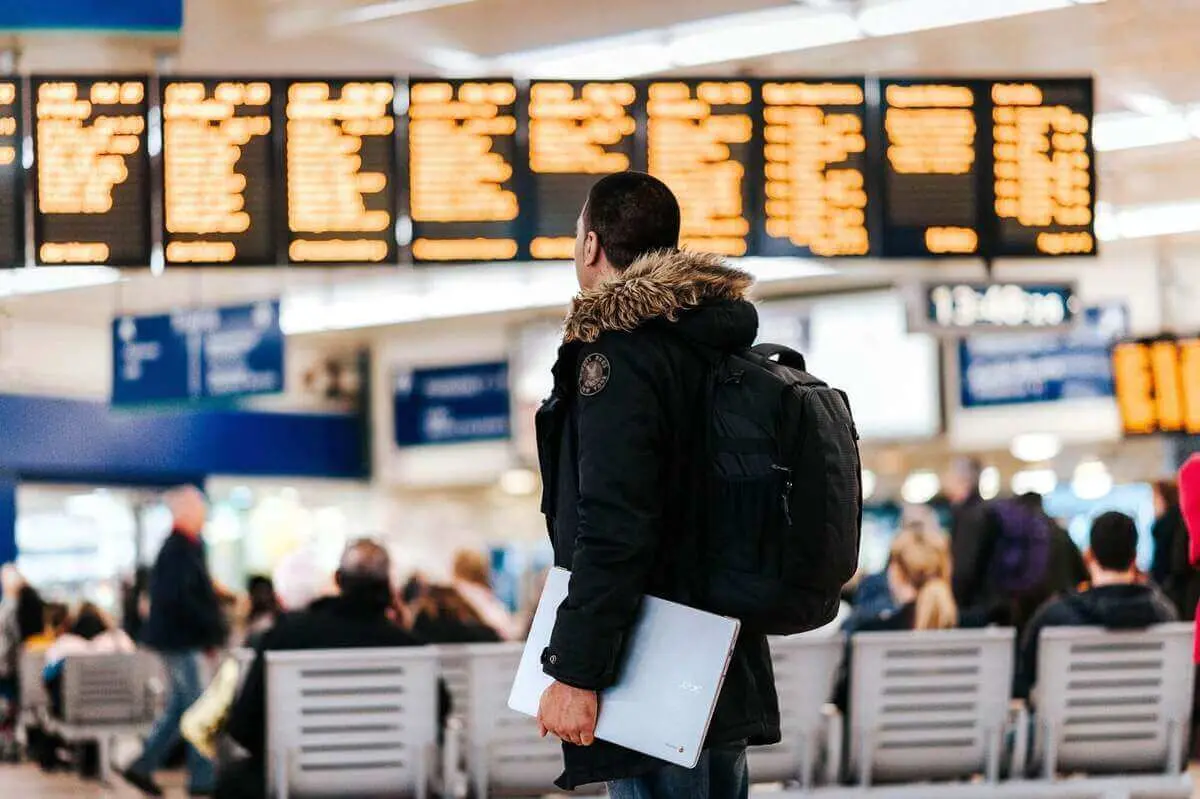
Airport advertising at Hartsfield-Jackson Atlanta International Airport (ATL) The World’s Busiest Airport Still Has a Hometown.

106.3 million passengers a year: Atlanta headquarters and logistics flying out, buyers and partners flying in, and GWCC and stadium peaks on top. Get the ATL media kit for formats, planning ranges, and booking windows.

We’ll follow up to learn who you need to reach and when, then come back with current availability and a recommended mix.

  • 125+Airports worldwide
  • 40+Media vendors
  • 106.3MATL passengers in 2025

You’re in good company

  • Thomson Reuters
  • Invest in Canada
  • Dynatrace
  • Fortinet
  • Motorola
  • BYU

At a glance

Atlanta airport advertising
at a glance

  1. 1

    ATL handled 106,302,208 passengers in 2025 (−1.6% vs. 2024), remaining the busiest airport in North America and the world. Delta carries about 74.8% of enplaned passengers across Domestic North, Domestic South, and the International Terminal.

  2. 2

    Two terminal complexes and seven concourses (T–F) linked by the Plane Train. South Domestic is Delta-exclusive for curbside and ticketing; North Domestic carries the other domestic carriers; Concourse F is the International Terminal. Airline assignment decides the buy. Connecting passengers may stay airside once: concourse units reach everyone; bag claim, customs exits, and the curb reach only people starting or ending a trip in Atlanta.

  3. 3

    The always-on audience is metro Atlanta — headquarters employers, logistics, healthcare, and higher education — thickened when Mercedes-Benz Stadium and the Georgia World Congress Center host sports windows, Dragon Con, SEC weekends, and holiday travel.

  4. 4

    Planning ranges: a single unit or network runs $11,000–$235,000 per 28-day period. A two- or three-unit package runs $40,000–$300,000 per period. Multi-network domination runs north of $350,000 per period. Production, install, and removal are extra on most static units. Those are planning ranges, not a rate card.

  5. 5

    Inventory is sold in 28-day periods (1 Period = 28 Days). Digital runs:10 spots in loops of 100–240 seconds; static faces are full-face. Rates are non-cancellable; annual increases apply to multi-year agreements.

  6. 6

    Materials must be in market 14–18 business days before start for digital creative and 21–28 days before start for static creative. Holds expire 5 business days after confirmation. Proof of posting within 5 business days of initial posting. Competitive separation may be possible, but it isn’t guaranteed; ask when booking and write it into the contract. Escalator TFDs need holiday blackout planning and a longer creative lead.

  • 106.3MATL passengers in 2025; busiest in North America and the world (−1.6% vs. 2024)ACI-NA, July 2026
  • about 74.8%Delta share of CY 2025 enplaned passengersBTS T-100 operating-carrier data
  • ~5.3M11-county Atlanta region population, April 2025Atlanta Regional Commission

What you can run

What can you run
at ATL?

16 placements are in the current specifications: Arrivals digital network; Airport-wide video wall network; Iconic post-security video walls; Premier vertical directory network; Direct View Network (DVN); Concourse D CenterPoint tension fabric; plus 10 more in the cost table. Digital share of voice depends on the loop (one of 10 to one of 24). The cards are this airport's units. The format library after them is photographed across airports, not as ATL photography.

Digital

Arrivals digital network

Bag-claim screens across Domestic North, South (incl. one LED wall), and International

Type
19 screens (18 LCD + 1 LED); ~55″ and ~119″ × 67″
Your spot
:10 /:230–:240 — one of ~23–24, ~4% SOV
Best for
Arrival dwell (~30 min); motion and static

Digital

Airport-wide video wall network

Pre-security and Concourses T–F; temporarily 24 LEDs after Concourse B work

Type
24 LEDs; ~71–283″ × ~40″
Your spot
:10 /:120 — one of 12, ~8% SOV
Best for
Full-airport frequency; confirm screen count

Digital

Iconic post-security video walls

Three sequential walls after Main Security toward A–F

Type
3 walls, ~256″ × 93″
Your spot
:10 /:100 — one of 10, ~10% SOV; creative can differ per screen
Best for
Departure domination after screening

Digital

Premier vertical directory network

44 vertical directories, arrivals and departures

Type
44 × 75″; full-screen when idle, banner when directory is in use
Your spot
:10 /:100 — one of 10, ~10% SOV
Best for
Frequency with directory adjacency; no digital reporting

Digital

Direct View Network (DVN)

Overhead centerline down each concourse

Type
66 screens after Concourse D work (was 68); ~94″ × 27″
Your spot
:10 /:100 — one of 10, ~10% SOV
Best for
Concourse frequency; includes hub connections

Static

Concourse D CenterPoint tension fabric

Overhead at D CenterPoint toward Plane Train to E & F

Type
1 face, ~144″ × 60″
Your spot
Static — full face
Best for
Outbound toward E/F; escalator blackout rules

Static

Concourse B escalator tension fabrics (pair)

Overhead on B toward Plane Train to C–F; bottom unit backlit

Type
2 faces, ~132″ × 48″ and ~146″ × 93″
Your spot
Static — full face
Best for
Delta outbound spine; escalator shutdown for install

Static

Concourse C escalator tension fabrics (set of three)

Sequential overhead descending to Plane Train toward D–F

Type
3 faces, ~135–144″ wide
Your spot
Static — full face
Best for
Mid-complex outbound; escalator blackout rules

Static

Lower North Security tension fabrics (set of four)

Lower North Security lanes

Type
4 non-lit faces, ~240″ × 48″
Your spot
Static — full face
Best for
Non-Delta departures; 13-period commitment

Static

Domestic South window clings (pair)

South Main Terminal toward Delta ticketing and security

Type
2 faces, ~443–508″ × 83.5″
Your spot
Static — full face
Best for
Delta pre-security departure read

Static

Domestic North window clings (pair)

North Main Terminal toward North ticketing and security

Type
2 faces, ~513–528″ × 83.5″
Your spot
Static — full face
Best for
Non-Delta pre-security departure read

Static

Concourse D Plane Train station wraps

All four ingress/egress sections on the D platform

Type
12 wrap/cling pieces
Your spot
Static — full face
Best for
Outbound/connecting toward E & F

Static

Concourse F wall wrap

Walk up to F or down to the Plane Train

Type
1 face, ~244″ × 72″
Your spot
Static — full face
Best for
International / F junction; temporary-use approval

Static

South exterior banner

South Domestic roadway; Delta-exclusive curb

Type
1 banner, ~316″ × 240″
Your spot
Static — full face
Best for
Delta curb and meeter vehicles

Digital

Wi-Fi sponsorship

Free Wi-Fi splash video plus atl.com landing banner

Type
1 sponsorship
Your spot
N/A
Best for
Always-on brand layer; term length varies

Experiential

Floor exhibits (E CenterPoint; North/South claim vestibules; Domestic atrium; Concourse T)

Pre- and post-security experiential footprints; supporting media included in media rate

Type
Footprints ~7′–20′ on a side
Your spot
Experiential — full period
Best for
Domination / activation; production quoted separately
Table: ATL placements, where they reach passengersStatic tension-fabric and wraps are a major share of this pack.

Static tension-fabric and wraps are a major share of this pack. Branding plans often mix one digital network for motion and play logs with static faces for continuous presence. Some deck units are not priced on the January 27, 2026 grid (Concourse A arrivals TFD pair, Concourse C Plane Train wraps, Main Security airside set) — ask at quote.

Before you buy escalator tension fabrics on B, C, or D CenterPointAirport holiday blackout dates apply.

Airport holiday blackout dates apply. Install and removal require an escalator shutdown; no shutdowns during blackout dates. Contract and creative are due a minimum of 30 days before the desired posting date — longer than the standard creative deadline (digital 14–18 business days before start; static 21–28 days before start).

Before you buy the Lower North Security tension-fabric setFirst installation needs at least six weeks lead time, and the kit requires a 13-period media commitment.

First installation needs at least six weeks lead time, and the kit requires a 13-period media commitment.

Before you buy the Premier vertical directory networkDigital reporting is not available.

Digital reporting is not available. Plan measurement around proof of posting, not play logs.

Before you buy the arrivals digital networkLoop is crowded (about 4% share of voice).

Loop is crowded (about 4% share of voice). Motion and static are accepted; treat modeled impressions as an estimate against ~30-minute claim dwell.

Before you buy floor exhibitsProduction, install, and removal are quoted separately; power is not available at the North and South claim.

Production, install, and removal are quoted separately; power is not available at the North and South claim vestibule sites; atrium and Concourse T sites note power costs. Media rate includes required supporting media to be specified in planning.

Before you buy the Concourse F wall wrapTemporary-use unit; airport approval required on client, creative, and timing.

Temporary-use unit; airport approval required on client, creative, and timing.

Before you buy the video wall network or DVNScreen counts changed in September 2025 for Concourse B and Concourse D modernization.

Screen counts changed in September 2025 for Concourse B and Concourse D modernization. Check the live package size when you book. Concourse D expansion continues toward a 2029 completion — unit locations move.

Every airport format, with specs and lead times

The digital, static, experiential, and exterior units brands buy in airports. For ATL we plan specific units and dates against what is open at the time.

Examples

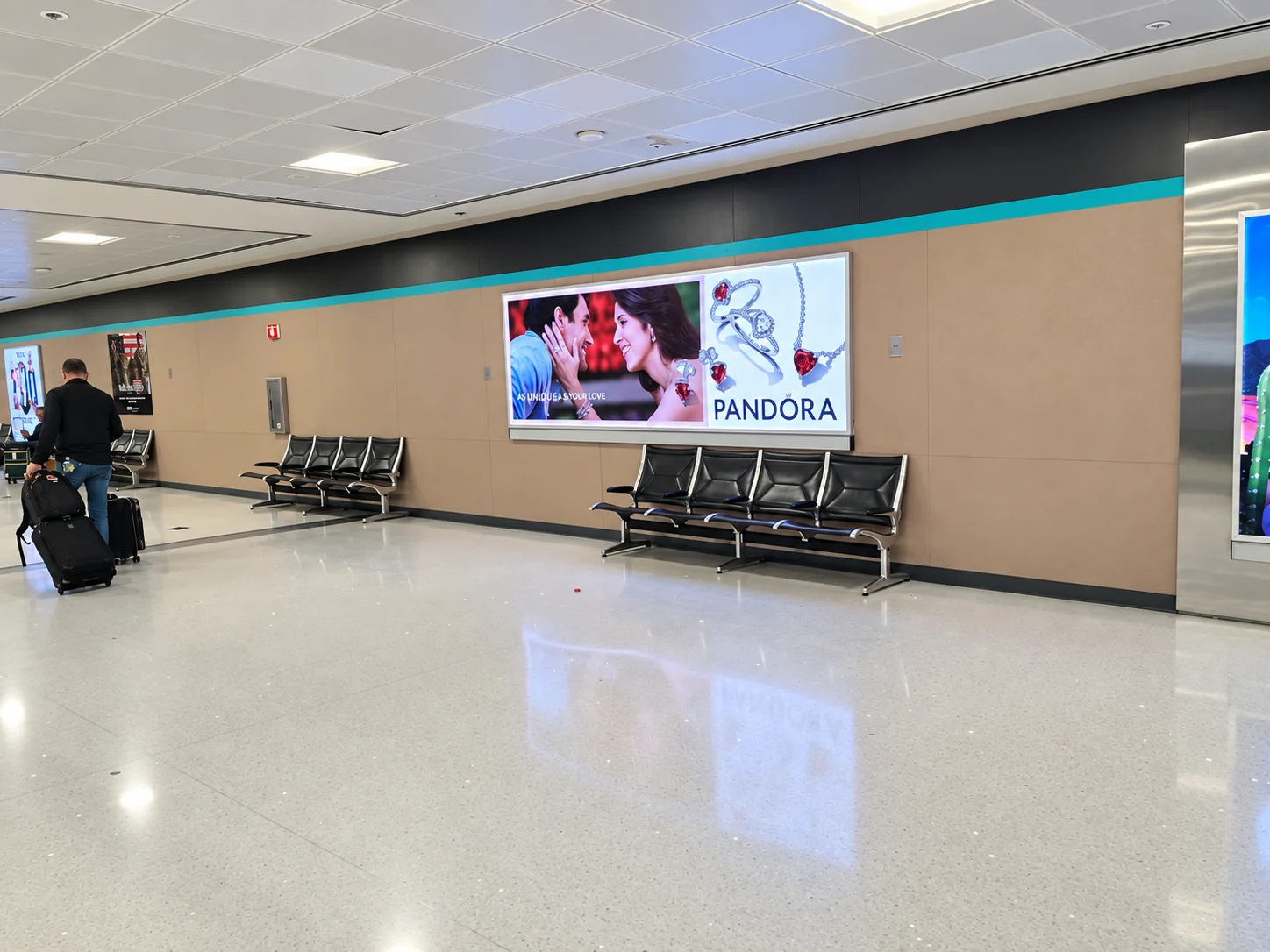
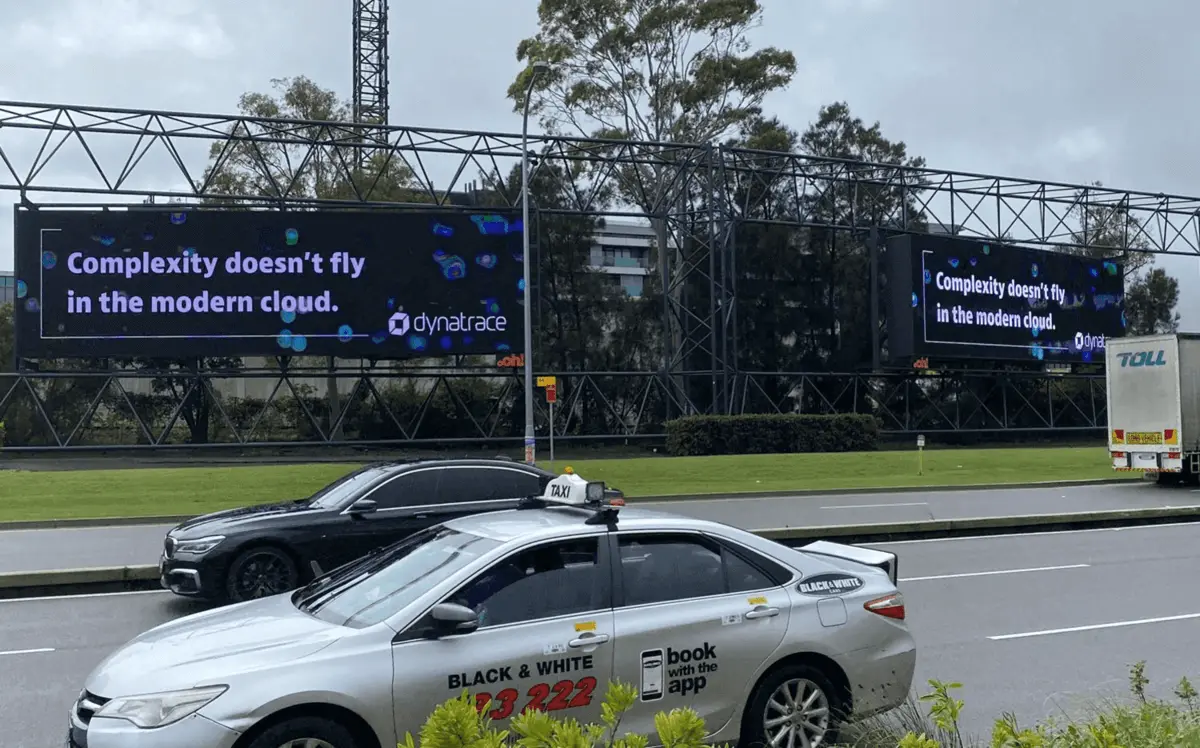
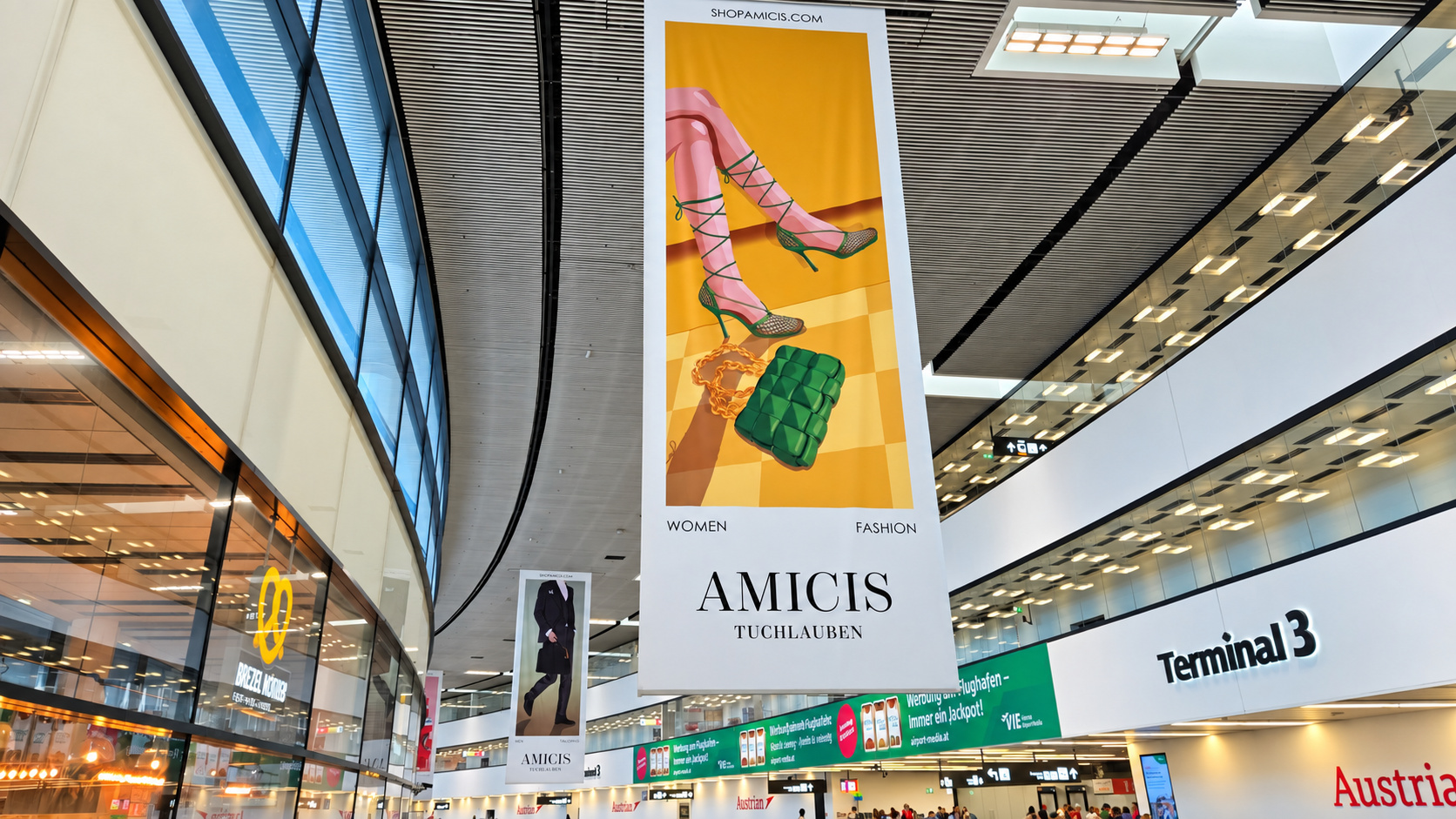
What does airport advertising
look like?

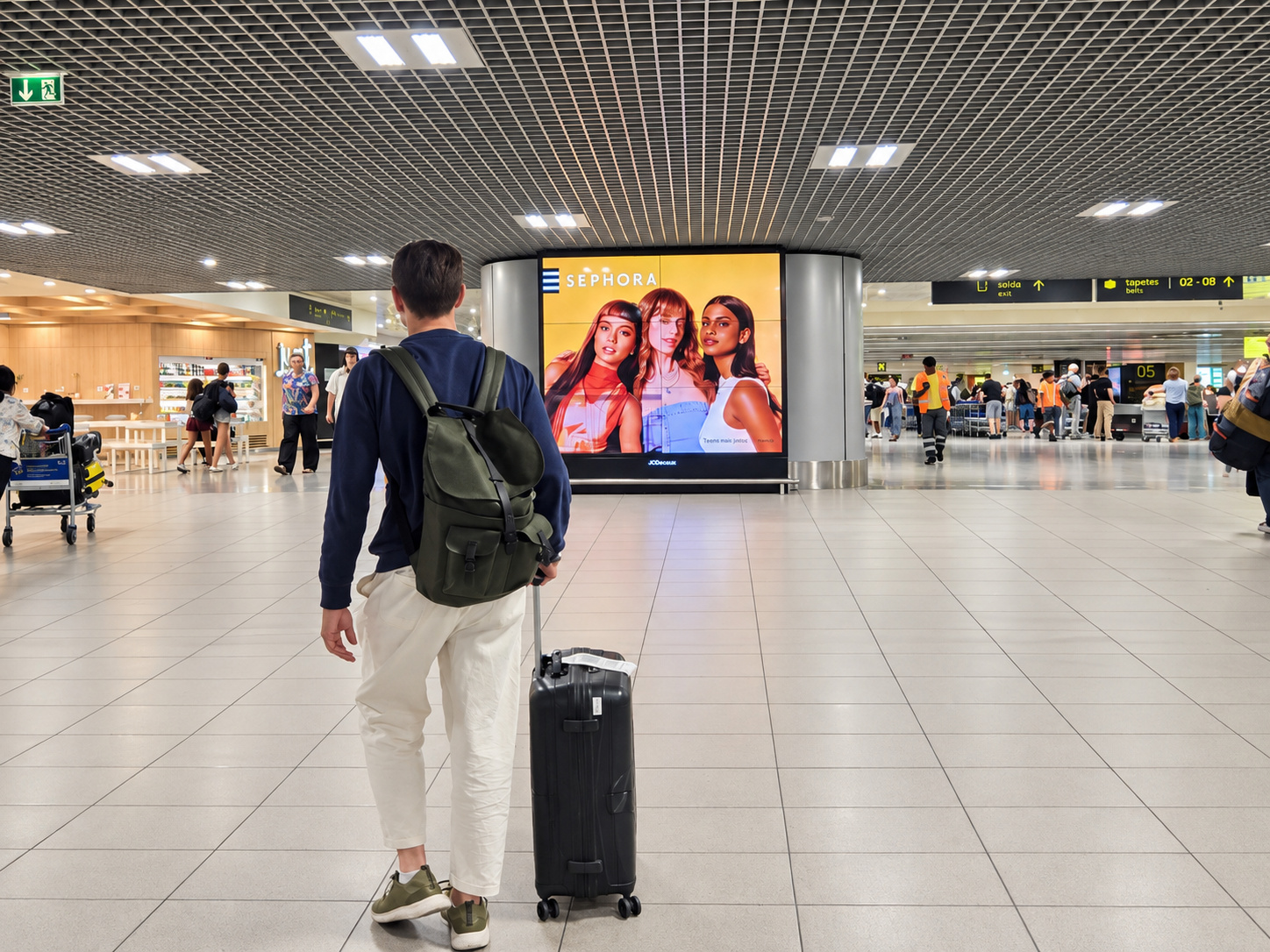
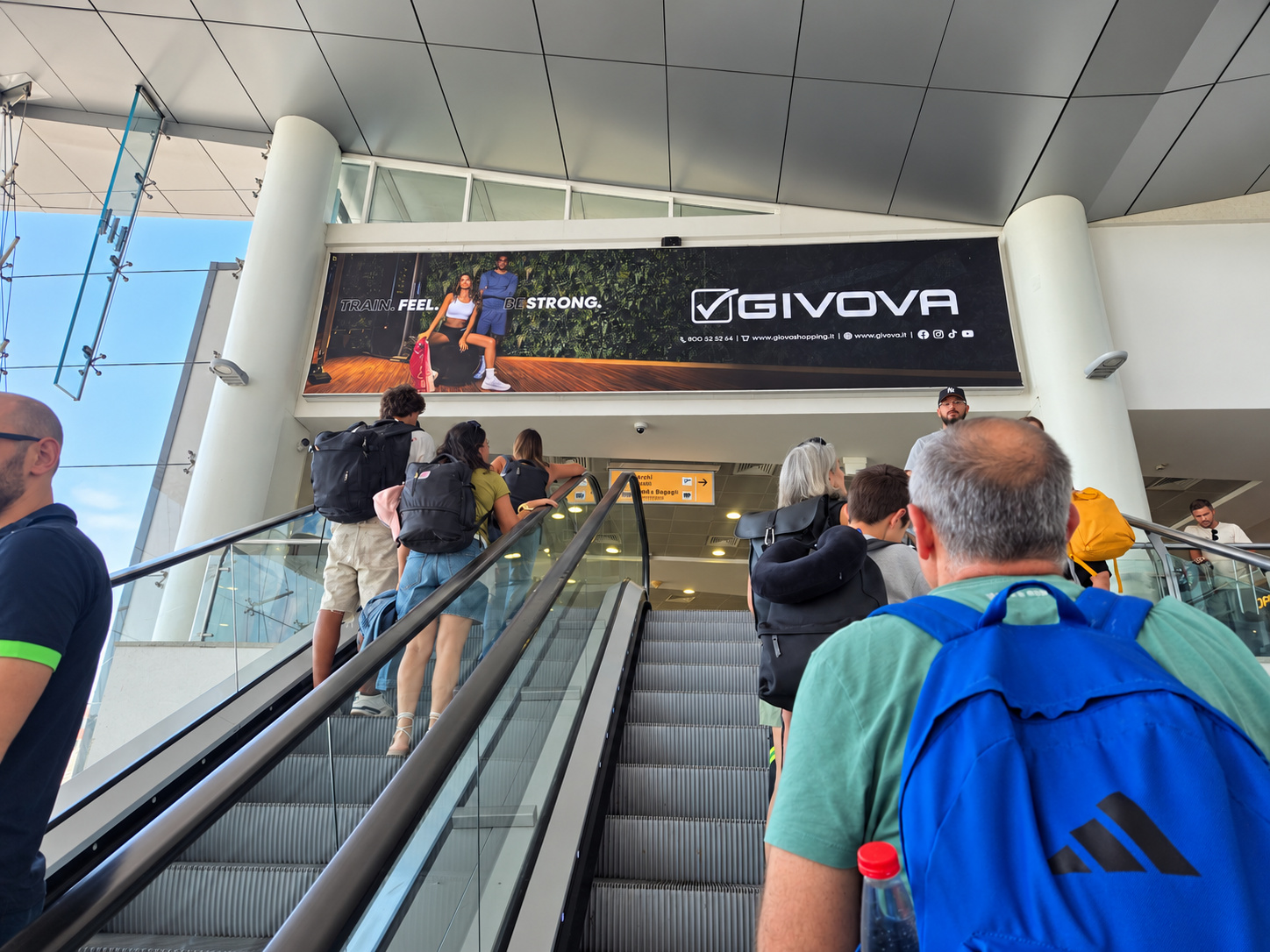
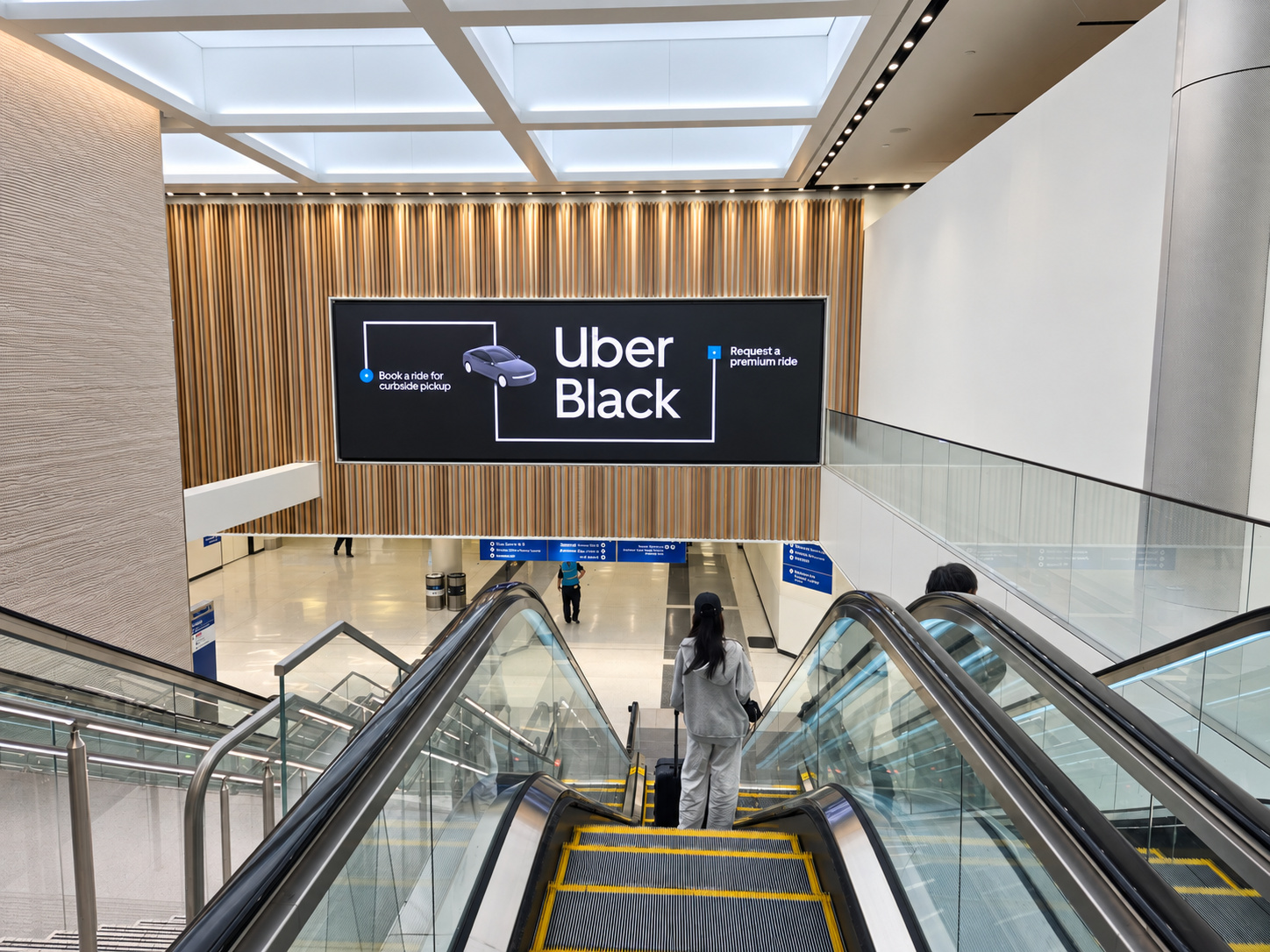
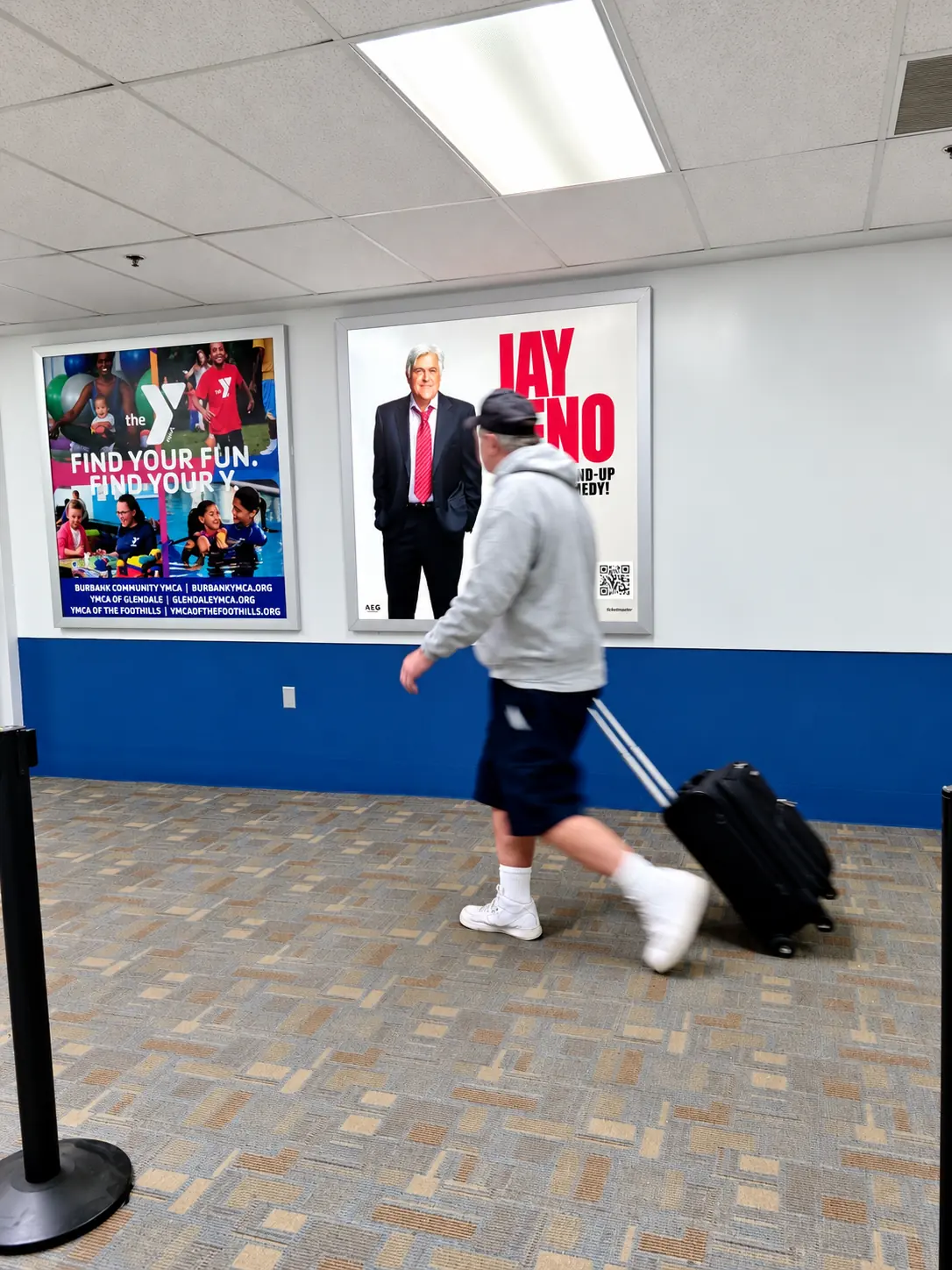
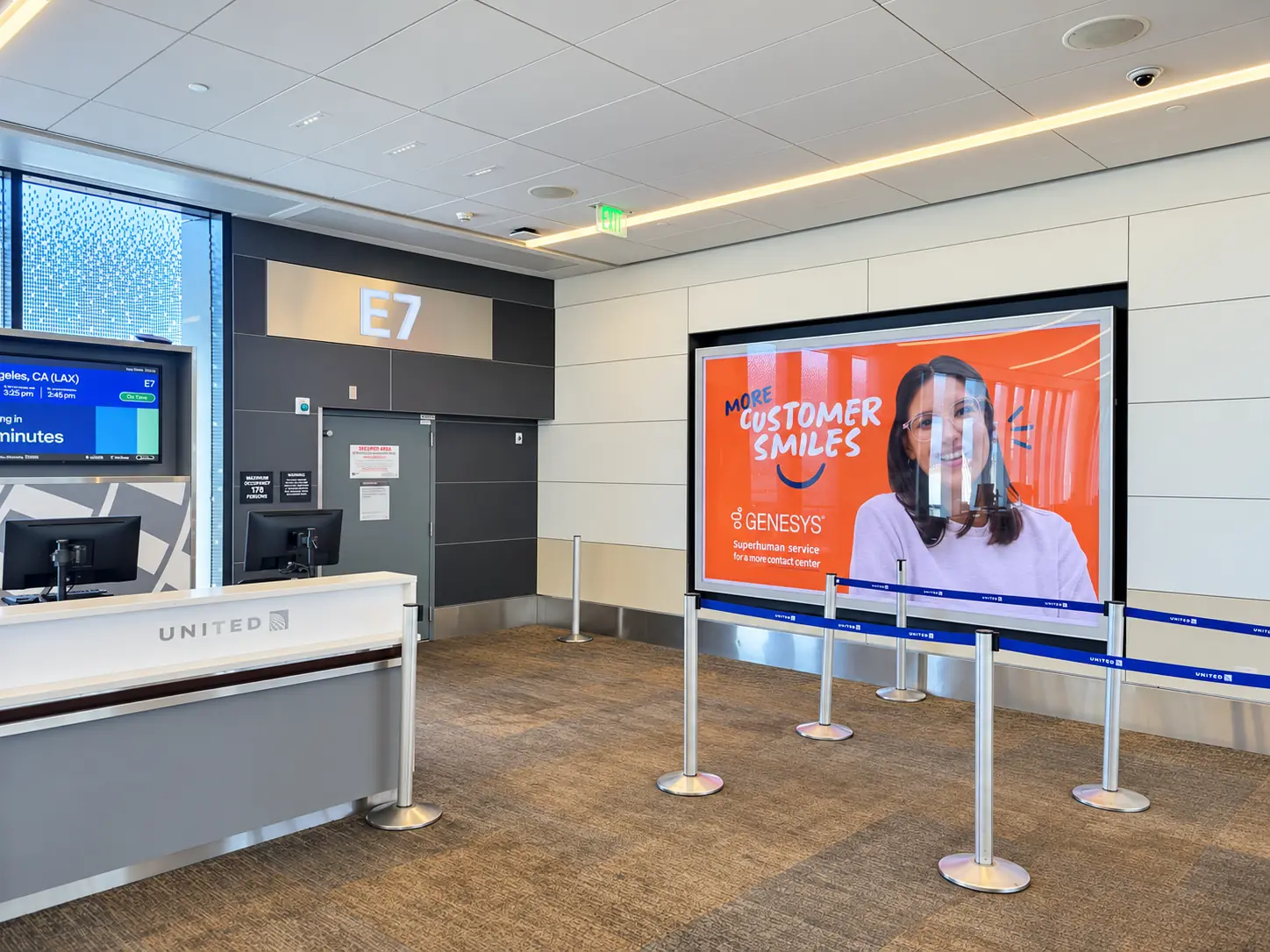
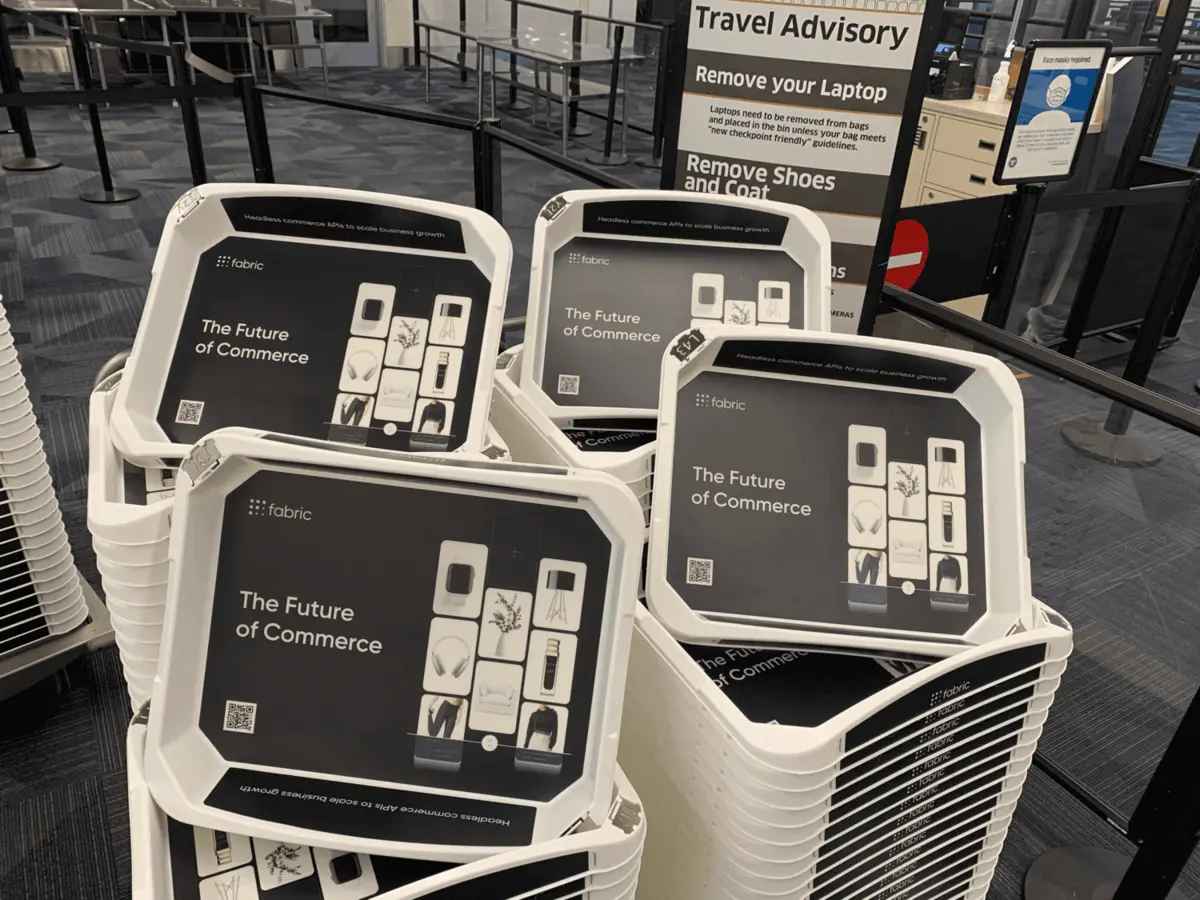
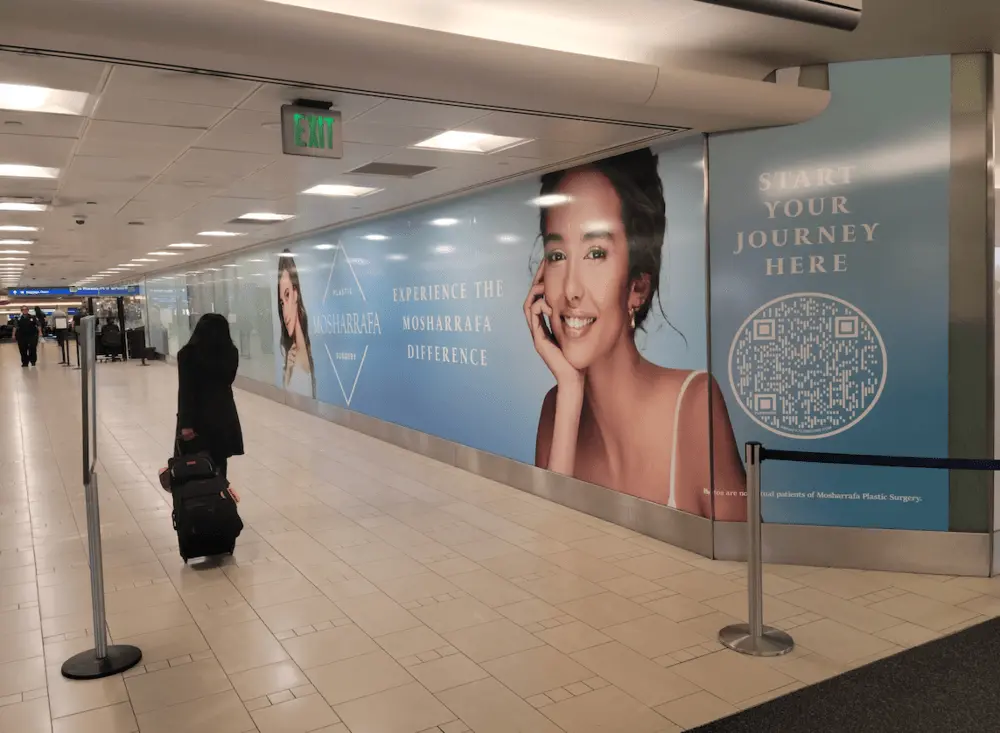
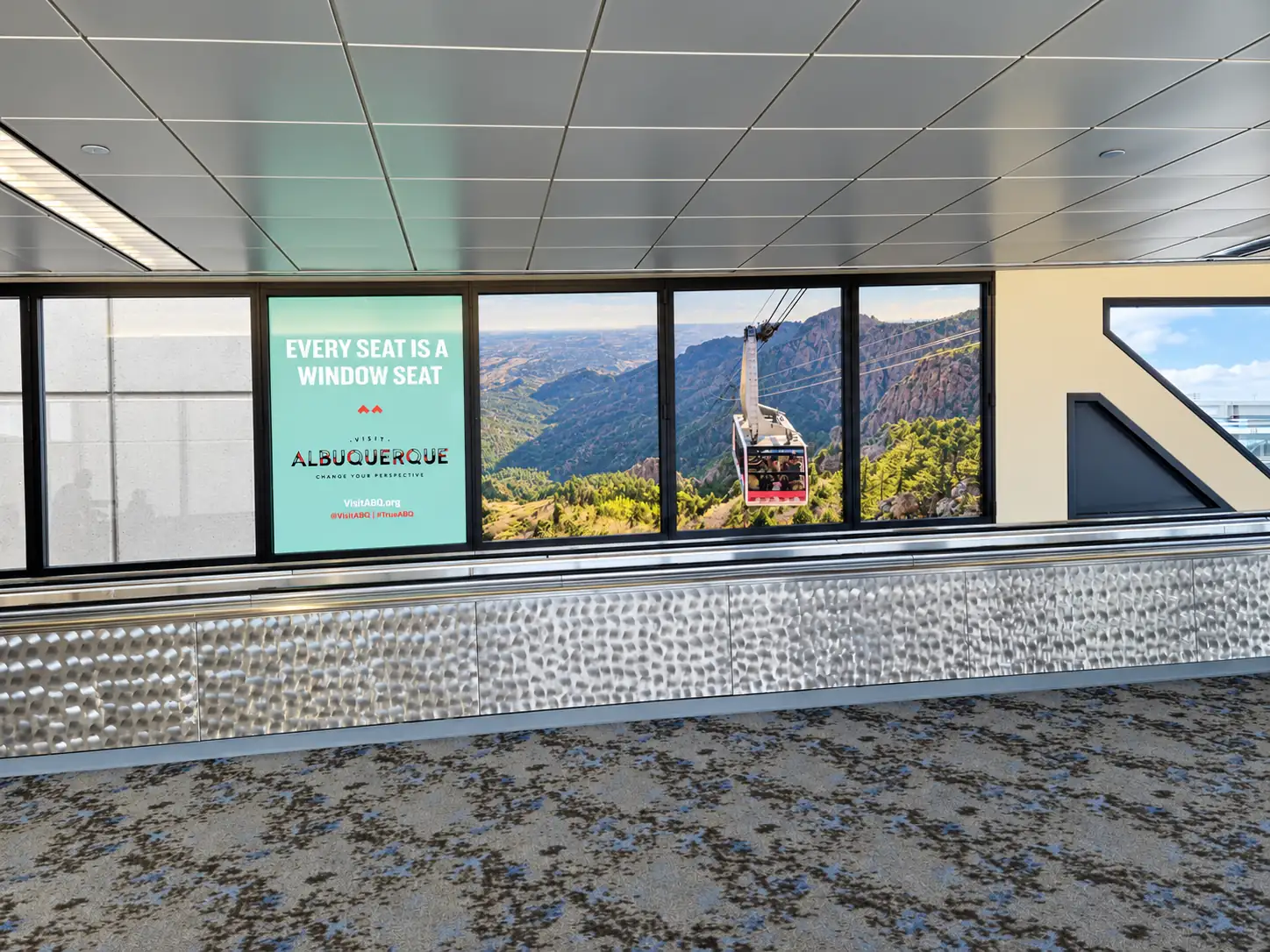
Airport advertising in practice, photographed across many airports. Availability at ATL varies by format.

Real brands. Real campaigns.

Which brands have run airport campaigns
with EAM Advertising?

Campaigns across several countries and media owners, each bought through one contract. Swipe or use the arrows for the markets, the scope, and the result.

“EAM made a nationwide airport campaign feel much easier to manage. The team was responsive, organized, and always on top of the details. They helped us make smart decisions with the budget, kept everything moving, and ultimately delivered exactly what we were looking for.”

Chief Marketing OfficerFortinet · nationwide airport campaign

These examples show past EAM campaigns—not a minimum campaign size, a forecast, or a guarantee of results. One-airport briefs are welcome, too.

Cost

What does Atlanta airport
advertising cost?

$11,000–$235,000 for a single unit or network per 28-day period. $40,000–$300,000 for a two- or three-unit package per period. North of $350,000 for a multi-network domination per period. Production, install, and removal are extra on most static units (often ~$2,500–$9,000 per install cycle where published; floor exhibits quoted separately). Digital share of voice depends on the loop (one of 10 to one of 24). Those are planning ranges, not a rate card.

Sold in 28-day periodsEverything in the current ATL specifications is quoted on a 28-day buying unit (1 Period = 28 Days).

Everything in the current ATL specifications is quoted on a 28-day buying unit (1 Period = 28 Days). Buy the period that covers show or match week, or stack periods for always-on. A one-week show still pays for the period that contains it unless a shorter unit is released at quote.

Digital loops run ten-second spots. A:10 in a:100 loop is one of 10 (~10% SOV); in a:120 loop, one of 12 (~8%); in a:240 loop, one of 24 (~4%). The arrivals digital network moved to a 24-spot / 240-second loop effective September 1, 2025. Static faces are full-face for the period. Share of voice is why the placements table matters more than the rate card.

Static tension-fabric and wraps are a major share of this pack. Branding plans often mix one digital network for motion and play logs with static faces for continuous presence. Some deck units are not priced on the January 27, 2026 grid (Concourse A arrivals TFD pair, Concourse C Plane Train wraps, Main Security airside set) — ask at quote.

What a budget buys at ATL

Planning ranges. Pick the one closest to your brief and we’ll build the plan from it.

$11,000–$235,000

A single unit or network, one 28-day period

What it is
One placement or network for one period.
For
A focused presence on the path your audience walks.
Plan at this budget
$40,000–$300,000

A two- or three-unit package, one period

What it is
Two or three placements for the period that covers the week.
For
A show, a sports window, or a thicker always-on mix.
Plan at this budget
North of $350,000

Multi-network domination, one period

What it is
Several networks in the same 28-day period.
For
A launch, or a period when one brand needs the building.
Plan at this budget

These are planning ranges, not packages or a rate card. Actual plans depend on the unit, the period, and what is open when you book.

Contract realitiesBuying unit, creative deadlines, and separation are set in the contract.

Buying unit: 28 days (1 Period). Rates are non-cancellable; annual increases apply to multi-year agreements; proposal pricing valid 30 days. Holds expire 5 business days after confirmation. Materials in market 14–18 business days before start for digital creative and 21–28 days before start for static creative (30 days for escalator-shutdown units). Airport authority approval before production or posting. Competitive separation may be possible, but it isn’t guaranteed; ask when booking and write it into the contract. Proof of posting within 5 business days of initial posting (print: close-up + environmental per location; digital: close-up + environmental, 10% of package locations, plus stacked-content photo). Inventory subject to availability at contracting.

What this page will not publishUnit rates and period-specific quotes come back as a quote.

Unit-level rates, loop-position premiums, and period-specific quotes. Those numbers move with availability and with the period. What you can plan against: 28-day periods; $11,000–$235,000; $40,000–$300,000; North of $350,000. Specific units and periods come back as a quote.

Compare all 16 units in one tableWhere, faces, loop, best use
ATL units and networks, where they reach passengers
Unit (plain description)Where it reaches themFaces or screens (approx. size)Your spot in the loopBest for
Arrivals digital networkBag-claim screens across Domestic North, South (incl. one LED wall), and International19 screens (18 LCD + 1 LED); ~55″ and ~119″ × 67″:10 /:230–:240 — one of ~23–24, ~4% SOVArrival dwell (~30 min); motion and static
Airport-wide video wall networkPre-security and Concourses T–F; temporarily 24 LEDs after Concourse B work24 LEDs; ~71–283″ × ~40″:10 /:120 — one of 12, ~8% SOVFull-airport frequency; confirm screen count
Iconic post-security video wallsThree sequential walls after Main Security toward A–F3 walls, ~256″ × 93″:10 /:100 — one of 10, ~10% SOV; creative can differ per screenDeparture domination after screening
Premier vertical directory network44 vertical directories, arrivals and departures44 × 75″; full-screen when idle, banner when directory is in use:10 /:100 — one of 10, ~10% SOVFrequency with directory adjacency; no digital reporting
Direct View Network (DVN)Overhead centerline down each concourse66 screens after Concourse D work (was 68); ~94″ × 27″:10 /:100 — one of 10, ~10% SOVConcourse frequency; includes hub connections
Concourse D CenterPoint tension fabricOverhead at D CenterPoint toward Plane Train to E & F1 face, ~144″ × 60″Static — full faceOutbound toward E/F; escalator blackout rules
Concourse B escalator tension fabrics (pair)Overhead on B toward Plane Train to C–F; bottom unit backlit2 faces, ~132″ × 48″ and ~146″ × 93″Static — full faceDelta outbound spine; escalator shutdown for install
Concourse C escalator tension fabrics (set of three)Sequential overhead descending to Plane Train toward D–F3 faces, ~135–144″ wideStatic — full faceMid-complex outbound; escalator blackout rules
Lower North Security tension fabrics (set of four)Lower North Security lanes4 non-lit faces, ~240″ × 48″Static — full faceNon-Delta departures; 13-period commitment
Domestic South window clings (pair)South Main Terminal toward Delta ticketing and security2 faces, ~443–508″ × 83.5″Static — full faceDelta pre-security departure read
Domestic North window clings (pair)North Main Terminal toward North ticketing and security2 faces, ~513–528″ × 83.5″Static — full faceNon-Delta pre-security departure read
Concourse D Plane Train station wrapsAll four ingress/egress sections on the D platform12 wrap/cling piecesStatic — full faceOutbound/connecting toward E & F
Concourse F wall wrapWalk up to F or down to the Plane Train1 face, ~244″ × 72″Static — full faceInternational / F junction; temporary-use approval
South exterior bannerSouth Domestic roadway; Delta-exclusive curb1 banner, ~316″ × 240″Static — full faceDelta curb and meeter vehicles
Wi-Fi sponsorshipFree Wi-Fi splash video plus atl.com landing banner1 sponsorshipN/AAlways-on brand layer; term length varies
Floor exhibits (E CenterPoint; North/South claim vestibules; Domestic atrium; Concourse T)Pre- and post-security experiential footprints; supporting media included in media rateFootprints ~7′–20′ on a sideExperiential — full periodDomination / activation; production quoted separately

Timing

When should you buy ATL,
and how far ahead?

For a branding buy, the resident flies every week and the 28-day period is the unit. For a calendar buy, IPPE, Dragon Con, SEC Championship weekend, bowl season, Super Bowl LXII, and Thanksgiving through New Year change who is in the building. Always-on beats chasing one week unless the brief names that audience.

The table covers the weeks that change who is in the building.

Atlanta weeks and what they mean for the buy
Period or eventTimingWho arrivesWhat it means for the buy
Holiday and winter travelLate November through early JanuaryResidents, visiting family, leisureConsumer/hospitality weight; contested loops; escalator blackouts on some TFDs
IPPEJanuary 26–28, 2027, GWCCProtein and agriculture buyers and suppliersFirst major B2B peak; one 28-day period; Domestic claim path
Bowl season / CFP corridorLate Dec–early JanFans, alumni, hospitalityConsumer and destination; short always-on weight
Spring break and spring sportsMarch–AprilFamilies, students, visiting teamsLeisure volume; efficient always-on
Summer leisure and sports peaksJune–early AugustLeisure, international visitors, sports hospitalityConsumer/destination; arrivals digital and curb exhibits. One or two 28-day periods cover a summer leisure/sports overlay
Dragon ConSeptember 2–6, 2027 (Labor Day weekend)Pop-culture, gaming, entertainment fansConsumer and entertainment; Domestic claim and atrium
SEC Championship weekendDecember 5, 2026, Mercedes-Benz StadiumFans, alumni, corporate hospitalityShort consumer peak; book the covering 28-day period
Super Bowl LXIIFebruary 2028, Mercedes-Benz StadiumNFL week visitors, sponsors, hospitalityMulti-period advance hold; multi-week stadium booking discipline
Always-on business travelYear-roundAtlanta workforce, healthcare, logistics, university travelersBranding spine; stack periods, thicken around peaks
EAM's take<p>The mistake at ATL is buying one stadium week and calling it an Atlanta strategy — or buying twelve quiet.

The mistake at ATL is buying one stadium week and calling it an Atlanta strategy — or buying twelve quiet months and ignoring IPPE and Dragon Con. The resident who flies every Tuesday is why always-on works; the industry or crowd that lands for IPPE, Dragon Con, SEC weekend, and Super Bowl LXII is why the calendar still matters. Buy 28-day periods against the resident first; add the conference or sports period when the brief names that audience. A large share of Delta traffic is connecting — concourse impressions are not Atlanta reach.

How far in advance do you need to book?

Dragon Con, SEC Championship weekend, bowl season, Thanksgiving–New Year, and Super Bowl LXII: hold 4–6 months out. Mid-tier GWCC weeks and spring leisure: 8–12 weeks. Standard periods: 6–10 weeks is often enough. ATL does not publish a separate event-week rate card in this pack; premium shows up as availability pressure on arrivals digital, iconic walls, DVN, claim exhibits, and South Delta pre-security faces.

ATL booking windows
TierExamplesHold byWhat sells firstPricing character
PeakDragon Con; SEC Championship; Thanksgiving–New Year; Super Bowl LXII (2028)4–6 monthsArrivals digital, iconic walls, DVN, claim/atrium exhibits, South Delta window clingsOpen 28-day rates; contested loops
HighIPPE; other GWCC weeks; Falcons / Atlanta United home stretches; fall holiday ramp8–12 weeksDomestic claim path; T and E CenterPoint; video wall networkStandard 28-day rates; contested by terminal
StandardQuiet mid-periods outside stadium and GWCC peaks6–10 weeksMost static faces and secondary digital openStandard 28-day rates; a strong always-on start

Ready to plan?

Start your ATL plan.
Send the brief.

Tell us who you need to reach, where, and when. We come back with current availability at every airport in the plan and a recommended mix.

Airports, start date and duration, campaign goal, budget range, and anything else you can share. A few lines is plenty.

We’ll follow up to learn who you need to reach and when, then come back with current availability and a recommended mix.

Placement

Where should your ads run
inside ATL?

In the terminal your audience flies, along the path they walk. Delta-heavy briefs center Domestic South and Concourses T–D. Non-Delta domestic briefs center Domestic North. International inbound briefs center Concourse F bag claim and curb after inspection. Claim and curb exits are the arrival spine; ticketing-to-security and post-security iconic walls plus concourse digital are the departure spine.

Where ads run inside ATL
StepZone and unitsWhat the passenger is doingPriority
1. Off the planeDVN; E CenterPoint; F wall wrap; video wall networkStill airside; connections may never leaveMedium for O&D; high for Delta connections
2. Toward claim / Plane TrainEscalator TFDs on B/C; D CenterPoint; Plane Train wrapsMoving to claim or another concourseHigh for connections and outbound to E/F
3. Baggage claim dwellArrivals digital (19 screens); North/South claim exhibitsWaiting for bags (~30 min); choosing ground transportHighest for arrival-moment and destination
4. Curb / SkyTrain / MARTA / rental carsWest curb vestibule exhibits; South exterior bannerLast decisions before the cityHigh; last read before downtown or the stadium
Departure sideNorth/South window clings; Lower North Security TFDs; iconic walls; DVN and video walls; Wi-FiCheck-in, security, gate waitHigh for resident, recruiting, university, financial
Domestic South (Delta)South claim exhibit on the walk to curb, SkyTrain, and rental cars.

South claim exhibit on the walk to curb, SkyTrain, and rental cars. Departures: South window clings, iconic post-security walls, then Concourses T–D. South exterior banner on the Delta-exclusive curb.

Domestic NorthNorth window clings, Lower North Security tension fabrics, North claim exhibit.

North window clings, Lower North Security tension fabrics, North claim exhibit. Concourse T CenterPoint catches passengers leaving North security toward American and United gates and the Plane Train.

Concourses A–DEscalator tension fabrics toward the Plane Train; DVN overhead.

Escalator tension fabrics toward the Plane Train; DVN overhead. Concourse D is under multi-year modernization.

Concourses E and FE CenterPoint for mix and duty-free; F for the International Terminal and the Plane Train junction wrap.

E CenterPoint for mix and duty-free; F for the International Terminal and the Plane Train junction wrap. International arrivals reach public media after inspection.

Plane Train and ground transportStation wraps on D (and C when available) reach outbound and connecting passengers toward E and F.

Station wraps on D (and C when available) reach outbound and connecting passengers toward E and F. Vestibule exhibits are the last indoor read before the city.

Direction follows the objectiveRecruiting, universities, and financial lean departure-side.

Recruiting, universities, and financial lean departure-side. Conference inbound, destination, sports visitors, and arrival-moment services lean arrival-side — especially Domestic claim during show and match weeks. Healthcare often buys both. International inbound is public-side F for arrivals.

Callout — Concourse D modernizationConcourse D expansion runs into 2029.

Concourse D expansion runs into 2029. The kit already cut the video wall network to 24 screens and DVN to 66 after September 2025 work. Use the current terminal map when you plan unit locations.

Why this airport

Why do brands advertise
at Hartsfield-Jackson Atlanta International Airport (ATL)?

Because metro Atlanta has one commercial front door that both the resident workforce and the calendar inbound share. About 106 million passengers a year move through Hartsfield-Jackson. Brands that need people who live and work here buy continuously; brands that need a conference or stadium week buy the 28-day period that covers it.

How this airport is boughtATL is bought for the Atlanta metro base inside a Delta hub of more than 106 million passengers a year, and for.

ATL is bought for the Atlanta metro base inside a Delta hub of more than 106 million passengers a year, and for the weeks the calendar fills Mercedes-Benz Stadium and downtown — Dragon Con, SEC weekends, bowl season, Super Bowl LXII, and the holiday corridor. The resident and visitor workforce is the year-round reason; the calendar is why you thicken a period. Delta carries about 74.8% of the building, so Domestic South and Concourses T–D are the connecting spine; Domestic North and Concourse F (International Terminal) carry the rest. Inventory is sold in 28-day periods. The page weights both: resident first in audience cards, conference and sports rows first in the use-case table.

Audience

Who actually flies
through ATL?

About 106 million passengers a year, shaped by Delta's hub and a large connecting share. Domestic South and Concourses T–D carry the Delta spine; Domestic North carries the other domestic carriers; Concourse F carries long-haul international. The useful branding audience is the Atlanta resident and visitor; the useful calendar audience is the industry or crowd arriving that week — not the annual total.

ATL terminals and what they mean
Terminal / concourseRoleAirlinesWhat it means for the buy
Domestic SouthDelta-exclusive curbside, ticketing, and South baggage claimDelta Air LinesSouth window clings, exterior banner, claim exhibit; Delta O&D
Domestic NorthNon-Delta domestic curbside, ticketing, North claimAmerican, United, Southwest, Spirit, Frontier, JetBlue, Alaska, peersNorth window clings, claim exhibit, Lower North Security TFDs
Concourse TAttached to Domestic; mixedDelta, American, United and peers on the kit's CenterPoint notesPost-North-security exhibit; Plane Train to A–F
Concourses A & BCore Delta domesticDelta (primary)Escalator TFDs; video walls and DVN along the spine
Concourse CMid-complex; Southwest heavy on one sideSouthwest, Alaska, Frontier, Spirit, Delta ConnectionOverhead TFDs; Plane Train wraps toward D–F
Concourse DMixed domestic; active modernizationMixed domesticCenterPoint TFD; Plane Train wraps toward E & F; construction caveats
Concourse EDomestic and international mix; duty-freeDelta intl/domestic; Aeromexico and peersCenterPoint exhibit; duty-free dwell
Concourse F / International TerminalMaynard H. Jackson Jr. International TerminalNon-Delta international plus Delta long-haul as assignedF/Plane Train wall wrap; international claim screens on arrivals digital

Airline assignments across Domestic North, Domestic South, and concourses T–F shift; confirm the current map when you book.

Domestic business travelers in an airport terminal

Atlanta residents and the local workforce (year-round)

Headquarters employers, logistics, fintech, healthcare, and professional services across the metro. They fly weekly. Audience for recruiting, employer brand, healthcare, financial, and B2B. Departure-side weight; South for Delta, North for the rest.

Business travelers in an airport terminal

Conference and enterprise inbound (calendar peaks)

IPPE, AmericasMart, and the rest of the Georgia World Congress Center calendar. Concentrated into 28-day periods covering show week. Claim path and iconic post-security walls inbound; concourse digital outbound.

Leisure travelers in an airport terminal

Sports and major-event visitors (stadium calendar)

Falcons and Atlanta United home stretches, SEC Championship weekend, bowl season, and Super Bowl LXII in 2028. Weight Domestic claim and curb during match weeks; do not build the annual plan from the overlay alone.

Leisure travelers in an airport terminal

International visitors (alliance-weighted)

Long-haul and near-international through Concourse F and parts of E. Public bag claim and curb after inspection for arrivals; F and E for departures and connections.

Students and alumni in an airport terminal

Students and universities (semester calendar)

Georgia Tech, Emory, Georgia State, the Atlanta University Center, and the broader University System of Georgia. Out-of-state programs recruit here too. Education brands EAM has placed in airports include Wharton, BYU, the University of Michigan, the University of Pittsburgh, and UT Dallas. Weight August, January, and commencement on departure-side inventory. ---

Who advertises

What kinds of brands advertise at ATL,
and what are they trying to do?

Employers and universities recruiting Atlanta; agriculture around IPPE; trade buyers around GWCC weeks; financial brands reaching residents; destination and hospitality for sports and international arrivals; arrival-moment services at claim; consumer brands on sports and holiday peaks; logistics and B2B inside a Delta hub. Always-on and calendar rows both lead, matching the spine.

How brands use ATL
ObjectiveWho buys itWho it reaches at ATLWhat the buy usually looks like
Conference inboundVendors at IPPE, AmericasMart, GWCC showsTheir industry, arriving show weekOne 28-day period; Domestic claim; iconic walls; outbound concourse digital
Sports / major-event overlaySponsors, hospitality, destination brandsFans and visitors for SEC weekend, bowl season, Super Bowl LXIIOne or two 28-day periods; arrivals digital + claim exhibits
Account-based / B2B presenceEnterprise software, security, professional services, logisticsBusiness travelers on Delta (South / T–D) and North mixAlways-on DVN or video walls plus conference-period overlay
Recruiting / employer brandHeadquarters employers, healthcare, logistics, techResidents departing/returning; candidatesDeparture-side South and North; stacked periods
Universities / executive educationLocal programs and out-of-state recruitersStudents, parents, alumni, professionalsDeparture-side; August, January, commencement
HealthcareHospital systems, specialty care, insurersResidents year-roundAlways-on plus period overlay; both directions
Financial and wealthBanks, wealth managers, fintech, paymentsResidents on departure; international arrivalsMixed direction; multi-period flights
Destination and attractionsVisit Atlanta / state tourism, sports hospitalityLeisure, sports visitors, international arrivalsArrivals digital, claim exhibits, International path
Arrival-moment servicesHotels, rideshare, rental cars, connectivityEvery arrival deciding the next hourArrivals digital; North/South claim exhibits; always-on
Luxury and retailRetail, auto, premium consumerDeparting residents and long-haul departuresPre-security window clings, iconic walls, E duty-free
International inboundAirlines, telecom, banks, destination brandsInternational arrivals after inspectionInternational claim screens; F wall wrap; E CenterPoint
Launch or brand momentLaunches timed to IPPE, Dragon Con, or a stadium windowEveryone in the building for the periodTwo or three networks plus an exhibit or iconic set
On the resident workforceDeparture-side is not a leftover.

Departure-side is not a leftover. For recruiting, healthcare, and financial buyers, the weekly flyer is the point — and Domestic South is how most Delta travelers enter the system.

On the calendarIPPE puts a defined industry in the same claim halls for a few days; Dragon Con and Super Bowl LXII put.

IPPE puts a defined industry in the same claim halls for a few days; Dragon Con and Super Bowl LXII put visitors in every terminal for a peak period. Cover the peak with a 28-day period; keep lighter always-on if you sell those buyers year-round.

On the hubDVN and video-wall impressions include connections who never enter the city.

DVN and video-wall impressions include connections who never enter the city. If the brief is metro Atlanta residents, weight O&D claim, curb, and pre-security departure paths.

For Southeast reach beyond ATL, Charlotte, Nashville, and Orlando add volume, and EAM buys them as one plan when a brief needs it. That is a scoping conversation, not something this page needs to argue.

How EAM works

How does EAM run
an ATL campaign?

One call, one plan, one contract. We follow up to learn who you need to reach and the objective, then come back with current availability and a recommended mix.

  1. Step 01

    Scope the week.

    Always-on versus an IPPE, Dragon Con, sports, or holiday period; Domestic South (Delta), Domestic North, International, or a mix; arrivals, departures, or both; one airport or part of a Southeast plan.

    You getThe period, the audience, and the direction

  2. Step 02

    Check avails and loop position.

    Which networks and static faces are open, how crowded the loops are (:100,:120, or:240), whether Concourse D work or escalator blackouts affect a unit, and whether category separation is possible (print vs. digital is not guaranteed).

    You getAvailability and loop position

  3. Step 03

    Quote the mix.

    Formats, share of voice, and a range, not a scraped rate card. After we know who you need to reach, we come back with current availability and a plan you can take inside.

    You getA quoted plan you can take inside

  4. Step 04

    Contract and traffic creative.

    Specs across every screen shape and fabric size, airport approval, files in market 14–18 business days before start for digital creative and 21–28 days before start for static creative (30 days for escalator-shutdown units).

    You getOne contract and one spec sheet

  5. Step 05

    Go live and close the loop.

    Confirm posting before the first arrival wave. Deliver proof of posting and play logs after the flight.

    You getProof of posting and play logs in one report

Why an independent agency

EAM Advertising is an independent airport and in-flight media agency, founded in 2015. We specialize in airport and in-flight media and nothing else, and we do not own media assets at ATL or any airport. That independence is why the recommendations hold up. We plan and buy across 125+ airports and 45+ airlines worldwide, which is the leverage and the current-availability knowledge a one-time ATL buyer does not have. Clients include Fortinet, Dynatrace, Rubrik, McGraw-Hill, and Wharton. When the strategy extends beyond Atlanta — a Spanish plan with Madrid, a European launch, an MWC roadshow — the same relationship covers the other markets. See the airport advertising hub.

For agencies and consultants

Your client. Your plan.
We handle the airports.

Agencies and consultants bring EAM Advertising in as the airport specialist behind a client’s plan. The client relationship stays with you. We plan, buy, and report under NDA, and can work white-label.

Get our media kit
  • Your client stays yours.We work behind your team, not around it.
  • White-label and NDA.Plans and reporting can go out under your name.
  • One contract, one invoice.Every airport and media owner in the plan, under one set of terms.
  • Numbers before the client commits.Current availability and planning ranges at the proposal stage.

Measurement

How do you measure
an ATL campaign?

Proof of posting and digital play logs are factual. Delivered impressions are modeled. Brand lift is the only method that speaks to effect, and it has to be fielded before the flight. Direct pipeline attribution is not reliably available. A resident Atlanta audience allows a geo-targeted survey panel; a conference or match week is a defined population; Delta-hub concourse impressions can overstate the local audience on connection-heavy units.

What can and can't be measured on an airport campaign
MeasureWhat It Actually Tells YouWhen to Set It UpConfidence
Proof of postingPhotographic confirmation every unit ran in the right place for the full period. Print and digital stills within 5 business days (10% of package locations for digital networks, plus stacked-content photo)Written into the contract before signingHigh — factual
Delivered impressionsModeled audience delivery based on airport traffic and unit position. An estimate built from traffic data, not a count of people who lookedRequested at proposal stageModerate — modeled
Digital play logsActual spot counts and share of voice on digital networks. The check on whether the loop crowding you planned against actually materialized. Not available on the Premier vertical directory networkRequested at contractingHigh — logged (where offered)
Brand lift studySurvey-based awareness or perception change against a control. The only method that measures effect rather than exposureFielded pre-flight for a baselineModerate — needs budget and lead time
Direct attribution to pipelineNot reliably available. Airport media has no click, and the same brands run other touchpoints at the same time—Low — treat claims here with skepticism
Callout — What a both-angle hub makes possibleA geo-fenced brand-lift panel works for always-on against Atlanta residents.

A geo-fenced brand-lift panel works for always-on against Atlanta residents. Conference and sports weeks give a defined population for a pre/post survey. Hub concourse units need honest delivery framing so connections are not sold as local reach. Decide which audience you are buying before you decide what to measure.

The honest framing for anyone defending this spend internally: proof of posting and play logs prove the campaign ran as bought, delivered impressions size the audience, and a lift study is the only line that speaks to effect. A vendor promising attributed pipeline from airport media is overselling. EAM contracts proof of posting and delivery reporting on every campaign as standard and will tell you plainly when a proposed measurement approach won't produce a number worth presenting.

How to read the numbers<p>Ask for play logs on every digital network that supports them — the Premier vertical directory network does not.

Ask for play logs on every digital network that supports them — the Premier vertical directory network does not. Modeled delivery overweights connections on DVN and concourse video walls; treat that as an upper bound when the brief is Atlanta residents.

Questions

Frequently asked
questions about ATL

How much does it cost to advertise at Atlanta airport (ATL)?

A single unit or network runs $11,000–$235,000 per 28-day period, depending on format and location. A two- or three-unit package runs $40,000–$300,000 per period. A multi-network domination runs north of $350,000 per period. Production, install, and removal are extra on most static units. Those are planning ranges; specific units and periods are quoted against current availability.

How is ATL airport advertising sold?

In 28-day periods (1 Period = 28 Days). Digital networks in the current pack run ten-second spots in loops of 100, 120, or 240 seconds (about 10%, 8%, or 4% share of voice). Static tension-fabric, wraps, window clings, and banners are full-face for the period. Rates are non-cancellable. Holds expire in 5 business days. Materials are due 14–18 business days before start for digital creative and 21–28 days before start for static creative (30 days for escalator-shutdown units). Broadcast hours are confirmed at quote.

Which terminal should I advertise in at ATL?

Domestic South and Concourses T–D for Delta-heavy and hub-connection briefs. Domestic North for the non-Delta domestic mix. Concourse F for long-haul arrivals after inspection and international departures. Concourse D modernization changes the map; use the current layout when you plan the buy.

Can I reach international arrivals at ATL?

Yes, on the public side after federal inspection — primarily the international screens inside the arrivals digital network, the International Terminal curb, and related F-path units. Gate and concourse units on E and F reach international departures and connections more directly than arrivals.

Can I reach connecting passengers at ATL?

Yes — much of the building. Delta connections that stay airside see DVN, concourse video walls, Plane Train wraps, and CenterPoint units, and may never see claim or curb. If the brief is Atlanta residents only, weight O&D paths and treat hub-concourse delivery as an upper bound.

How far in advance should I book ATL for IPPE, Dragon Con, or a major sports window?

Four to six months for those peaks and for Thanksgiving through New Year. Mid-tier GWCC weeks: eight to twelve weeks. Standard periods: six to ten weeks is often enough. Escalator tension-fabric units also need blackout-date and 30-day creative planning.

Is ATL good for B2B advertising?

Yes — always-on against the Atlanta headquarters and logistics market, and by the period when your industry is at GWCC or a defined crowd fills Mercedes-Benz Stadium. IPPE and major GWCC weeks each bring a defined population through the same terminals. Outside those weeks, B2B still works as employer-brand and account-based presence on the Delta spine.

Do travel and consumer brands dominate contested units?

During Dragon Con, holidays, SEC weekend, and major GWCC weeks, arrivals digital, iconic walls, and claim exhibits are contested. Other categories often find North-side pre-security or secondary static less contested outside Delta peaks. Plan share of voice explicitly — arrivals digital is already about 4%.

Do universities advertise at ATL?

Yes. Out-of-state recruiters, executive programs, and alumni campaigns around commencement. Georgia Tech, Emory, Georgia State, and the Atlanta University Center sit inside the metro. Education brands EAM has placed include Wharton, BYU, Michigan, Pittsburgh, and UT Dallas. Natural periods: late August, January, and May.

When is creative due for an ATL flight?

Materials must be in market 14–18 business days before start for digital creative and 21–28 days before start for static creative. Escalator tension-fabric units need contract and creative a minimum of 30 days out; holiday blackouts can block install windows. Expect multiple fabric sizes and at least two digital pixel shapes in a mixed buy. All creative needs airport authority approval before production or posting.

Can I get category exclusivity at ATL?

Competitive separation may be possible, but it isn’t guaranteed; ask when booking and write it into the contract. Ask at quote; do not assume exclusivity.

What does EAM handle on an ATL campaign?

Everything after the objective. We check what's open for the week, which loops are crowded and which units will sell out, and where on the arrival path your audience actually walks. We recommend the mix, secure the units, traffic the creative through airport approval, confirm posting on day one, and deliver proof of posting and play logs after. If ATL is one market in a larger plan, the same relationship covers the others.

Independent airport advertising media agency. Est. 2015.

One airport or twelve.
Start with the media kit.

Send your work email for the media kit: formats, planning ranges, and how EAM works. We’ll follow up to learn who you need to reach and when, then come back with current availability and a recommended mix.

We’ll follow up to learn who you need to reach and when, then come back with current availability and a recommended mix.

Independent since 2015 · 125+ airports · 40+ media vendors

Sources

Sources and
methodology

  1. ACI-NA 2025 rankings — ATL 106,302,208 passengers (−1.6% vs. 2024); busiest in North America. https://airportscouncil.org/press_release/airports-council-releases-2025-north-american-airport-traffic-rankings/
  2. ACI World 2025 rankings — ATL 1st worldwide at 106.3 million. https://aci.aero/2026/04/14/worlds-busiest-airports-revealed-in-latest-global-rankings/
  3. BTS T-100 CY 2025 enplaned passengers — Delta ~74.8% operating-carrier share. https://dwuconsulting.com/info/data/t100/airport/ATL
  4. Terminal layout and Plane Train / International Terminal: https://www.atl.com/maps/
  5. Atlanta Regional Commission 2025 estimates — 11-county region 5,285,474 (April 1, 2025). https://atlantaregional.org/news/press-releases/atlanta-region-adds-64400-residents-in-past-year-arc-population-estimates-show/
  6. Metro Atlanta Chamber 2025 profile (MSA, universities, connectivity). https://metroatlantachamber.com/wp-content/uploads/2025/09/Metro-Atlanta-Profile-booklet-web-version-2025.pdf
  7. Event dates: IPPE Jan 26–28, 2027 (https://www.ippexpo.org/); SEC Championship Dec 5, 2026 (https://www.ncaa.com/news/football/article/2026-06-01/2026-sec-championship-game-date-time-tv-channel-history); Dragon Con Sept 2–6, 2027 (https://www.dragoncon.org/); Super Bowl LXII 2028 at Mercedes-Benz Stadium.
  8. Concourse D modernization: AJC coverage of expansion toward 2029. https://www.ajc.com/business/2025/09/a-glimpse-of-whats-to-come-atlanta-airports-concourse-d-extension-opens/
  9. Unit and network descriptions, screen counts, loop structure, terminal and route assignments, contract terms, production notes, holiday blackout rules, and construction caveats: current ATL airport media specifications, January 2026 (World Cup 2026 proposal deck Nov 17, 2025 and rate grid Jan 27, 2026). Unit rates are not published on this page. Terminal assignments change; verify against the airport's current map when planning.
  10. Pricing ranges and booking windows: EAM Advertising planning and buying data, 2015–2026. ---

Related reading