Airport advertising at Josep Tarradellas Barcelona–El Prat (BCN) Europe’s Trade Shows Arrive Through BCN.

57.5 million passengers a year: the ISE, MWC, and Smart City Expo industries flying in, Barcelona’s businesses flying out, and international visitors every week of the year. Get the BCN media kit for formats, planning ranges, and booking windows.

We’ll follow up to learn who you need to reach and when, then come back with current availability and a recommended mix.

  • 125+Airports worldwide
  • 40+Media vendors
  • 57.5MBCN passengers in 2025

You’re in good company

  • Thomson Reuters
  • Invest in Canada
  • Dynatrace
  • Fortinet
  • Motorola
  • BYU

At a glance

Barcelona airport advertising
at a glance

  1. 1

    BCN handled 57.5 million passengers in 2025 (AENA’s count is 57,483,036), a record and up 4.4%, the second-busiest airport in Spain and seventh in Europe. Terminal 1 carried about 37.6 million and Terminal 2 about 19.8 million, on about 360,000 aircraft movements. The operator’s forecast for 2026 is about 59.4 million, up roughly 3.6%. 74.3% of passengers are international and 25.7% are domestic; the airport serves about 90 countries and 480 destinations.

  2. 2

    Two terminals. Terminal 1 carries about two thirds of traffic: Vueling’s hub, the legacy and long-haul carriers, the Madrid–Barcelona shuttle, the conference audiences, and every large-format unit. Terminal 2 is the low-cost terminal (Ryanair, easyJet, Wizz Air, Volotea, Norwegian, Jet2). A shuttle connects them; nobody walks. Terminal 1 arrivals split by border. Schengen and non-Schengen take different routes to baggage claim, and units are sold by route.

  3. 3

    The useful audience is the international visitor most weeks, the domestic business traveler on the Madrid shuttle year-round, and the MWC and ISE inbound in February and March. The largest international markets are the U.K., Italy, Germany, France, and the Netherlands. Outside the show weeks, the audience is the visitor. Almost none of the traffic is connecting.

  4. 4

    The Fira Gran Via calendar sits on top. ISE is February 2–5, 2027. MWC and 4YFN are March 1–4, 2027, with 100,000-plus attendees from 200 countries. Seafood Expo Global is in April 2027, Alimentaria in April of even years (next in 2028), Automobile Barcelona in May of odd years, Smart City Expo World Congress November 3–5, 2026, and IBTM World November 17–19, 2026. Primavera Sound runs May 27–31, 2027 and Sónar June 17–19, 2027.

  5. 5

    Planning ranges, excluding VAT: a single digital unit or network runs €6,000–€65,000 for one week and €20,000–€210,000 for four weeks, plus a technical cost per unit of roughly €100–€3,000 per week. A two- or three-unit conference plan runs €40,000–€150,000 for the week. Those are planning ranges, not a rate card.

  6. 6

    Sold by the week or by four weeks. The four-week period containing MWC is the first to sell out every year. Every digital unit runs in a loop of four, six, or eight advertisers, so share of voice is never below one in eight. Screens run 5:00 to midnight, seven days. Plan digital creative 14–18 business days before start and static creative 21–28 days before start; the deadline is set at contract. Competitive separation may be possible, but it isn’t guaranteed; ask when booking and write it into the contract.

  • 57.5MBCN passengers in 2025, a record, up 4.4%; seventh-busiest airport in EuropeAENA
  • 74.3%International share of BCN passengers; about 90 countries and 480 destinationsAENA, 2026 media specifications
  • 100,000+MWC Barcelona attendees from 200 countries, March 1–4, 2027, almost all through Terminal 1GSMA

What you can run

What can you run
at BCN?

Ten digital placements: Sky Centre cubes, a Schengen arrivals LED pair, the boarding-pier LED, the Sky Centre arrivals LED, baggage-belt screens, a baggage-hall exit LED, taxi and ride-hail ramp LEDs, and six-sheet networks of 129, 62, or 67 screens. Loops are one of four, one of six, or one of eight. The route your audience takes, Schengen or non-Schengen, decides which arrivals units can reach them. The 2026 specifications on this page are digital only.

Terminal 1 · Digital

Sky Centre cubes

Two large LED cubes in the Sky Centre, the commercial hall every Terminal 1 departure crosses after security; also seen by Schengen arrivals passing through. About 7 × 3.4 m each.

Type
Digital, 2 cubes
Your spot
One of six, about 17% share of voice
Best for
All departures; Schengen arrivals. The biggest read in the building; a launch or a category statement

Terminal 1 · Digital

Arrivals LED pair

Two large LED walls facing each other on the corridor Schengen arrivals walk toward baggage claim and the exit. About 10.3 × 2.5 m each.

Type
Digital, 2 faces
Your spot
One of four, 25% share of voice
Best for
Schengen arrivals only. The first impression for European arrivals

Terminal 1 · Digital

Boarding pier LED

A large LED at the entrance to the Sword, the main boarding pier, passed by every passenger heading to the B gates. About 9.2 × 2.8 m.

Type
Digital, 1 face
Your spot
One of six
Best for
Departures. The business and long-haul audience on the way to the gate

Terminal 1 · Digital

Sky Centre arrivals LED

Over the arrivals-side entrance to the Sky Centre, on the Schengen route to baggage claim. About 9.2 × 1.7 m.

Type
Digital, 1 face
Your spot
One of six
Best for
Schengen arrivals. Arrival-side scale for a European audience

Terminal 1 · Digital

Baggage belt screens

Four double-sided LEDs on the central belts of the Terminal 1 baggage hall, where passengers wait 10–25 minutes. Eight faces, about 2.2 × 1.2 m each.

Type
Digital, 8 faces
Your spot
One of eight
Best for
All arrivals, Schengen and non-Schengen. The dwell moment, and the first unit that reaches U.K., U.S., and Asian arrivals

Terminal 1 · Digital

Baggage hall exit LED

Just before the exit door from baggage claim into the public arrivals hall. About 2.8 × 2 m.

Type
Digital, 1 face
Your spot
One of six
Best for
All arrivals. Every arriving passenger, once, on the way out

Terminal 1 · Digital

Taxi ramp LED and ride-hail ramp LED

At the head of the two ramps down to the taxi rank and the ride-hail pickup. One face each, about 2.5 × 2 m.

Type
Digital, 1 face each
Your spot
One of four each
Best for
All arrivals leaving by car. The last read before the city; transport, hotels, and destination brands

Both terminals · Digital network

Digital six-sheet network, arrivals and departures

Vertical 4K screens through both terminals: check-in, security, the Sky Centre, the piers, the Madrid shuttle, passport control, baggage claim, arrivals halls. 129 screens, 85″ and 75″.

Type
Digital network, 129 screens
Your spot
One of eight
Best for
Both routes, both terminals. Frequency across the whole airport; the only buy that covers Terminal 2

Both terminals · Digital network

Digital six-sheet network, departures only

The departure-side screens: check-in, security, boarding areas, both terminals.

Type
Digital network, 62 screens
Your spot
One of eight
Best for
Departures. The departing business traveler and the domestic shuttle

Both terminals · Digital network

Digital six-sheet network, arrivals only

The arrivals-side screens: passport control, baggage claim, arrivals halls, both terminals.

Type
Digital network, 67 screens
Your spot
One of eight
Best for
Both routes, including non-Schengen through passport control, before baggage claim
How the loop worksLoops are four, six, or eight advertisers, so share of voice is never below one in eight.

Every digital unit runs in a loop of four, six, or eight advertisers. The media specifications price each unit with its loop position stated as a fraction: one in four on the arrivals LED pair and the exit-ramp screens, one in six on the Sky Centre cubes, the boarding-pier wall, and the baggage claim units, one in eight on the belt screens and the six-sheet networks. Those are short loops by large-airport standards. A one-of-six loop means the spot plays once every six spots.

Screens run from 5:00 to midnight, seven days. Creative is static or motion. On a corridor where the exposure is a walk past, loop position is the difference between being seen and not. At the belts, where the wait is 10–25 minutes, one in eight still delivers several exposures per passenger.

The six-sheet network is also sold in subsets: by terminal, by route (Schengen or non-Schengen, arrivals or departures), and by audience (an executive selection around the shuttle and business lounges; a shoppers selection around the Sky Centre retail). Those are the units to ask about when the brief is narrower than everyone.

International arrivals, by borderSchengen and non-Schengen take different routes; the largest arrival screens are Schengen-only.

Terminal 1 arrivals are split by border. Passengers from Schengen countries take one route to baggage claim. Passengers from the U.K., the Americas, Asia, and the rest of the non-Schengen world take another, through passport control. Inventory is sold by route.

A brand that wants the MWC attendee from San Jose, Seoul, or London has to buy the units on the non-Schengen route or the ones at baggage claim where the two routes meet. The arrivals LED pair and the Sky Centre arrivals LED are Schengen-only. The belt screens, the exit LED, the ramp LEDs, and the arrivals six-sheet network (which runs through passport control) reach non-Schengen arrivals.

Print and static are not in the 2026 kitThis page lists the digital units in the 2026 specifications. Static inventory is not included.

The 2026 BCN media specifications behind this page are digital only. Static or experiential units are not listed here. If that inventory exists and should be on the page, it has to come from a later kit.

Capacity management from 2027From summer 2027 the operator will manage capacity by terminal at peak hours, ahead of a 2027–2031 program.

The airport operator has announced that from the summer 2027 season it will manage passenger capacity by terminal and traffic type at peak hours, ahead of a wider investment program running 2027–2031. Expect some reassignment of airlines and flows between terminals over that period. Confirm the route and terminal for a specific airline against the current airport map at contract, not from memory.

Every airport format, with specs and lead times

The digital, static, experiential, and exterior units brands buy in airports. For BCN we plan specific units and dates against what is open at the time.

Examples

What does airport advertising
look like?

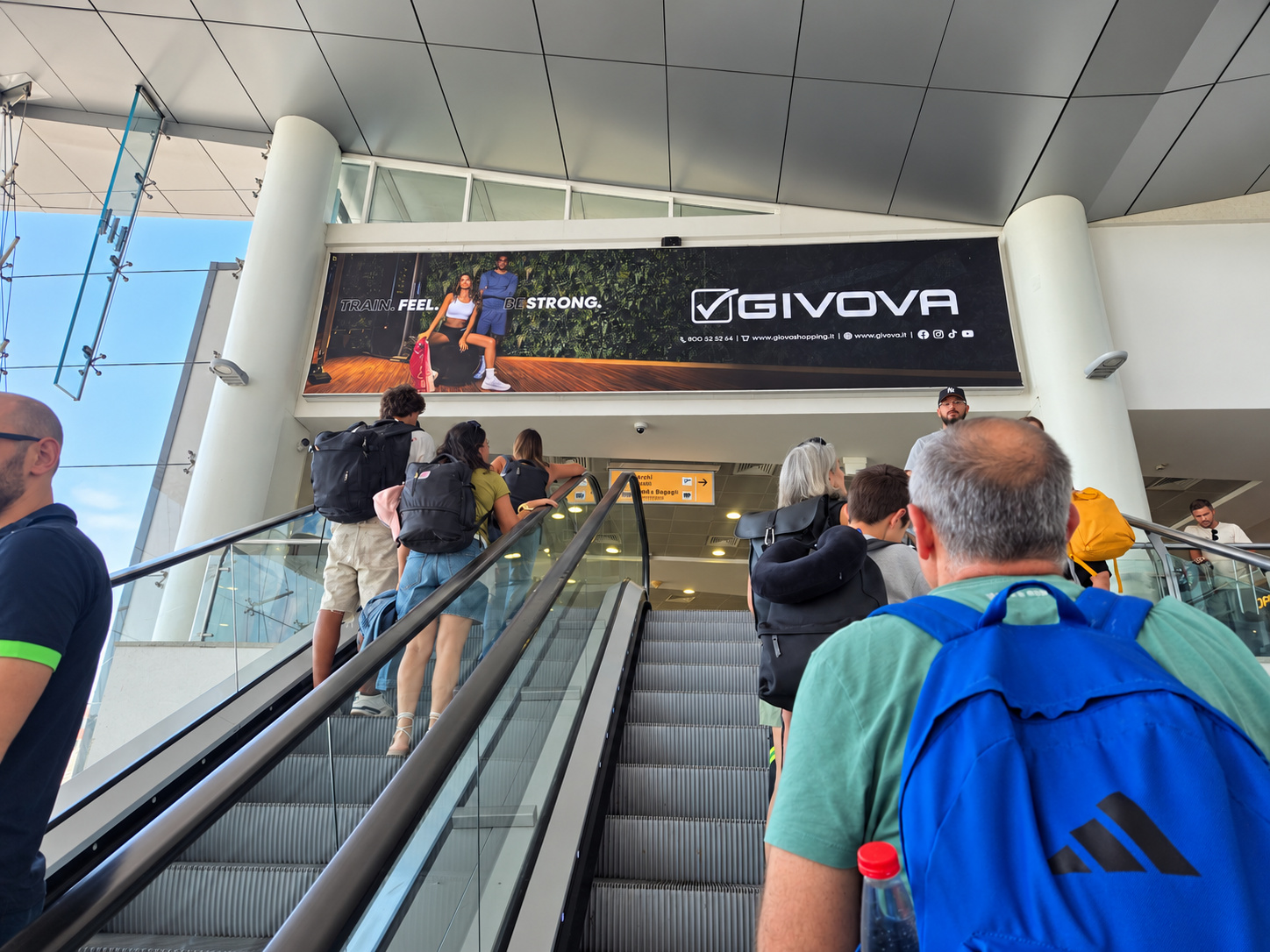
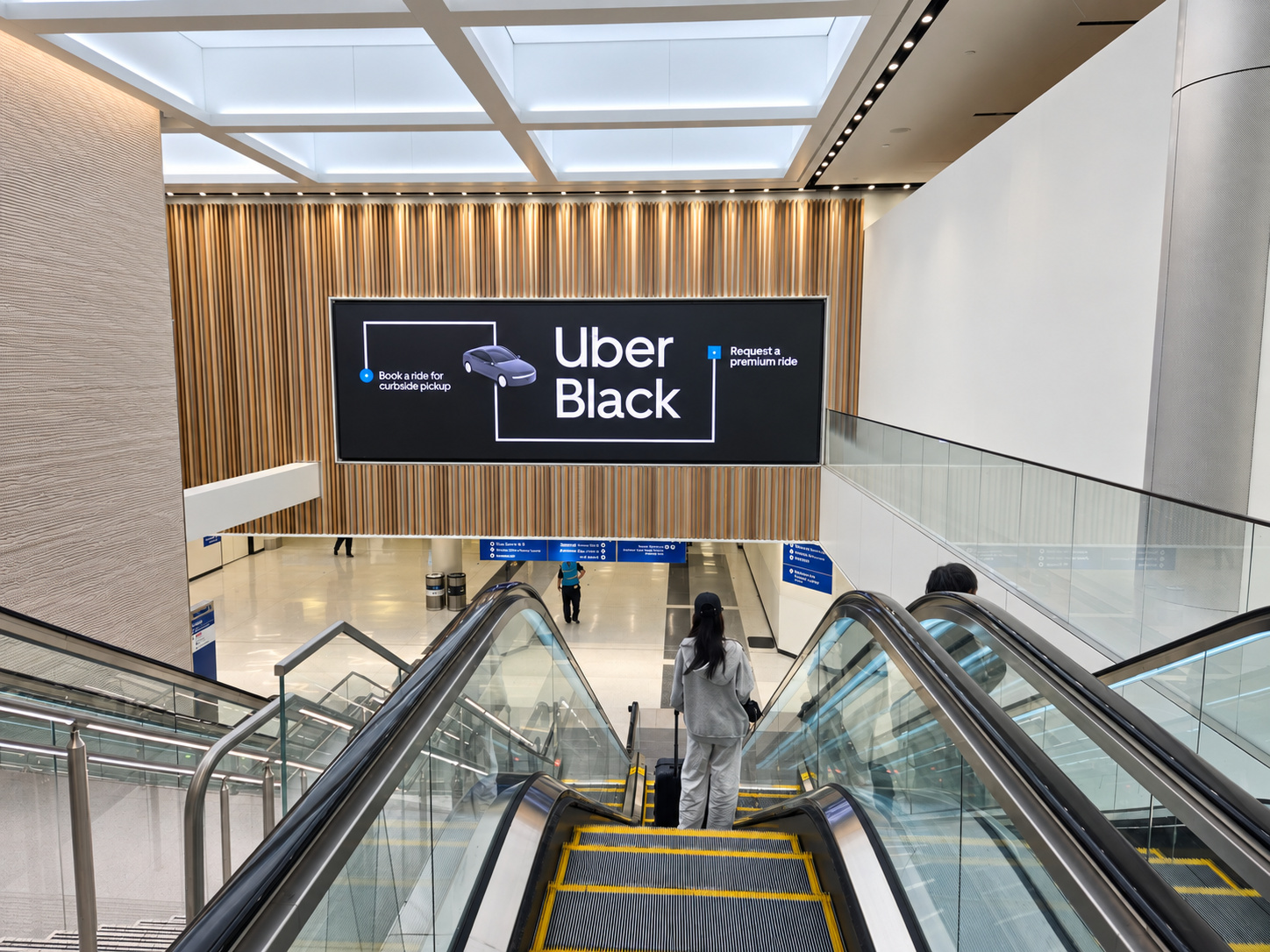
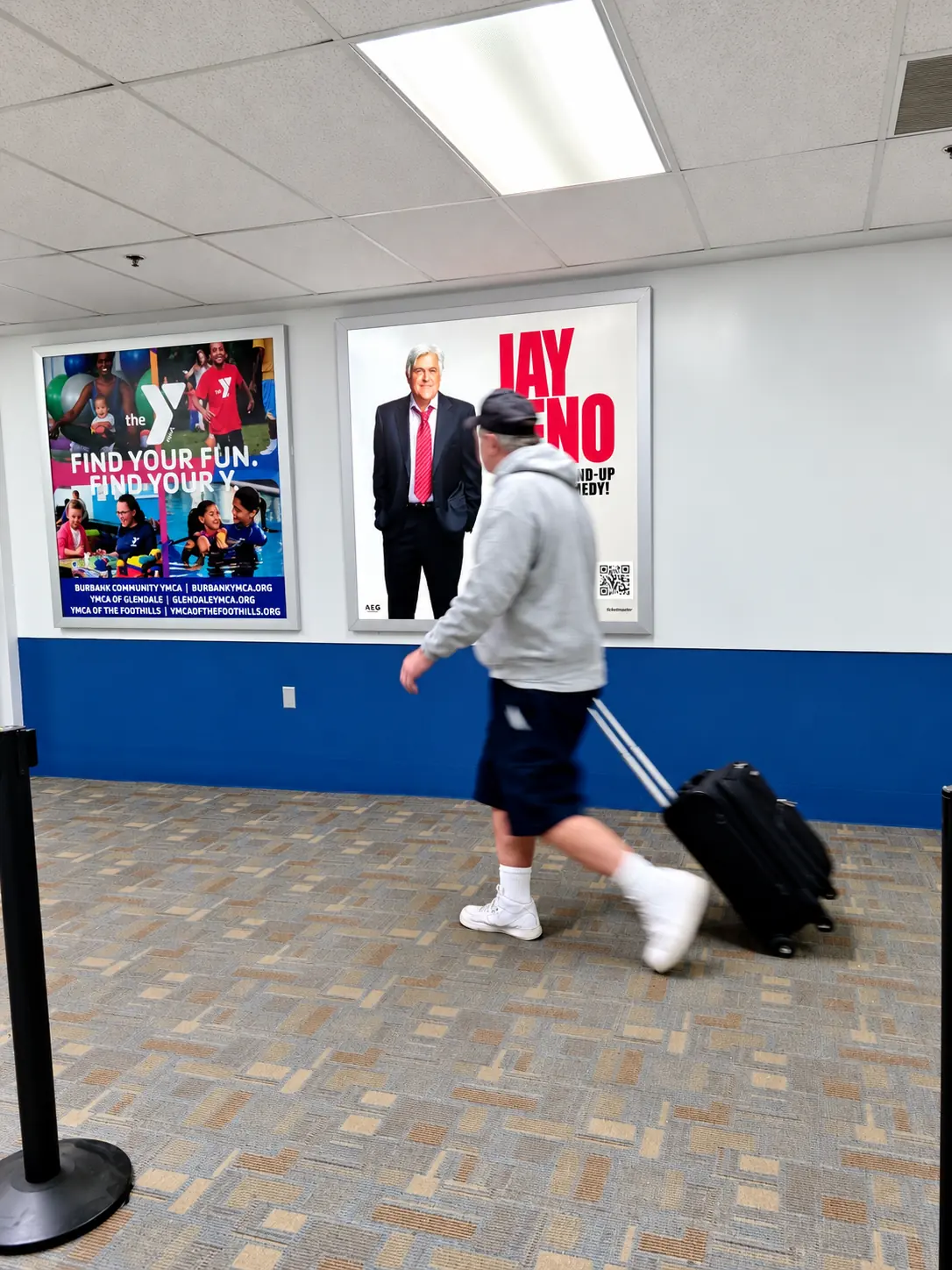
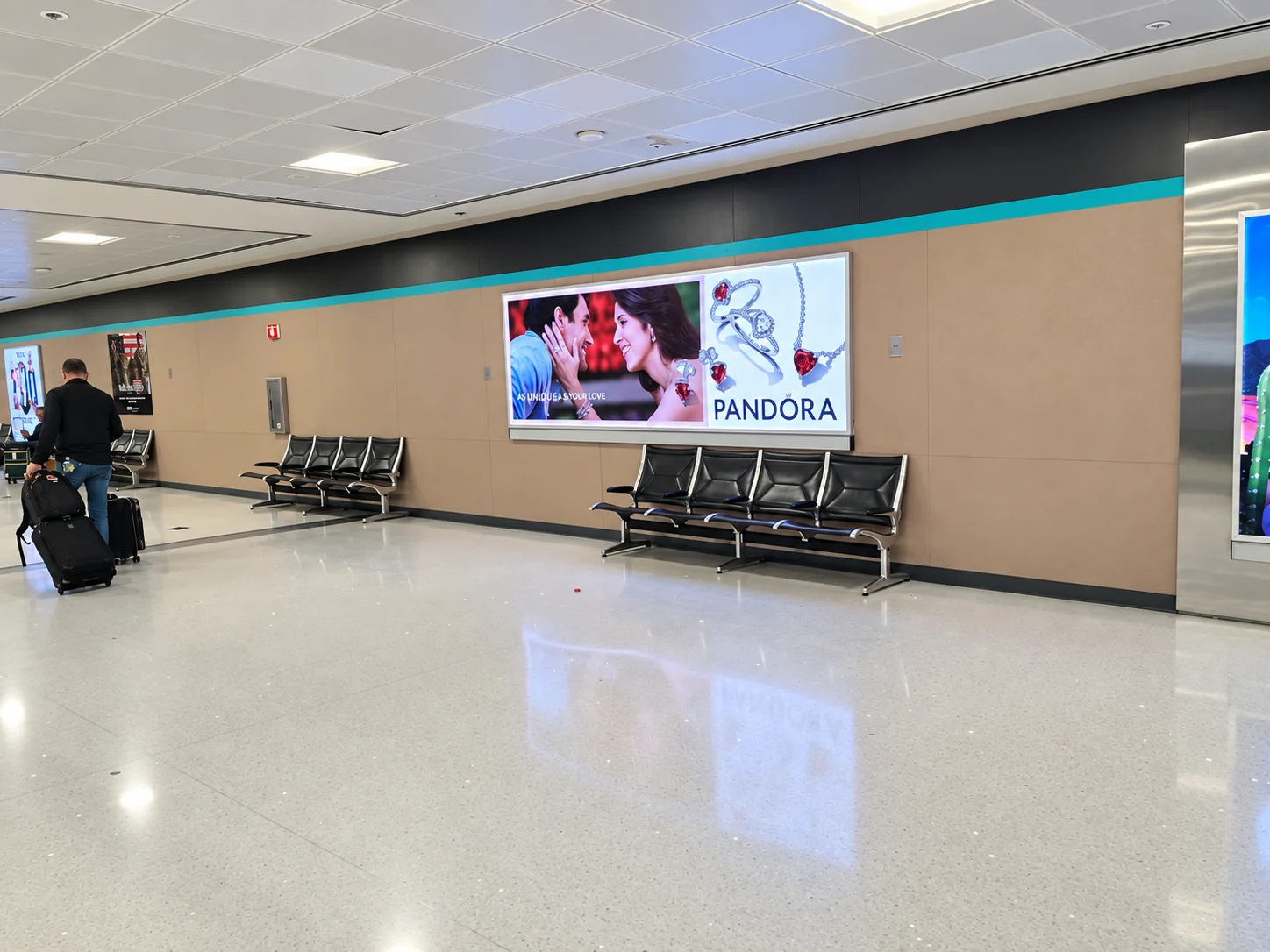
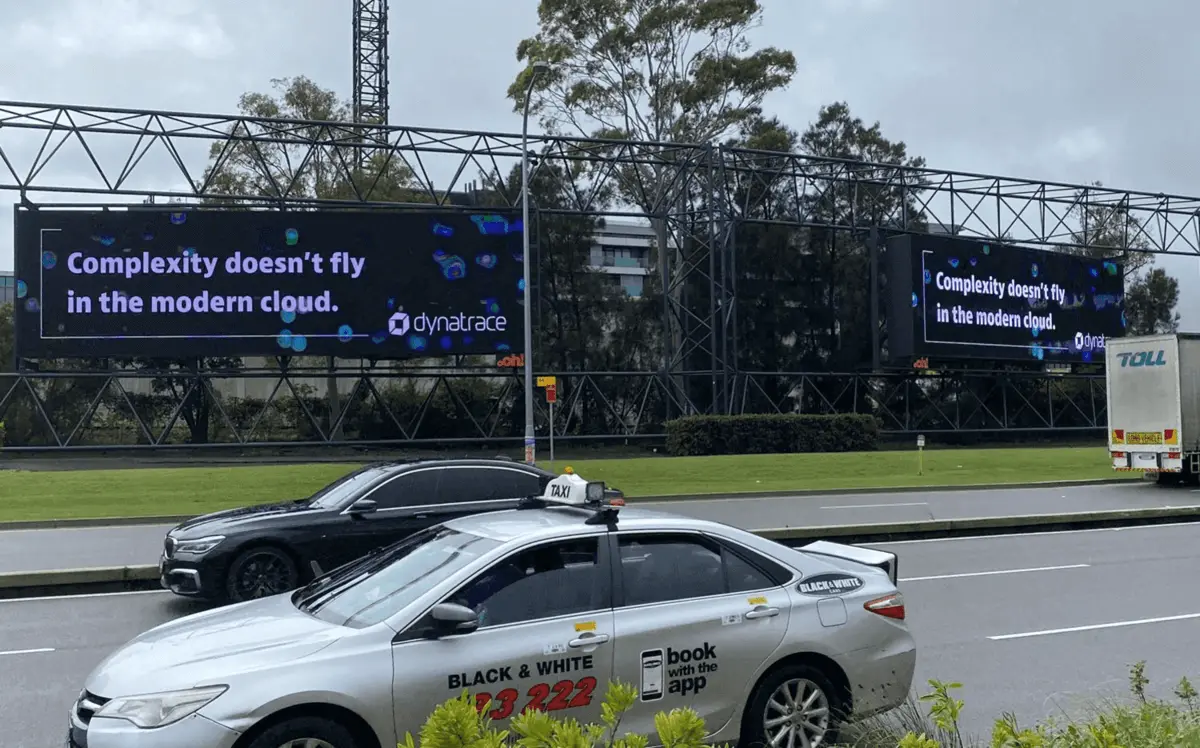
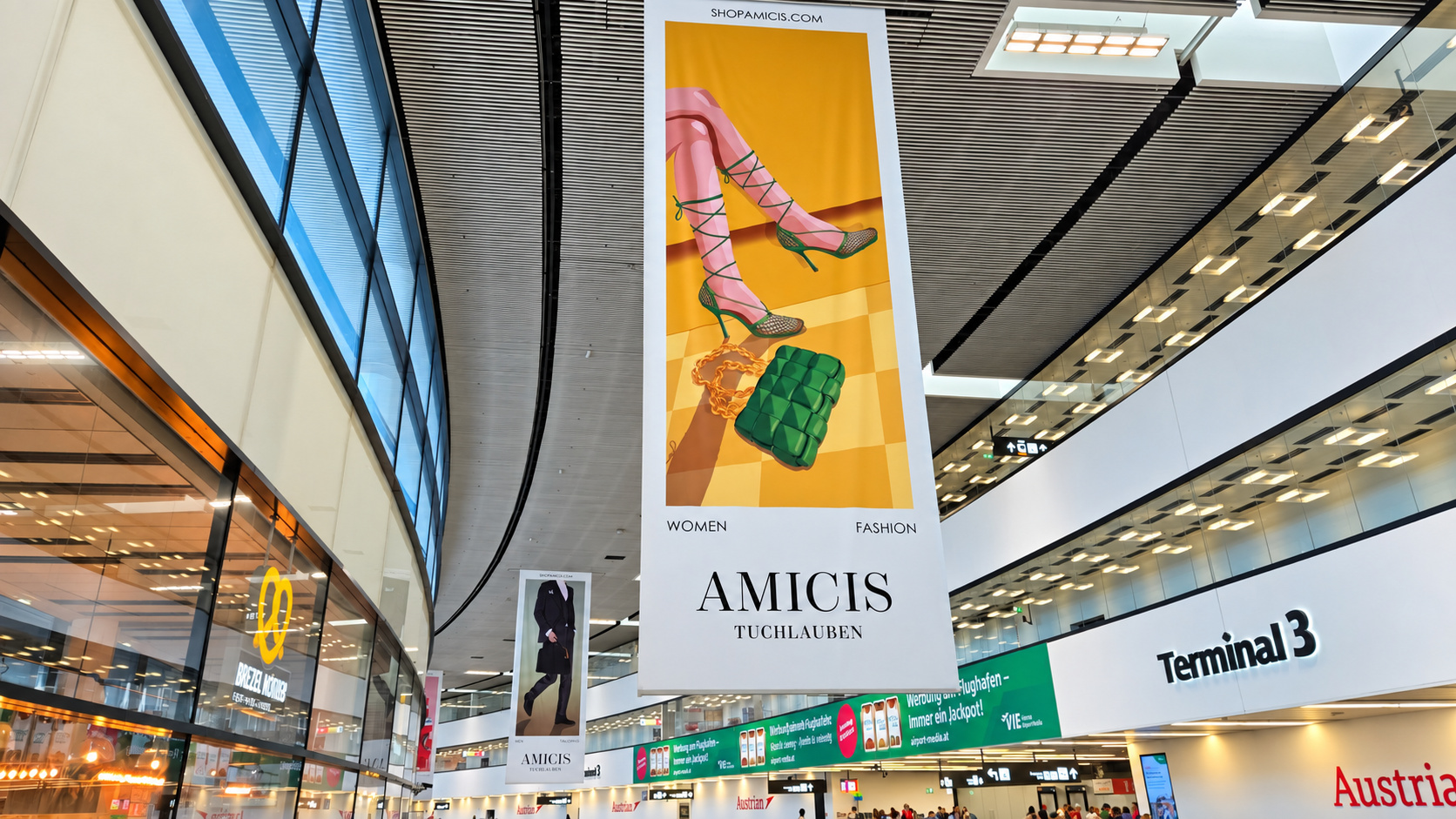
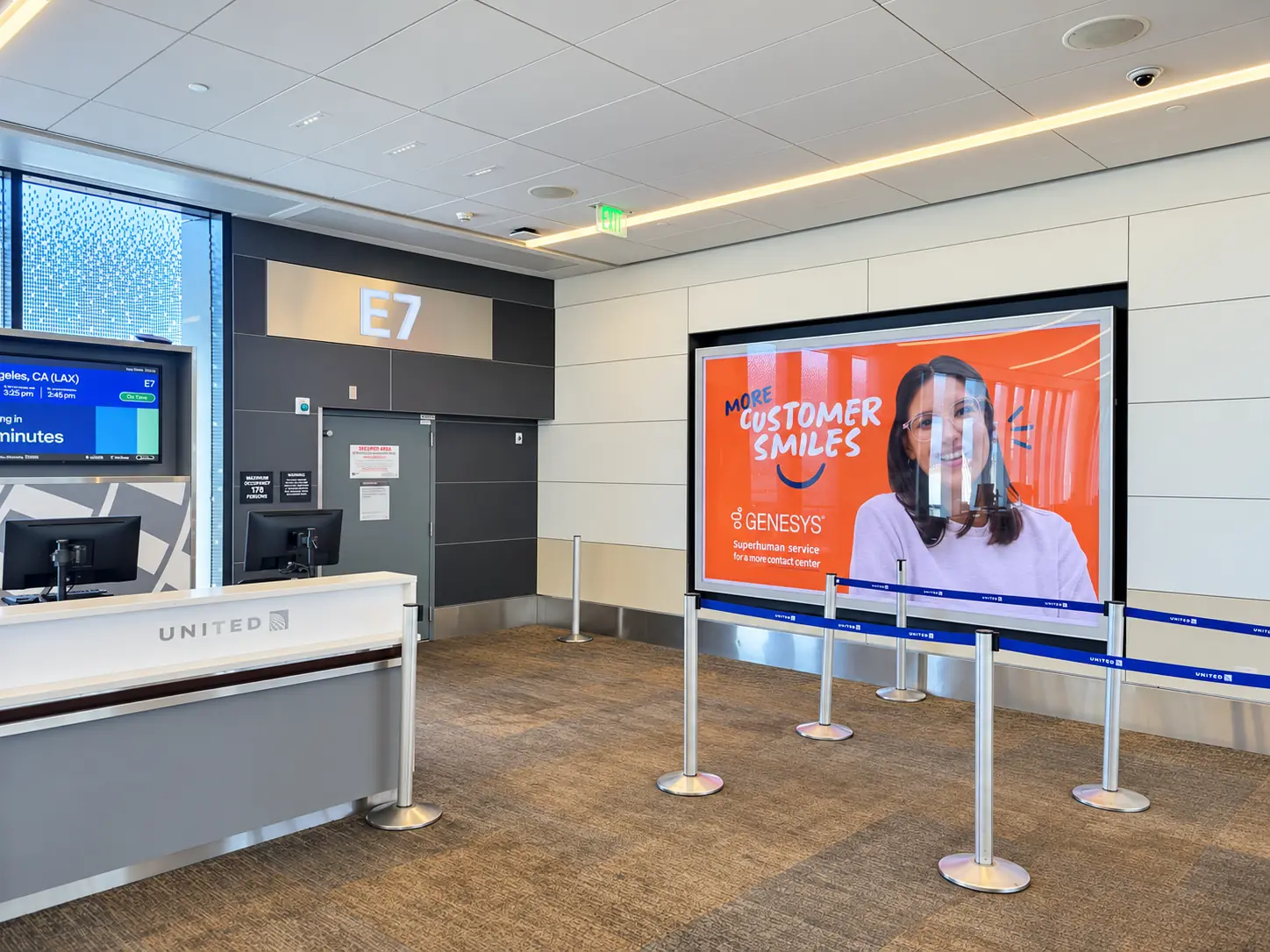
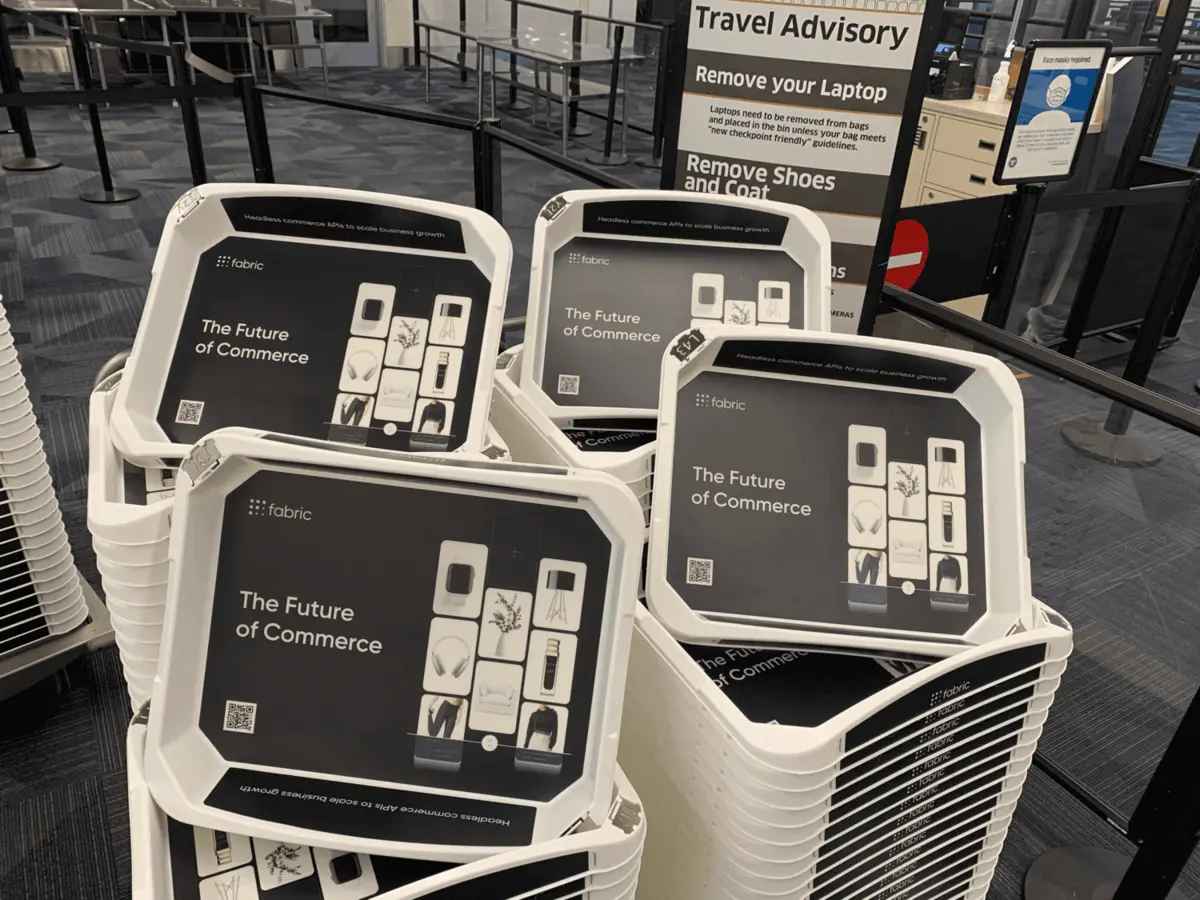
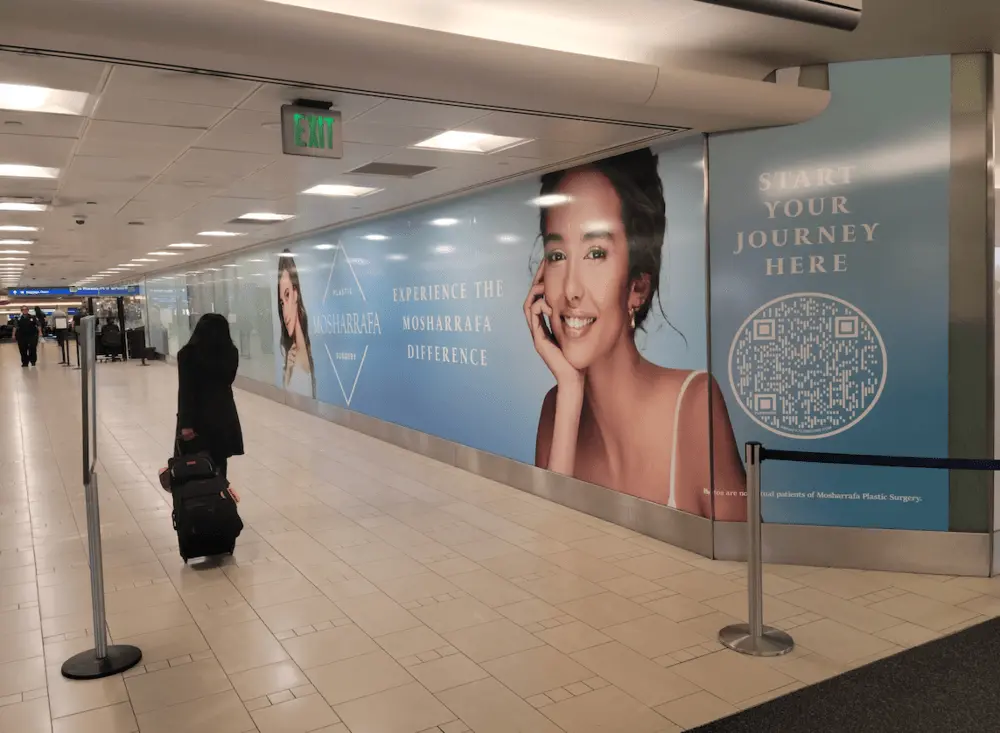
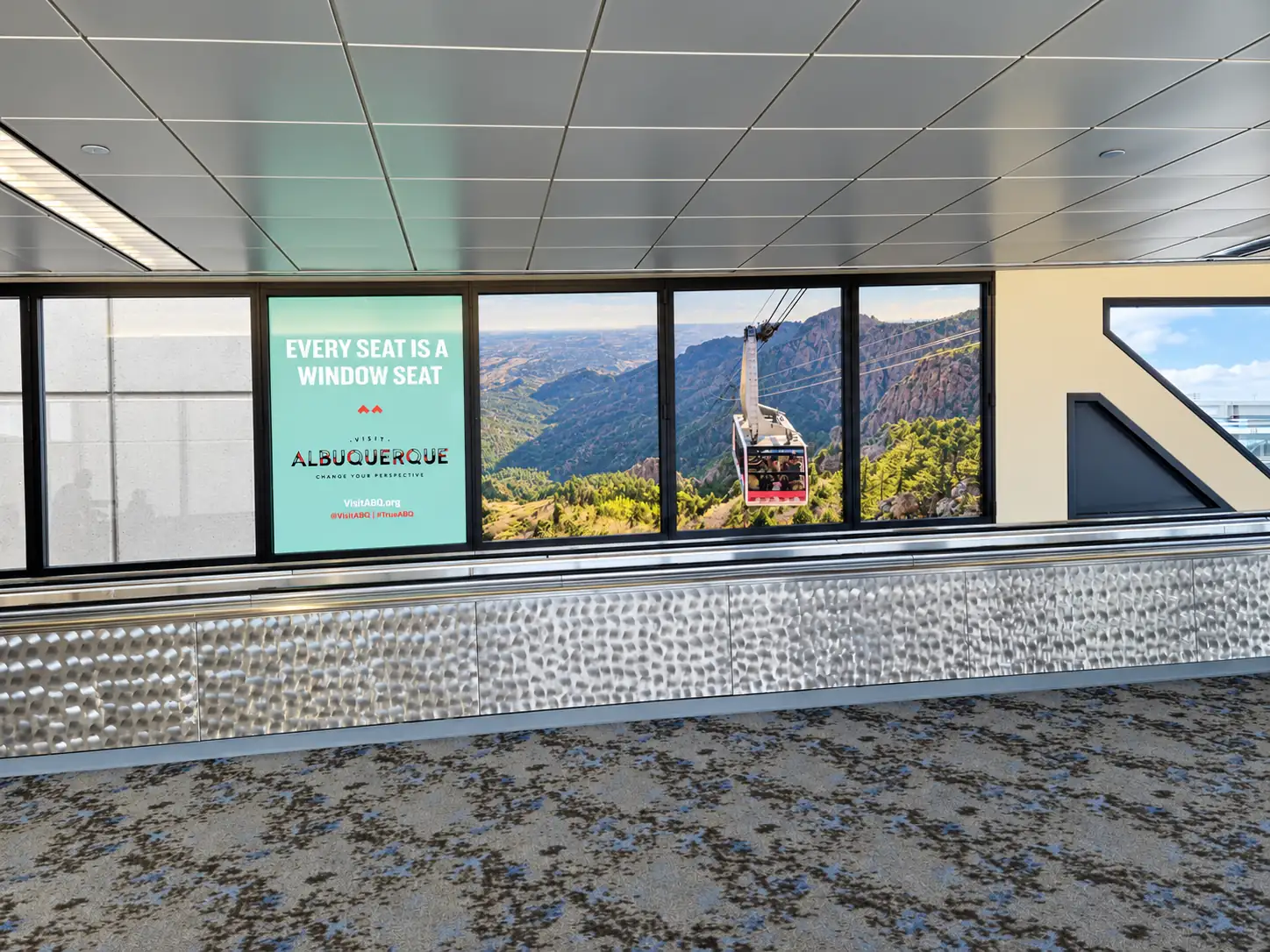
Airport advertising in practice, photographed across many airports. Availability at BCN varies by format.

Real brands. Real campaigns.

Which brands have run airport campaigns
with EAM Advertising?

Campaigns across several countries and media owners, each bought through one contract. Swipe or use the arrows for the markets, the scope, and the result.

“EAM made a nationwide airport campaign feel much easier to manage. The team was responsive, organized, and always on top of the details. They helped us make smart decisions with the budget, kept everything moving, and ultimately delivered exactly what we were looking for.”

Chief Marketing OfficerFortinet · nationwide airport campaign

These examples show past EAM campaigns—not a minimum campaign size, a forecast, or a guarantee of results. One-airport briefs are welcome, too.

Cost

What does Barcelona airport
advertising cost?

€6,000–€65,000 for a single digital unit or network for one week, and €20,000–€210,000 for four weeks, excluding VAT. Add a technical cost per unit of roughly €100–€3,000 per week. A two- or three-unit arrival-path plan runs €40,000–€150,000 for a week. Every digital unit runs in a loop of four, six, or eight advertisers, so share of voice is never worse than one in eight. Those are planning ranges, not a rate card.

Sold by the week and by four weeksThe card rate does not move by season. What moves is availability, and MWC sells first.

BCN is sold by the week and by four weeks, at rates that do not move by season on the card. What moves is availability. The MWC period costs the same on paper as any other period. It is just gone by November.

Share of voice is the second thing. One in four on the arrivals LED pair and the exit-ramp screens, one in six on the Sky Centre cubes, the boarding-pier wall, and the baggage claim units, one in eight on the belt screens and the six-sheet networks.

The third is the border. Units are sold by which arrivals route they reach. Rates are quoted in euros and exclude VAT. The technical cost per unit is a fixed fee that covers scheduling and playout, not creative production. EAM contracts in euros or U.S. dollars as the client prefers and handles the VAT treatment for non-Spanish advertisers.

What a budget buys at BCN

Planning ranges, excluding VAT. Pick the one closest to your brief and we’ll build the plan from it.

€6,000–€65,000

A single unit or network, one week

What it is
One digital placement or network for one week: a cube, an LED, the belt screens, or a six-sheet network
For
A focused presence on the route your audience walks
Plan at this budget
€20,000–€210,000

A single unit or network, four weeks

What it is
The same unit for the four-week period, which is how MWC and ISE are usually bought
For
A brand at both shows, or a period that includes build-up
Plan at this budget
€40,000–€150,000

A two- or three-unit week

What it is
Two or three placements for one week, usually both arrival routes plus dwell at the belts
For
A conference week when one unit cannot cover both borders
Plan at this budget

These are planning ranges, not packages or a rate card. Actual plans depend on the unit, the period, and what is open when you book. Technical cost of roughly €100–€3,000 per unit per week sits on top and is not a media range.

Contract realitiesWeek or four-week buys. Creative deadlines differ for digital and static. Separation is not guaranteed.

Media is priced in euros, excluding VAT, and sold by the week or by four weeks. Screens run 5:00 to midnight, seven days. Plan digital creative 14–18 business days before start and static creative 21–28 days before start; the deadline is set at contract. Creative needs airport authority approval.

Competitive separation may be possible, but it isn’t guaranteed; ask when booking and write it into the contract. Hold expiry, cancellation, and proof-of-performance terms were not in the 2026 specifications this page is built from, so they are set at contract rather than quoted here.

What this page will not publishUnit rates, loop-position premiums, and period-specific quotes come back as a quote.

Unit rates, loop-position premiums, and period-specific quotes. Those numbers move with availability and with the period. What you can plan against: one week or four weeks; €6,000–€65,000 for a single unit or network per week; €20,000–€210,000 per four weeks; €40,000–€150,000 for a two- or three-unit week; technical cost of roughly €100–€3,000 per unit per week; all excluding VAT. Specific units and periods come back as a quote.

Compare all 10 units in one tableWhere, faces, loop, route
BCN digital units and networks, where they reach passengers
Unit or networkWhere it reaches themFaces or screensYour spot in the loopRouteBest for
Sky Centre cubesSky Centre, every T1 departure after security; also Schengen arrivals2 cubes, about 7 × 3.4 mOne of six, about 17% share of voiceAll departures; Schengen arrivalsThe biggest read in the building; a launch or a category statement
Arrivals LED pairCorridor Schengen arrivals walk toward baggage claim2 faces, about 10.3 × 2.5 mOne of four, 25%Schengen arrivals onlyFirst impression for European arrivals
Boarding pier LEDEntrance to the Sword, the main boarding pier (B gates)1 face, about 9.2 × 2.8 mOne of sixDeparturesBusiness and long-haul departures on the way to the gate
Sky Centre arrivals LEDArrivals-side entrance to the Sky Centre1 face, about 9.2 × 1.7 mOne of sixSchengen arrivalsArrival-side scale for a European audience
Baggage belt screensCentral belts, Terminal 1 baggage hall; 10–25 minute wait8 faces, about 2.2 × 1.2 mOne of eightAll arrivalsDwell, and the first unit that reaches U.K., U.S., and Asian arrivals
Baggage hall exit LEDBefore the exit from baggage claim into the public arrivals hall1 face, about 2.8 × 2 mOne of sixAll arrivalsEvery arriving passenger, once, on the way out
Taxi ramp LED and ride-hail ramp LEDHead of the ramps to the taxi rank and ride-hail pickup1 face each, about 2.5 × 2 mOne of four eachAll arrivals leaving by carLast read before the city
Six-sheet network, arrivals and departuresBoth terminals: check-in, security, Sky Centre, piers, shuttle, passport control, claim, arrivals halls129 screens, 85″ and 75″One of eightBoth routes, both terminalsFrequency across the airport; the only buy that covers Terminal 2
Six-sheet network, departures onlyCheck-in, security, boarding areas, both terminals62 screensOne of eightDeparturesDeparting business traveler and the domestic shuttle
Six-sheet network, arrivals onlyPassport control, baggage claim, arrivals halls, both terminals67 screensOne of eightBoth routes, including non-SchengenArrivals coverage before baggage claim on the non-Schengen route

Timing

When should you buy BCN,
and how far ahead?

The Fira Gran Via calendar. ISE (February 2–5, 2027) and MWC (March 1–4, 2027) are the two weeks every technology brand plans around. Seafood Expo Global and Alimentaria in April, Automobile Barcelona in May, and Smart City Expo and IBTM World in November bring their own industries through the same terminal. Between shows, BCN is bought for the visitor. Dates checked October 2026; where the next edition is not yet announced, the row shows the season.

Barcelona’s trade-show calendar is the reason most brands buy this airport, and it runs most of the year. The table covers the weeks that change who is in the building.

Barcelona weeks and what they mean for the buy
EventTimingWho arrivesWhat it means for the buy
ISE (Integrated Systems Europe)February 2–5, 2027Audiovisual, systems integration, pro display, and smart-building industryThe first industry week of the year. Non-Schengen arrivals are a large share; buy both routes. The four-week period that contains it also contains MWC build-up
MWC Barcelona and 4YFNMarch 1–4, 2027Connectivity, telecom, devices, AI, cloud; 100,000-plus from 200 countries, plus the 4YFN startup and investor ecosystemThe week BCN is a conference airport. Every arrivals unit in Terminal 1 is contested; the four-week period sells first. U.S., Asian, and U.K. attendees are non-Schengen
Seafood Expo GlobalApril 2027, Fira Gran ViaSeafood trade, globalMid-tier B2B week; European-heavy but with a strong Asian and North American buyer share
Alimentaria and HostelcoApril of even years; next edition 2028Food, beverage, and hospitality tradeEvery other year; check before planning
Automobile BarcelonaMay of odd years; next edition 2027, Fira MontjuïcAutomotive industry and consumersAutomotive and mobility brands; the boarding-pier LED and cubes for scale
Cruise seasonApril to October, peaking June to SeptemberCruise passengers embarking and disembarking, mostly international, with luggageArrivals-side; baggage claim and the exit-ramp units. Cruise lines, hotels, port services
Primavera Sound and Sónar (with Sónar+D)May 27–31, 2027 (Primavera Sound, Parc del Fòrum) and June 17–19, 2027 (Sónar, Fira Montjuïc and Gran Via)International music audiences; Sónar+D brings a creative-technology conference alongsideConsumer, beverage, streaming, fashion; T2 traffic matters here
SummerJuly and August, the two busiest monthsFamilies and international leisure at the year’s peakTourism, attractions, retail; both terminals
Smart City Expo World CongressNovember 3–5, 2026, Fira Gran ViaUrban technology, public sector, infrastructureA B2B week with a large public-sector and international-delegation share
IBTM WorldNovember 17–19, 2026, Fira Gran ViaThe meetings, incentives, and events industryHospitality, destinations, and venues selling to buyers; a natural airport buy for a destination brand
EAM’s takeBuy both arrival routes, and buy the four-week period rather than the show week.

The mistake exhibitors make with Barcelona is buying it like a domestic airport: one arrivals unit, one route. In Terminal 1 the arrivals are two rivers that meet at baggage claim, and a brand whose buyers are flying in from the U.S., the U.K., or Asia has to be on the non-Schengen route or at the point where the rivers join. For MWC, that isn’t a nuance; it’s most of the audience. The second mistake is buying the week when the airport sells the period: the four weeks around MWC include ISE’s tail and MWC’s build-up, and a brand at both shows can cover both with one buy.

How far in advance do you need to book, and what do MWC and ISE weeks cost?

The four-week period containing MWC: hold inventory 4–6 months out. The ISE period: 3–4 months. Cruise season and summer: 8–12 weeks for the arrivals units. Standard periods: 4–8 weeks is usually enough. BCN prices by the card, not by the event; MWC week costs what any week costs on paper, and it is the first period of the year to sell out.

The premium is availability, not priceBy December or January the four-week MWC period is often already gone. A brand that wants it books in the autumn.

The Sky Centre cubes, the arrivals LED pair, and the six-sheet arrivals network are the units every technology brand with a Barcelona presence wants for MWC, and by the time most international planners start looking, in December or January, the four-week period is gone. A brand that wants MWC books it in the autumn.

What the period gives you is more than the week. A four-week buy that contains MWC also contains the build-up week, when exhibitors and their teams arrive early, and, depending on the dates, the tail of ISE. For a brand exhibiting at both shows, one four-week period can cover both audiences.

BCN booking windows by period
TierExamplesHold byWhat sells firstPricing character
PeakThe four-week period containing MWC4–6 monthsSky Centre cubes, arrivals LED pair, arrivals six-sheet networkCard rate; sold out earliest of any period
HighISE period; cruise-season and summer weeks for arrivals units3–4 months for ISE, 8–12 weeks for summerBaggage belt screens, exit-ramp LEDs, Sky Centre arrivals LEDCard rate; arrivals units contested by tourism and transport brands
StandardAll other periods4–8 weeksMost units openCard rate; one-week minimum

Ready to plan?

Start your BCN plan.
Send the brief.

Tell us who you need to reach, where, and when. We come back with current availability at every airport in the plan and a recommended mix.

Airports, start date and duration, campaign goal, budget range, and anything else you can share. A few lines is plenty.

We’ll follow up to learn who you need to reach and when, then come back with current availability and a recommended mix.

Placement

Where should your ads run
inside BCN?

In Terminal 1, along the route your audience takes. Schengen arrivals: the arrivals LED pair, the Sky Centre arrivals LED, then baggage claim. Non-Schengen arrivals: the arrivals six-sheet network through passport control, then baggage claim. Both: the belt screens, the exit LED, the ramps. Departures: the Sky Centre cubes, the boarding-pier LED, the departures network. Terminal 2 is covered by the six-sheet network only.

The BCN arrival and departure sequence, by route
StepSchengen arrivalsNon-Schengen arrivalsDeparturesPriority
Off the planeDikes and Sword; six-sheetsSword; six-sheets—Medium
The routeArrivals LED pair; Sky Centre arrivals LEDPassport control; arrivals six-sheetsSky Centre cubes; boarding-pier LED; six-sheetsHighest on the departure side for luxury and B2B; highest on the Schengen route for European arrivals
Baggage claimBelt screens (8 faces); exit LEDBelt screens; exit LED—Highest for any arrivals buy; the one place both routes stand still
The exitTaxi and ride-hail ramp LEDs; arrivals hall six-sheetsSame—High; the last read before the city
Terminal 2Six-sheets onlySix-sheets onlySix-sheets onlyMedium; leisure scale on the low-cost carriers
Three sequences in one buildingSchengen, non-Schengen, and departures do not share the large screens. Both routes meet at baggage claim.

Schengen arrivals. Off the plane at the A or C dikes or the Schengen end of the Sword, down to the arrivals level, along the corridor with the arrivals LED pair, past the Sky Centre arrivals LED, into baggage claim. No passport control.

Non-Schengen arrivals. Off the plane at the non-Schengen end of the Sword, through passport control (the arrivals six-sheet screens are here), into the same baggage claim.

Both, from baggage claim. The belt screens while waiting, the exit LED at the door, the public arrivals hall, then the ramps to the taxi rank or the ride-hail pickup (an LED at the head of each), or the train and metro.

Departures. Check-in on the upper level (six-sheet screens), security, the Sky Centre (the two cubes overhead, the shoppers six-sheets), then out to the gates: the boarding-pier LED at the entrance to the Sword, six-sheets along the pier and in the dikes and at the Madrid shuttle’s own boarding area.

Terminal 2. Three connected buildings (T2A, B, C) served by the low-cost carriers. The six-sheet network covers check-in, boarding, arrivals, and baggage claim. None of the large-format units are here.

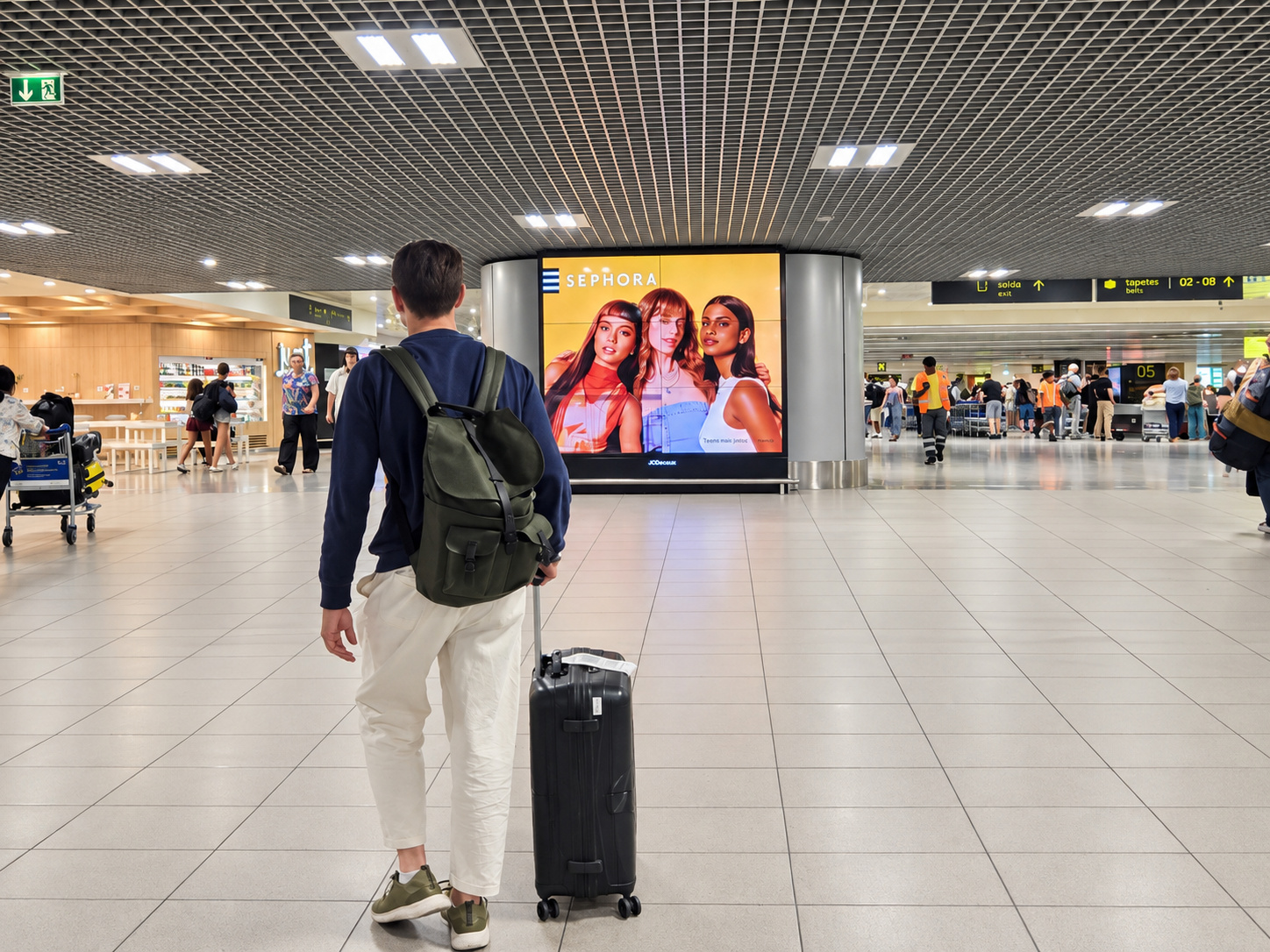
Direction follows the objectiveConference buys are arrivals on both routes. Luxury is the Sky Centre. Spanish B2B is the departures network.

A conference buy is arrivals on both routes for the inbound weekend, the belt screens for the dwell, and the exit ramps for the delegate looking for a taxi; departures matter on the last day, when the same audience flies home. A tourism, transport, or welcome buy is arrivals-side, and the route split decides the units. A luxury or retail buy is departure-side in the Sky Centre. A Spanish B2B buy is the departures network with the shuttle screens. A launch is the cubes plus the arrivals pair plus the network, for one week.

Capacity management from 2027From summer 2027, peak-hour capacity is managed by terminal. Confirm the airline’s terminal at contract.

The airport operator has announced that from the summer 2027 season it will manage passenger capacity by terminal and traffic type at peak hours, ahead of a wider investment program running 2027–2031. Expect some reassignment of airlines and flows between terminals over that period. Confirm the route and terminal for a specific airline against the current airport map at contract, not from memory.

Why BCN

Why do brands advertise at
Barcelona–El Prat (BCN)?

Because their industry flies in for a week and lands at one airport. MWC, ISE, Smart City Expo, IBTM, Alimentaria, Seafood Expo, Automobile Barcelona: the Fira Gran Via calendar brings a different industry to Barcelona most months, and every attendee, exhibitor, and buyer comes through Terminal 1 before the show floor. The rest of the year, 74.3% of passengers are visitors, and the same building reaches them.

One airport for the showWhen MWC is on, more than 100,000 people from 200 countries arrive in the same week, most of them at Terminal 1.

Barcelona is one of the three or four largest trade-show cities in Europe, and unlike most of them it has one airport that everyone uses. When MWC is on, more than 100,000 connectivity, telecom, device, and AI decision makers from 200 countries arrive in the same week, most of them at Terminal 1, most of them from abroad; 4YFN brings the startup ecosystem alongside them. ISE, four weeks earlier, brings the audiovisual and integration industry. Smart City Expo and IBTM World fill November. The arrivals hall at Terminal 1 during those weeks looks like a registration line, and a brand that wants to be seen before the badge is scanned has one building to be in.

Twelve kilometres, then the fairgroundThe Fira Gran Via sits between the airport and the city. The window is the ride from the gate to the taxi rank.

The airport is 12 kilometres from the city and the Fira Gran Via fairground sits between them, which is why ’before the show floor’ at Barcelona is a taxi ride, not a walk. The window is the arrival: the ride from the gate to baggage claim, the wait at the belt, and the walk to the taxi rank, all before the delegate has checked email, found the hotel, or been handed a lanyard. For an exhibitor, that’s the one moment the audience isn’t already inside someone else’s booth.

The visitor’s airport the rest of the year57.5 million passengers in 2025, 74.3% international, almost none connecting.

Outside the show weeks, BCN is the visitor’s airport: 57.5 million passengers in 2025, 74.3% international, almost none connecting. Tourism, luxury, transport, hospitality, and the business schools buy it year-round, and the same units that reach a delegate in March reach a visitor in July.

The border decides the buySchengen-only screens miss U.K., U.S., and Asian arrivals. Use the shared units or the network.

One structural fact runs through every section of this page. Terminal 1’s arrivals are split by border. Passengers from Schengen countries take one route to baggage claim; passengers from the U.K., the Americas, Asia, and the rest of the non-Schengen world take another, through passport control. The airport’s media inventory is sold by route. A brand that wants the MWC attendee from San Jose, Seoul, or London has to buy the units on the non-Schengen route or the ones at baggage claim where the two routes meet. The largest arrival-side screens in the building are Schengen-only.

Audience

Who actually flies
through BCN?

57.5 million passengers in 2025, 74.3% of them international, the largest markets being the U.K., Italy, Germany, France, and the Netherlands, with fast-growing long-haul service to the Americas and Asia. Terminal 1 handles about two thirds of traffic and everything premium; Terminal 2 is the low-cost terminal. The useful audience is the international visitor most weeks, the domestic business traveler on the Madrid shuttle year-round, and the MWC and ISE inbound in February and March.

BCN terminals and who uses them
TerminalShare of passengersAirlinesWhat it means for the buy
Terminal 1About 65% (37.6 million in 2025)Vueling (hub), Iberia, the Madrid–Barcelona shuttle, Lufthansa, British Airways, Air France, KLM, Brussels, Finnair, American, Delta, United, Qatar, Emirates, Cathay Pacific, Japan Airlines, Korean Air, Singapore, Qantas, Malaysia, LATAM, Royal Jordanian, S7, SriLankan, and most other full-service carriers. The list is indicative.Every premium unit on the page is in T1. The business traveler, the long-haul international arrival, and the MWC and ISE audiences all come through here. Arrivals split into Schengen and non-Schengen routes
Terminal 2About 35% (19.8 million in 2025)Ryanair, easyJet, Wizz Air, Volotea, Norwegian, Jet2, and other low-cost carriersEuropean leisure at scale, U.K. and Northern Europe in particular. The digital six-sheet networks cover T2; the large-format units do not. A shuttle bus connects T2 to T1
How Terminal 1 is laid outDepartures cross the Sky Centre. Both arrival routes meet at baggage claim.

BCN served 57,483,036 passengers in 2025, up 4.4%, on about 360,000 aircraft movements. Terminal 1 carried about 37.6 million and Terminal 2 about 19.8 million. The airport operator’s forecast for 2026 is about 59.4 million, up roughly 3.6%, with every month of the year growing. July and August each pass 5.5 million passengers; January and February, the ISE and MWC months, run about 3.8 million.

25.7% of passengers are domestic Spanish and 74.3% international. The airport connects about 90 countries and 480 destinations. Vueling is the largest carrier and based here; Ryanair and easyJet are the largest low-cost carriers; the legacy European carriers, the Gulf carriers, and the Asian and American long-haul carriers all operate from Terminal 1.

Terminal 1 is a single building. Departures check in on the upper level and pass through security into the Sky Centre, the commercial and restaurant area at the centre of the terminal that every departing passenger crosses. From the Sky Centre, gates run out along a long pier known as the Sword (La Espada, gates B24–B69), with the Schengen A and C gates in the dikes on either side. Arrivals come down to a lower level: Schengen arrivals walk directly toward baggage claim; non-Schengen arrivals go through passport control first. Both routes meet at the baggage claim hall, exit through one door to the public arrivals hall, and go down ramps to the taxi rank, the ride-hail area, or the train and metro.

What matters for advertisers is not the annual total. It is who is on which route, in which week.

Cruise passengersBarcelona is the largest cruise port in Europe. Many passengers fly in to embark, spring through autumn.

Barcelona is the largest cruise port in Europe, and a large share of its passengers fly in to embark or out after disembarking, spring through autumn. They arrive with luggage, in groups, headed for the port. Cruise lines, port services, hotels, and excursion brands buy for them.

Business travelers in an airport terminal

The conference inbound

The Fira Gran Via calendar: ISE in the first week of February; MWC’s 100,000-plus connectivity decision makers and 4YFN’s startups in the first week of March; food and beverage in April; automotive in May; urban technology and the meetings industry in November. Europe on Schengen routes; the U.S., U.K., Korea, Japan, China, and India on non-Schengen routes. This is the audience most BCN campaigns EAM plans are for.

Leisure travelers in an airport terminal

International leisure visitors

74.3% of passengers, year-round, heaviest from May through October. The U.K., Italy, Germany, France, and the Netherlands are the largest markets; the Americas and Asia are the fastest growing. U.K. and long-haul arrivals are non-Schengen; the European mainland is Schengen. This is the audience for tourism, attractions, retail, luxury, and hospitality.

Domestic business travelers in an airport terminal

The domestic business traveler

About 25.7% of the airport is Spanish, and the Madrid–Barcelona air shuttle is one of the busiest business routes in Europe. It has its own check-in and boarding area in Terminal 1, and the digital six-sheet networks cover it. This is the audience for Spanish B2B, financial, and professional-services brands.

Students and alumni in an airport terminal

Students, faculty, and the business schools

IESE and ESADE draw executives and MBA candidates from around the world; the University of Barcelona, Pompeu Fabra, and the Autonomous University draw international students. Education brands EAM has placed in airports include Wharton, BYU, the University of Michigan, the University of Pittsburgh, and UT Dallas.

Who advertises

What kinds of brands advertise at BCN,
and what are they trying to do?

Exhibitors and sponsors reaching their industry the week it lands at MWC, ISE, Smart City Expo, and the rest of the Fira calendar; brands meeting customers at a show without a stand; startups and investors around 4YFN; host-city hotels and venues selling to delegates; and, year-round, tourism, luxury, transport, banks, business schools, and Spanish B2B reaching the visitor and the domestic traveler. The objective picks the route and the direction.

How brands use BCN, by objective
ObjectiveWho buys itWho it reachesWhat the buy usually looks like
Conference inbound: exhibitors and sponsorsExhibitors and sponsors at MWC, ISE, Smart City Expo, IBTM, Seafood Expo, Alimentaria, Automobile BarcelonaTheir industry, arriving the weekend before show week, on both routesThe four-week period containing the show; the arrivals six-sheet network for both routes, the baggage belt screens for dwell, the Sky Centre cubes for scale. The most common BCN brief EAM plans
Conference presence without a standBrands that meet customers at the show without exhibiting; companies hosting side events, dinners, or suitesThe same audience, before the floor opensArrivals-side units on both routes for the inbound weekend; the exit-ramp and belt screens where the delegate is looking for a taxi and a hotel
Startups and 4YFNFounders and investors at 4YFN and Sónar+D; venture firms; the Barcelona tech hub recruiting during the showInvestors and founders arriving for MWC week; the resident startup workforce departingThe arrivals network and belt screens for the week; the departures network for recruiting
Host-city hospitality and venuesHotels, restaurant groups, event venues, and the convention bureau selling to delegates and to the IBTM buyerDelegates deciding where to stay and eat; the meetings industry deciding where to hold next year’s eventExit-ramp LEDs and belt screens during show weeks; the arrivals network for IBTM
Destination and attraction presenceMuseums, Gaudí sites, FC Barcelona, theme parks, the regional tourism boardsEvery international arrival, every weekArrivals LED pair and the baggage hall units, cruise season through summer; the arrivals six-sheet network for coverage
Luxury, fashion, fragrance, and retailFragrance and fashion houses, watch and jewellery brands, the Sky Centre retailers themselvesThe international departure with time and a duty-free hall in front of themSky Centre cubes and the boarding-pier LED; the shoppers subset of the six-sheet network. This is the category that buys the biggest units at BCN
Arrival-moment servicesHotels, ride-hail, rental cars, the airport train, SIM and connectivity providers, currencyArrivals deciding how to get into the city and get onlineBaggage hall exit LED, taxi and ride-hail ramp LEDs, baggage belt screens; always-on
Banks, telecom, and inbound welcomeBanks and mobile operators targeting visitors and new residents; payment brandsInternational arrivals on both routesArrivals six-sheet network; the belt screens; cruise season and summer
Business schools and universitiesIESE, ESADE, and their peers; international programs recruiting Barcelona’s students; executive educationExecutives on the shuttle and the long-haul routes; students and families at semester startsThe executive subset of the six-sheet network; the departures network in September and January
Spanish B2B and professional servicesBanks, insurers, consultancies, law and accounting firms reaching the domestic business travelerThe Madrid–Barcelona shuttle and the domestic departuresThe departures six-sheet network and its shuttle screens; always-on
Cruise and portCruise lines, port services, excursion operatorsEmbarking passengers arriving with luggage, spring through autumnBaggage hall and exit-ramp units; arrivals network
Launch or brand momentA product launch timed to MWC, a store opening, a route launchEveryone in the building for a weekSky Centre cubes plus the arrivals LED pair plus the network; one week
On the borderFrench, Italian, German, and Dutch visitors can use the Schengen screens. U.K., U.S., and Asian visitors cannot.

The single most useful thing to know about BCN is which of your audience is Schengen and which is not. A brand reaching French, Italian, German, and Dutch visitors buys the Schengen arrivals units, which include the largest arrival-side screens in the building. A brand reaching U.K., American, or Asian visitors, or the overseas share of an MWC audience, needs the units both routes share (the belt screens, the exit LED, the ramps) or the arrivals six-sheet network, which runs through passport control on the non-Schengen route. Most plans need both, and the split tells you how to weight them.

On luxuryFragrance and fashion buy the cubes and the boarding-pier LED. Plan share of voice with competitors in the loop.

The units at BCN are photographed with fragrance and fashion creative because that’s who buys them. The international departure at Terminal 1 walks through the Sky Centre with time, a boarding pass, and a duty-free hall in front of them; the cubes and the boarding-pier LED are placed for exactly that moment. A brand in that category should expect to share the loop with its competitors and plan share of voice accordingly.

On universitiesIESE, ESADE, and the city’s universities use the airport. Natural windows are September, January, and spring admissions.

Barcelona’s business schools recruit executives from every continent, and its universities are among the most international in Spain. Programs recruiting here, executive education reaching the business traveler, and universities abroad recruiting Catalan and Spanish students all use the airport. The natural windows are September and January intakes and the spring admissions season.

Spain and the rest of EuropeMadrid–Barajas adds volume. Other European gateways are a scoping conversation, not a second rate card.

For Spain-wide reach, Madrid–Barajas adds volume and the domestic hub; for a European plan, the other gateways add markets. EAM buys them as one plan when a brief needs it. That is a scoping conversation, not something this page needs to argue.

How EAM works

How does EAM run
a BCN campaign?

One call, one plan, one contract. We follow up to learn who you need to reach and the objective, then come back with current availability and a recommended mix.

  1. Step 01

    Scope the week.

    Which show, or always-on; which route the audience is on (Schengen, non-Schengen, or both); arrivals, departures, or both; Terminal 1, Terminal 2, or both; one airport or Barcelona as part of a Spanish or European plan.

    You getThe period, the route, and the direction

  2. Step 02

    Check avails and loop position.

    Which units are open for the period, how many of the loop positions are taken, and whether competitive separation is possible. It may be possible, but it isn’t guaranteed; ask when booking and write it into the contract.

    You getAvailability and loop position

  3. Step 03

    Quote the mix.

    Units, share of voice, route coverage, and a range, not a scraped rate card. After we know who you need to reach, we come back with current availability and a plan you can take inside.

    You getA quoted plan you can take inside

  4. Step 04

    Contract and traffic creative.

    Specs across every unit in the buy (the cubes, the walls, and the six-sheets are three different shapes), airport authority approval, and files in by the deadline: digital creative 14–18 business days before start, static creative 21–28 days before start. EAM handles the euro contract and the VAT treatment for non-Spanish advertisers.

    You getOne contract and one spec sheet

  5. Step 05

    Go live and close the loop.

    Confirm posting before the first arrival wave. Deliver proof of posting and play logs after the flight.

    You getProof of posting and play logs in one report

Why an independent agency

EAM Advertising is an independent airport and in-flight media agency, founded in 2015. We specialize in airport and in-flight media and nothing else, and we do not own media assets at BCN or any airport. That independence is why the recommendations hold up. We plan and buy across 125+ airports and 45+ airlines worldwide, which is the leverage and the current-availability knowledge a one-time BCN buyer does not have. Clients include Fortinet, Dynatrace, Rubrik, McGraw-Hill, and Wharton. When the strategy extends beyond Barcelona — a Spanish plan with Madrid, a European launch, an MWC roadshow — the same relationship covers the other markets. See the airport advertising hub.

For agencies and consultants

Your client. Your plan.
We handle the airports.

Agencies and consultants bring EAM Advertising in as the airport specialist behind a client’s plan. The client relationship stays with you. We plan, buy, and report under NDA, and can work white-label.

Get our media kit
  • Your client stays yours.We work behind your team, not around it.
  • White-label and NDA.Plans and reporting can go out under your name.
  • One contract, one invoice.Every airport and media owner in the plan, under one set of terms.
  • Numbers before the client commits.Current availability and planning ranges at the proposal stage.

Measurement

How do you measure
a BCN campaign?

Proof of posting and digital play logs are factual. Delivered impressions are modeled. Brand lift is the only method that speaks to effect, and it has to be fielded before the flight. Direct pipeline attribution is not reliably available. An MWC period has the cleanest measurement setup airport media offers: a defined population, a defined week, and an audience that can be surveyed at the show.

What can and can’t be measured on an airport campaign
MeasureWhat it actually tells youWhen to set it upConfidence
Proof of postingPhotographic confirmation that every unit ran, in the right place, for the full period.Written into the contract before signingHigh — factual
Delivered impressionsModeled from monthly terminal traffic (about 4.5 million a month across the airport, about 3.1 million in T1) and unit position; treat them as audience sizing, not verified views. A Schengen-only unit’s impressions are Schengen-only, and a plan that reports arrivals reached should say which arrivals.Requested at proposal stageModerate — modeled
Digital play logsActual spot counts and share of voice on digital units. The check on whether the loop you planned against actually materialized.Requested at contractingHigh — logged
Brand lift studySurvey-based awareness or perception change against a control. The only method that measures effect rather than exposure.Fielded pre-flight for a baselineModerate — needs budget and lead time
Direct attribution to pipelineNot reliably available. Airport media has no click, and the same brands run other touchpoints at the same time.—Low — treat claims here with skepticism
What MWC makes possibleMWC is one badge, four days, and one terminal. A pre/post survey is the closest controlled test.

During MWC the audience is defined by badge, the window is four days, and most attendees pass through one terminal. A pre-show and post-show survey of registered attendees is the closest thing airport media has to a controlled test. For a tourism or always-on buy, the population is broad and the season long; play logs and delivered impressions are the honest measures.

The honest framingProof of posting and play logs prove delivery. Impressions size the audience. Only a lift study speaks to effect.

The honest framing for anyone defending this spend internally: proof of posting and play logs prove the campaign ran as bought, delivered impressions size the audience, and a lift study is the only line that speaks to effect. A vendor promising attributed pipeline from airport media is overselling. EAM contracts proof of posting and delivery reporting on every campaign as standard and will tell you plainly when a proposed measurement approach won’t produce a number worth presenting.

Decide before the buyAirport media is not measurable the way digital media is. Retrofitting measurement after the period rarely holds up.

Airport advertising is measurable, but not in the way digital media is measurable, and the gap between those two things is where most internal arguments about this channel happen. Decide what you are measuring before the buy; retrofitting measurement after a period has ended rarely produces anything defensible.

Questions

Frequently asked
questions about BCN

Is BCN good for B2B advertising?

For the weeks the Fira Gran Via calendar brings an industry to town, it's one of the best airports in Europe for it: ISE in early February, MWC and 4YFN in early March with 100,000-plus, Seafood Expo and Alimentaria in April, Automobile Barcelona in May, Smart City Expo and IBTM in November. Every one of those audiences comes through Terminal 1. Outside the show weeks, BCN is a visitor's airport, and a B2B message is reaching tourists, with the exception of the domestic business traveler on the Madrid shuttle.

I'm exhibiting at MWC. What should I buy at BCN?

The four-week period that contains the show, not the week; it includes build-up and, depending on the dates, ISE's tail. Arrivals on both routes: the arrivals six-sheet network (which runs through passport control on the non-Schengen route) and the baggage belt screens (both routes, 10–25 minutes of dwell). Add the Sky Centre cubes if the brief is scale, and the exit-ramp screens if the message is "come see us" with a stand number. Skip the Schengen-only arrivals units unless your buyers are European.

How much does it cost to advertise at Barcelona airport (BCN)?

A single digital unit or network runs €6,000 to €65,000 for one week and €20,000 to €210,000 for four weeks, excluding VAT, plus a technical cost per unit of roughly €100 to €3,000 per week. A two- or three-unit arrival-path plan runs €40,000 to €150,000 for a week. Those are planning ranges; specific units and periods are quoted against current availability, in euros or dollars.

How is BCN airport advertising sold?

By the week or by four weeks. Every digital unit runs in a loop of four, six, or eight advertisers, so share of voice is at least one in eight and as high as one in four on the arrivals LED pair and the exit-ramp screens. Screens run 5:00 to midnight, seven days. Rates are the same across the year on the card; availability is what changes.

Which terminal should I advertise in at BCN?

Terminal 1 for almost every brief. It carries about two thirds of the traffic, Vueling's hub, the legacy and long-haul carriers, the Madrid shuttle, the business and conference audiences, and every large-format unit. Terminal 2 is the low-cost terminal (Ryanair, easyJet, Wizz, Volotea, Norwegian, Jet2) and is covered by the digital six-sheet network only. For European leisure at scale, add T2 through the network.

Can I reach U.K., American, or Asian arrivals at BCN?

Yes, but not with every unit. Those passengers are non-Schengen and go through passport control on a separate route from European arrivals. The units that reach them are the arrivals six-sheet network (which runs through passport control), the baggage belt screens, the baggage hall exit LED, and the taxi and ride-hail ramp LEDs. The arrivals LED pair and the Sky Centre arrivals LED are on the Schengen route and don't reach them. For an MWC or ISE audience from outside Europe, this is the most important line on the page.

How far in advance should I book BCN for MWC?

Four to six months for the four-week period containing MWC; it's the first period of the year to sell out, and the Sky Centre cubes, the arrivals LED pair, and the arrivals network go first. ISE: three to four months. Summer and cruise-season arrivals units: eight to twelve weeks. Standard periods: four to eight weeks.

Do the luxury and fragrance brands dominate the big units?

They are the largest buyers of the Sky Centre cubes and the boarding-pier LED, because the international departure walking through the Sky Centre with a duty-free hall ahead is their audience. A brand in that category should plan for share of voice; a brand in another category usually finds the arrivals side less contested.

Do universities and business schools advertise at BCN?

Yes. IESE and ESADE recruit executives and MBA candidates internationally, Barcelona's universities recruit international students, and programs abroad recruit Catalan and Spanish students through the same airport. Education brands EAM has placed in airports include Wharton, BYU, the University of Michigan, the University of Pittsburgh, and UT Dallas. The natural windows are the September and January intakes and the spring admissions season.

When is creative due for a BCN flight?

Plan digital creative 14–18 business days before start and static creative 21–28 days before start; the deadline is set at contract. Expect three screen shapes in a multi-unit buy: the cubes, the wide LED walls, and the portrait six-sheets. All creative is subject to airport approval before it posts.

Are prices in euros, and what about VAT?

Rates are quoted in euros and exclude VAT. EAM contracts in euros or U.S. dollars as the client prefers and handles the VAT treatment for advertisers outside Spain.

What does EAM handle on a BCN campaign?

Everything after the objective. We check what's open for the week, which loops are crowded and which units will sell out, and where on the arrival path your audience actually walks. We recommend the mix, secure the units, traffic the creative through airport approval, confirm posting on day one, and deliver proof of posting and play logs after. If BCN is one market in a larger plan, the same relationship covers the others.

Independent airport advertising media agency. Est. 2015.

One airport or twelve.
Start with the media kit.

Send your work email for the media kit: formats, planning ranges, and how EAM works. We’ll follow up to learn who you need to reach and when, then come back with current availability and a recommended mix.

We’ll follow up to learn who you need to reach and when, then come back with current availability and a recommended mix.

Independent since 2015 · 125+ airports · 40+ media vendors

Sources

Sources and
methodology

  1. Passenger statistics: AENA annual and monthly traffic statistics for Josep Tarradellas Barcelona–El Prat: 57,483,036 passengers in 2025 (+4.4%); Terminal 1 about 37.6 million and Terminal 2 about 19.8 million; 2026 forecast about 59.4 million; domestic/international split 25.7% / 74.3%; about 90 countries and 480 destinations. aena.es statistics. The 2026 media specifications cite AENA for the split and the destination count.
  2. Event dates: ISE February 2–5, 2027 (iseurope.org); MWC Barcelona March 1–4, 2027, 100,000-plus attendees (mwcbarcelona.com).
  3. Terminal operations: AENA’s announcement of capacity management by terminal from the summer 2027 season and the 2027–2031 investment program (Aviation Week, July 2026).
  4. Unit descriptions, faces and screen counts, loop positions, routes, broadcast hours, and buying units: current BCN airport media specifications, 2026. Unit rates are quoted per week and by four weeks and are not published on this page; ranges are stated in euros excluding VAT. Terminal and route assignments change; verify against the airport’s current map when planning. The airline list for Terminal 1 is indicative.
  5. Pricing ranges and booking windows: EAM Advertising planning and buying data, 2015–2026.
  6. Creative deadlines on this page follow EAM’s standard: digital creative 14–18 business days before start; static creative 21–28 days before start. The 2026 BCN specifications did not state a single deadline. Competitive separation is not guaranteed and is written at contract. Hold, cancellation, and proof-of-performance terms were not in the 2026 kit.